
# Made by Hand
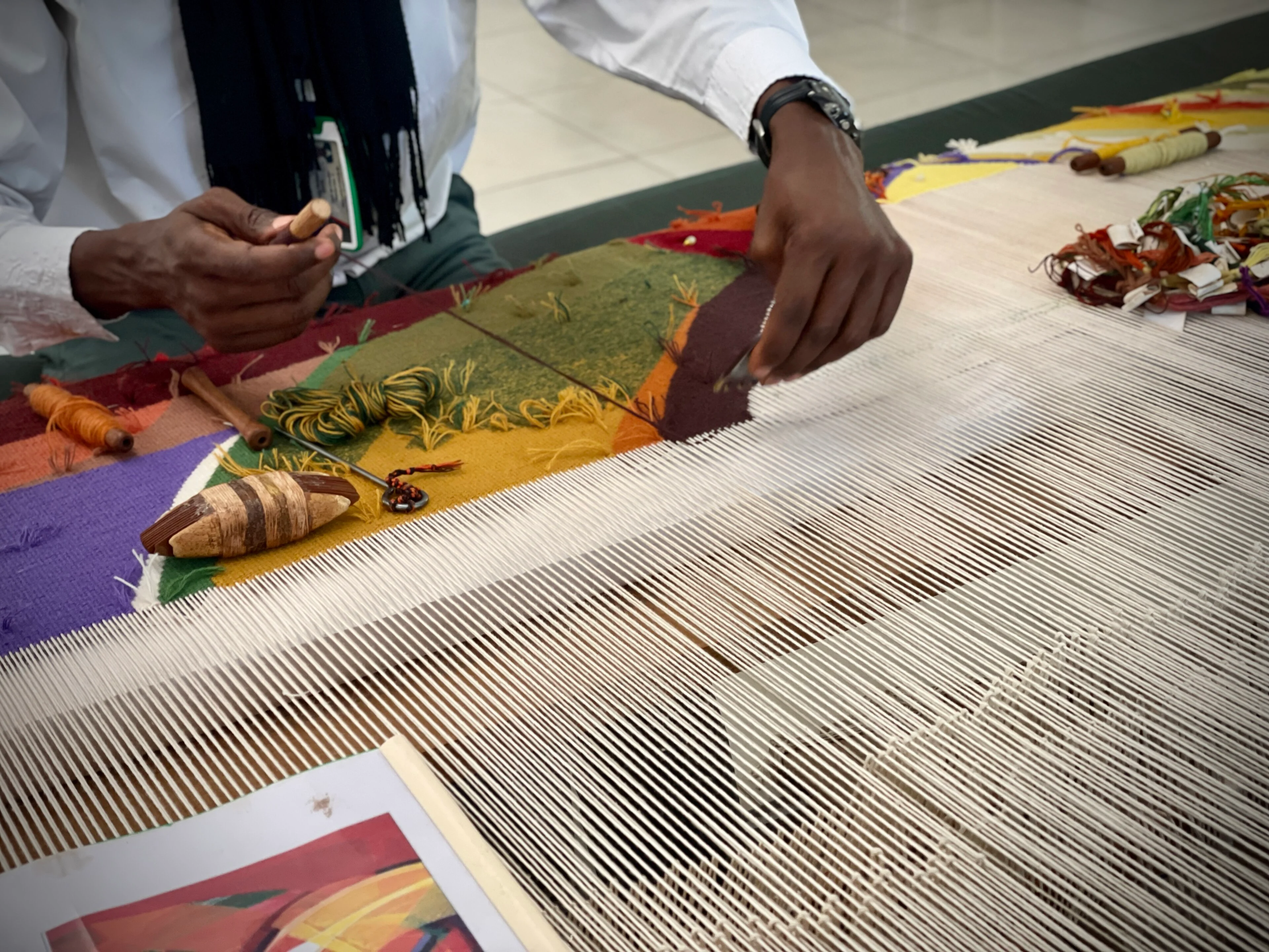
The first thing a hand reveals is not mastery but pace. A weaver checks a line before the shuttle moves. A potter pauses at the rim, where another millimetre of pressure will change the vessel’s balance. A metalworker turns a sheet towards the light and reads the marks that have not yet become a pattern. None of these gestures is slow for the sake of appearing traditional. Each is an efficient answer to material, tool and purpose, learned through repetition and revised by experience.
Travel has a habit of making that work picturesque. A workshop becomes a backdrop, a loom becomes evidence of an older world, and the finished object becomes a souvenir whose value is measured by how convincingly it carries the destination home. The maker may appear in the photograph but disappear from the story. Their price is negotiated, their design goes uncredited, their timetable is treated as an attraction’s opening hours. “Handmade” becomes a mood rather than a description of labour.
This issue begins with a different proposition. Craft is not a decorative remainder after modern life has arrived. It is modern life: a way of organising knowledge, income, materials, risk and invention. Some practices are transmitted within families or communities; some are taught in schools; some move between both. Workshops use old tools beside new kilns, digital drawings beside paper patterns, local fibre beside imported dyes. Continuity does not require stillness. A living tradition survives because its practitioners are able to choose, adapt, earn and argue about what comes next.
UNESCO’s Convention for the Safeguarding of the Intangible Cultural Heritage describes safeguarding as supporting the conditions in which practices and knowledge can continue, not freezing them into a single authorised form. Its ethical principles place communities, groups and individuals at the centre. That distinction matters to a traveller. We are not visiting a technique detached from people. We are entering, briefly, a relationship governed by consent, attribution and fair exchange.
Begin with the verb
Labels are useful, but verbs tell a clearer story. Ask what was spun, carved, dyed, thrown, beaten, woven, fired, printed, polished or repaired. Then ask who performed those stages and where. An object sold in Oaxaca may combine wool from one place, dyeing in another and weaving in a family workshop; a ceramic cup in Kanazawa may pass between specialists before reaching the shop. Distributed authorship does not make the work less genuine. It makes a simple label inadequate.
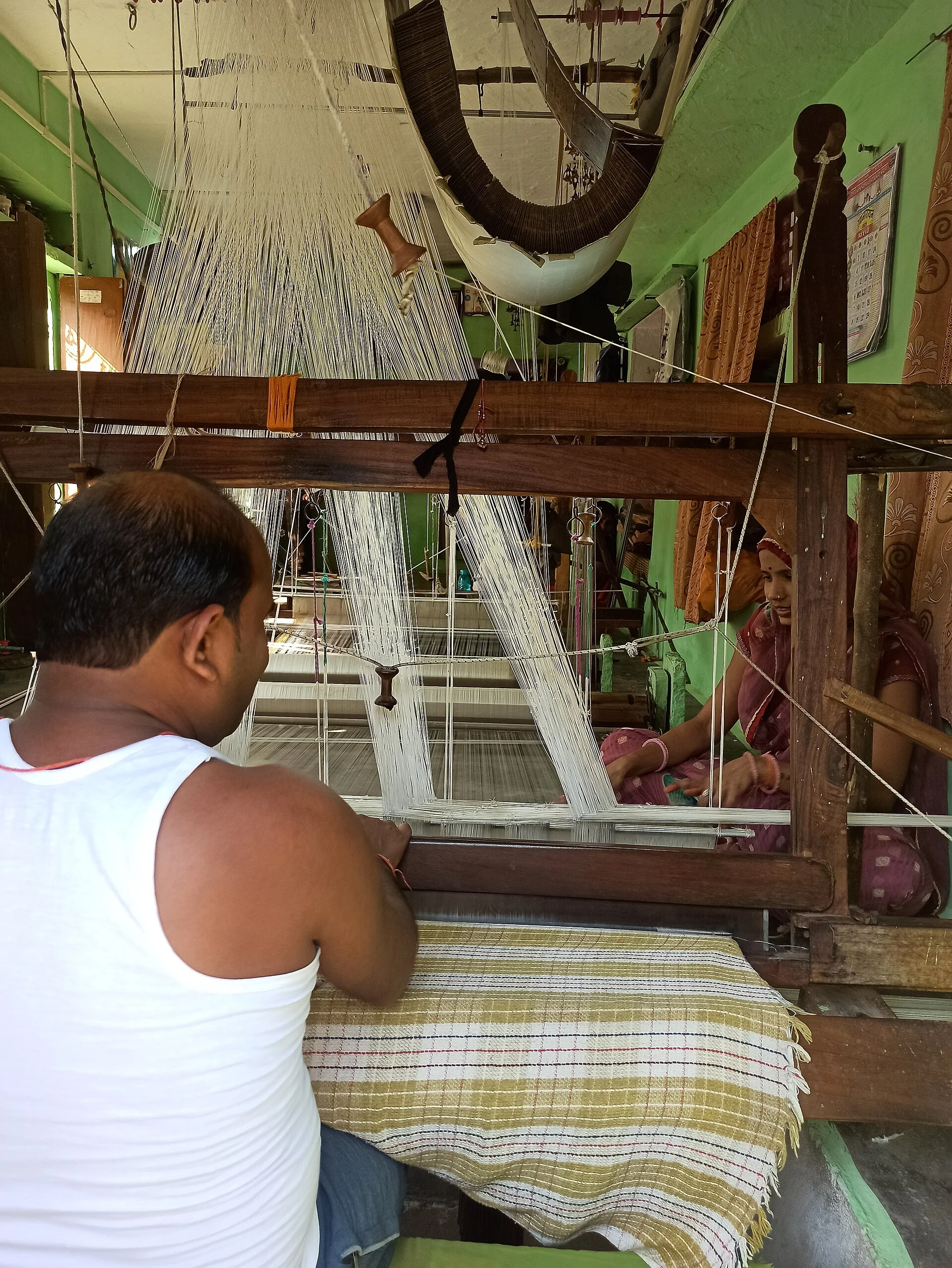
The word handmade rarely means untouched by machinery. A maker may use an electric wheel, a mechanical loom, a laser-cut guide or a gas kiln while retaining decisive control over form and finish. Another object may be assembled by hand from components made at industrial scale. Neither can be judged honestly by a romantic checklist. Ask which decisions belong to the maker, what the tool enables and what the seller means by the term.
A demonstration also needs its own description. Some workshops pause production to teach visitors; some maintain a separate visitor studio; some stage a concise version of a process that normally takes days. A shortened demonstration can be generous and accurate when it is labelled as such. The problem begins when performance is presented as the entire production system, or when a visitor’s photograph is allowed to imply that every item was made by the person in the frame.
Good questions are specific and answerable. Where was this made? Who designed it? Which parts were completed here? What is the material? Is this intended for food, wear, ceremony or display? How should it be cared for? Questions framed as tests—Is it really authentic? Is it completely natural?—invite defensiveness because they assume there is one pure form and that the buyer is qualified to certify it. Curiosity works better when it leaves room for a complicated answer.
Price is part of provenance
The price of craft holds time that is easy to overlook: sourcing, preparation, failed pieces, sharpening, washing, firing, rent, teaching, administration and the long apprenticeship that makes a difficult movement appear quiet. It may also include a retailer or cooperative that connects a dispersed group of makers to customers. A direct sale is not automatically fair, and an intermediary is not automatically exploitative. The useful question is how value and decisions are shared.
Bargaining customs vary. Where negotiation is expected, it can remain proportionate and courteous. The traveller should still resist turning a maker’s margin into a game won for the price of coffee. A fixed-price shop may be protecting an agreed return; a studio may be charging for design rather than raw material. If the price is beyond reach, paying for a museum, class or guided visit can support knowledge without requiring ownership.
Receipts and labels are not bureaucratic clutter. They preserve the maker’s name, material, place, date and care instructions after memory softens. For valuable work, record dimensions, condition, edition or commission terms, shipping method and insurance. Never ask a seller to understate customs value. A cheap declaration moves risk back onto the person least able to absorb a lost parcel.
The same care applies to claims of age. Archaeological fragments, religious objects, wildlife materials and older textiles can fall under export, cultural-property or conservation controls. Confidence at the point of sale is not legal documentation. UNESCO’s 1970 Convention and CITES provide international frameworks, while departure and arrival countries set their own requirements. When provenance is uncertain, choose contemporary work with a named maker. It is not the lesser story.
Permission travels with the image
A camera changes the workshop. It can distract a person using heat or sharp tools, reveal a design before release, expose a private address or turn concentration into a public performance. Ask before photographing people, work in progress and interior spaces. A yes to one portrait is not permission to record a whole lesson, and purchase does not buy the right to reproduce a pattern.
Attribution should survive beyond the caption. Keep the maker’s preferred name and link attached when posting, and do not invent identity from appearance. Broad labels can erase the community or workshop that produced the work; overconfident symbolism can be equally damaging. If a seller cannot confirm what a motif means, describe colour, material and technique rather than turning uncertainty into folklore.
Traditional cultural expressions create questions that ordinary copyright language does not fully resolve. WIPO’s work in this area reflects the fact that designs and knowledge may be held collectively, transmitted across generations and governed by customary rules. Something visible in a market is not therefore free for a fashion brand, hotel or content creator to copy. The respectful traveller does not ask, “Can I get away with reproducing this?” but “Who has the authority to give permission, and what acknowledgement or benefit is expected?”
Children require particular restraint. Do not photograph or commission a child’s participation because it appears charming. Schools, family workshops and festivals have their own safeguarding and consent responsibilities; a traveller should never override them through gifts or pressure. A scene can be memorable without becoming content.
Material has a geography
Objects begin before the workshop. Wool begins with land, animals, weather and grading. Clay begins with geology, extraction and recipes. Wood begins with a species, a forest or plantation and a chain of custody. Metal begins with mining, recycling and alloys. Dyes begin with plants, insects or chemistry, water and safe handling. “Local material” can be meaningful, but it should not be demanded as proof of worth. Makers choose materials for quality, availability, safety, price and artistic purpose; imported material can support deeply local knowledge.
Environmental claims deserve the same specificity as craft claims. Natural dye is not harmless by definition; mordants, water use and disposal matter. A wood species may be locally familiar and ecologically threatened. A new kiln may reduce fuel use but require capital beyond a small studio. Ask what the workshop has changed, measures or reuses. Do not expect a maker to solve the environmental cost of an entire supply chain during a ten-minute visit.
Durability can be a practical form of sustainability. Buy an object that has a role, learn how to clean and store it, and ask whether it can be repaired. A cup that is used for years, a garment that can be darned and a basket that returns to the market have lives beyond display. The maker’s care advice is part of the design. Keep it.
Transport is material too. Fragile ceramics require boxes, padding and fuel; large textiles carry weight and customs risk. Sometimes the responsible decision is to buy a small piece, commission later through an established channel or leave with knowledge rather than luggage. Admiration does not need to become acquisition.
The workshop is not a stage
Appointments protect both sides. Production schedules change around commissions, drying, firing, harvest, festivals and family responsibilities. Confirm the time, fee, language, accessibility, group size and photography rules. Arrive without assuming a private workshop has public toilets, card payment or space for bags. If the visit includes teaching, ask what materials are provided and whether the finished piece can safely travel.
Safety instructions are not barriers to intimacy. Kilns, blades, dust, dyes, molten metal and repetitive machinery require boundaries. Stay behind marked lines, tie back loose clothing and do not touch an unfinished object. An unfired pot can be damaged by a fingerprint; a loom under tension is not an interactive prop. Children need supervision appropriate to the actual hazards, not the gentleness of the finished object.
Accessibility should be discussed plainly. Historic workshops may have steps, narrow passages, low light or limited seating. Some processes are noisy or create dust and scent. Ask for details, not a generic assurance, and accept a museum, gallery or demonstration space as a worthwhile alternative when the production floor is inaccessible. Inclusion is better served by accurate information than by pretending every space works for everybody.
Language can be part of the fee. A guide or interpreter does more than translate nouns; they help explain who may be visited, what can be asked and how a price is structured. Credit that work. Do not turn a guide into an invisible conduit while celebrating the visible maker.
A better object story
When the object reaches home, its story should remain modest enough to be true. Name the maker or workshop if permitted, the place, material, technique and date. Say that you watched a demonstration if that is what happened. Do not claim an intimate apprenticeship after an afternoon class, or make one purchase stand for an entire culture.
Use is a form of respect when the object was made for use. Wear the cloth, serve from the bowl, sharpen the knife, mend the basket. Display may be correct for fragile or ceremonial work, but ask rather than assuming. If the object breaks, contact the maker or a qualified repairer before improvising a treatment that cannot be reversed.
The deepest pleasure of travelling through craft is not collecting proof of discernment. It is learning to see decisions. After one careful workshop visit, the even edge of a basket looks less inevitable; a printed repeat reveals the discipline of registration; a hammered surface holds thousands of controlled impacts. Price, care and credit become more legible because labour has become visible.
That knowledge should make the world larger, not rank it. There is no single ladder with anonymous factory work at the bottom and solitary handwork at the top. People move between systems; production can be collaborative; technology can reduce injury; repetition can carry invention. The task is to describe what is there, who benefits and what the object asks of its owner.
Made by hand is not a guarantee of goodness. It is an invitation to ask better questions. Follow the material backwards, the payment sideways and the care instructions forwards. Leave the maker with their name, time and choices intact. Then the object may carry more than the memory of a trip: it may carry a relationship accurately enough to deserve keeping.