Maun is the fifth-largest town in Botswana. As of 2011, it had a population of 55,784. Maun is the "tourism capital" of Botswana and the administrative centre of Ngamiland district. Francistown and Maun are linked by the A3 highway. Maun is also the headquarters of numerous safari and air-charter operations who run trips into the Okavango Delta.
Although officially still a village, Maun has developed rapidly from a rural frontier town and has spread along the Thamalakane River. It now has shopping centres, hotels and lodges as well as car hire services, although it retains a rural atmosphere and local tribesmen continue to bring their cattle to Maun to sell. The community is distributed along the wide banks of the Thamalakane where red lechwe can still be seen grazing next to local donkeys, goats and cattle.
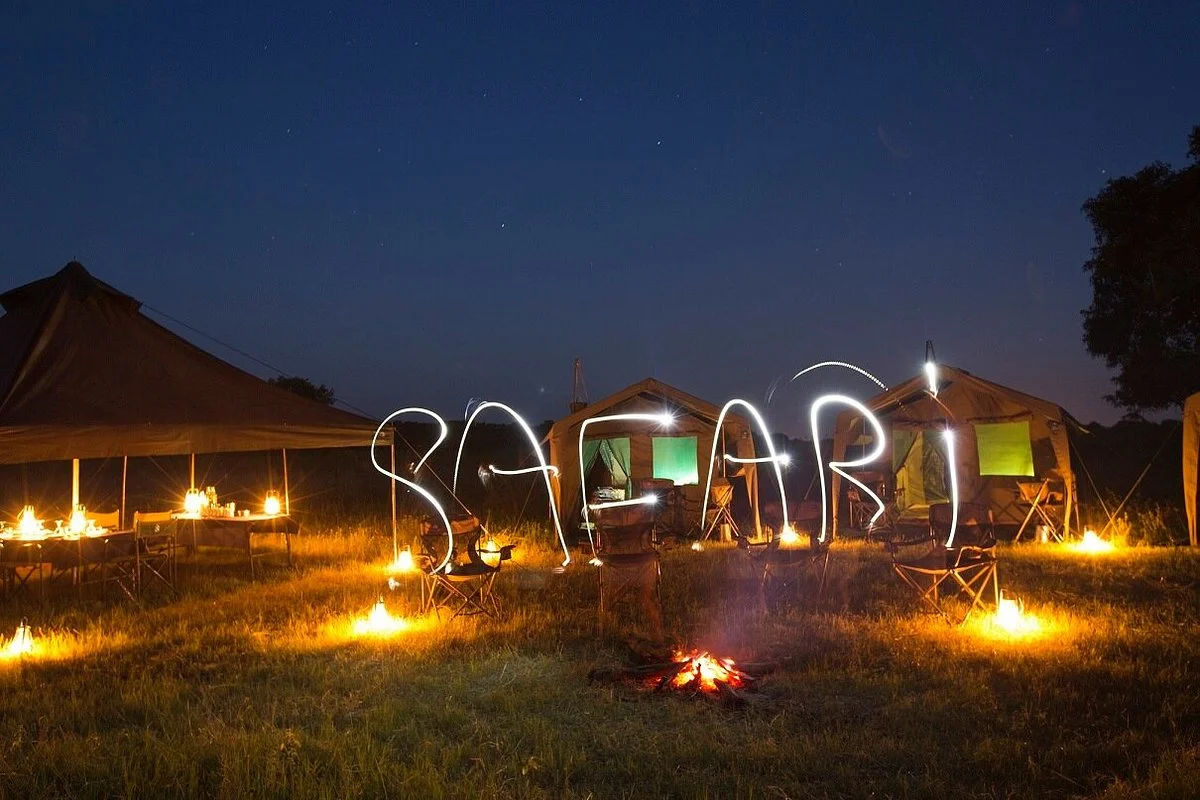
Maun is a prime take-off location for mobile safaris into the Okavango Delta, Parks and Game Reserves.
There are a couple of hotels (most notably Riley's) and some unimpressive B&Bs in Maun proper. A number of campsites and hotels popular with travellers are clustered on the road to Moremi and Shorobe, about 6-10 km north-east of Maun Airport. The landmark for this cluster is a roundabout on the south side of the Thamalakane River, just after the road crosses from the north side. A combi ride into Maun costs about P3, while a tax costs about P30.
=
The core of Maun, say from Riley's Hotel to the airport, is walkable, but usually hot. Further out than that — and a number of popular camps are to the north-east of town — you will want to get a ride.
There is a roundabout just a few hundred metres northeast of Riley's Hotel and the Tourist office. It is a useful reference point. From here, Tesheko Tsheko road runs southwest past Riley's to the bus station and market (at Tsaro St, ~1.5 km). Sekgoma Road runs southeast, crossing the Thamalakane River, past the Maun Education Park, and on to Francistown. Moeti Road runs northwest. And Sir Seretse Khama Road runs north to the Maun airport (~2.5 km), and thence to the popular camps, to Moremi, and to Shorobe.
Taxis and combis have blue licence plates. (Expect to pay P30 for a taxi to the camps north of town.) In this area, especially on relatively high-speed roads, available taxis will honk gently once to see if you are interested. To show that you want a taxi, stick your arm out parallel to the ground, perpendicular (and towards) the road, palm-down, and flap your fingers. (Raising your hand will probably also work, but the finger-flapping is the way the locals do it.)
Note that taxis do not have a central dispatch system. Thus, if you want to call a taxi to fetch you from somewhere a bit remote, you need to have the mobile number of a taxi driver. Also note that driving after dark is dangerous (due to animals on the road), so there will be fewer taxis running after dark.
Combis (vans) run from the bus station along ten specified routes.
The following companies offer cars for hire. Car hire typically carries a per-km charge. If you are coming from outside Southern Africa, you may be able to get unlimited km allowance by making your reservation with an international company on their website.