Mazar-i-Sharīf ( mə-ZARR-ee shə-REEF; Dari and Pashto: مزار شریف), also known as Mazar-e Sharīf or simply Mazar, is the fourth-largest city in Afghanistan by population, with an estimated 500,207 residents in 2021. It is the capital of Balkh province and is linked by highways with Kunduz in the east, Kabul in the southeast, Herat in the southwest and Termez, Uzbekistan in the north. It is about 55 km (34 mi) from the Uzbek border. The city is also a tourist attraction because of its famous shrines as well as the Islamic and Hellenistic archeological sites. The ancient city of Balkh is also nearby.
The region around Mazar-i-Sharif has been historically part of Greater Khorasan and was controlled by the Tahirids followed by the Saffarids, Samanids, Ghaznavids, Ghurids, Ilkhanates, Timurids, and Khanate of Bukhara until 1751 when it became part of the Durrani Empire (although under autonomous emirs). Eventually the city passed to a few local rulers before becoming part of Afghanistan in 1849.
Mazar-i-Sharif is the regional hub of northern Afghanistan, located in close proximity to both Uzbekistan and Tajikistan. It is also home to an international airport. It has the highest percentage of built-up land (91%) of all the Afghan provincial capitals, and it has additional built-up area extending beyond the municipal boundary but forming a part of the larger urban area. It is also the lowest-lying major city in the country, about 357 metres (1,171 ft) above sea level. The city was spared the devastation that occurred in the country's other large cities during the Soviet–Afghan War and subsequent civil war, and was long regarded as one of the safest cities in the country.On 14 August 2021, Mazar-i-Sharif was seized by Taliban fighters, becoming the twenty-fifth provincial capital to be captured by the Taliban as part of the wider 2021 Taliban offensive.
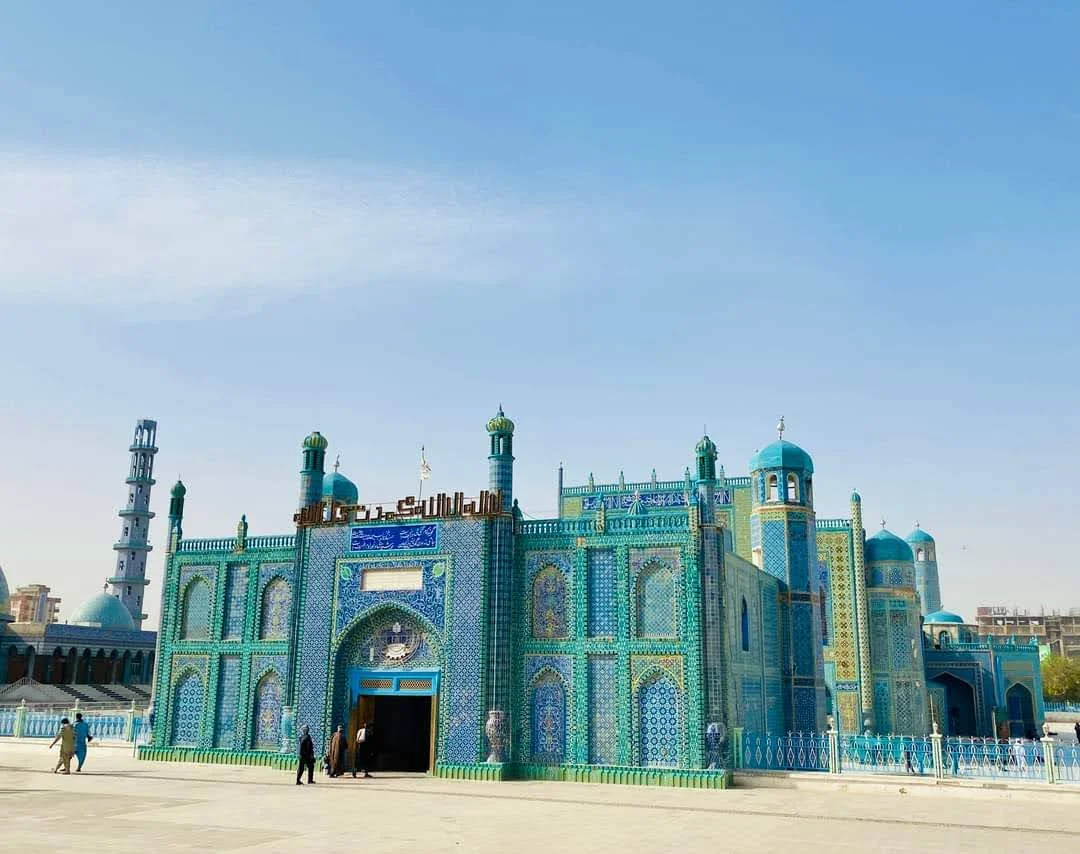
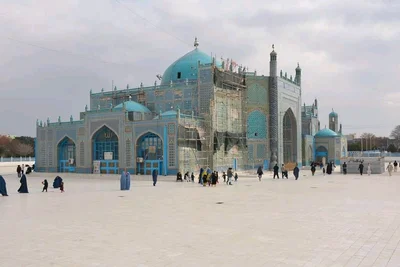
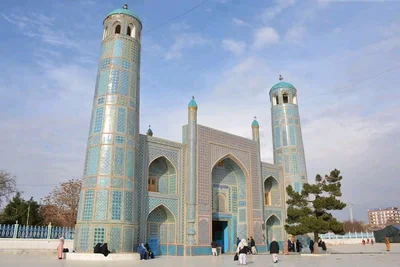
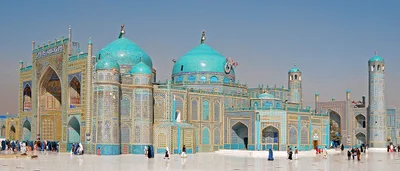
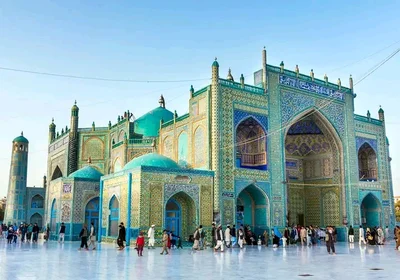
In the way of sights Mazar has little to offer the visitor other than the Blue Mosque - although some of the modern monuments built atop traffic circles are worth a photo. Mazar is surrounded by beautiful Mountains on two sides and is home to some Ancient Greek relics.
Hand-woven carpets are common in the bazaar, both Turkoman rugs and Afghan rugs that are typically cheaper and coarser.
=
With a population of more than 485,000 (2020), Mazar-e Sharif is the 4th largest city in Afghanistan. It was founded in the 12th century after a local mullah dreamt of the secret site where Ali bin Talib, the Prophet's cousin and the fourth caliph of Islam, had been buried (outside of Afghanistan most Muslims believe that Ali is buried in Najaf, Iraq). A shrine, which was rebuilt as the Blue Mosque, was constructed on the site and the city of Mazar grew around it.
Historically this region was known as Bactria, its capital was Balkh and Mazar was a smaller town nearby. However Balkh was abandoned due to disease in the mid-19th century and Mazar assumed the role of capital of the region, a position it has maintained ever since. Being at a crossroads of trade, the Mazar region is more ethnically diverse than other areas of Afghanistan, and after Kabul it is considered the most open and liberal of all Afghan cities.