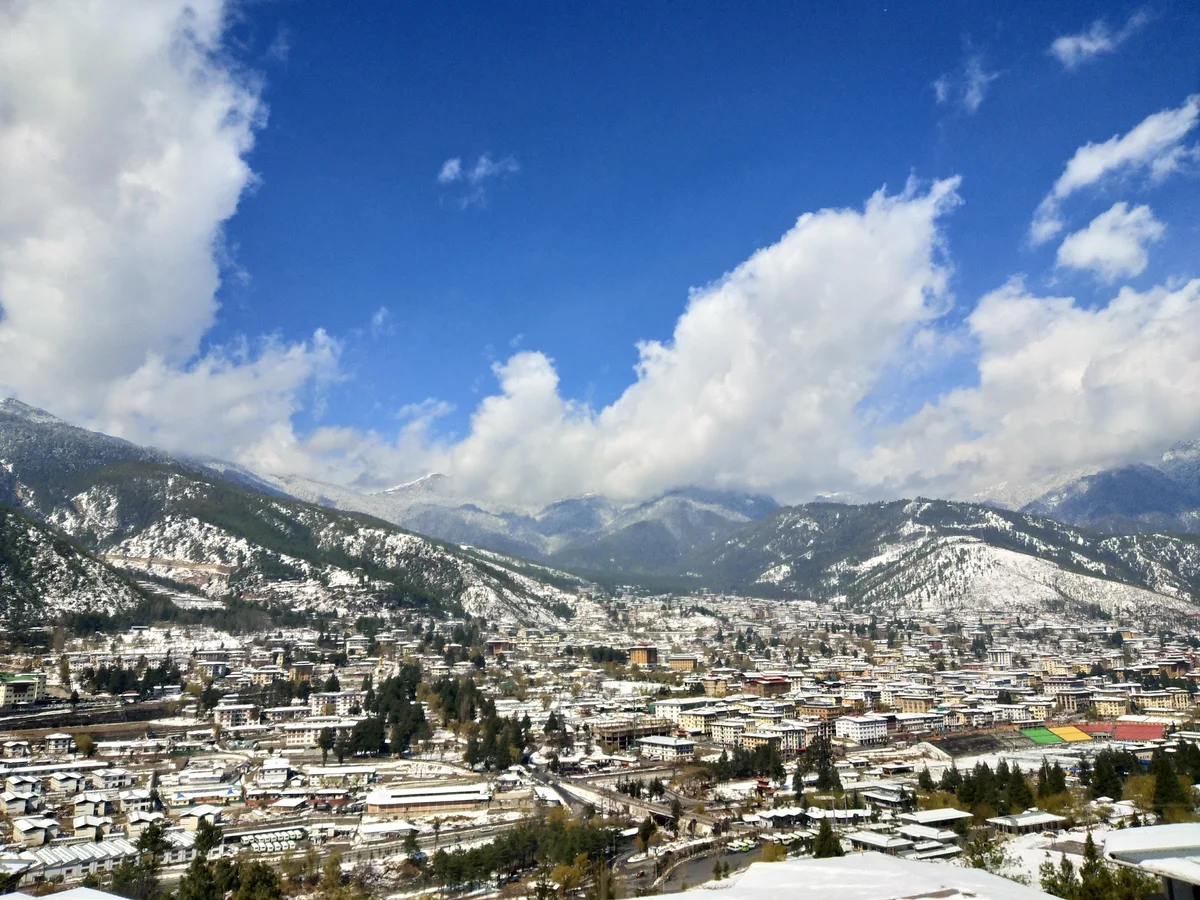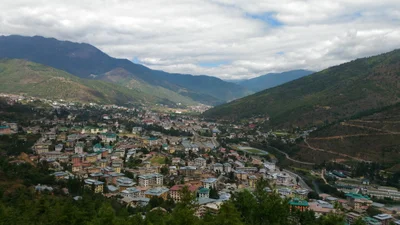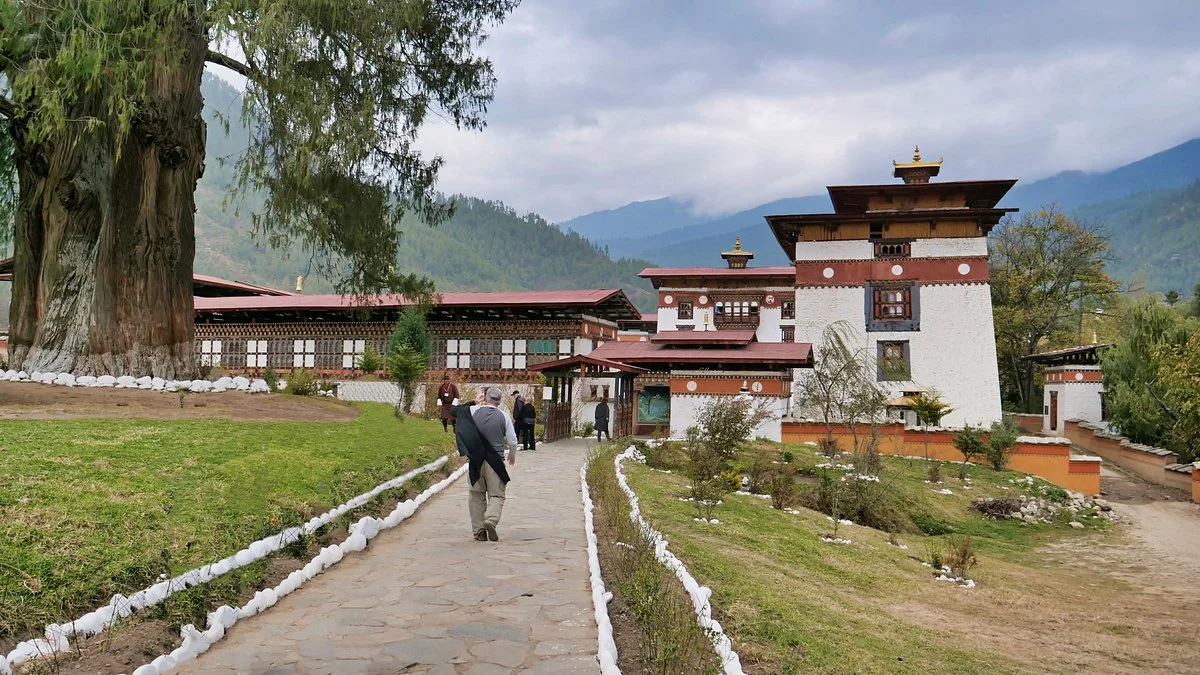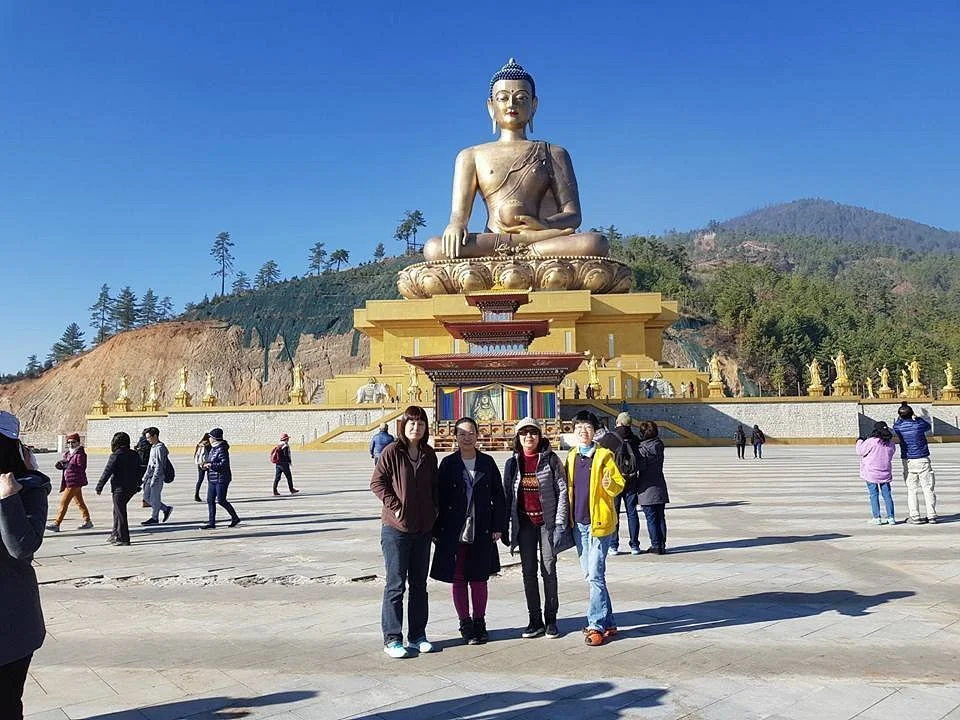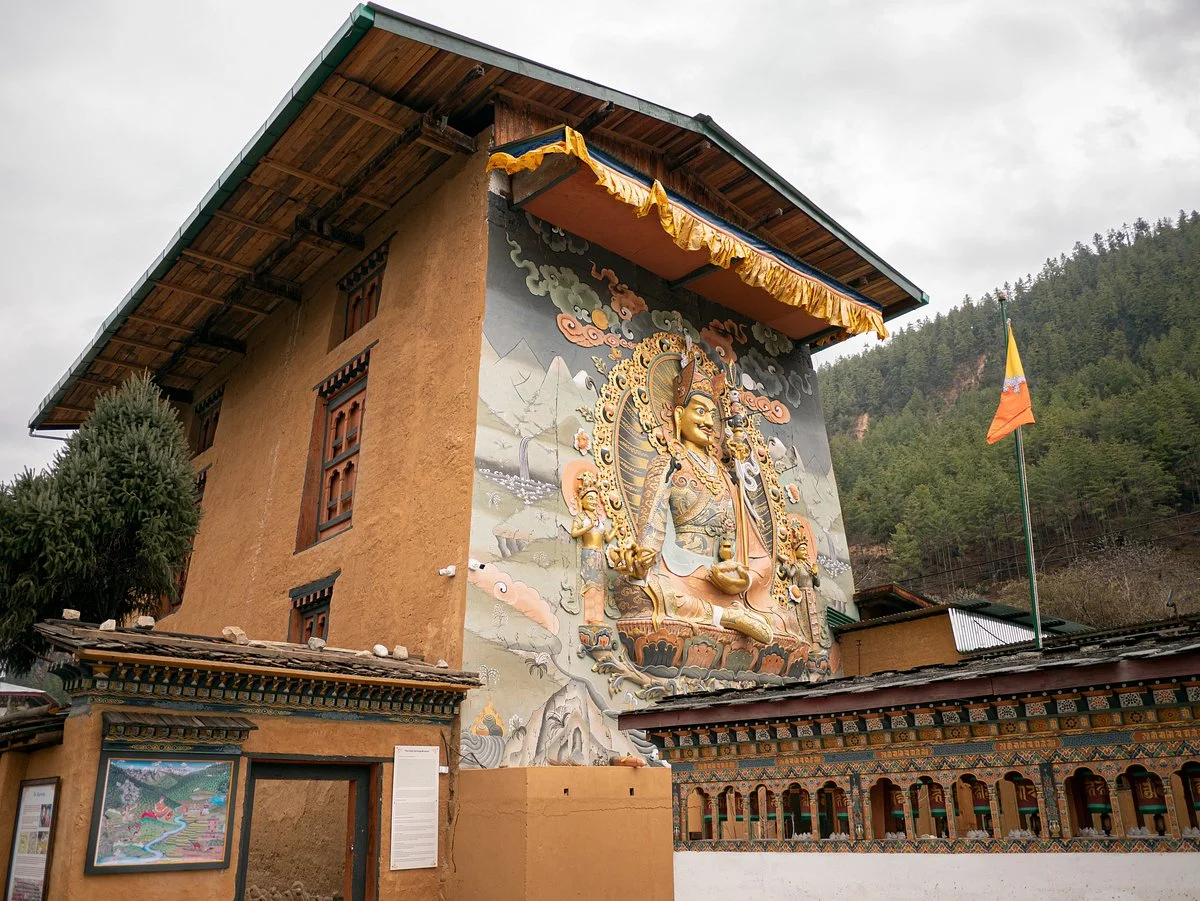
Thimphu (; Dzongkha: ཐིམ་ཕུག [tʰim˥.pʰu˥]) is the capital and largest city of Bhutan. It is situated in the western central part of Bhutan, and the surrounding valley is one of Bhutan's dzongkhags, the Thimphu District. The ancient capital city of Punakha was replaced by Thimphu as capital in 1955, and in 1961 Thimphu was declared as the capital of the Kingdom of Bhutan by the 3rd Druk Gyalpo Jigme Dorji Wangchuck.
The city extends in a north–south direction on the west bank of the valley formed by the Wang Chhu, which flows out into India as the Raidāk River. Thimphu is the fifth highest capital in the world by altitude and ranges in altitude from 2,248 metres (7,375 feet) to 2,648 metres (8,688 feet). Unusually for a capital city, Thimphu does not have its own airport, instead relying on the Paro Airport (connected by road some 52 kilometres (32 miles) away).
Thimphu, as the political and economic center of Bhutan, has a dominant agriculture and livestock base, which contributes to 45% of the country's GNP. Tourism, though a contributor to the economy, is strictly regulated, maintaining a balance between the traditional, development and modernization. Thimphu contains most of the important political buildings in Bhutan, including the National Assembly of the newly-formed parliamentary democracy and Dechencholing Palace, the official residence of the King, located to the north of the city. Thimphu is coordinated by the "Thimphu Structure Plan, 2002-2027", an urban development plan with the objective of protecting the fragile ecology of the valley. Some of this development was undertaken with financial assistance from the World Bank and Asian Development Bank.
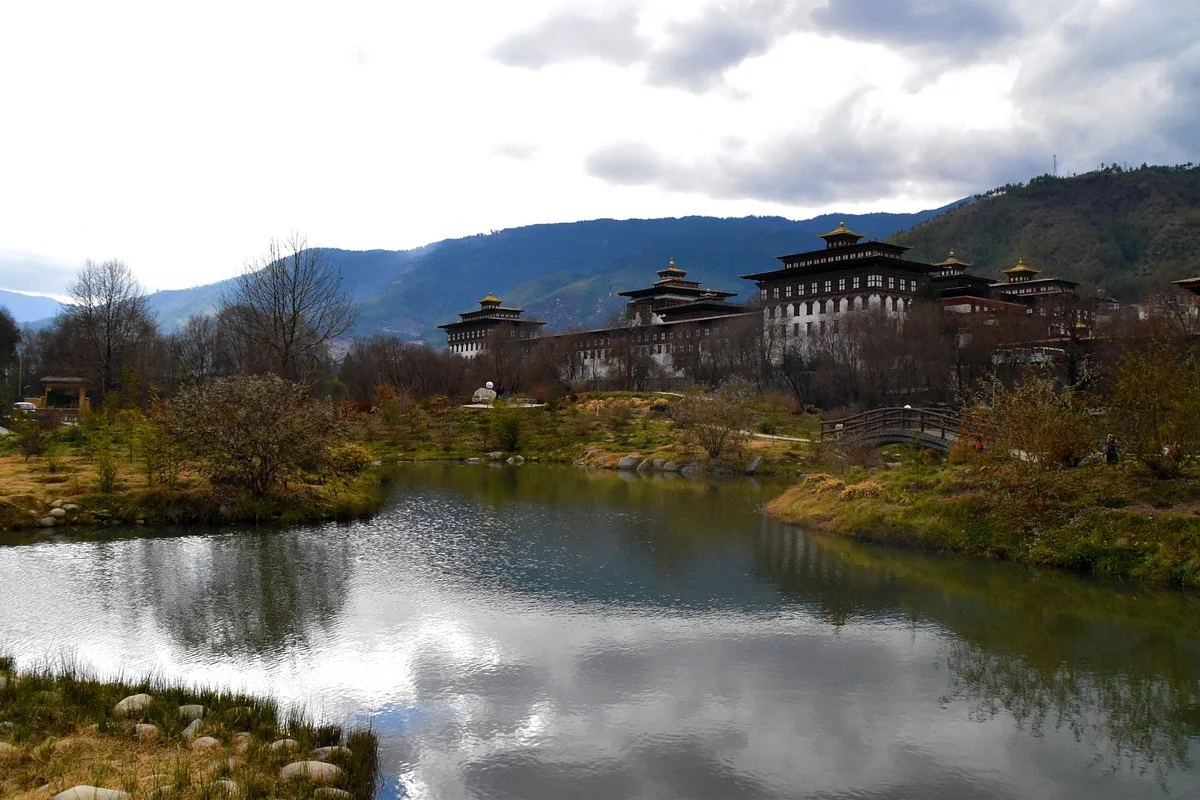
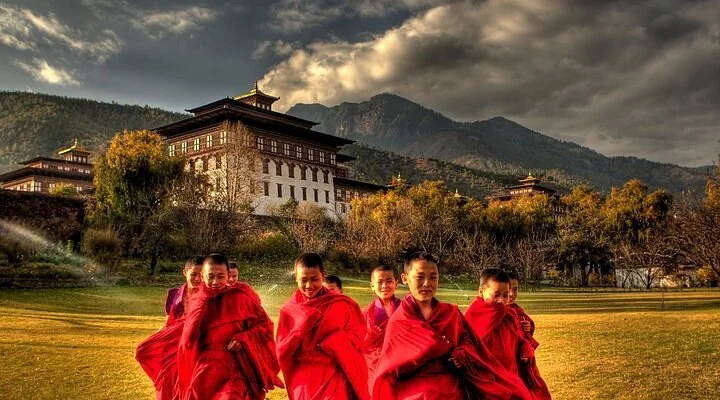
The culture of Bhutan is fully reflected in Thimphu in literature, religion, customs, and national dress code, the monastic practices of the monasteries, music, and dance, and in the media. Tshechu is an important festival when mask dances, popularly known as Cham dances, are performed in the courtyards of the Tashichho Dzong in Thimphu. It is a four-day festival held every year in September or October, on dates corresponding to the Bhutanese calendar.
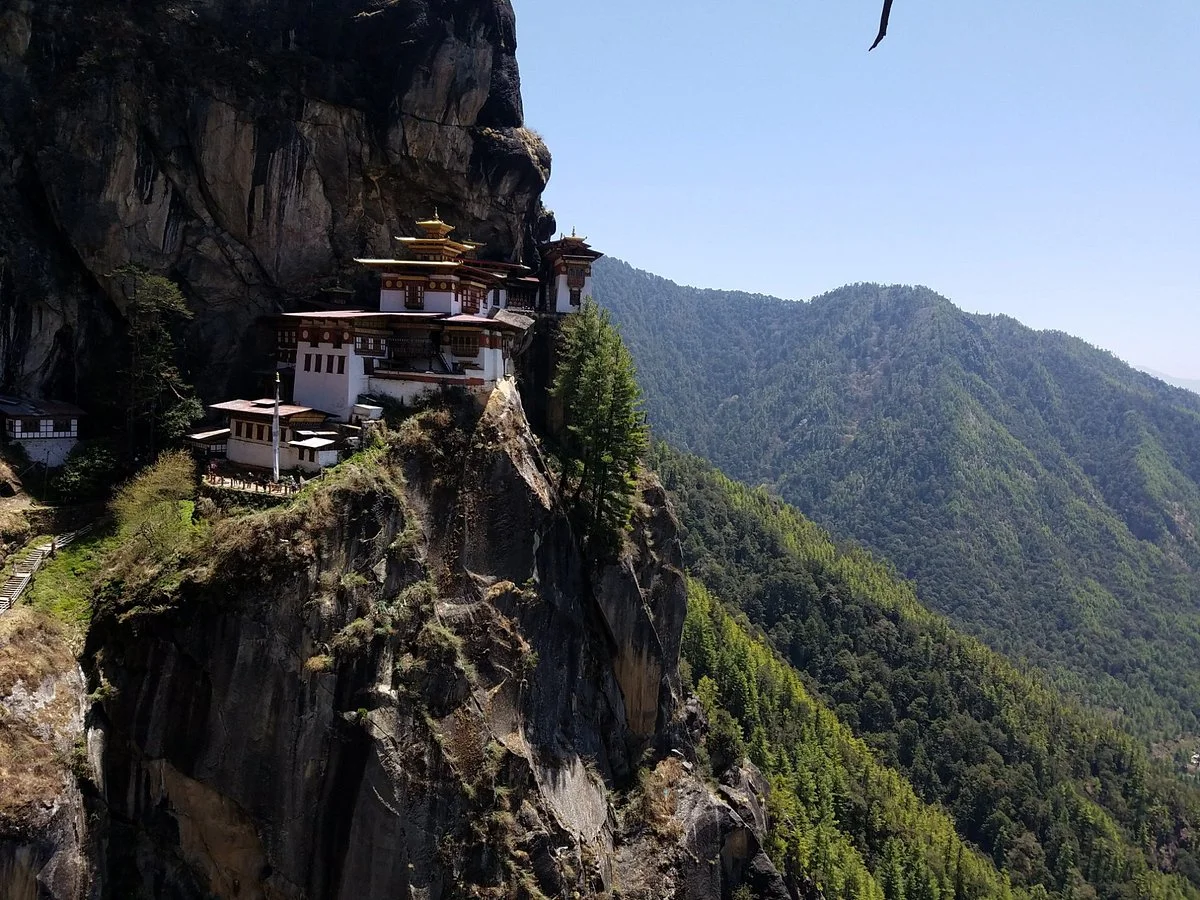
Although lacking the charm and culture associated with ancient capitals, Thimphu has several attractions of note. A hefty entry fee is charged to all foreign nationals (including those with work permits or who are paying the daily tariff of US$100 to the government sustainable fund) at religious structures and buildings of national significance.
Most restaurants (including those in 2- or 3-star hotels) in Thimphu stop serving food between 20:30 and 21:30. For information about restaurants in hotels, check the sleep section of this article.
Bhutan's small population means demand for new and innovative goods is limited. Thimphu has three kinds of stores: clothing, handicraft and hardware. Between these, there is a small assortment of stationery, bookshops, and supermarkets. Almost all shops stock the same goods, so if you cannot find the required items in the first couple of stores it is generally useless to persist.
Haggling at tourist-oriented shops is expected, but the margin for discount is small (unless you make a bulk purchase). However, shop owners are generally honest and there is little possibility to be cheated or offered an inflated price.
Most handicrafts sold in Thimphu are made in Nepal or other Himalayan areas. Exceptions are cloth items, some thankas, goods made of lemon grass oil, incense, and Bhutanese coffee.
=
is the country's sole international airport and a 45-minute to 1-hour drive from the capital. Bhutan has four domestic airports and two domestic and international carriers.
To avoid the hefty airfare rates charged to foreigners flying into Bhutan, many overseas nationals opt to fly to Bagdogra Airport in Siliguri and then travel overland to Bhutan. The journey from Siliguri to Thimphu takes 9-10 hours. There is no direct bus, and passengers will need to change transportation in Phuentsholing. Indian taxis will travel as far as the border town of Jaigaon and will not enter Bhutan.
The city center is small enough to negotiate on foot.
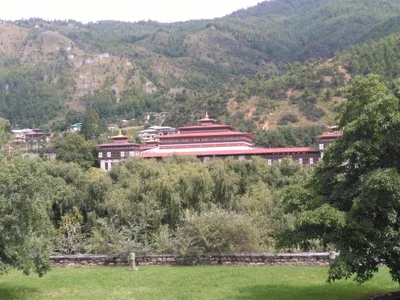
Although the Thimphu Valley has supported small settlements for many centuries and a dzong has existed there since 1216, the city didn't really develop until the king declared Thimphu the new capital in 1961. Vehicles first appeared on the streets a year later, and slowly the city began to adapt to its role as the nation's capital. Since then, the town has undergone massive development. Tree-lined streets have been laid and the clock tower area in the center of the city is now a park-cum-open air theater where fairs and live cultural performances take place. In 2008, the national stadium and a new river-side park were completed. The area around the dzong and government buildings is a particularly green and an attractive district.
Norzin Lam is the city's main thoroughfare and is lined with small hotels and shopping complexes.