Kaiping (Chinese: 开平), alternately romanized in Cantonese as Hoiping, is a county-level city in Guangdong Province, China. It is located ín the western section of the Pearl River Delta and administered as part of the prefecture-level city of Jiangmen. The surrounding area, especially Sze Yup (Chinese: 四邑), is the ancestral homeland of many overseas Chinese, particularly in the United States.
Kaiping has a population of 688,242 as of 2017 and an area of 1,659 square kilometres (641 sq mi). The locals speak a variant of the Sze Yup dialect.
=
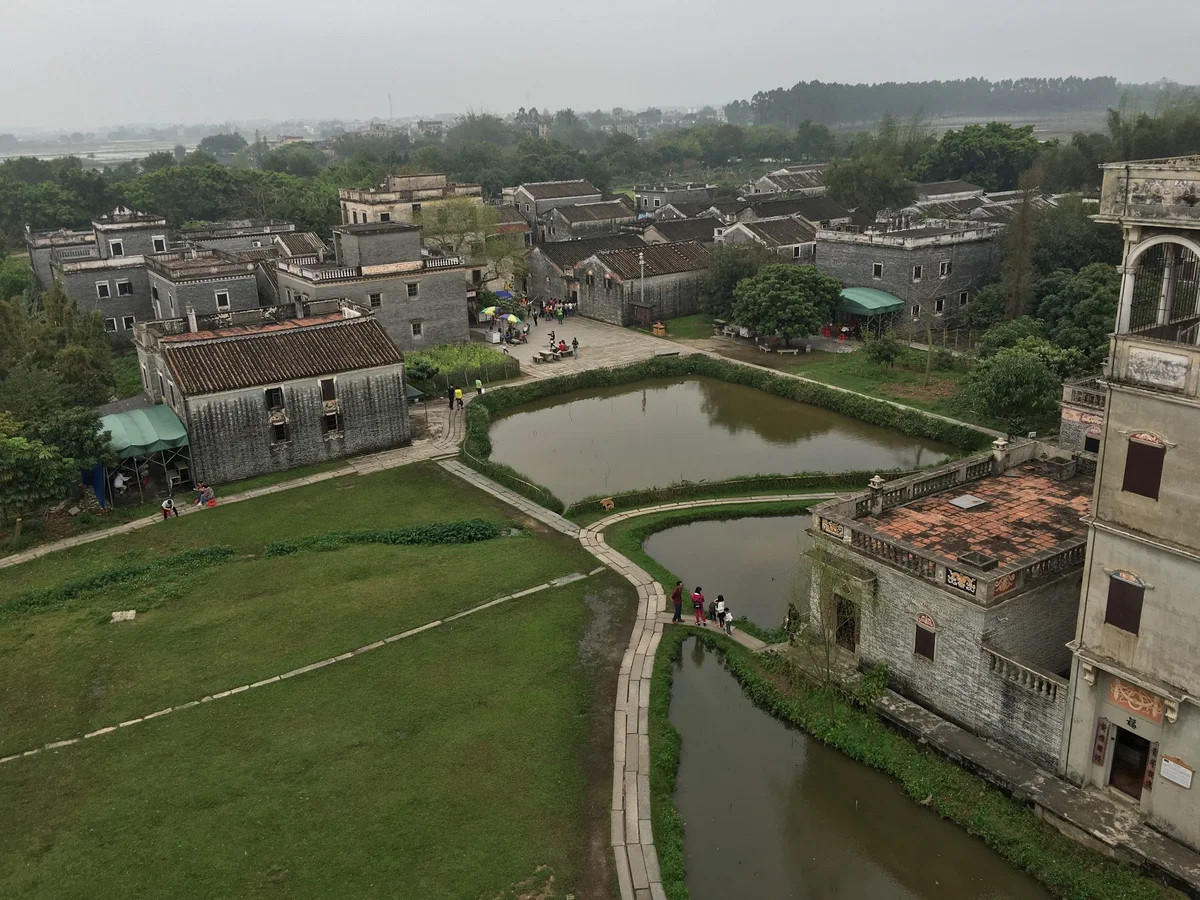
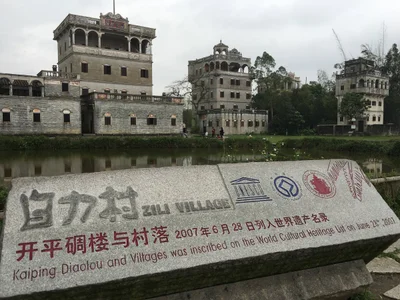
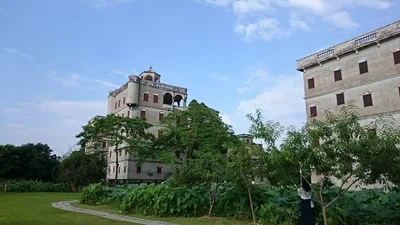
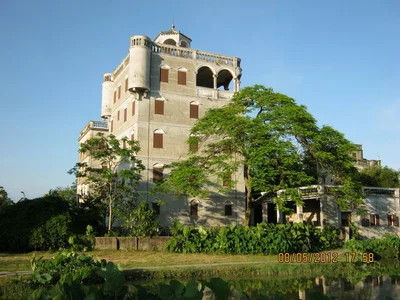
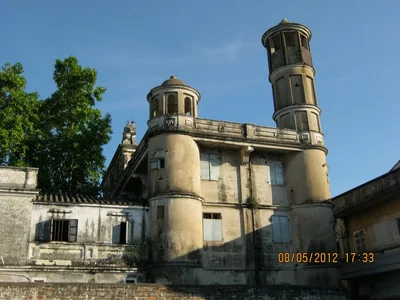
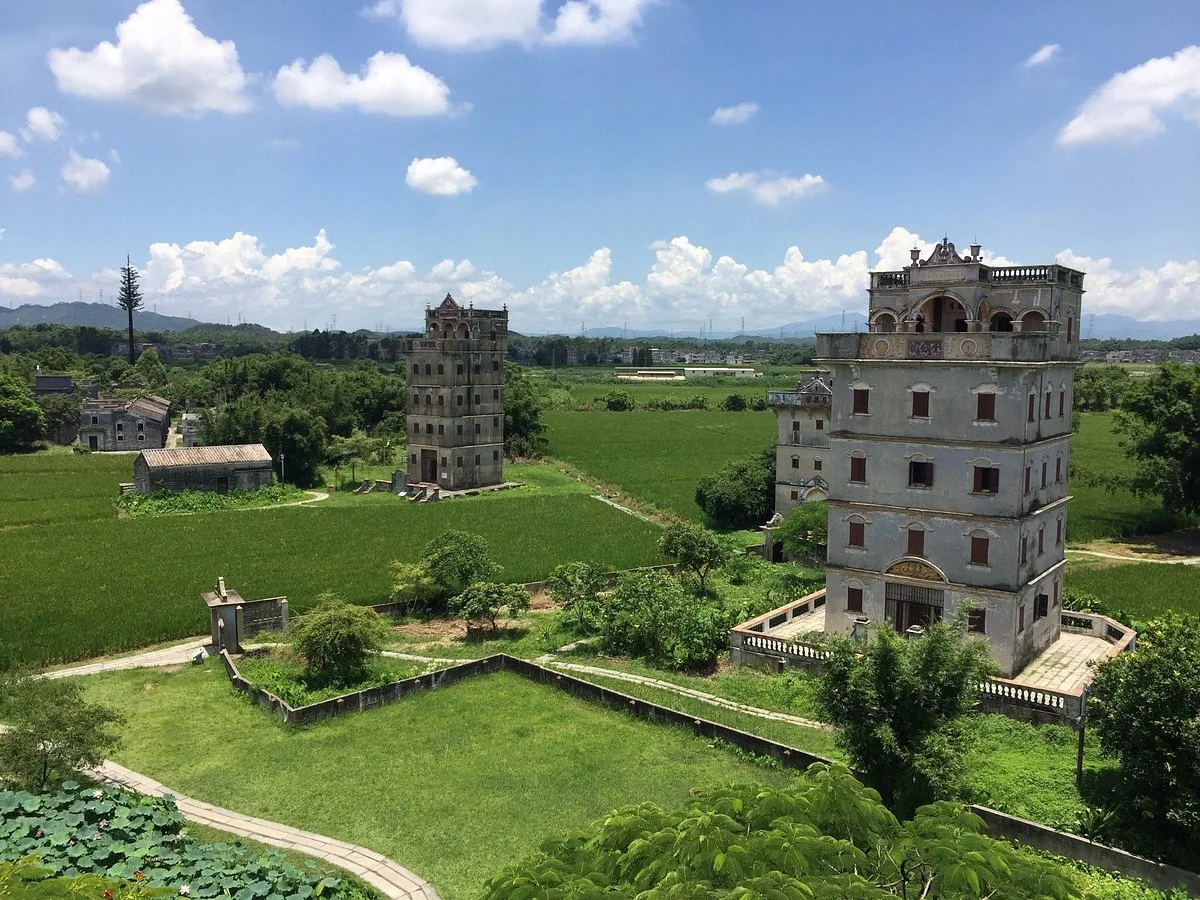
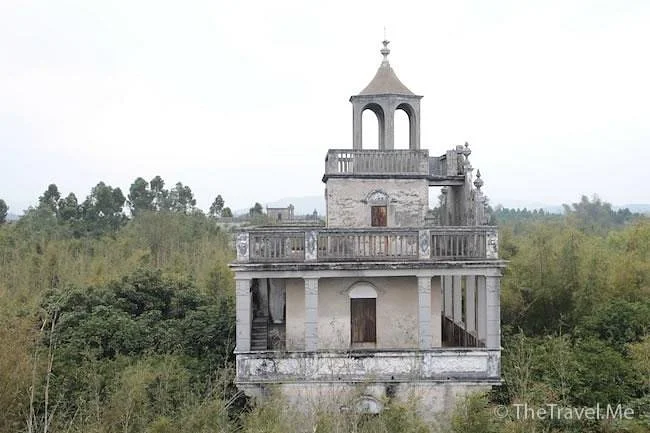
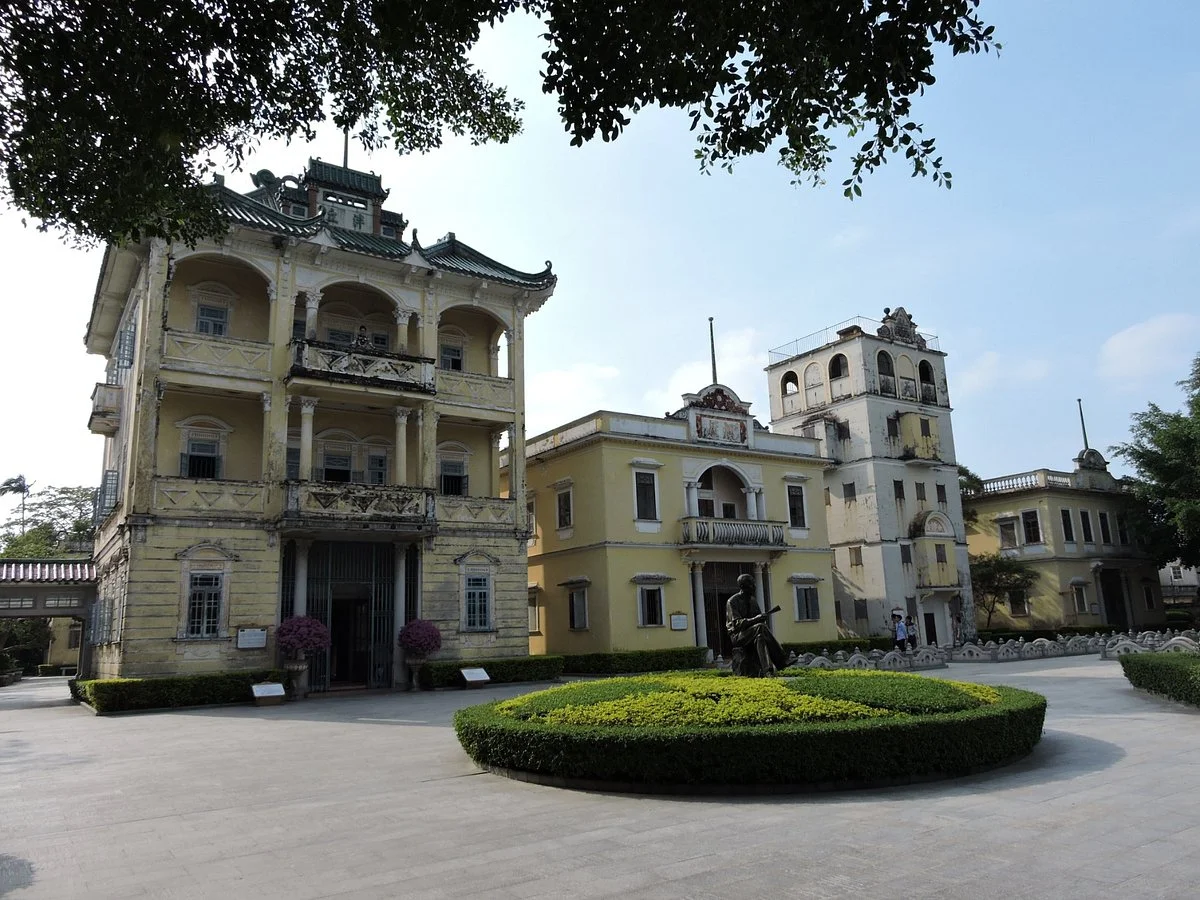
Very close to the town of Kaiping there are a number of small villages and small houses that were built by overseas Chinese during the early 20th century. These are the Kaiping Diaolou, by far the most famous attractions in Kaiping. Most buildings resemble the style of western or middle eastern culture mixed with traditional Chinese elements. Often there were designed to defend against bandits. See The Diaolou of Kaiping for background. The buildings have not been taken care of since, but the government has started to restore and preserve them. Four of them (Zilicun, Sanmenli, Majianglong, and Jinjiangli) have together been designated as a UNESCO World Heritage Site. The style of these buildings is often cheaply copied by many "modern" buildings throughout Guangdong. Kaiping diaolou is also the setting for China's highest grossing domestic film "Let the Bullets Fly" (让子弹飞) with Chow Yun-Fat. Visit the website provided for directions as it is a very large and complex place to visit that will easily take an entire day to see and possibly more.
There are tonnes of Diaolou across the countryside and you will get bored of them within a day, so don't worry too much about skipping some. As of November 2019 there is a tourism system set up whereby five major sites can be visited individually for varying prices, or ¥180 when purchased as a joint ticket. There is also a smaller joint ticket including just the most popular sites of Liyuan and Zilicun for ¥150. Smaller kids are free. The joint ticket is valid for two days and includes four villages with diaolou you can go up into, plus one other site:
In general, each of these four main villages has about two diaolou you can go up in. Many of these diaolou have been restored with the types of furniture and personal items that they might have had when they were occupied, and the villages have other interesting historic buildings too. Some of the villages have a signed "Suggested route" or "Best tourist route" that you can follow to see the most interesting parts of the village. Most signs are in Chinese and English; some have Korean and Japanese too. The entrances to the villages have machines where you can fill up a water bottle for free, so there's no need to keep buying bottled water.
For those interested in diaolou architecture, see The Diaolou of Kaiping (1842-1937) for background. It may also be a good idea to look for accommodations in one of the small townships surrounding Kaiping. (Kaiping city is a fairly standard modern Chinese town.) Xiangang (蚬冈镇), for example, has entire small streets fitted with baroque-like facades cast in concrete.
Other major historic areas:
Other sites around the main diaolou area:
Hot springs in the town of Chishui (赤水 Chìshuǐ) near Jinjiangli.
A local specialty is clay pot rice (煲仔饭 bāozǎifàn), rice cooked in a covered clay pot with meat and vegetables on top. Mix it together when it's served—the sauce on the rice is delicious. Some restaurants can make a version without meat for vegetarians.
Most options are downtown, and it's perfectly feasible to do the diaolou as a day trip from your more centrally located lodging. There are also guesthouses and hostels out among the diaolou, with a particular concentration in the towns of Chikan and Tangkou. Staying out in these places lets you enjoy the rural scenery, and they make a good base for exploring the countryside by bicycle.
= Because the diaolou and Kaiping's other attractions are spread out around a large rural area, driving is the most convenient and efficient way to get to them. Many travelers hire a car in town; drivers wait around at the train station looking for passengers. Around ¥300 should be enough for a half day (5 hours) of sightseeing. The taxi drivers don't often see this much money, so there's no need to offer them any more.
Kaiping (population 700,000) falls under the administration of Jiangmen City in the Pearl River Delta and is located on the Tanjiang River, 140 km (87 mi) away from Guangzhou. The urban area lies on the eastern edge of the county-level city, which is shaped like a big question mark (see map in pink).