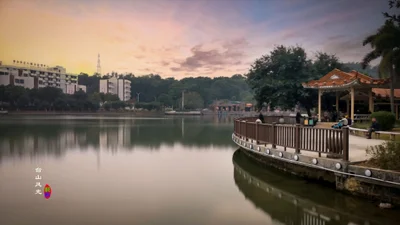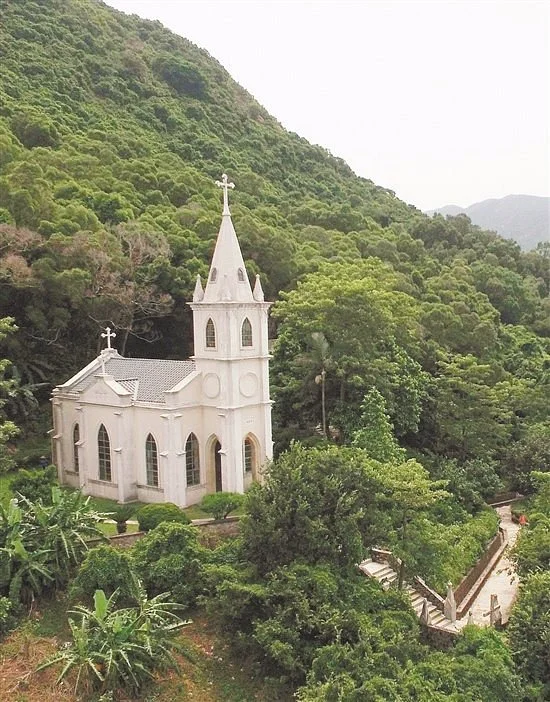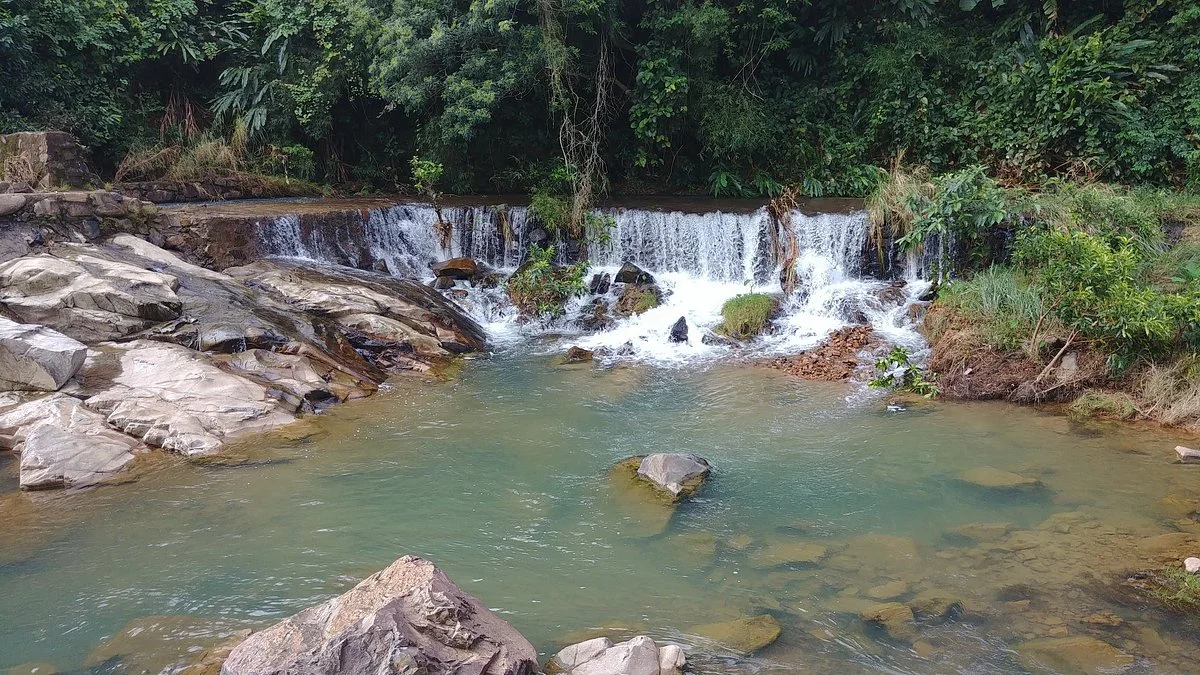
Taishan (simplified Chinese: 台山; traditional Chinese: 臺山; pinyin: Táishān; Jyutping: Toi4saan1), alternately romanized in Cantonese as Toishan or Toisan, in local dialect as Hoisan, and formerly known as Xinning or Sunning (新寧), is a county-level city in the southwest of Guangdong province, China. It is administered as part of the prefecture-level city of Jiangmen. During the 2020 census, there were 907,354 inhabitants (941,095 in 2010), but only 433,266 were considered urban.
Taishan calls itself the "First Home of the Overseas Chinese". An estimated half a million Chinese Americans are of Taishanese descent.
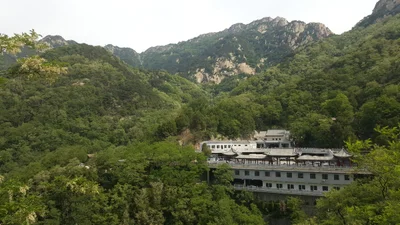
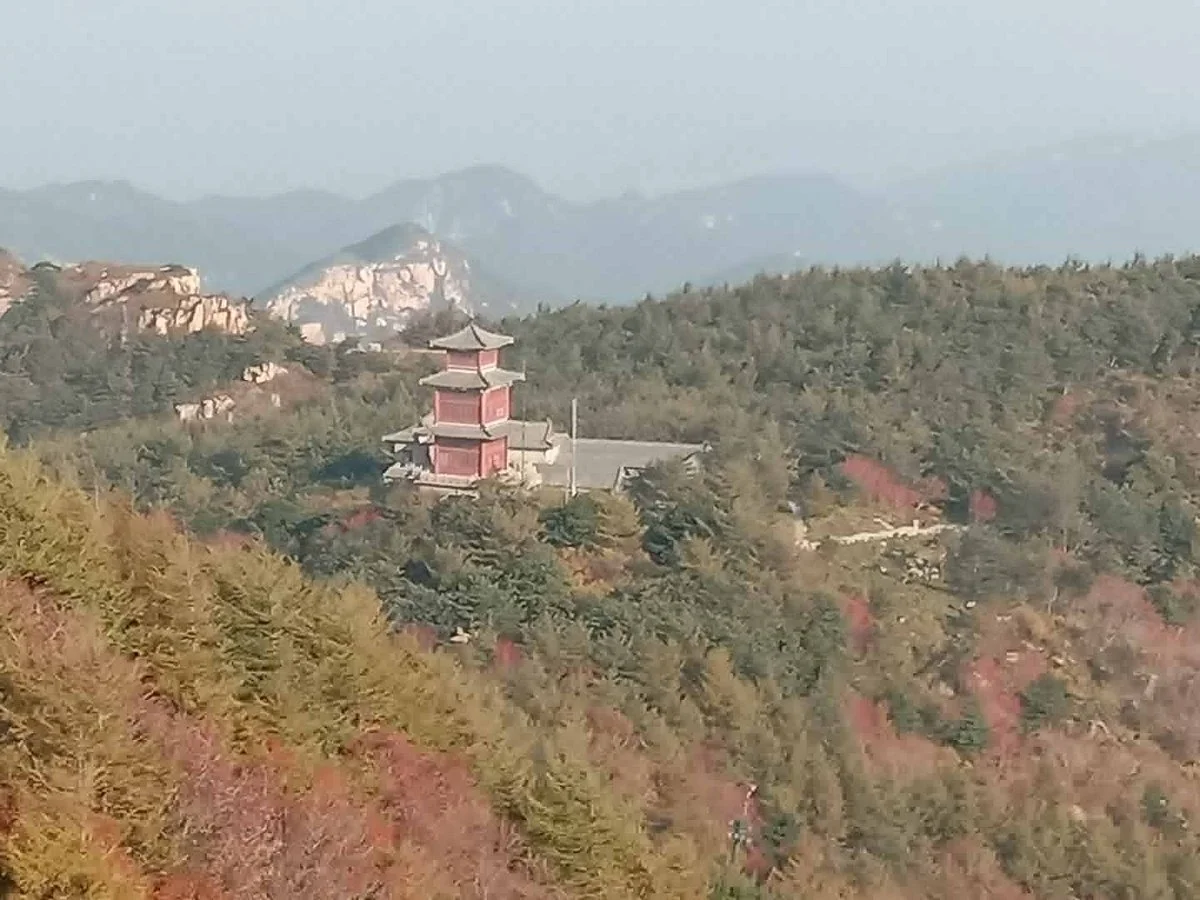
The word "shan" in Mandarin (saan in Cantonese) means mountain and Taishan is chock full of them. Almost any small village you visit with have a picturesque landscape towering above fields of rice. Most of the time, these mountains are not hikeable but during tomb sweeping month (see below in the Do section), trails will be cleared.
Many areas around the world are famous for exporting foods and goods from the local area. Taishan is famous for exporting people. Everybody in Taishan has a relative who just emigrated to another "country" (whether developed in North America/Europe/Hong Kong/Singapore or developing ones in Latin America/Africa). Some are waiting their turns for their parents/off-spring/siblings to sponsor them and many more get money sent to them from overseas.
Hence Taishan's primary industry is leisure for not only vacationing overseas Taishanese but for the many locals who don't need to work. What you will find are scores of karaoke clubs, hair salons, foot massage parlors, facial treatment parlors, hotspring spas (outside Taicheng), internet bars.
Go to Miniso. It's a high-end Japanese discount store where you can find many small cute soft things. Their baskets will not be big enough for you to hold all the stuff you want so you will have to make a trip there everyday you are in the city.
The primary cuisine in Taishan is Cantonese with an emphasis on simpler fares. For example, you will not find much of the deep fried dim sum found in larger Guangdong cities. Likewise, instead of fried rice/noodles common in Chinatowns around the world, steaming in stainless steel cabinets is the cooking style of choice.
The most famous dish in Taishan is Stone Bowl Eel Rice "Wong Seen Fon". In Guangdong's major cities, a scattering of restaurants will have "Toisan Wong Seen Fon" as a specialty but Taishan is the place to go to experience the original, especially Shuibu Town. Rice is first cooked halfway before being mixed with precooked eel in a clay pot. The clay pot is then fired up to finish cooking the rice. Where the rice touches the clay pot, oil from the precooked eel drips down and makes a crispy layer called "fon jil". (Taishanese call this layer "nuong" which is also the word for burnt.)
Also popular amongst Taishan locals are restaurants that serve western, Cantonese and coffee and tea. In the local language, this is referred to as "Cha Chaan Teang" which roughly translates to Tea Cuisine. If you have a hankering for sandwiches, steaks, pizza or spaghetti, you can halfway satisfy your need. The western foods are cooked in a style similar to "Hong Kong style fast food" you might find in Chinatowns around the world.
Finally, Taishanese love late night dining. After dinner at 6PM, it is common for locals to head out at about 9PM-10PM to fill their stomachs with everything from dim sum to street vendor fare to breakfast foods to desserts.
There are three main fruits that are grown locally:
To travel between the towns of Taishan, local buses go everywhere. The two main bus stations in Taicheng are Taishan Central "Juong Cheh Jaam" and "Top Saan" stations.
Within any of the towns in Taishan, expect to use taxis whether 4-wheel cars, motorcycles or 3-wheelers. In the smaller towns, motorcycle and 3-wheel taxis will be the only option.
Taishan towns are relatively small and flat so biking is a good way to get around. At ¥200 to purchase a 1-speed commuter bicycle, it may be cheaper and easier to buy and sell it afterwards at a loss than to find a fancier rental.
Finally, you can hire a van taxi to drive you around both within the local cities and between them.
Taishan County-level City falls under the administration of Jiangmen Prefecture. It is divided into 20 townships.
The mainland townships are Baisha, Beidou, Chixi, Chonglou, Diajiang, Doushan, Duanfen, Duhu, Guanghai, Haiyan, Nafu, Sanba, Sanhe, Shenjing, Shuibu, Sijiu, Taicheng and Wencun. The island townships are Shangchuan and Xiachuan.
Sanba was merged into Baisha and Nafu into Shenjing in 2006. Shangchuan and Xiachun on the Chuandao Islands are governed as a single entity. Taicheng, or Toising, is the administrative capital and the largest township by far with the most of the civilized amenities.