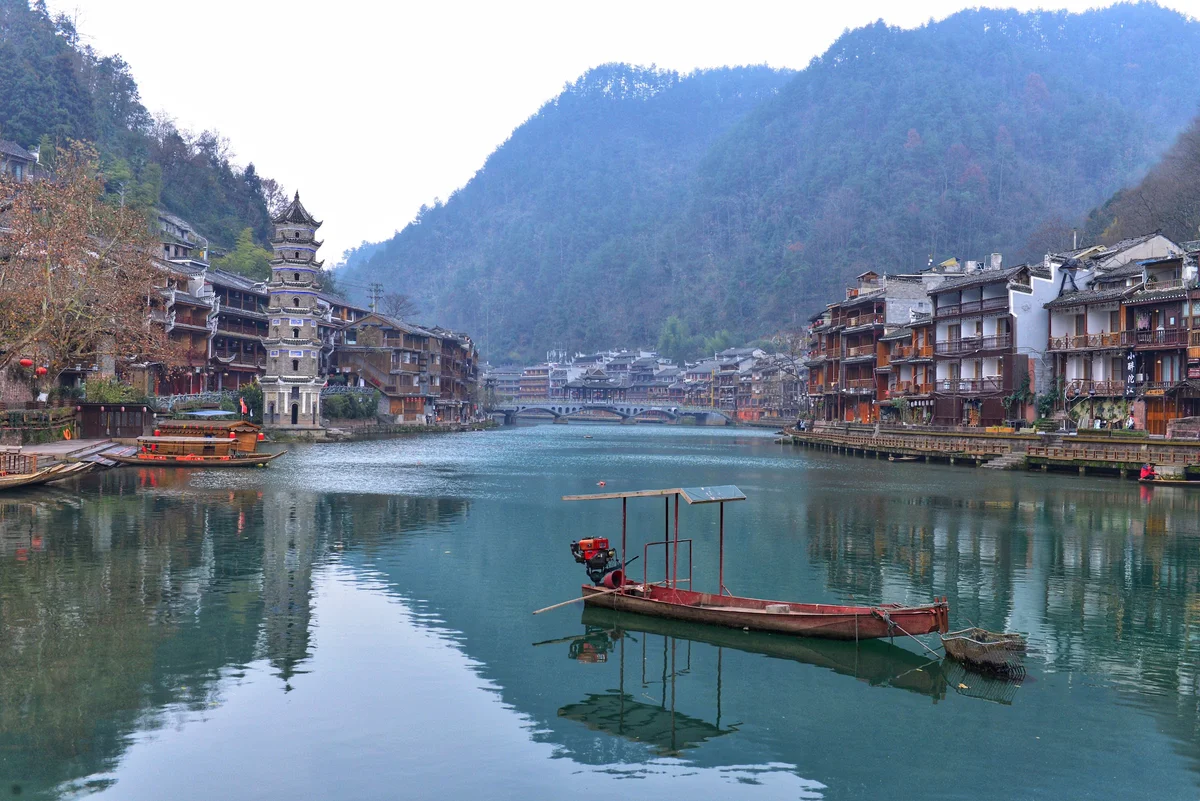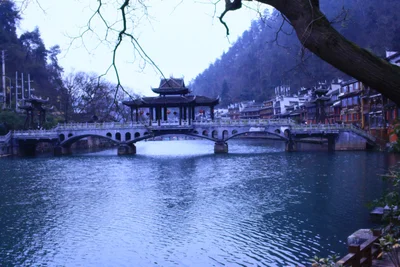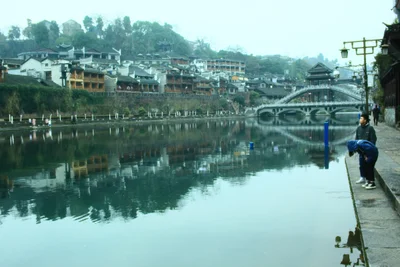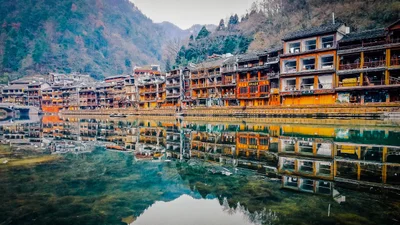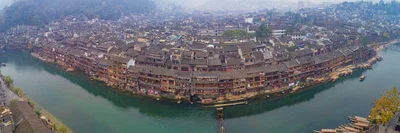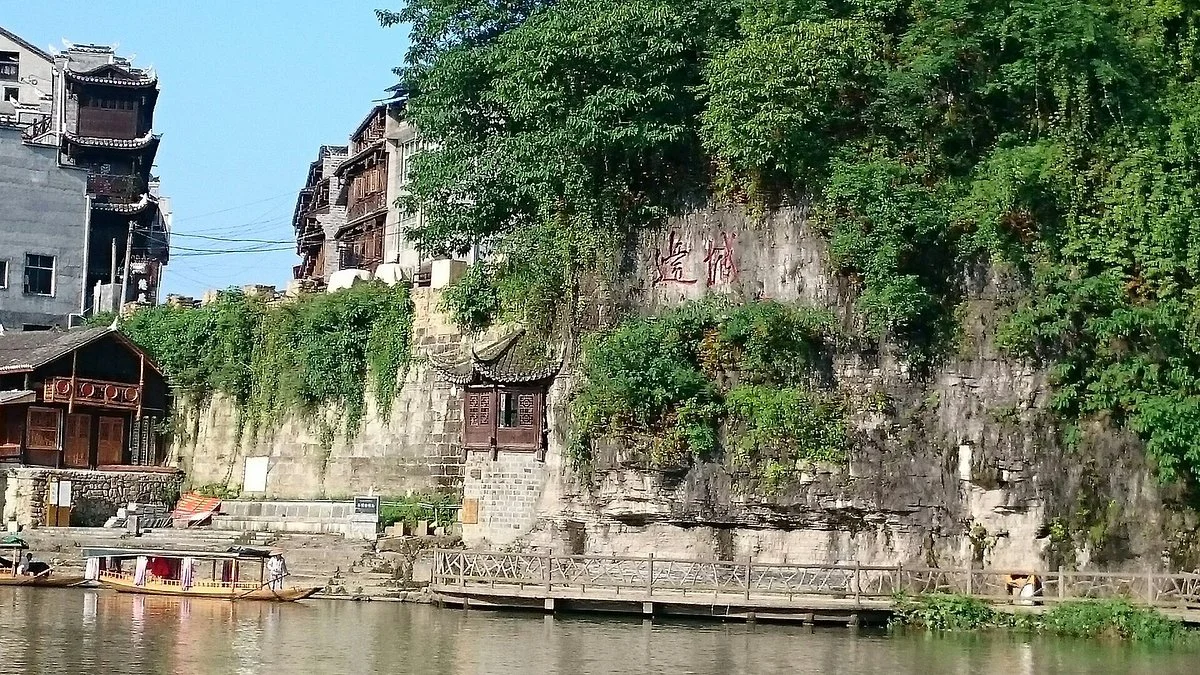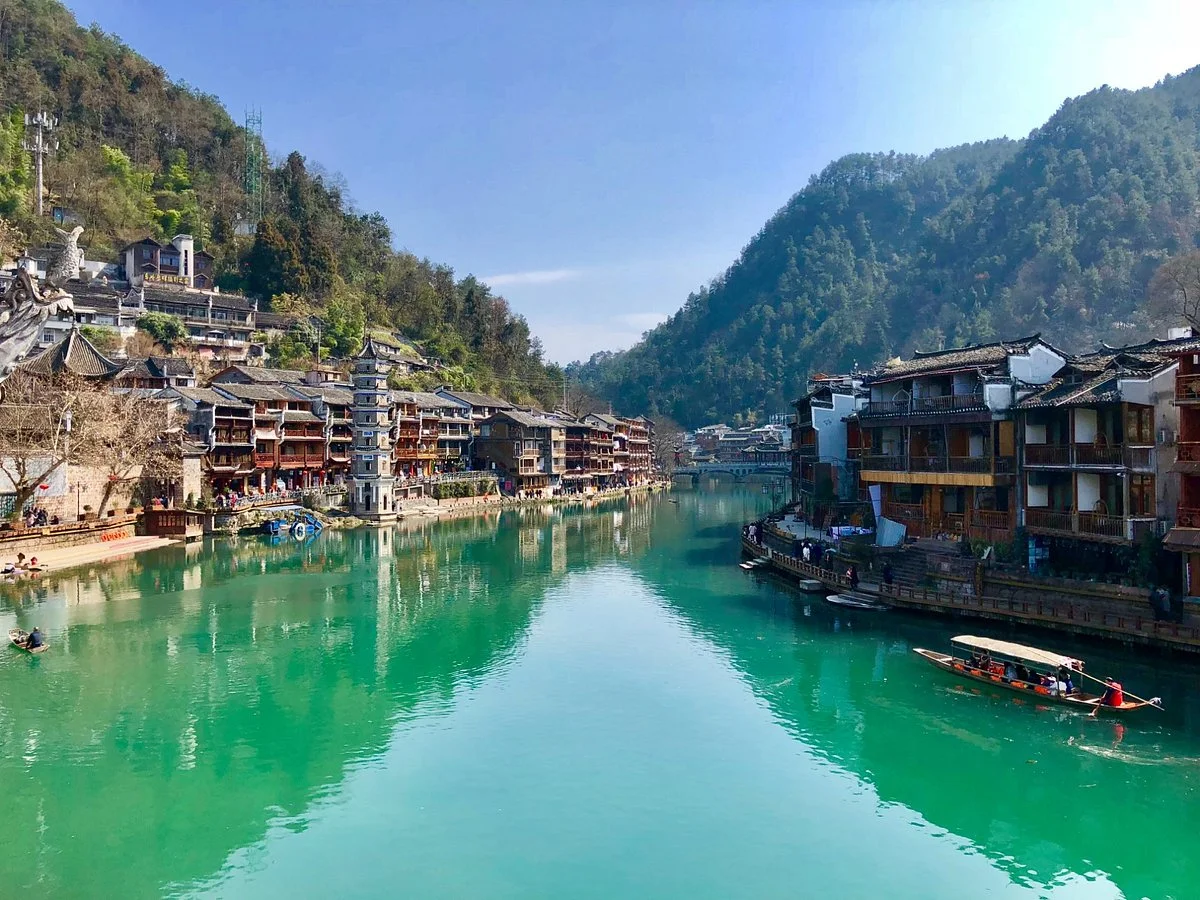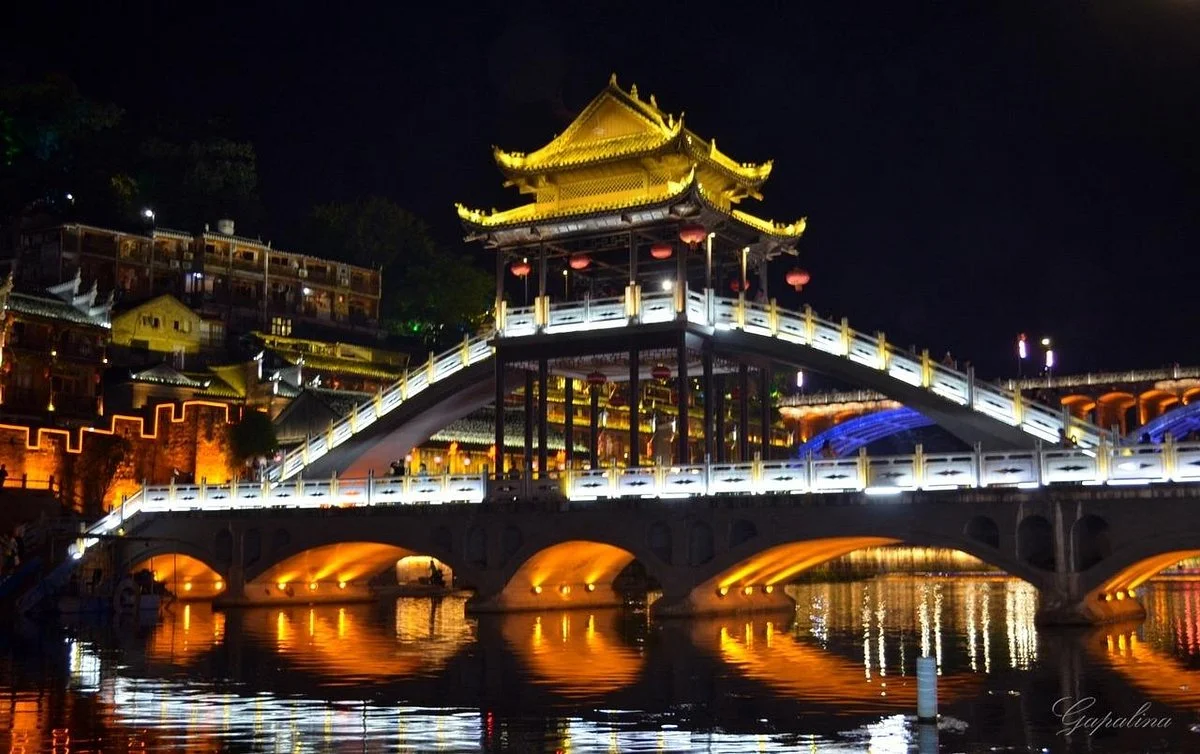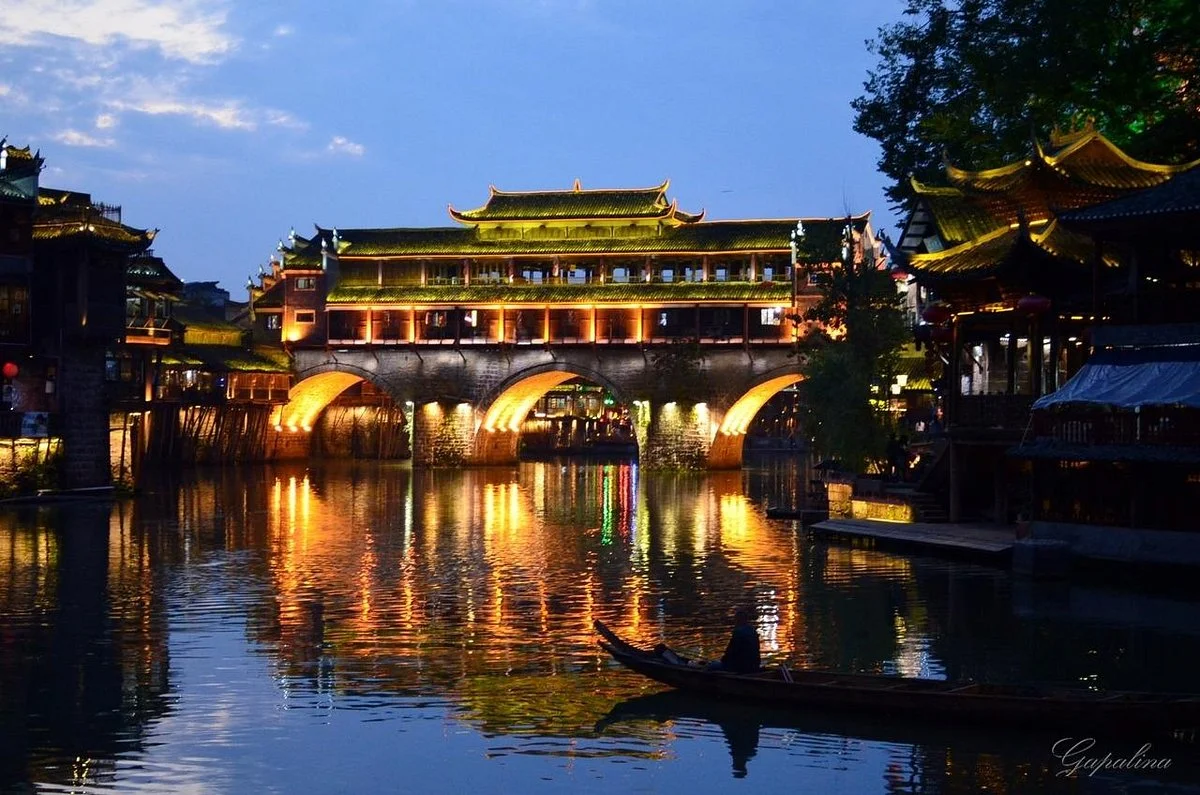
Fenghuang County (simplified Chinese: 凤凰县; traditional Chinese: 鳳凰縣; pinyin: Fènghuáng Xiàn), named after the mythological birds Fenghuang, is a county of Hunan Province, China, under the administration of Xiangxi Autonomous Prefecture.
Located on the western margin of the province and the southern Xiangxi, it is immediately adjacent to the eastern edge of Guizhou Province. The county is bordered to the north by Huayuan County and Jishou City, to the east by Luxi County, to the southeast by Mayang County, to the southwest and the west by Bijiang District of Tongren City and Songtao County of Guizhou. Fenghuang County covers 1,745 km2 (674 sq mi), as of 2015, It had a registered population of 428,294 and a resident population of 363,700. The county has 13 towns and four townships under its jurisdiction, the county seat is Tuojiang (沱江镇).
Most of Fenghuang's sites can be visited with a "through ticket" (通票). There are three versions. The first includes the Yang Family Ancestral Hall, East Gate Tower, the upper gallery of the Hong Bridge, and a few other smaller attractions for ¥98. The second ticket includes the first ticket plus the Gucheng Museum and Wanshou temple, costs ¥148, and is valid for 2 days. The third ticket is a Fenghuang regional through ticket that, in addition to the previous two through tickets, includes the Southern Great Wall and Miao Village for ¥168 and is valid for 3 days.
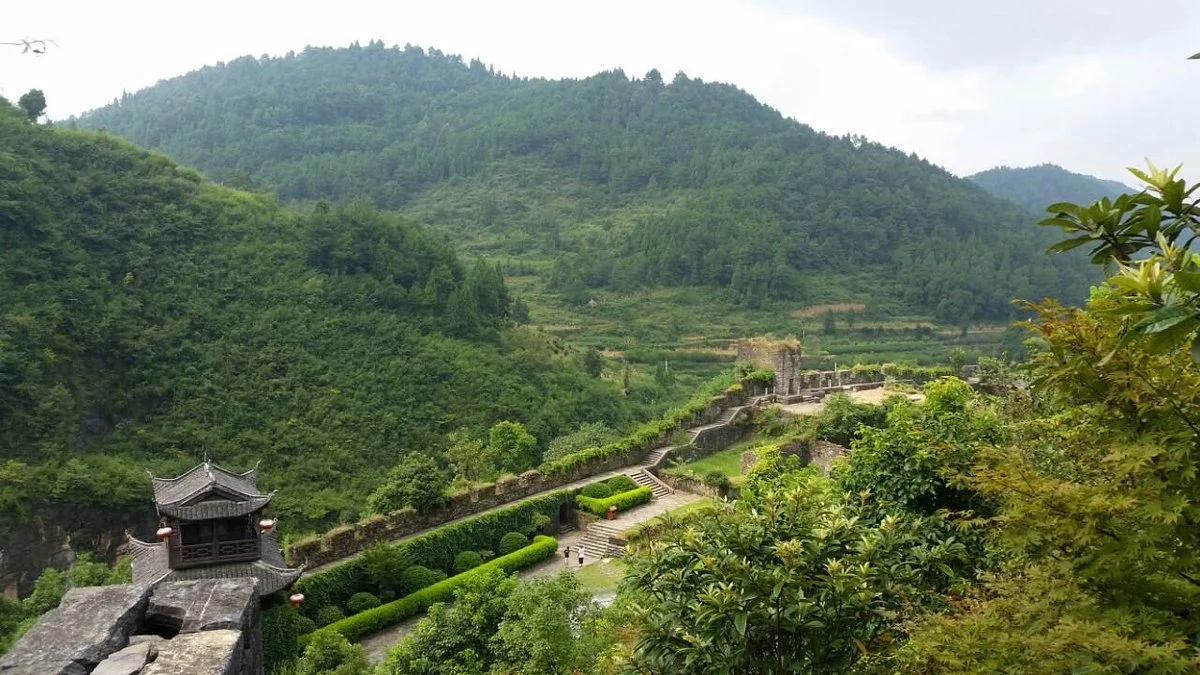
The Southern Great Wall (南方长城) is about 15 km west of the city (entrance coordinates: 27.9312N,109.4665E). While it is nearly completely restored it still makes for a strenuous hike with beautiful viewpoints of rice terraces and the surrounding countryside. Since 2003, the courtyard of the old fortress has featured a giant Go board used for the biennial Ancient City of the Phoenix Cup - an exhibition match between a top player from China and Korea, played using people in traditional black and white clothing as pieces.
Minivan drivers are everywhere and will be willing to take you here, but bargain with them first (price will depend on number of people, distance traveled, and time spent). Or, from the old town area take the westbound bus number 2 to the big bus station (second-to-last stop) and transfer to an unnumbered bus which will make a stop right next to the entrance.
At night the streets in Fenghuang's old town are full of street food vendors, serving grilled meats, dumplings, fried potatoes, flat breads and grilled vegetables.
There are many restaurants that specialize in Hot Pot.
The streets facing the river come alive at night with karaoke bars, adorned with neon lights and blasting out music until midnight. Beer typically costs ¥25 for a 330 ml bottle, or about ten times the price at local shops.
Fenghuang is famous for ginger candy. Throughout the Old Town vendors make and sell bags of candy for around ¥2-4. The local Miao people are also renowned for their silverwork. The old town has several silver shops offering high quality items. Beware of cheaper materials sold in the many shops selling mass-produced trinkets to tourists.
Inns can be found in the Old Town along Bei Bian Jie, running between the Northern Wall and the river. Larger hotels catering to tour groups can be found in the city center and the roads leading to both bus stations.
The easiest way to reach Fenghuang is by high-speed train. Before the completion of the new railway line in 2021, most visitors arrived by car or bus from Jishou. An expressway opened in 2012, cutting travel time from Jishou from 70 minutes to about 30 minutes. Expect buses and roads to be crowded on weekends and holidays, however.
Fenghuang Old Town is only part of the city of Fenghuang. Taxis can take you from the bus stations to the main entrance to the Old Town, which is best explored on foot. The Old Town is largely not wheelchair accessible.