Get around Taxis are the most convenient while buses are the most affordable. The base fare for a taxi is ¥8, and most areas of the city can be reached from the Zhenjiang Railroad Station for less than ¥30. Bus routes are traveled by all air-conditioned buses from 05:40 until 23:20 The bus fare is ¥1-5.
A ferry will take you across the Yangtze river to Yangzhou for ¥3.
Read more Eat Zhenjiang is known for producing the best vinegar in China. Most major cities situated nearby provide Zhenjiang vinegar whenever dumplings are served. Steamed dumplings with the famous vinegar can be found on almost every block in town.
Zhenjiang and nearby Yangzhou are the centres of "Zhen-Yang cuisine", one of the major traditions of Chinese cuisine which is prized across China and known for its subtle and light flavours, refined techniques and the emphasis of fresh vegetable and freshwater fish, crustaceans and shellfish, including in particular freshwater crabs, prawns and fish.
Like most Chinese cities, Zhenjiang also houses a variety of restaurants serving dishes from each of the four main culinary traditions in China. More exotic food includes Japanese, Korean, and Russian cuisine. A Brazilian barbecue can even be found near the city center.
Western fast food restaurants in Zhenjiang include McDonalds, KFC, and a Pizza Hut.
• • Yong'an Fish House (Dongwu Road Branch) — A chain restaurant specializing in signature fish dishes, with pufferfish as its main highlight. The restaurant offers private dining rooms and complimentary WiFi, reservations are required. — Address: 5 Dongwu Road, Zhenjiang City — Hours: 11ː00-13ː30, 17ː00-21ː30 — Price: ¥91
Read more See =
Four major parks in Zhenjiang provide the most common destinations to tourists. Entrance to each park is ¥30-50, and the parks with pagodas charge another entrance fee (about ¥10) if you wish to climb the pagoda.
The parks are all nice, but if you are not interested in Chinese history, legends and architecture and view them only as parks, then if you've seen one "park" in the city, you've seen them all. If considered purely as places to relax, Jiaoshan is enjoyable if you want to get away from people (it's nearly empty all the time), and Jinshan is nice if you want to boat around the lake (paddle and electric boats are available).
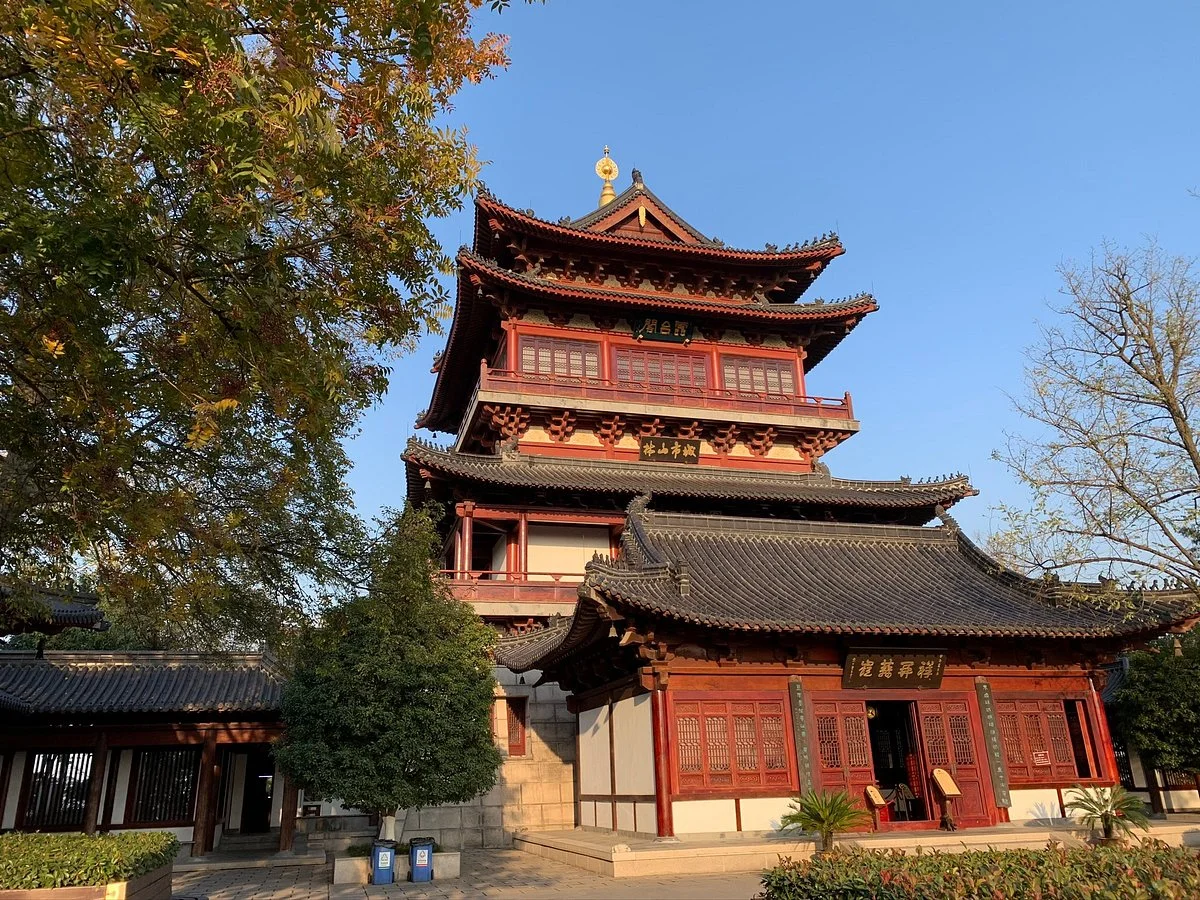
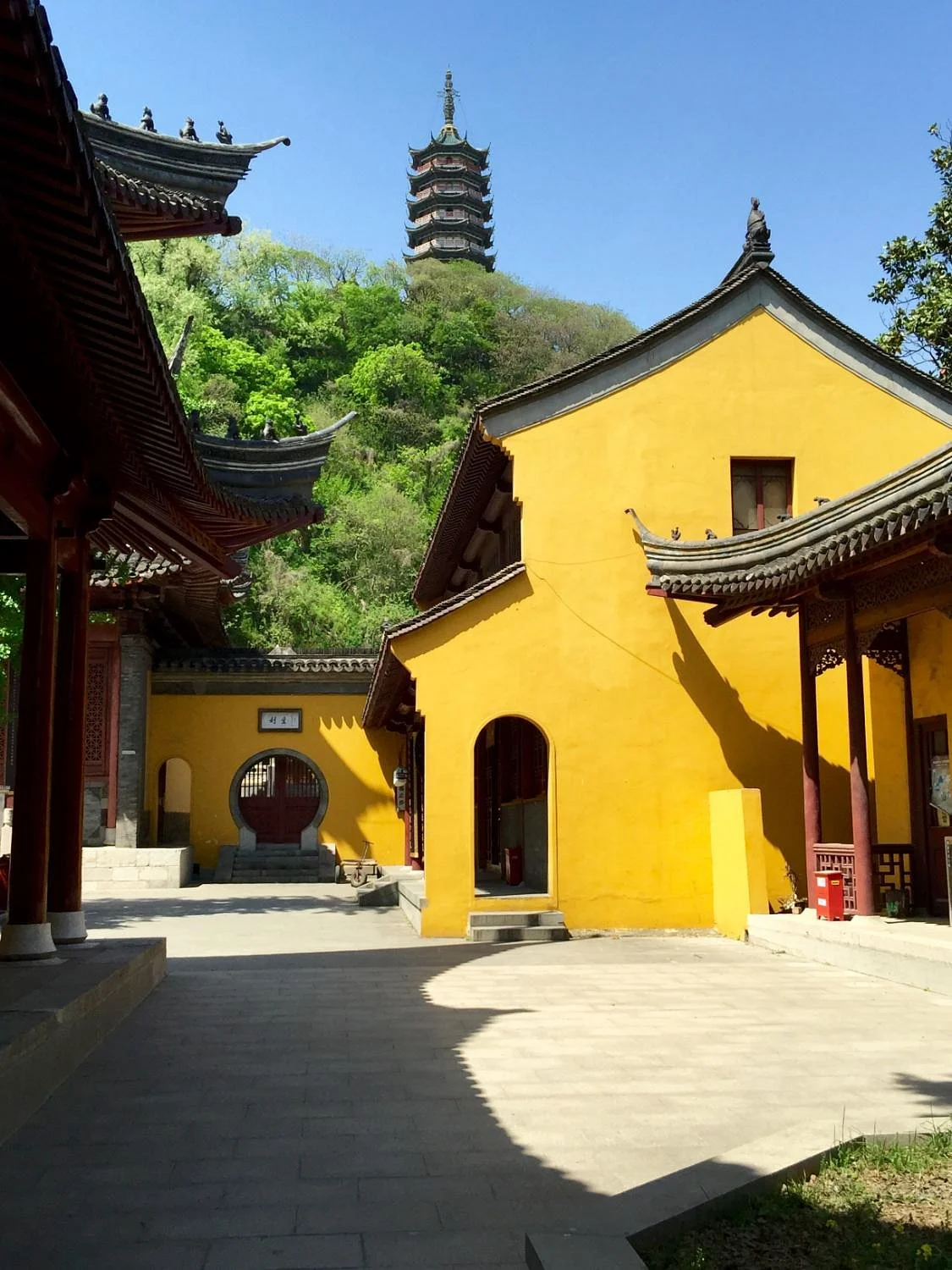
All parks have legendary history, which is the main reason they attract visitors. Jinshan Park is famous for being a "mountain encompassed by monasteries (寺裹山)". It is the setting of the ancient legend and novel "Tale of the White Snake (白蛇传)", in which it is flooded by the heroine, a white snake spirit, because the abbot of the Buddhist monastery had imprisoned her husband. Beigushan Park, near the Yangtze river, was a legendary stronghold in ancient times. During the Three Kingdoms period, the rulers of two of the kingdoms, Liu Bei and Sun Quan, took a horse ride here together to discuss forming an alliance - which ultimately changed China history forever. Jiaoshan Park, on an island, is famous for having "monasteries encompassed by mountains (山裹寺)" and is connected to the history of local resistance to a British invasion in the 19th century. Some iron cannons from the historical fortifications can still be found here.
• • Jiaoshan Park — A park on a small island with a mountain on it in the Yangtze River. It includes a temple called Dinghui Temple, a large pagoda, peacock farm, and many winding paths through dense foliage. Bamboo forests partially cover the island.
• • Jinshan Park — It's on the northwest side of Zhenjiang and includes a Buddhist monastery and another large pagoda. The Buddhist temple complex and a large lake (complete with paddle boats available for rent) form the majority of the park. — Website: http://www.jspark.cn/en/index.asp
• • Beigushan Park — It has paths lit with lanterns after sundown. The park is surrounded by great landscaping and the Yangtze River. — Directions: on the north side of Zhenjiang
• • Nanshan Park — It includes a hill with various paths snaking up and down it. A large pagoda at the top of the hill offers great views of the city, the river, and the surrounding countryside. The climb is very easy and takes less than an hour. Many people barbecue at small pits next to a lake to the east of the park entrance. — Directions: on the south side of Zhenjiang — Website: http://www.nsfjq.com/en/about.asp
• • Maoshan Mountain — At an altitude of 372 meters, it takes approximately one hour to climb. It is not only a Taoist holy site but also one of the bases during the Anti-Japanese War. — Address: 26 km southeast of Jurong City, Zhenjiang — Directions: departing from Jurong Bus Terminal can reach — Hours: 07:30-17:00 — Price: 85 — Phone: +86 15052992370 — Website: https://www.maoshanchina.com.cn/ms/html/webpc/index
Read more Drink • • 1880 — A typical Chinese bar, with entertainers and live music. — Directions: On the same street as the Night Market — Hours: 09:00-15:00 — Price: ¥50 for cocktails, bottle service starts at ¥400
Read more