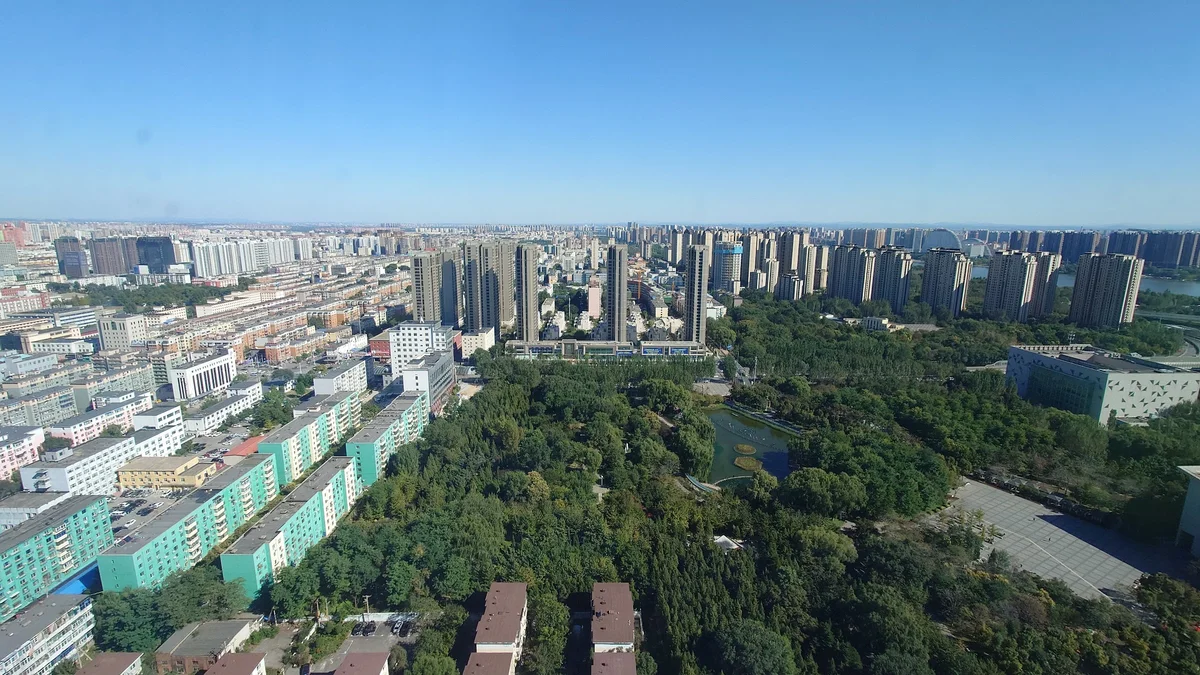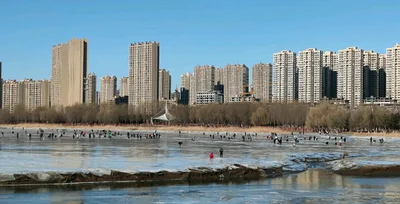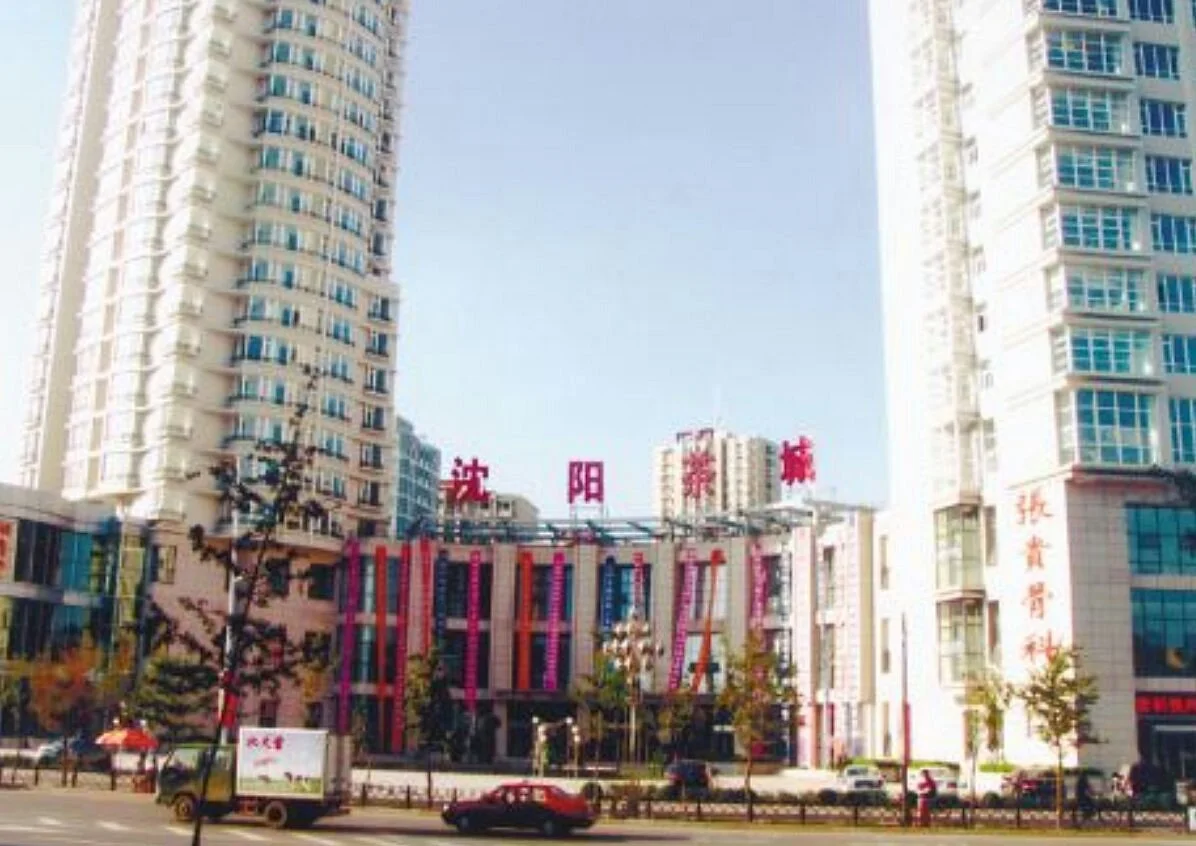
Shenyang, formerly known as Fengtian or by its Manchu name Mukden is a sub-provincial city in north-central Liaoning, China. It is the provincial capital of Liaoning and the province's most populous city with a population of 9,070,093 as of the 2020 census, also making it the largest city in Northeast China by urban population, and the second-largest by metropolitan population behind Harbin. The Shenyang metropolitan area is one of the major megalopolises in China, with a population of over 23 million. The city's administrative region includes the ten metropolitan districts of Shenyang, the county-level city of Xinmin, and the counties of Kangping and Faku.
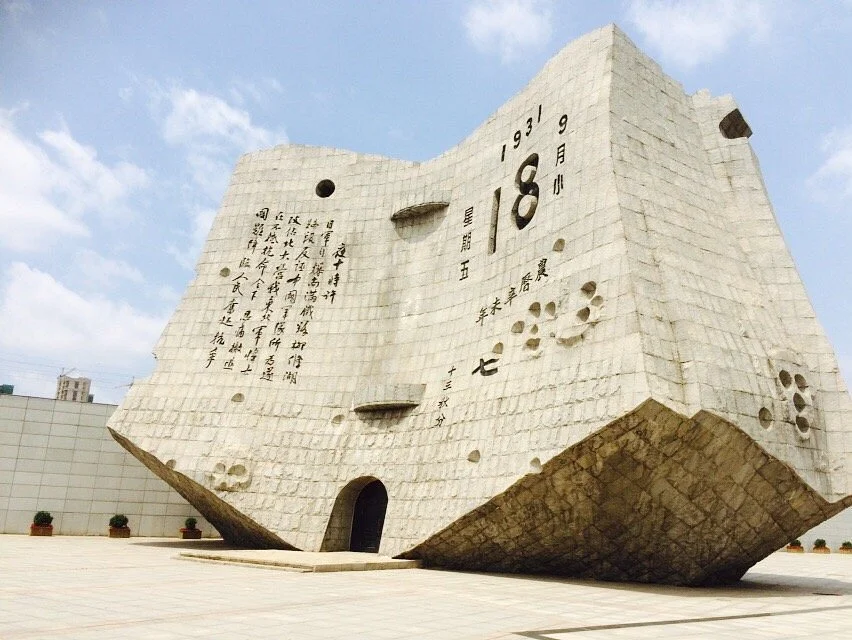
Shenyang has been controlled by numerous different states and peoples during its history. In the 14th century, the city came under the control of the Ming dynasty (1368–1644), for whom it served as an important military stronghold. The 1621 Battle of Shen-Liao resulted in Shenyang briefly serving as the capital of the Jurchen Later Jin dynasty, the direct predecessor of the Qing dynasty (1644–1912). The 1905 Battle of Mukden took place south of Shenyang as part of the Russo-Japanese War. The subsequent Japanese victory allowed its annexation of the region west of the old city and the increase of Japanese influence in Shenyang. In 1931, the Mukden incident led to the Japanese invasion and occupation of the rest of Northeast China, and the establishment of the puppet state of Manchukuo. After the Japanese surrender in 1945 Shenyang remained a stronghold of the Kuomintang until its capture by the Communists in 1948 following the Liaoshen campaign.
Together with its surrounding cities, Shenyang is an important industrial center in China, and serves as the transportation and commercial hub of China's northeast—particularly involved in links with Japan, Russia, and Korea. A center of heavy industry in China since the 1930s, and the spearhead of the Chinese central government's Northeast Area Revitalization Plan, the city has been diversifying its industry, including expanding into the service sector. Growing industries include software, automotive and electronics. Shenyang is also a major city for scientific research and education in Northeast China. As of 2023, it was listed among the top 125 cities by scientific output in the world, as tracked by the Nature Index. The city is home to several major universities, notably Northeastern University and Liaoning University, listed as prestigious universities in the Double First-Class Construction.
Liaoning is home to Liaocai (辽菜), a distinctive cuisine named after the area. Liaocai tends to be strong in flavour with plenty garlic, ginger and other spices but not hot. Shenyang has a large Korean and Mongolian population, who operate a lot of barbecue stands on the street corners of the city. Some of the city's best types of cuisine include 火锅 hot pot, 麻辣烫 mala tang, or spicy pay-by-weight soup, and 串儿 chuan'r barbeque. There are many Muslim hand-pulled noodle places, and also a number of very good Korean restaurants. All of Shenyang's top hotels feature fancy restaurants serving Cantonese, Japanese and Western food. At least two different places offering Mexican specials. There are also some decent noodle shops, as well as the national chain California Beef Noodle, on some of the small roads near the train station.
Fast food and coffee shops are plentiful. The imported, western style food tends to be at the higher end of the price market. By going after local cuisine you will save money. One of the absolute best places to try cheap and savoury local foods is at the 彩电塔 Cai Dian Ta night market near the Liaoning Radio Tower, located just west of the Kempinski hotel and 青年公园 Qingnian Gongyuan Station. This market is full of cheap barbeque 串儿 chuan'r, with selections as various as chicken necks, pig feet, or tofu rolls. There are also various noodle dishes, potato dishes, soft-serve ice cream and fruit jelly desserts, and a Liaoning starch specialty known as 闷子 Menzi. It stretches across several streets, and is generally open from the end of March until late October as crowds die down over the winter months.
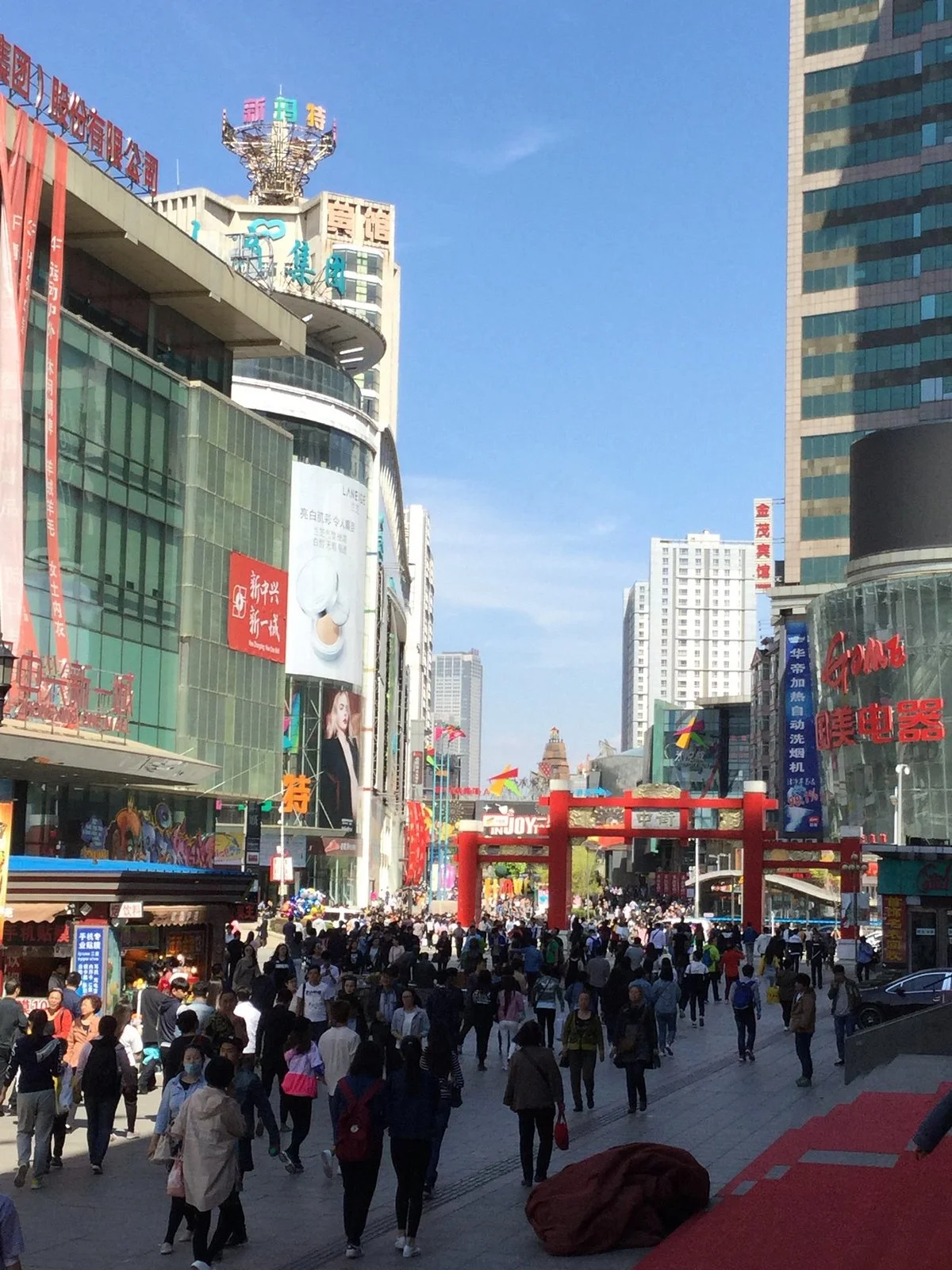
= Shenyang has three main shopping areas.
Sights in the old city, Shenhe District, can be walked between, but other areas such as those in Beiling or Dongling require transport.
The Shenyang Metro has three lines. Line 1 runs east-west across the city (serving Shenyang rail station). Line 2 runs north-south (serving Shenyang North rail station). Line 9 runs in an L shape, from northwest to southwest to southeast. Line 10 runs in an L shape, from northwest to southwest to southeast.
Shenyang has a comprehensive bus system, but it can be incomprehensible if you do not read Chinese. Make sure you pick up a city bus and area map at either train station. Very handy to help get around. Buses charge ¥1-2 and major bus lines congregate around the train stations. Bus 203 travels between the two train stations.
There are plenty of taxis whose meters start at ¥8 for 3 km, then ¥1.8 per kilometer. Make sure you get a taxi in which the meter is mounted on the dashboard and easily visible from your seat instead of behind the gear shift - it is possible the driver may be pulling some sleight of hand to increase your fare.
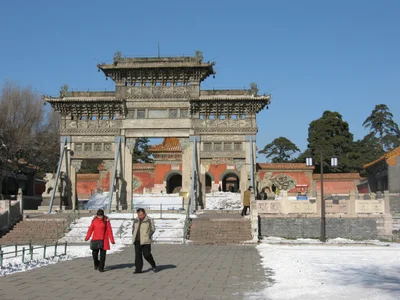
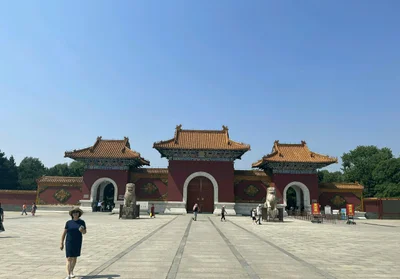
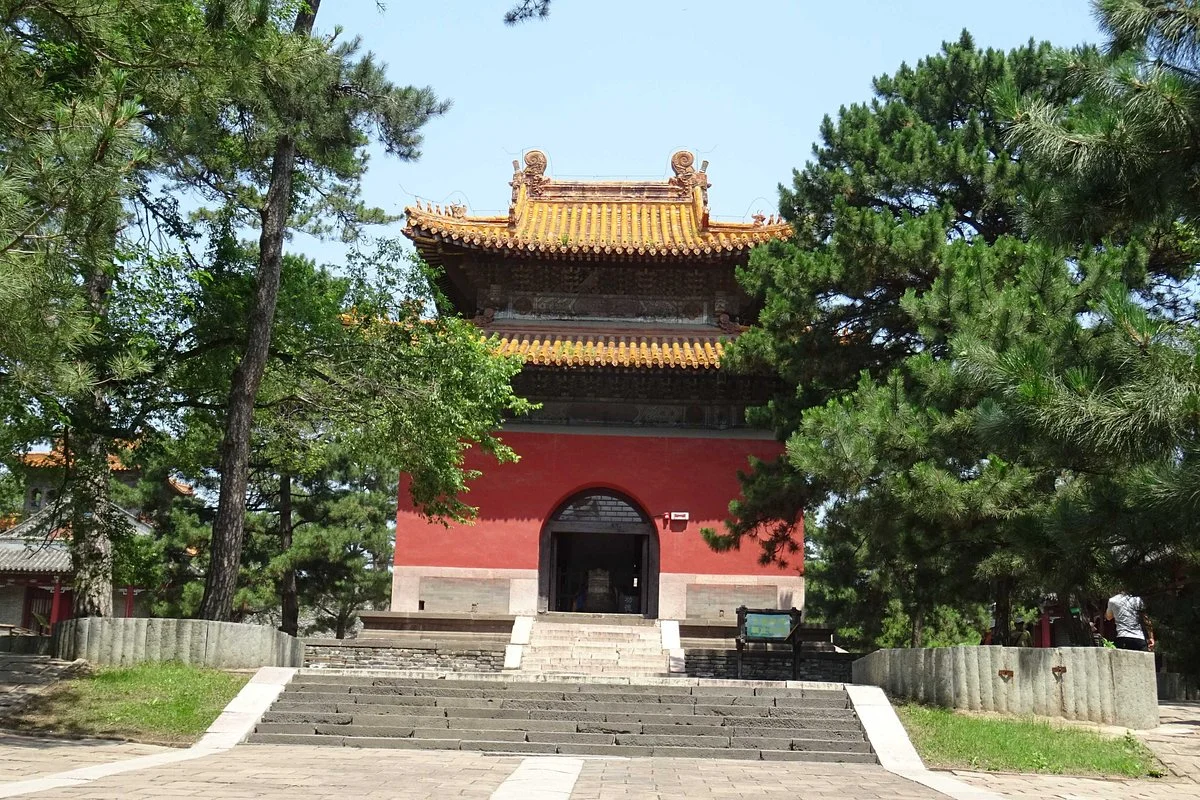
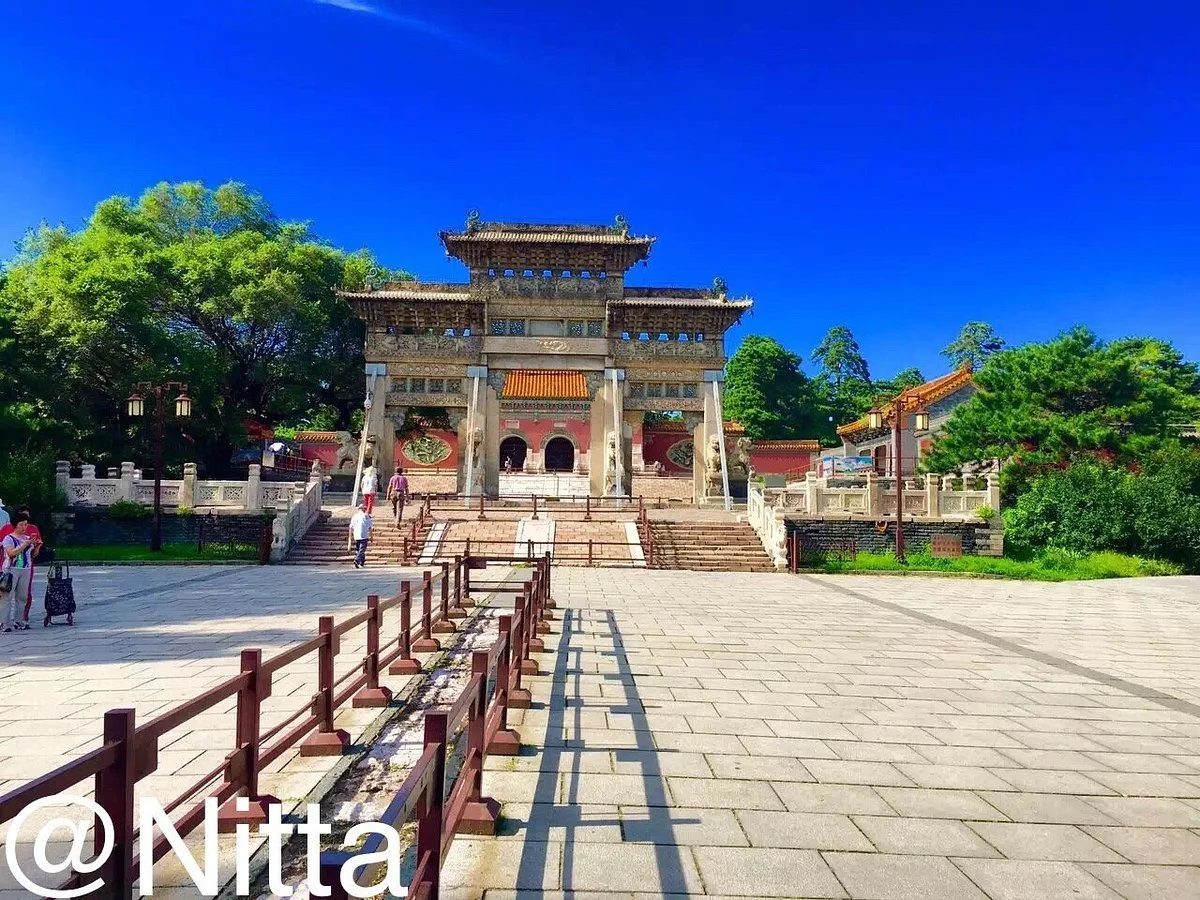
Nurhaci built his imperial palace and was laid to rest in one of the first two imperial tombs of the Qing Dynasty, Fuling Tomb. His son Hong Taiji is buried in Zhaoling tomb, which is the second of the first two imperial tombs. The imperial palace and the two tombs are all listed by UNESCO as World Heritage Sites. It was in Shenyang that the Russian army was defeated by the Japanese in 1905, resulting in Japan taking control of the Liaodong Peninsula from Russia. It was also here, on September 18, 1931 that Japan would stage the Mukden incident in order to use it as a pretext to occupy all of Northeast China. This city was also the home to the warlord Zhang Zuolin and his son Zhang Xueliang who ruled over the Northeast during the 1920s. In the 20th century, Shenyang developed as a major industrial centre. Today the city is rapidly losing its older structures with large scale construction throughout the city, as in all other cities in China.