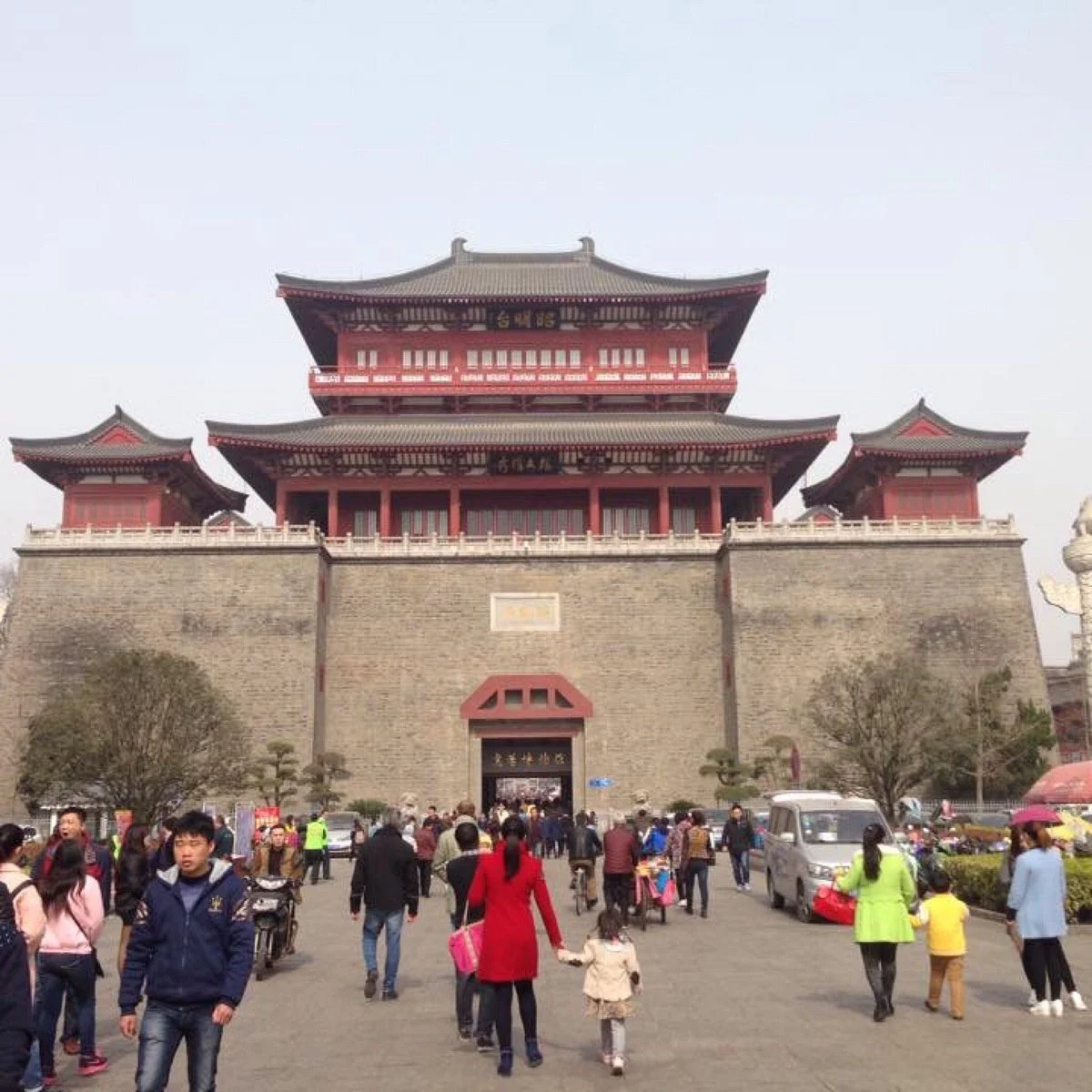
See • • Xianyang Museum — Address: 53 Zhongshan Street, Weicheng District (渭城区中山街53号) — Directions: bus nos. 19, 56 and 60, and the Xianyang-Guodu bus — Hours: 09:00-17:30, no entry after 17:00, closed on Monday (except when Monday is a public holiday) — Price: Free — Phone: +86 29 33231998 (bookings and enquiries), +86 29 33213015 (complaints) — Email: sxxb62@126.com — Website: http://www.xybwg.cn/
• • Maoling Mausoleum — Large pyramid tomb of Emperor Wu of the Han Dynasty (汉武帝), and largest of the Han imperial tombs. Emperor Wu is known for the pacification of the Xiongnu, greatly expanding the empire's borders to include what is today Xinjiang and part of northern Korea and Vietnam, construction of 4 garrison towns in Gansu, and touring the entirety of China during his 54-year-long reign; a record that would not be broken until the reign of the Kangxi Emperor of the Qing Dynasty more than 1,800 years later. The first Silk Road was established under his reign. 1 km to the east of the pyramid is the museum which houses many stone carvings. — Address: Nanwei Town, Xingping City (兴平市南位镇) — Directions: get a long-distance bus to Xingping (兴平) from the Xi'an Chengxi (City West) Bus Station, then transfer to a no. 11 bus; there are bus stops at both the tomb and the museum — Hours: 08:00-18:00 (March to November), 08:00-17:30 (December to February) — Price: ¥75 (March to November), ¥55 (December to February) — Phone: +86 29 38456140 — Email: 1483852205@qq.com — Website: http://www.maoling.com/
• • Qianling Mausoleum — The shared tomb of China's first and only female emperor Wu Zetian (武则天) and her husband Emperor Gaozong of Tang Dynasty (唐高宗). The best preserved of the Tang imperial tombs. The main burial chamber has not been excavated, though the burial chambers of the tombs of five attendants, one court official, one military officer, two princes and one princess have been excavated, and the latter three are open to the public. — Address: National Highway 312, Chengguan Town, Qian County (乾县城关镇312国道) — Directions: get a train to Qian County from either Xi'an Railway Station or Xi'an North Railway Station, then catch bus nos. 1 or 2 and get off at the final stop; alternatively, you can get a bus to Qian County from the Xi'an Chengxi Bus Station, then take bus no. 2 to the mausoleum — Hours: 08:00-18:00 (March to November), 08:30-17:30 (December to Feburary), no entry in last 60 minutes — Price: ¥100 (March to November), ¥80 (December to February) — Phone: +86 29 35510222, +86 29 35510458 — Email: tang_qianling@163.com — Website: https://en.zhongguoqianling.com/
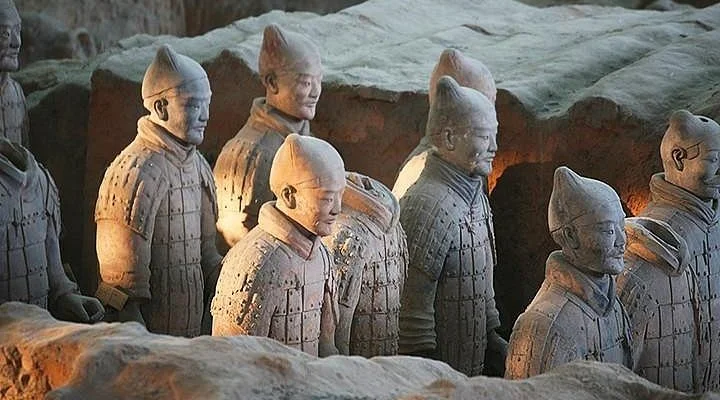
• • Tomb of Emperor Jingdi — A Han dynasty tomb containing 50,000 doll-sized terracotta figures. There are human figures (think small and naked version of the terracotta warriors) as well as a whole army-like formation of life-like animals (pigs, dogs, etc). The "Underground Museum" at the excavation site has a glass floor so that you can look down on the ongoing excavations and is definitely worth a visit (especially easy to do if done as part of a journey to or from the airport). There's a unique holographic movie experience as part of the exhibit (no 3D glasses required, English and some other language translation available, ¥10 though it is unclear if it's a legitimate fee). It's also worth getting a guide or following one around (note that English ones are more expensive than Chinese ones) because they will explain things in much more detail than the captions. Some people also climb up to the top of the burial mound (you can see a worn trail going up the side). If you cross the road you can see the Archaeological Exhibit Center (where some of the best figures are kept), a deer park (with actual live deer), and ruins of a "sacrifice temple" (not too impressive). The grounds around the mausoleum are nice to stroll in, with fragrant wild grasses and a rose garden next to the Archaeological Exhibit Center. — Directions: near the airport; it is possible to get to the site via tour or share a taxi (around ¥200 round-trip, not including waiting time); by public transit, the easiest way (as of 2021) is to take the special shuttle bus that departs from Qingong Station on the Airport Intercity Railway - the bus fare is ¥5 — Price: ¥80; half-price students — Website: http://www.hylae.com/
• • Zhaoling Mausoleum — Tomb of Emperor Taizong of the Tang Dynasty (唐太宗), widely regarded to be one of the most capable emperors to ever rule over China. Prior to becoming emperor, he was a brilliant military commander who participated in the rebellion against the preceding Sui Dynasty, and subsequently helped to consolidate his father's rule over the former Sui territories. Despite having gained the throne by murdering his elder brother and forcing his father to abdicate, he turned out to be a benevolent and just ruler, and was open to criticism from his court officials. He is known for having pacified the empire's enemies in the north and west, including the Eastern Turks and Western Turks, and recovering most of the territories previously held by the Han Dynasty. The Silk Road, which had fallen into disuse in the years after fall of the Han Dynasty, was re-opened during his reign. The mausoleum complex is known for the Six Steeds, which are stone relief carvings of six war horses that the emperor had ridden into battle, though the ones seen on-site are now replicas; four of the originals are in the Beilin Museum, while the other two were stolen and smuggled to the United States, where they can be seen today at the Penn Museum in Philadelphia. This is the largest of the Tang imperial tombs, and also the largest royal mausoleum complex in the world by land area.
Read more