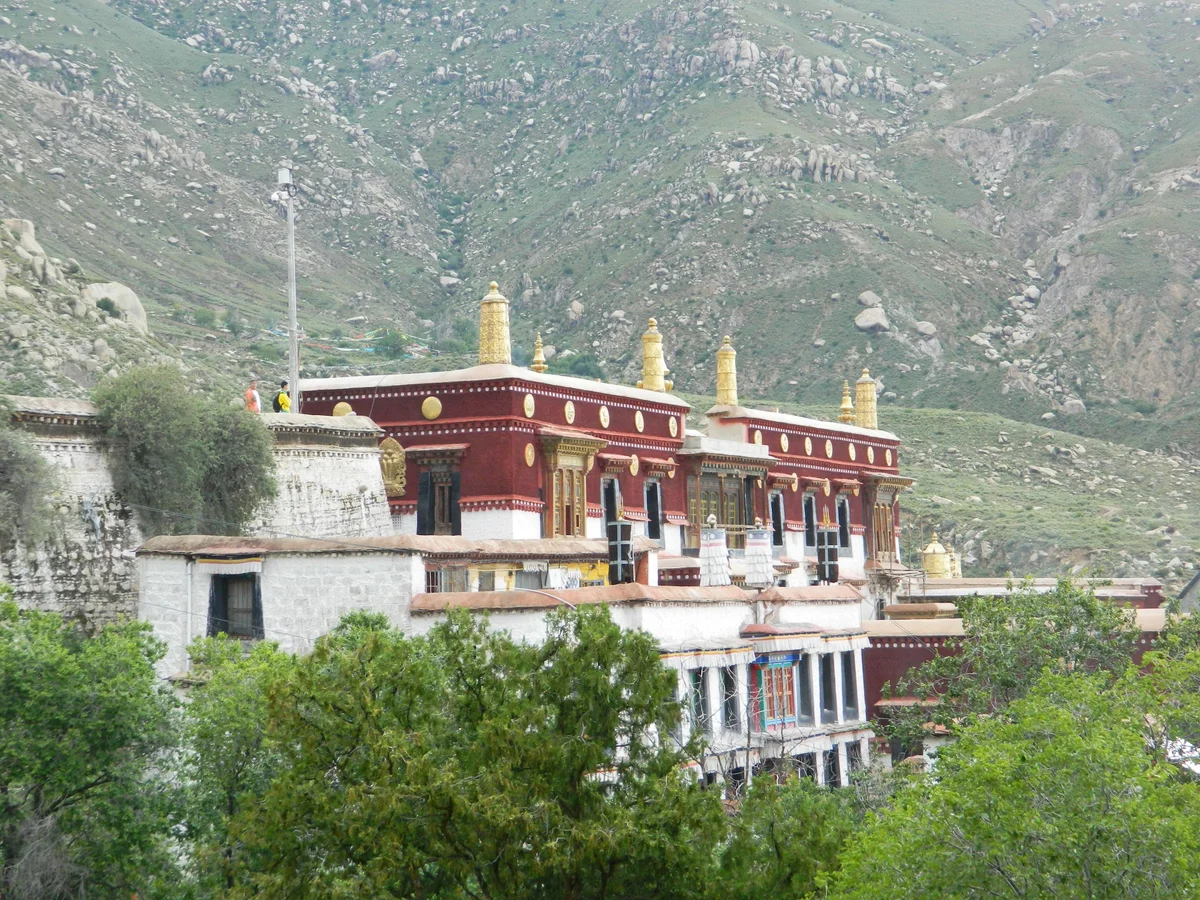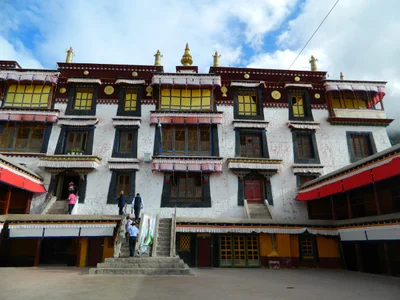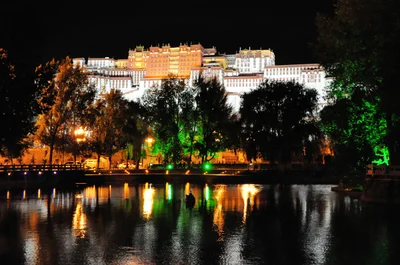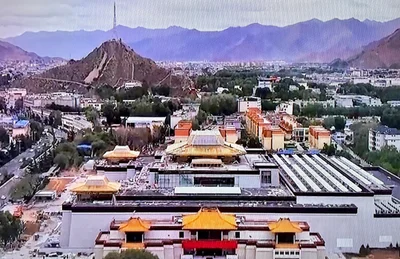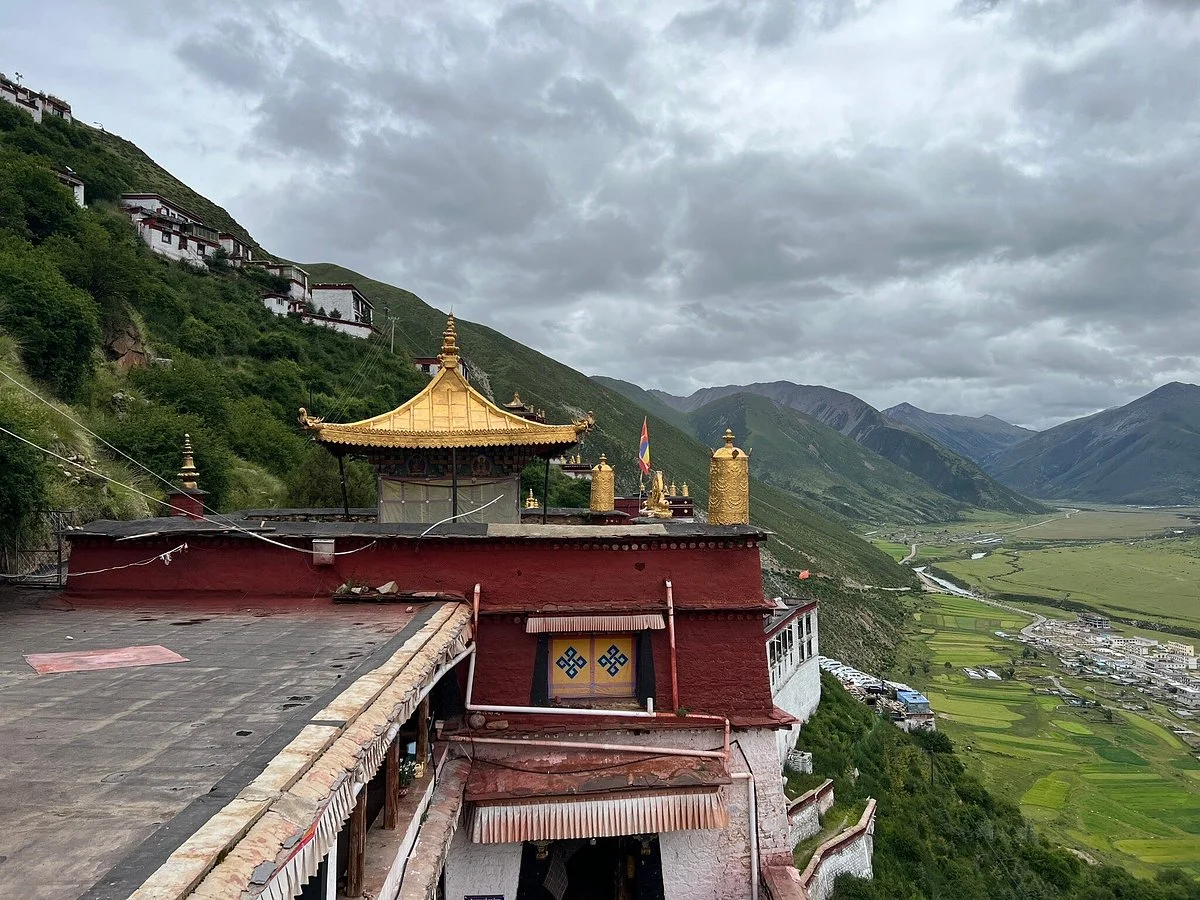
Lhasa is a prefecture-level city, one of the main administrative divisions of the Tibet Autonomous Region of China. It covers an area of 29,274 square kilometres (11,303 sq mi) of rugged and sparsely populated terrain. Its urban center is Lhasa, with around 300,000 residents, which mostly corresponds with the administrative Chengguan District, while its suburbs extend into Doilungdêqên District and Dagzê District. The consolidated prefecture-level city contains additional five, mostly rural, counties.
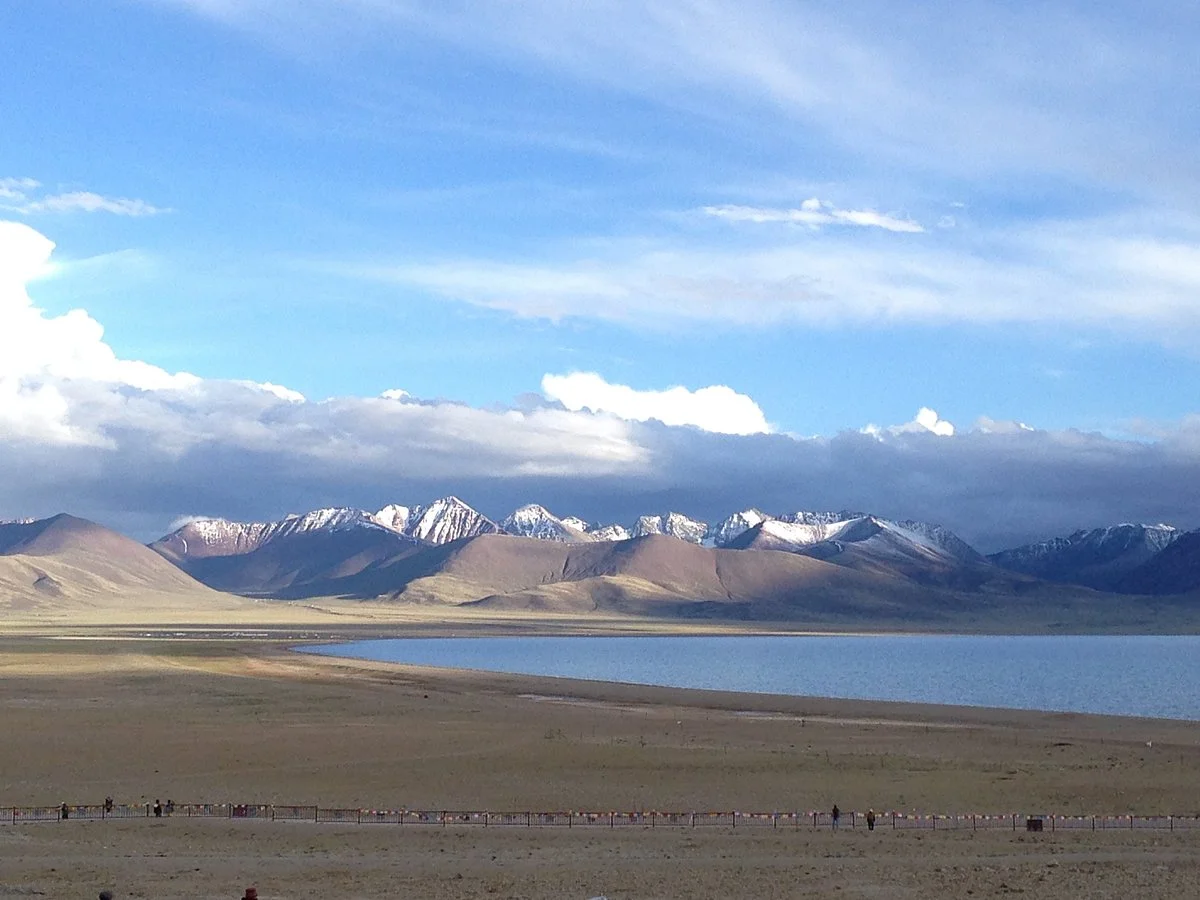
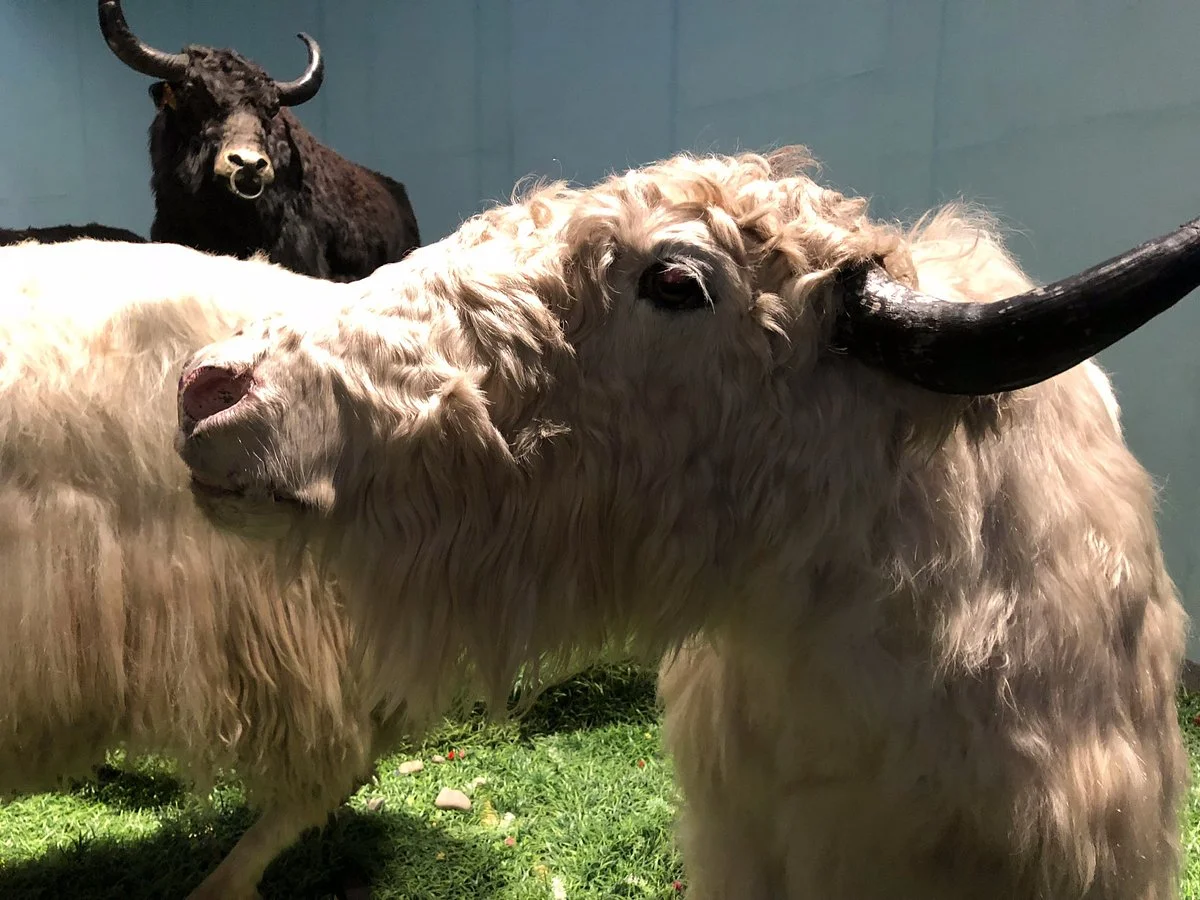
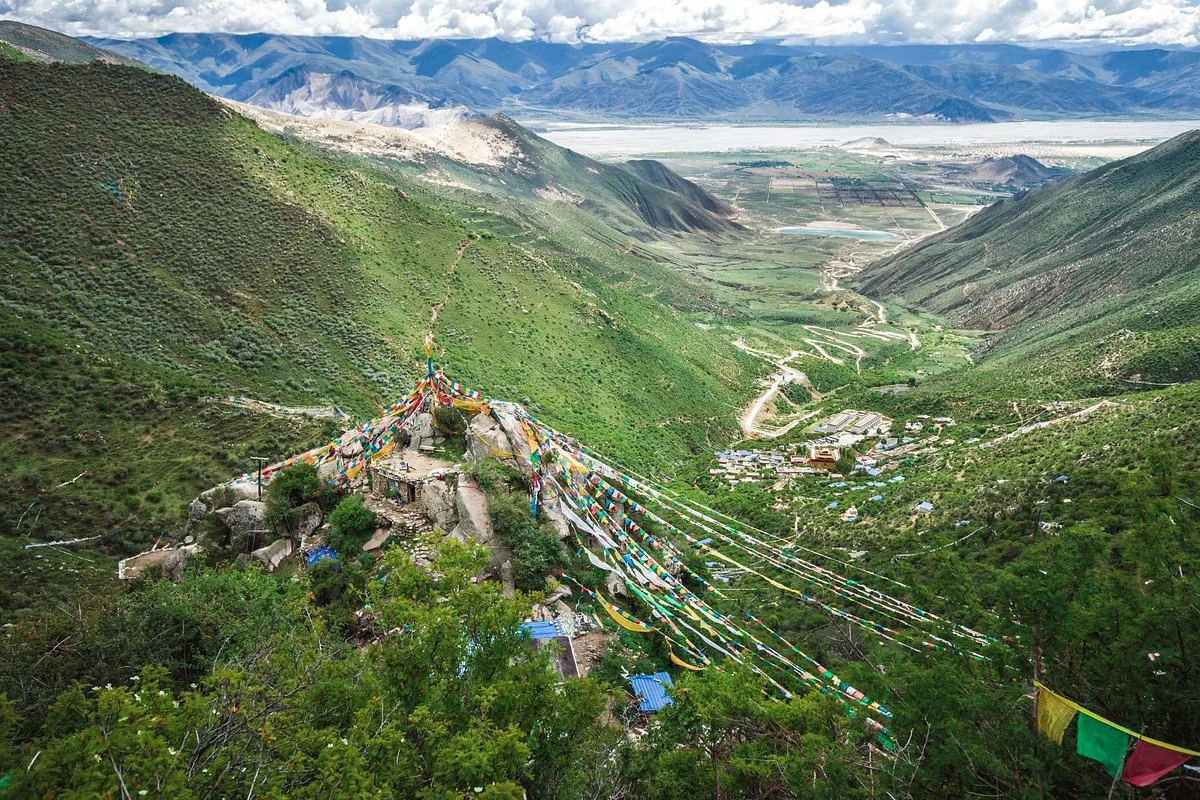
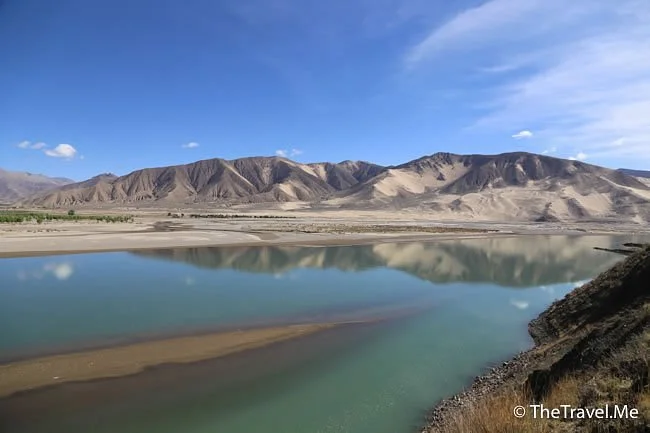
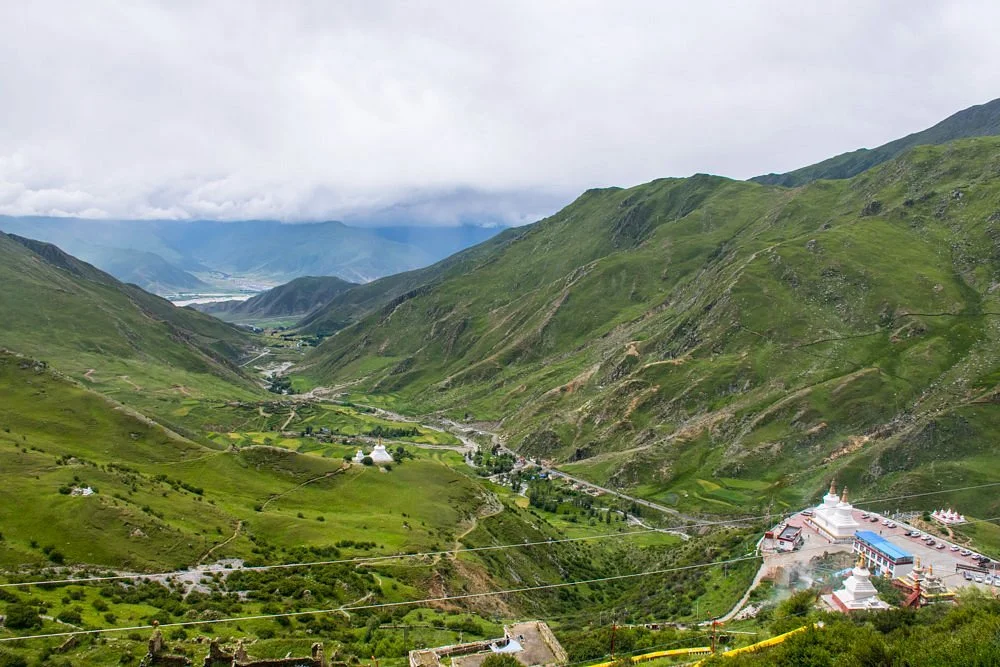
The city boundaries roughly correspond to the basin of the Lhasa River, a major tributary of the Yarlung Tsangpo River. It lies on the Lhasa terrane, the last unit of crust to accrete to the Eurasian plate before the continent of India collided with Asia about 50 million years ago and pushed up the Himalayas. The terrain is high, contains a complex pattern of faults and is tectonically active. The temperature is generally warm in summer and rises above freezing on sunny days in winter. Most of the rain falls in summer. The upland areas and northern grasslands are used for grazing yaks, sheep and goats, while the river valleys support agriculture with crops such as barley, wheat and vegetables. Wildlife is not abundant, but includes the rare snow leopard and black-necked crane. Mining has caused some environmental problems.
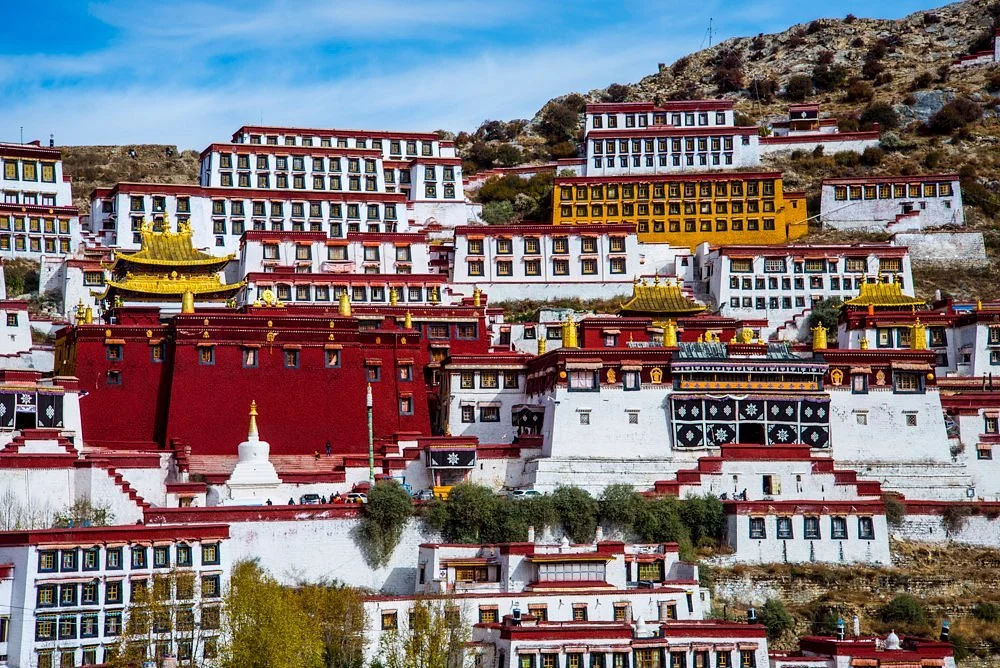
The 2000 census gave a total population of 474,490, of whom 387,124 were ethnic Tibetans. The Han Chinese population at the time was mainly concentrated in urban areas. The prefecture-level city is traversed by two major highways and by the Qinghai–Tibet railway, which terminates in the city of Lhasa. In the future, the Sichuan–Tibet railway currently under construction will expect to start operations in 2030. Two large dams on the Lhasa River deliver hydroelectric power, as do many smaller dams and the Yangbajain Geothermal Field. The population is well-served by primary schools and basic medical facilities, although more advanced facilities are lacking. Tibetan Buddhism and monastic life have been dominant aspects of the local culture since the 7th century. Most of the monasteries were destroyed during the Cultural Revolution, but since then many have been restored and serve as tourist attractions.
See Tibet#Eat for descriptions of typical Tibetan food.
A lot of nice and comfortable restaurants are located near the Jokhang Temple along Beijing Zhong Lu (or called Beijing Road Middle) and its tributary road Zang Yiyuan Lu (or called Tibetan Hospital Road). Some of them serve western food, Nepali and Indian food. Meals can be as cheap as ¥20 per person, including drinks. The smaller Tibetan restaurants, especially the teahouses, may not be decorated as nicely, but are much cheaper than the tourist restaurants and serve more tasty food. Most of the Chinese restaurants serve Sichuan's spicy cuisine. Although Tibetan restaurants are more traditional and full of history, to the western traveler the Chinese food might seem more diverse and more appealing than the greasy boiled yak meat typically served in the Tibetan ones. Westerners also might want to avoid the traditional Tibetan tea which is in fact black tea with yak butter in it and is typically being kept warm in heat insulating containers for quite some time.
Apart from eating at restaurants, you can buy food or snacks in the main supermarkets, all around Beijing Zhong Lu.
Be prepared with at least a few basic food describing words as in many of the restaurants they only speak Chinese!
Be prepared to learn to use chop sticks as some restaurants do not have forks, spoons or knives.
See Tibet#Drink for descriptions of typical Tibetan drinks.
Many ATMs do not accept foreign cards; however, foreign cards are generally accepted at Bank of China ATMs. Bank of China also offers currency conversion.
The stalls on Barkhor Street offer fascinating browsing. However, most of the items are junk from Nepal and other parts of China. Examples include bronzes and paintings that are all fake and laughing Buddhas with no connection with Tibetan tantric belief. Despite this, there are still many authentic items. Look for household items and carved wood pieces, such as bowls, pilgrims' stamps, silver items such as gau (amulet cases), silver and brass personal seals, old Tibetan banknotes, knitted satchels, and woven bags. Though it is quite fascinating, buying Tibetan antiques destroys the culture.
If you want a local Buddhist Thangka painting, find a workshop on the back streets where you can watch them being painted. Searching in the back streets around the Barkhor is very rewarding in this respect, and you can find artisans making paintings, furniture, clay sculpture, masks and ceremonial banners and applique. Not all artwork is easily transported home, but it is fascinating to watch.
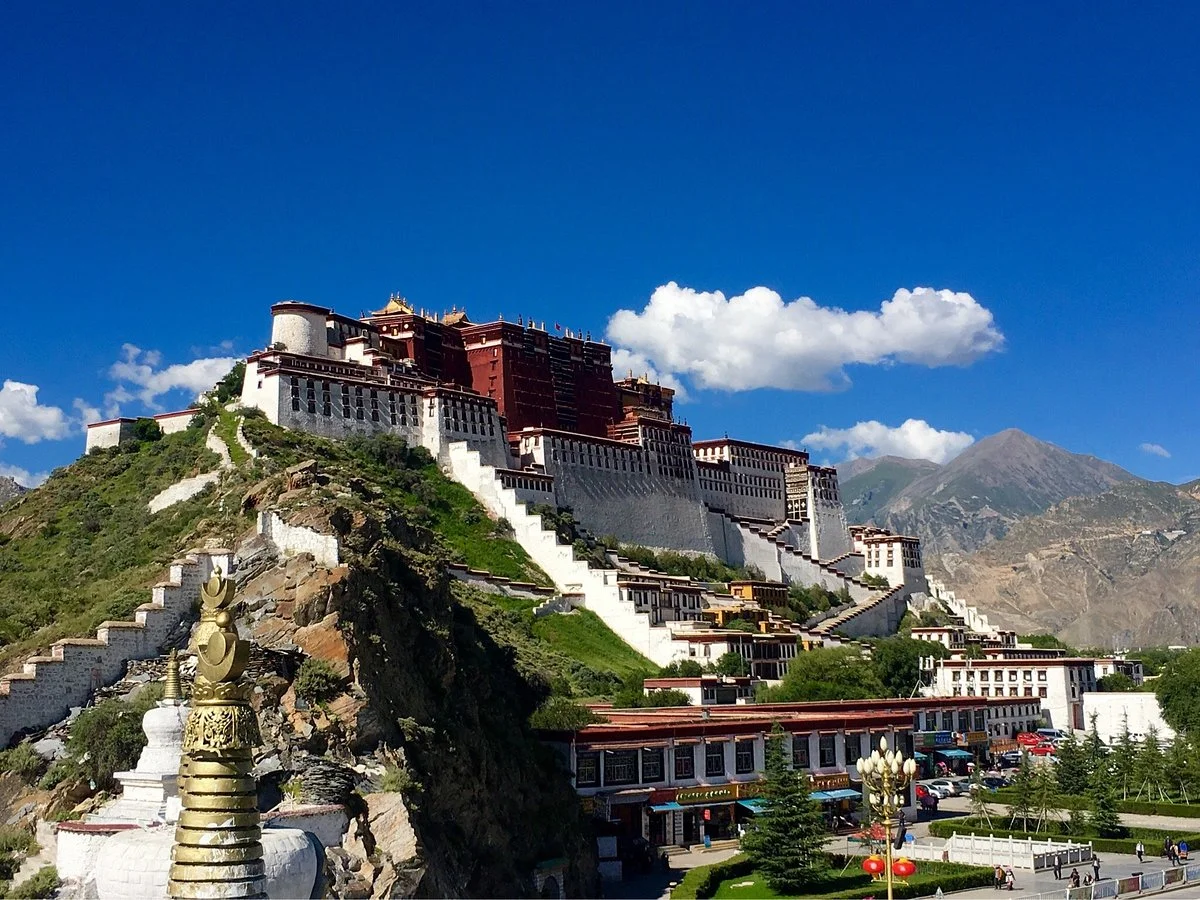
Tibet was the home of traditional carpet making, though many "Tibetan" carpets displayed in stores in the Barkhor and in front of the Potala are now made in Nepal in factories run by Tibetan exiles and many of the designs on display are Turkomen and Afghan and have no connection with Tibetan tradition. In some workshops you will find a few carpets on looms for display purposes, but the carpets in the showroom will mostly have been shipped in from elsewhere. To find authentic Tibetan carpets, visit the factories and their showrooms. Look closely at what is being woven, and make sure the piece you are buying matches what you are shown on the looms. Check the smell of the carpet: authentic Tibetan wool has a high lanolin content and a distinctive odor. Cheaper wools from Qinghai and Mongolia are dry by comparison. A few older carpets can still occasionally be found on the Barkhor and the shops around, though good, old carpets are much sought after by collectors, so prices tend to be surprisingly high, even in Lhasa.
Tianhai Night Market, in the western suburbs, is known for its great variety of goods and for being cheaper than the market on Barkhor Street.
Some hotels have branches of KTV (Chinese Karaoke). You should ensure that your room is not above one of these establishments or it may be difficult to sleep!
Non-Chinese nationals are required to obtain a special permit and must have a tour guide to visit Tibet. For information on visa requirements and immigration procedure, see Tibet#Get_in
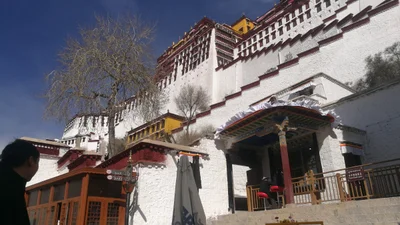
The central area with the main tourist attractions (Potala, Jokhang, Barkhor, Ramoche) is easily navigable on foot.
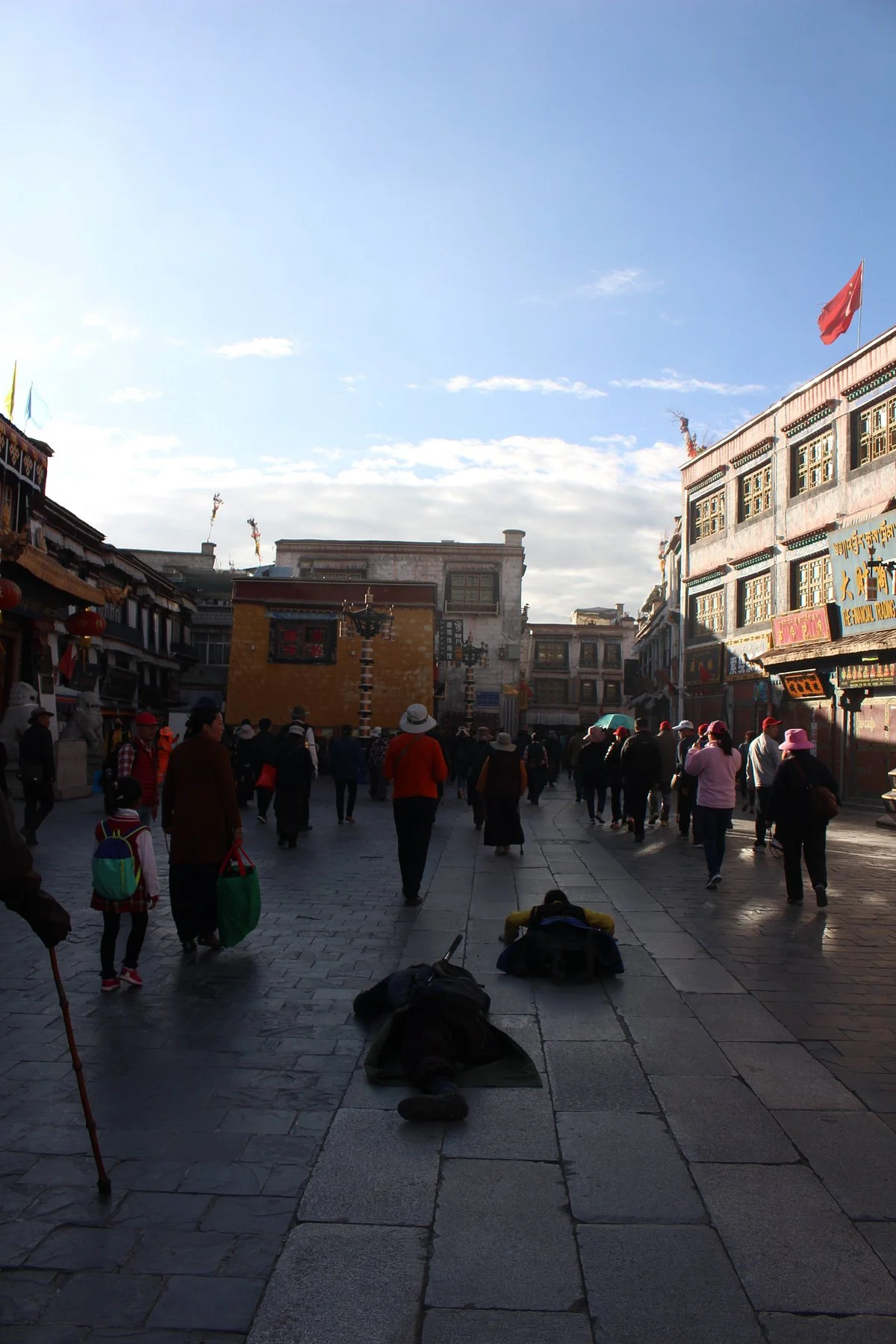
Lhasa, which means "Land of the Gods" and is over 1,300 years old, sits in a valley next to the Lhasa River. In the eastern part of the city, near the Jokhang Temple and Barkhor neighborhood, Tibetan influence is still strong and evident and it is common to see traditionally dressed Tibetans engaged on a kora (a clockwise circumambulation or walk around the Jokhang Temple), often spinning prayer wheels. Long dilapidated, the area has been given a thorough renovation and is now quite pleasant to wander around, and is also by far the most atmospheric area to stay.
The western part of Lhasa is more ethnically Han Chinese in character. It is busy and modern and looks similar to many other Chinese cities, although many of the modern concrete blocks have token Tibetan touches. Much of the infrastructure, such as banks, government offices and shopping malls are to be found there.