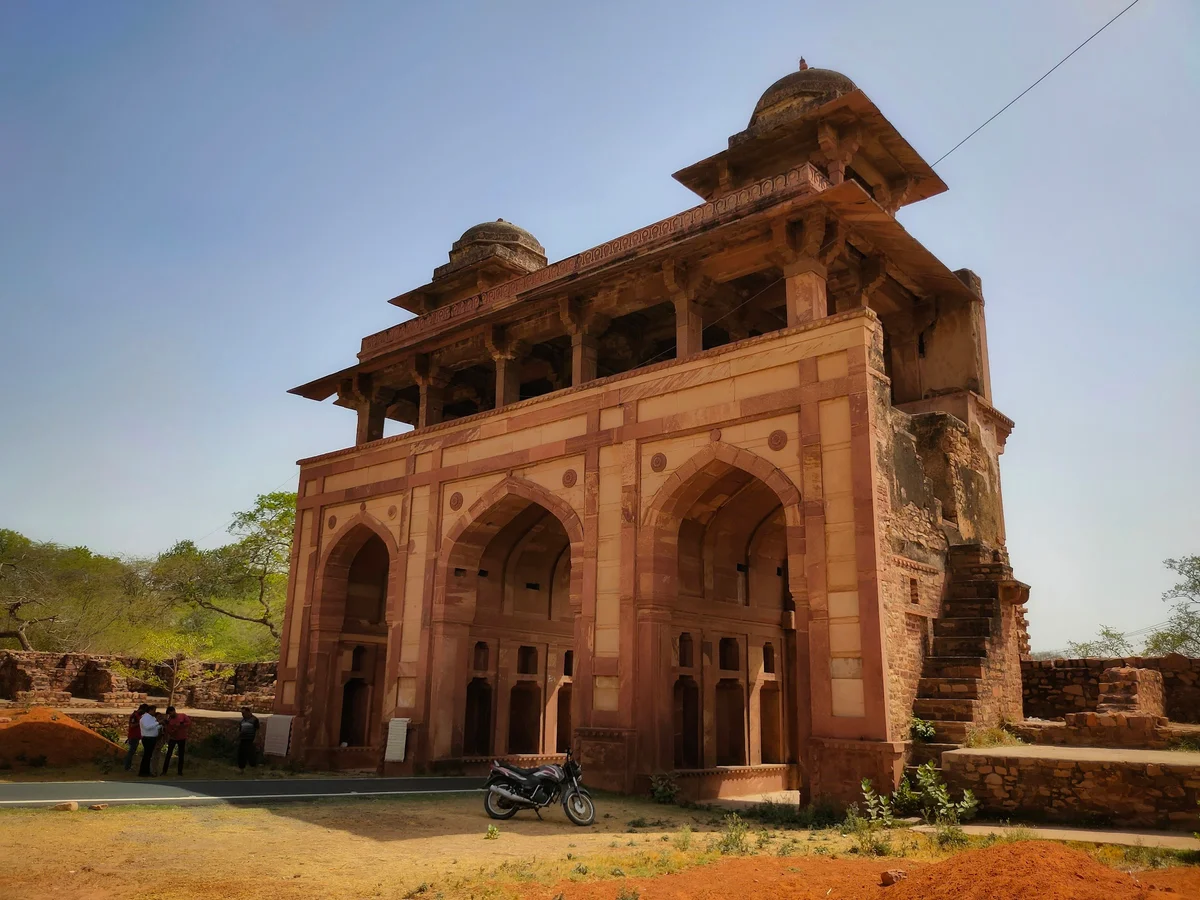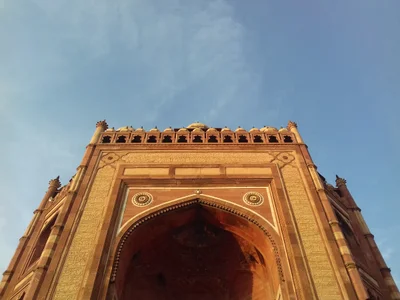
Fatehpur Sikri (Hindi: [ˈfətɛɦpʊɾ ˈsiːkɾiː]) is a town in the Agra District of Uttar Pradesh, India. Situated 35.7 kilometres (22.2 mi) from the district headquarters of Agra, Fatehpur Sikri itself was founded as the capital of the Mughal Empire in 1571 by Emperor Akbar, serving this role from 1571 to 1585, when Akbar abandoned it due to a campaign in Punjab and was later completely abandoned in 1610.The name of the city is derived from the village called Sikri which previously occupied the location. An Archaeological Survey of India (ASI) excavation from 1999 to 2000 indicated that there was housing, temples and commercial centres here before Akbar built his capital. The region was settled by Sungas following their expansion. It was controlled by Sakarwar Rajputs from the 7th to 16th century CE until the Battle of Khanwa (1527).The khanqah of Sheikh Salim Chishti existed earlier at this place. Akbar's son, Jahangir, was born in the village of Sikri to his favourite wife Mariam-uz-Zamani in 1569, and, in that year, Akbar began construction of a religious compound to commemorate the Sheikh who had predicted the birth. After Jahangir's second birthday, he began the construction of a walled city and imperial palace here. The city came to be known as Fatehpur Sikri, the "City of Victory", after Akbar's victorious Gujarat campaign in 1573.
After occupying Agra in 1803, the East India Company established an administrative centre here and it remained so until 1850. In 1815, the Marquess of Hastings ordered the repair of monuments at Sikri.
Because of its historical importance as the capital of the Mughal Empire and its outstanding architecture, Fatehpur Sikri was awarded the status of UNESCO World Heritage Site in 1986.
In order to get a full idea of this site it is better to take a guide (₹450 for 2h for its free entry part) or have a good printed guide. Entry to the site of the Jama Masjid (even to the yard) is only without wearing footwear. Beware sunny days when the flagstones get very hot. The vehicle parking is about a kilometre away and Agra Development Authority (ADA) runs some rickety non air conditioned buses to the site entrance from the parking lot area, fare is ₹10 per person one way. Ticket booths are by the entry to the fort area where the palaces are located. Tickets can be purchased in advance online from Archaeological Survey of India website for ₹35 Indian citizens/₹550 foreigners plus ₹10 Agra toll tax on site at the ticket counter. Otherwise, tickets purchased on site are ₹610 for foreigners.
The easiest way to get around the town is by car or rickshaw. However, it is possible to walk to the entrance of the historic site from the stations. Around the UNESCO site, walking is the only mode of transport.
Literally meaning the City of Victory, Fatehpur Sikri was founded by Mughal Emperor Akbar in 1571 and served as the capital from its founding to 1585. Emperor Akbar established the city to honour the local Sufi saint Salim Chishti who predicted the birth of his heir, Jahangir. Its name derived from the village of Sikri, which occupied the land prior to the construction of the city. The city was renamed Fatehpur Sikri to commemorate the successful Gujarat campaign by Emperor Akbar in 1573. It was abandoned in 1585 due to failure of the water supply. Today, there continues to be a town at the foothills of the historic site.
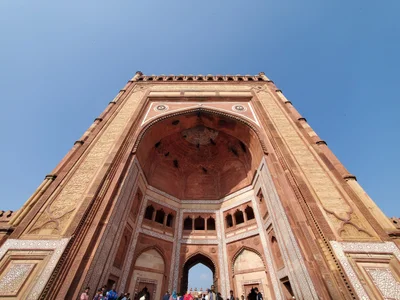
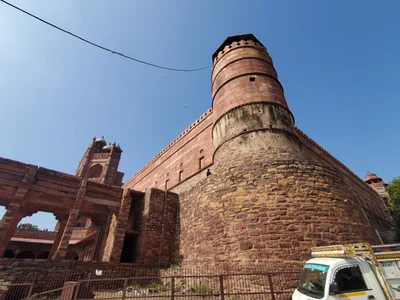
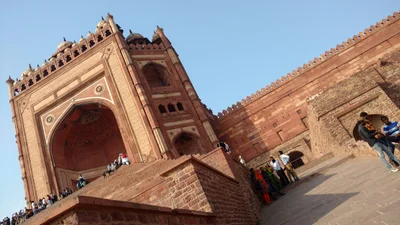
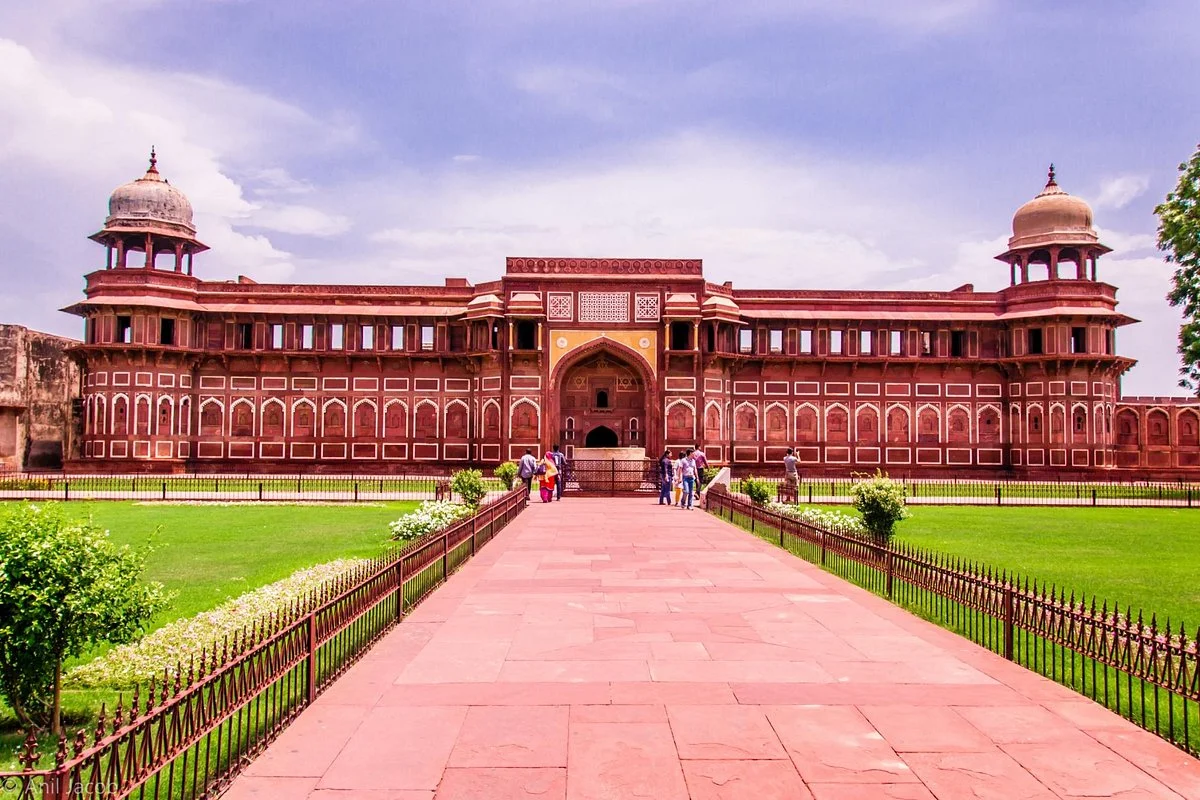
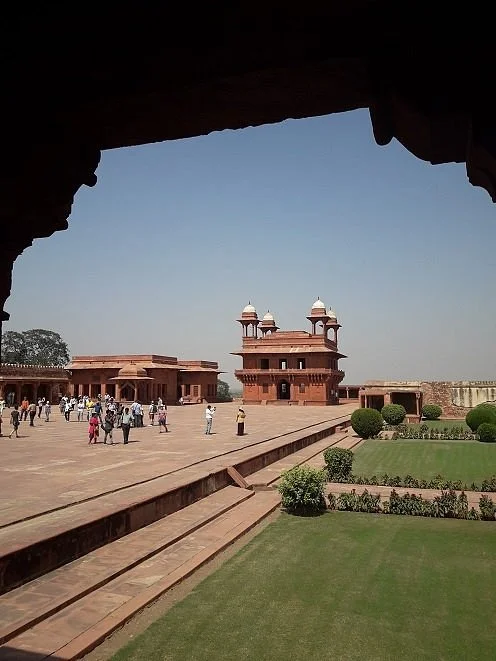
Often lumped together with Agra on tourist tours and trails, Fatehpur Sikri is a UNESCO World Heritage Site in its own right. It includes one of the largest mosques in India, the Jama Masjid. The complex is made from red sandstone and is of Mughal architecture reflecting both Islamic and Hindu styles. Full of well preserved palaces and courtyards, it is a must see for anyone visiting Agra.