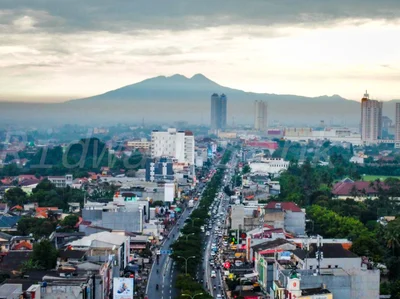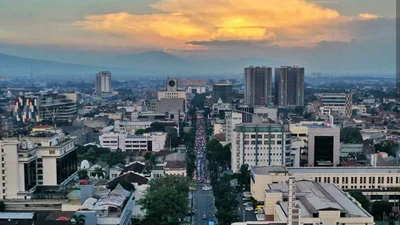
Depok (Pegon:ديڤوك) is a landlocked city in West Java province. It is located directly south of Jakarta within the Jakarta Metropolitan Area in Indonesia. It has an area of 199.91 km2.
It had a population of 1,738,600 at the 2010 census and 2,056,400 at the 2020 census; the official estimate as at mid 2023 was 2,145,400 (comprising 1,080,541 males and 1,064,859 females), resulting in a density of 10,731.8 people per km2. Depok was created as a separate city on 20 April 1999, having previously been part of Bogor Regency. It constitutes the second most populous suburban city in Indonesia (after Bekasi), and the tenth most populous suburban city globally.
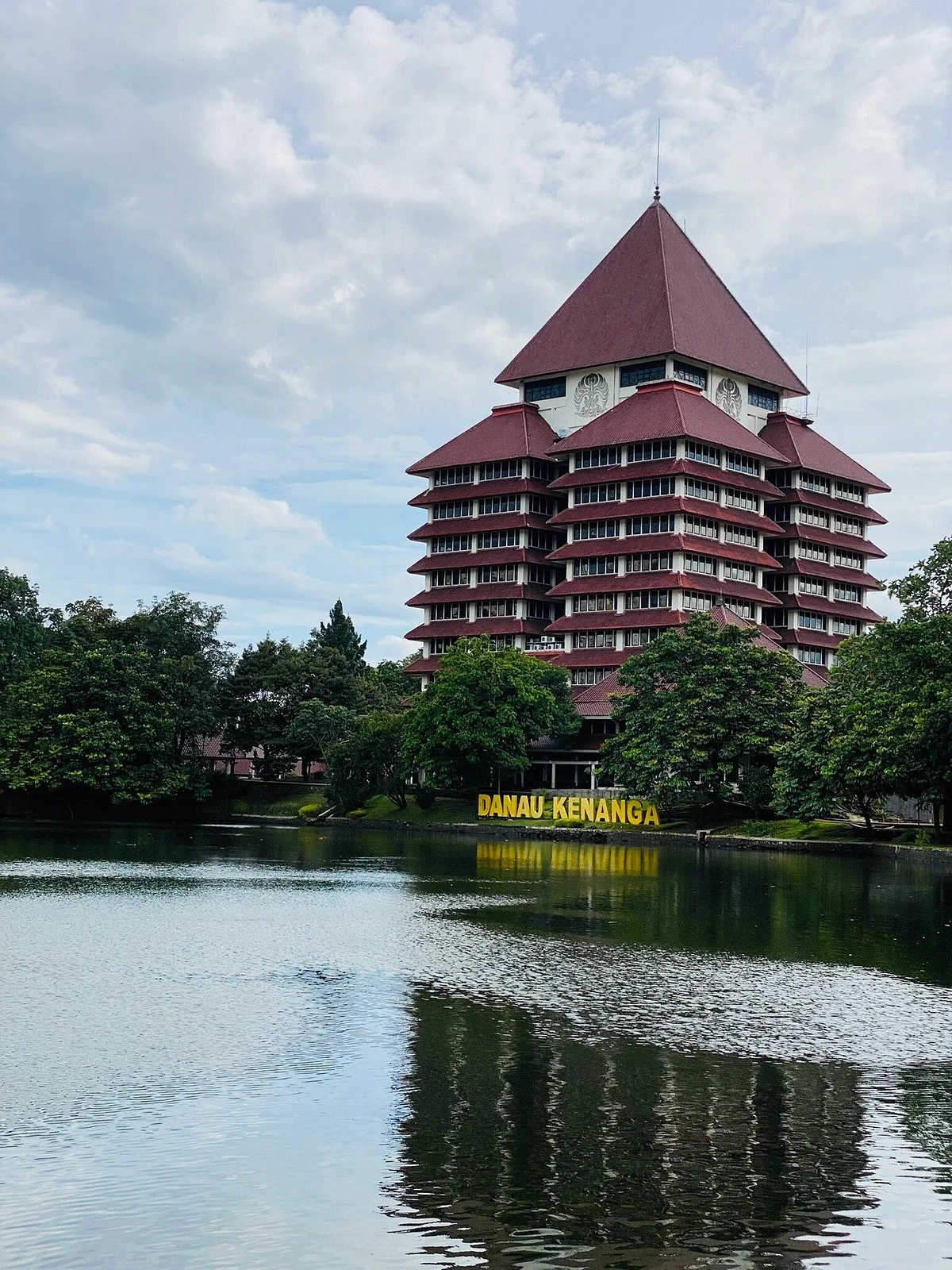
Cycling, walking, and jogging at the University of Indonesia Campus are common recreational activities during weekends in Depok. On Sundays, there is a market just outside of the campus where you can buy cheap things from food to CDs, and from clothes to utensils.
Along the main roads to Jakarta (Jalan Margonda Raya) and Bogor (Jalan Raya Bogor), there are many restaurants with various cuisines, from Sundanese and Javanese to Western. Cheap meals can be found especially in student cafés at or around the university campus.
Like other cities in West Java province, Depok has similar drinks. The variety of options are young coconut water with ice and palm sugar, mixed chunk fruit and jelly with ice, blended fruit with ice. They are refreshing for a really hot day. For those who are on diet should drink carefully because they are high energy drinks.
At the end of the year, it's the durian season; durian is a tropical fruit sold by locals along the road from Depok to Bogor. Durians here are cheap and good enough with prices ranging from Rp5,000-30,000. Don't hesitate to bargain the price and tell them that you only pay a good one. The seller will choose the fruit for you, open a small hole and take a little fruit for you to taste. If you're satisfied with the taste, they will open the whole fruit for you if you want to finish the fruit in their place. Depok is also known for its star fruit plantation so many food souvenirs are made from carambola or star fruit.
For longer-term staying, the Margonda Residence Apartments, located on Margonda Raya is quite useful. It costs Rp. 1,350,000-1,700,000 per month for a studio room, with a minimal contract of three months. As yet, it is the only apartment in Depok although others are being built. It is across the road from Universitas Indonesia, on the north part of the city, and thus is safe from much of the traffic jam in the city (although one still has to negotiate the traffic on the Jakarta side).
There are dozens of minibus (angkot) routes throughout Depok, with many of them connecting to South Tangerang and Jakarta. Angkots follow a fixed route, but there is no fixed schedule and there are no fixed stops. To get on, simply raise your hand. To get off, simply shout "Kiri!" to the driver, so he will pull over on the left (Indonesian: kiri) side of the road. The price of an angkot ride within the city is fixed at Rp.3,000. It is best to ask a local which angkot route to take, and how to recognise the location you want to get off.
Taxi ranks are available outside the shopping malls and hotels, and especially easy to find at the main artery Jalan Margonda Raya. The main reputable taxi companies of Jakarta, including Blue Bird and Express, also have branches in Depok. Online ride-hailing such as Grab and Gojek are abundant and can be booked through the respective apps.
No information available