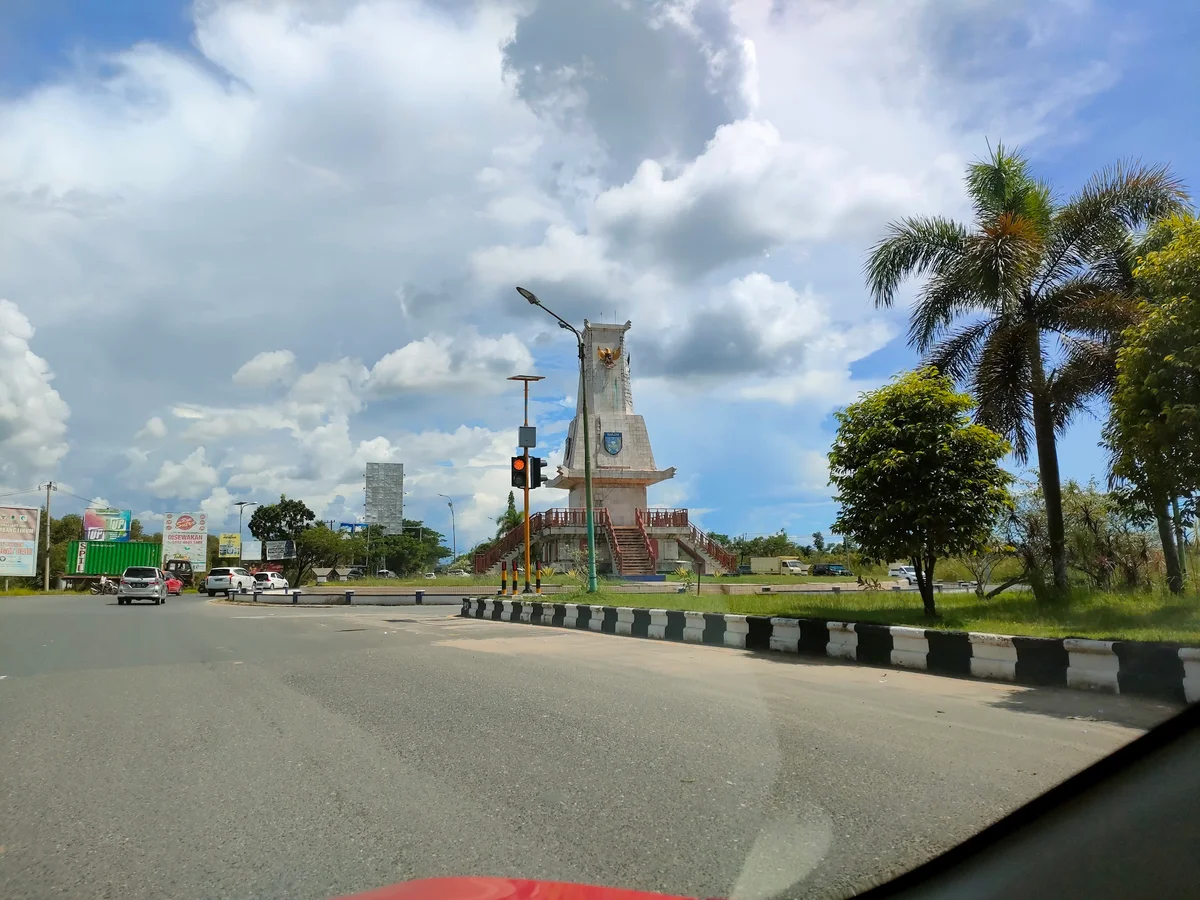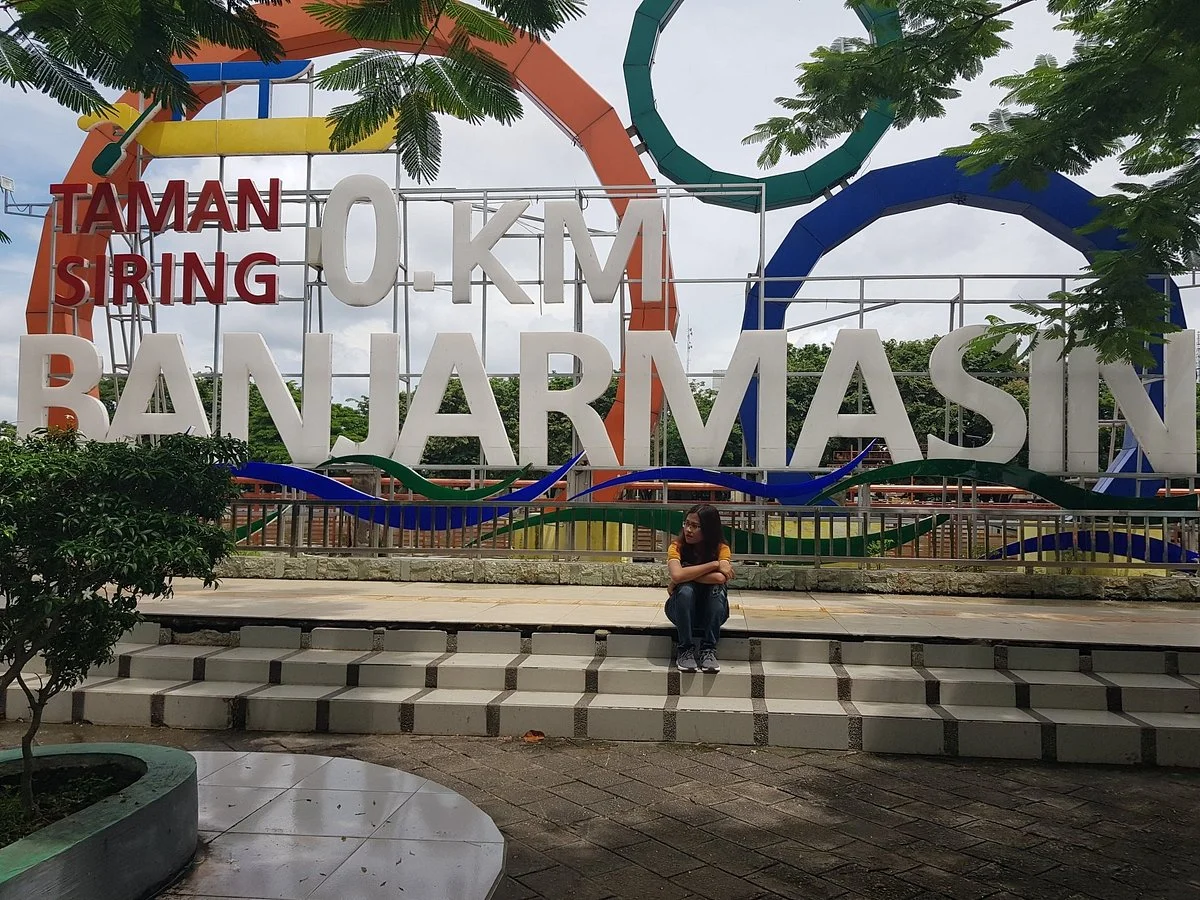
Banjarmasin is a city in South Kalimantan, Indonesia. It was the capital of the province until 15 February 2022. The city is located on a delta island near the junction of the Barito and Martapura rivers.
Historically the centre of the Banjarese culture, and the capital of the Sultanate of Banjar, it is the biggest city in South Kalimantan and one of the main cities of Kalimantan. The city covers an area of 98.46 km2 (38.02 sq mi) and had a population of 625,481 as of the 2010 Census and 657,663 as of the 2020 Census; the official estimate as of mid 2022 was 667,489 (comprising 334,110 males and 333,379 females).
Greater Banjarmasin, also known as Banjarbakula, is an urban agglomeration of around two million people covering an area of 8,136 km2 (3,141 sq mi), which includes Banjarbaru city and parts of Banjar Regency, Barito Kuala Regency, and Tanah Laut Regency, and accounts for almost half of the province's population.
It is the third most populous city on the island of Borneo.Banjarmasin was the de jure seat of the South Kalimantan governor and the location of the provincial parliament, although some provincial buildings have been relocated to Banjarbaru. On 15 February 2022, the capital of South Kalimantan province was legally moved to Banjarbaru.
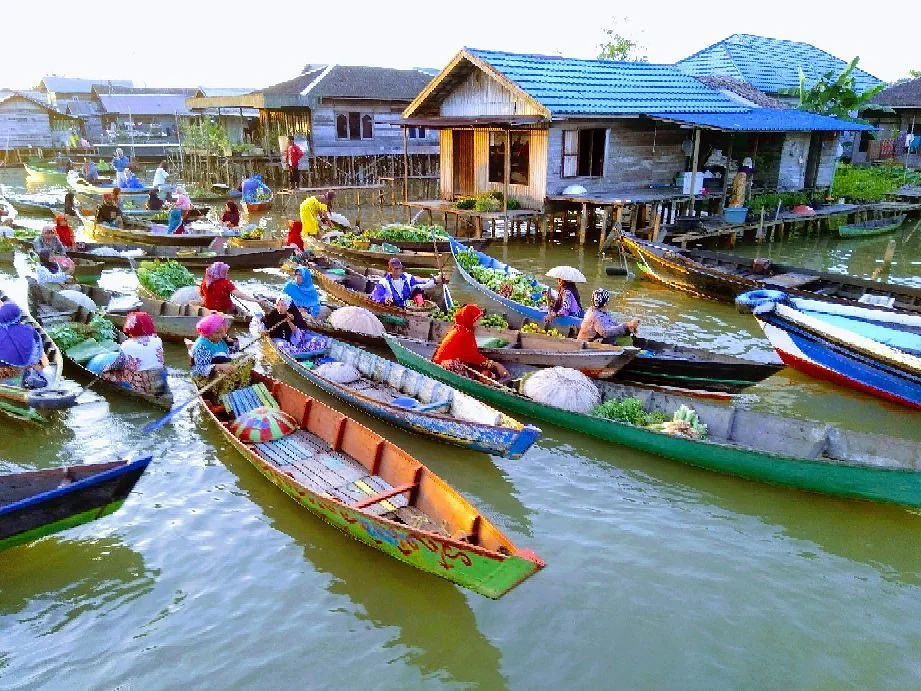
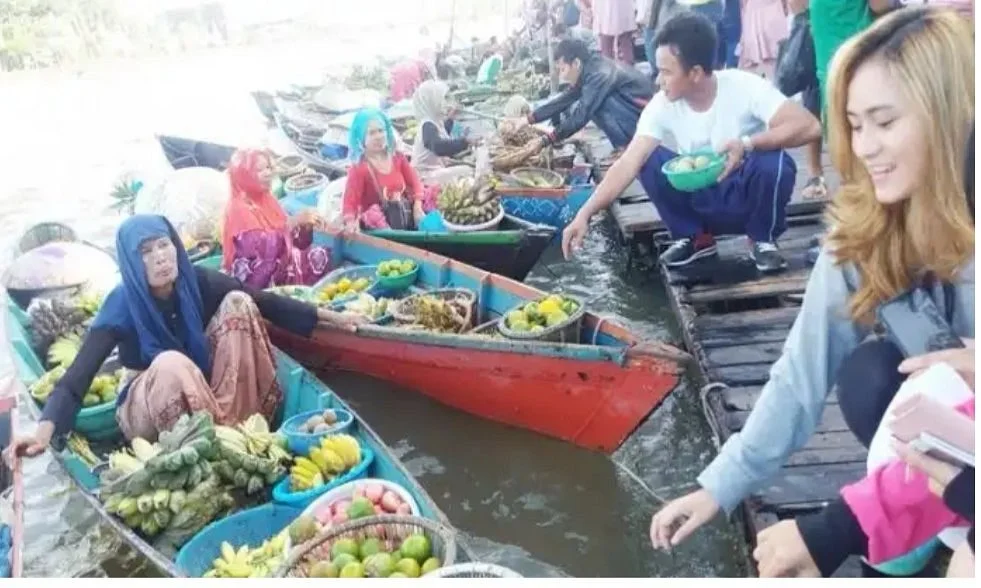
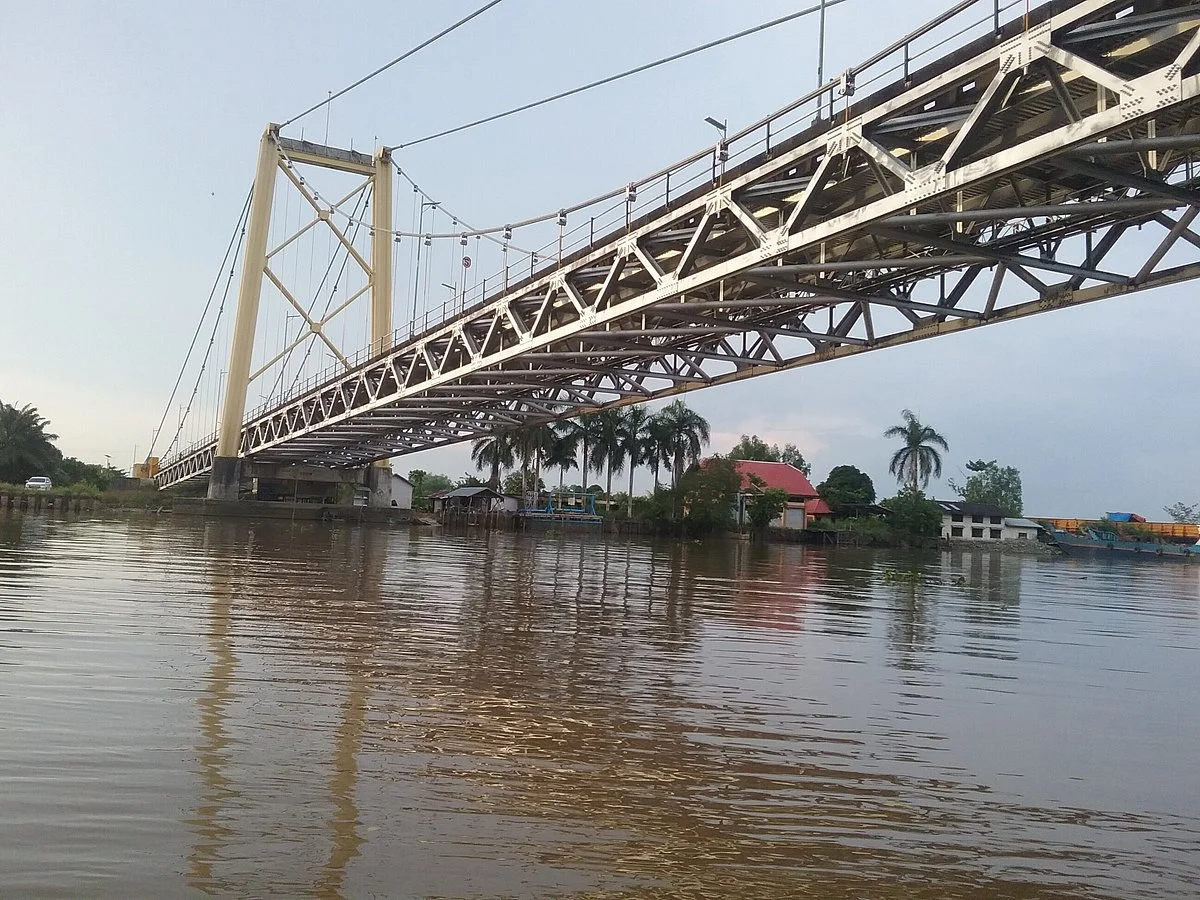
= There are many destination or ways for canal trips, for example along the Kelayan River or thr Kuin River.
To reach these islands, you will need to employ a local to take you by boat, "ketolok" (small motor boat), or other. Ask around and negotiate a price.
Banjarese loves their local cuisine. While restaurants, malls, or foodcourts are fine for beginners, to find the real taste of Banjarese food, you might have to join the locals among hidden places on the streets.
Foods that are available throughout the year and are very popular with the locals:
In the month of Ramadan, the Banjarese go all out with their traditional delicacies. Heaps of wadai (traditional cakes) and other treats mostly unavailable throughout the year will suddenly appears in Ramadhan. Though most travel guides won't suggest you to travel during the month of Ramadhan in Indonesia, it's an amazing experience to see the emergence of many "Pasar Wadai" (Cakes Market) all over the city, with treats such as:
If you have an interest to find tropical fruit there's one new agrotourism area near Banjarmasin, it's named Meek Farm in Banjarbaru. There, you can find and try some original tropical fruit that might be hard to find in another place like durian, avocado, keledang, and some kind of Kalimantan local mango and there is a restaurant too. the restaurant serves only Indonesian traditional food. Also, you may try fruit agrotourism by wooden boat on the Gampa River area of Banjarmasin. There is a farm of rambutan, mangosteen, rambai, cempedak, langsat, kecapi, and so on.
One should try the Banjarese tea, which is somewhat different with the teas found elsewhere in Indonesia. It is a strongly Muslim area, so don't expect to find alcohol outside large hotels.
Semi-precious gems and stones. Rattan products. You can buy original clothing from Banjarmasin, it calls "Sasirangan". Now, sasirangan fabric can be applied into other things like bags, shoes, veils, and so on.
You can also buy souvenirs like amplang, local labelled T-shirt, Accessories with Banjarmasin's logo/attributes.
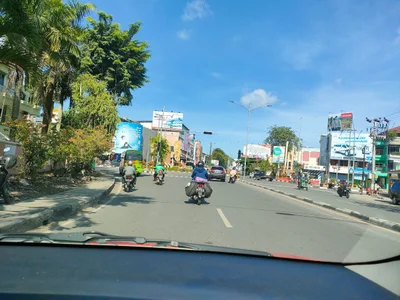
Your best bet would be the metered taxi, insist the driver to use the meter if you have to. Alternatively, you can use “angkot” or “bamikro” or public shuttle microbuses (Rp5,000 per passenger), which are also called “taxi” by the locals. Also available is by "ojek" (motorcity taxi) and "becak" (tricycle rickshaw), that cost around USD2.00-2.50 or Rp15,000 - 20,000 for inner city trips. There are some really old orange-colored "bajaj' (auto rickshaw) on the city streets as well.
Another options is to hire a motor bike. Amelindo Bike Rent offers motorbikes from Rp75,000/day. And for a Rp40,000 service fee, they will bring the motorbike to or pick it from a given address.
With the arrival of "online taxi" transportation services like GoJek/GoCar, and Grab, visitors and locals alike can now get around the city at a much cheaper rate by downloading and using the associated mobile applications. A ride across town in a new car can be as cheap as Rp20,00-25,000. More traditional taxis are comparatively expensive in Banjarmasin (often charging a minimum fee of Rp50,000, even for a ride as short as crossing the street). Make sure you use Indonesian phone number! Good luck.
The official founding date of the city is 24 September 1526, but its history is older than that. From the time of the ancient kingdom of Nan Serunai, to the Buddhist kingdom of Tanjungpuri and the Hindu kingdom Negara Dipa and its successor Negara Daha, the rivers of Southern Kalimantan have always been a favorite spot of the Malay people. That’s why Banjarmasin's old name was “Bandar Masih”, meaning the port of the Malay in Dayak Bukit dialect. In the chaotic time of civil war between the rightful heir of Negara Daha, Pangeran Samudera, and his uncle, Pangeran Samudera was forced to flee for his life. At this time, Bandar Masih received him warmly, stopped paying tribute to his uncle and supported Pangeran Samudera’s fight to get his throne back. When his uncle finally surrendered, Pangeran Samudera decided to make Bandar Masih his new capital, converted to Islam, and began his rule over the new Islamic Kingdom of Banjar. His day of victory was then celebrated as Banjarmasin’s birthday.
The name "Bandar Masih" slowly changed into "Banjarmasin" as the water tastes salty when in dry season (salty is "masin" in Banjarese language). The kingdom flourished and back in its golden era, its power enveloped almost all of the area of what is now Kalimantan. After the fierce Banjar War which produced a lot of highly-revered local heroes such as Pangeran Antasari, however, it was forced to surrender to the Dutch, following the total destruction of the palace grounds and the capture of the last Banjarese Princess (Ratu Zaleha).
Banjarmasin continued to be the capital of Dutch Borneo throughout the colonial era. Even after the formation of the Indonesian government, Banjarmasin was the capital of Kalimantan province until Kalimantan was divided into four provinces (West, East, Central and South); then it became the capital of South Kalimantan. The capital of South Kalimantan was moved to Banjarbaru in 2022. Little is left of its previous glory, but Banjarmasin silently kept her forgotten charm in unexpected places for the persistent traveller to find.