Get around If you plan on staying for an extended period of time (or believe you will spend more than ¥2000 on transportation), you may want to buy an IC Card at Shieki, which gives 10% discounts on all Iyotetsu transportation (including taxis).
Traveling on foot is an entirely viable way of getting around downtown at a comfortable pace.
Read more Eat Matsuyama is a great place to indulge a sweet tooth. Botchan dango (坊ちゃん団子) headline every sweet shop in town. They're skewered rice dumplings covered in bean paste dyed with green tea, eggs, and azuki beans. This soft, sweet snack was popularized by Sōseki, who had such a weakness for them that he included the treats in Botchan. Another local favorite are the cute little tarts (タルト). Originally derived from Nagasaki's Castella cake in the 1600s, the Matsuyama variety replaces jam with azuki bean paste, and rolls up the cake.
For a healthier sweet, citrus fruits come in a multitude of species, including iyokan (grapefruit-like) and dekopon (huge, orange and puckered). mikan (mandarin orange) are mainly harvested in the fall and are very cheap, but they're so treasured that they are used as offerings to ancestral spirits first - living people eat them only some days later.
• • Dōgo Bakushukan — One of the only two restaurants privileged with having Dōgo Beer on the menu, Bakushukan is to the right of Dōgo Onsen Honkan and has a warm, semi-German theme. — Address: 20-13 Yunomachi, Dōgo — Hours: Tu-Su 11:00-22:00 — Price: ¥1000-2000 — Phone: +81 89-945-6866 — Website: https://www.dogobeer.jp/bakusyukan-restaurant/
• • Goshiki Honten — This restaurant is a fantastic place to experience Ehime cuisine, serving dishes such as taimeshi (fish) and goshiki soumen (五色そうめん), five-colored noodles dyed using natural ingredients: eggs, green tea, buckwheat flour, plums and shiso. Thin yet strong, these noodles make an excellent base for other regional fare. — Address: 3-5-4 Sanbanchō — Hours: 11:00-21:00 — Price: ¥1600-5000 — Phone: +81 89-933-3838 — Website: https://s422500.gorp.jp/
• • Ladky's — There are two locations, but this is the original. Ladky's serves up the best Indian food in town. Spice potency varies with the chef's mood, so choose wisely... or order the pudding to soothe the fire. — Address: 5-9 Hanazonochō — Hours: 11:00-14:30, 17:00-22:00 — Price: Lunch: ¥1000-2000; Dinner: ¥1500-2500, Course: ¥2900 — Phone: +81 89-948-0885
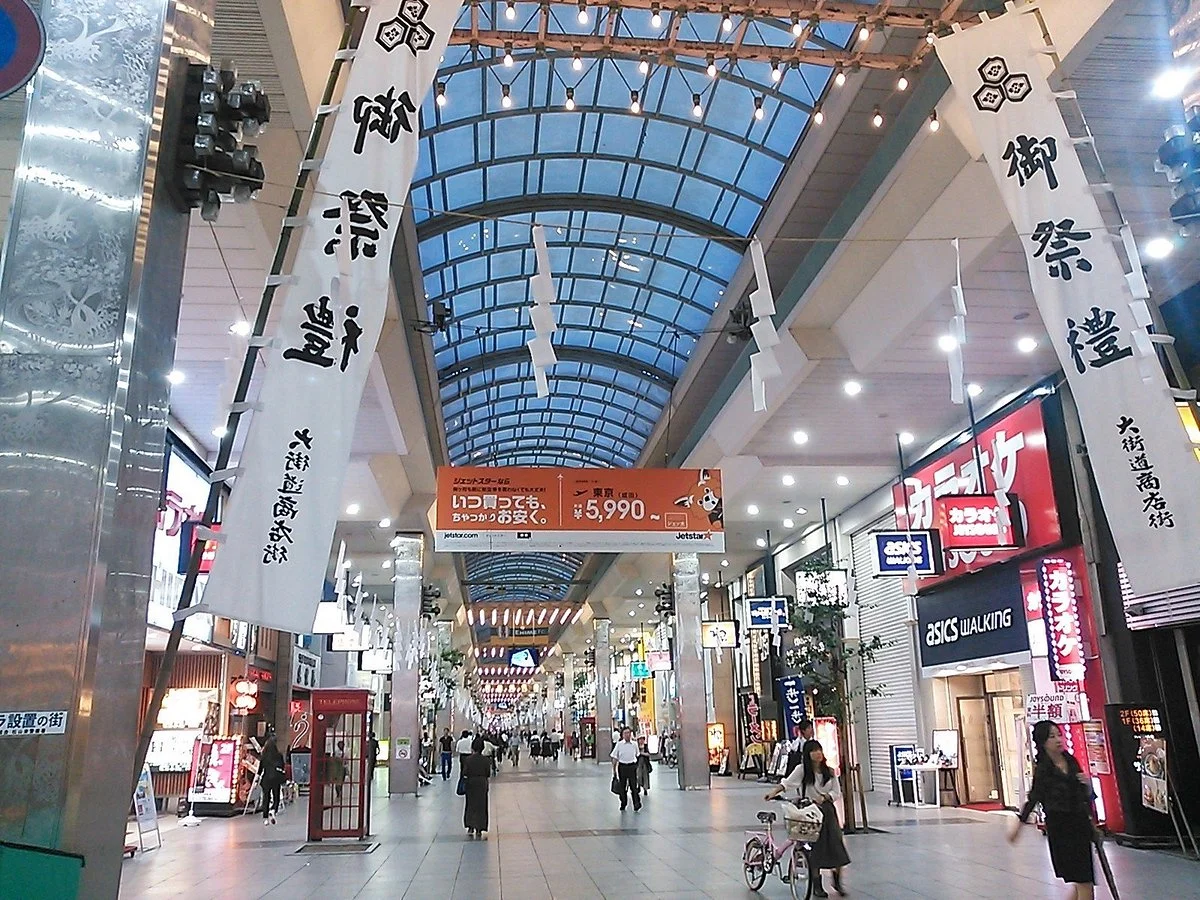
• • Matsuchika Town — Underground shopping arcade, opened in 1971. — Address: 5-1-1 Minatomachi — Directions: Underground of Shieki — Hours: 10:00-21:00, closed 3rd W each month — Price: ¥300-700 — Phone: +81 89-933-0857 — Website: http://matsuchika-town.com/
• • Nikitatsu-an — A romantic and sophisticated Japanese brasserie, and the other of the two restaurants with the honor of serving Dōgo Beer. It's next door to the brewery, in fact. — Address: 3-18 Kitamachi, Dōgo — Hours: Tu-Su 11:00-21:30 — Price: Lunch ¥1000-4000, dinner ¥3000-5000 — Phone: +81 89-924-6617
• • Underground Café — One of the best kept secrets among night spots. UC has an open patio draped in the Union Jack, yet has the tastiest Mexican dishes in town. Try the quesadilla or enchilada, but don't bother with the nachos. They also serve a wide variety of highballs (¥525+), exotic beers (Sol, Pine, and Red Stripe), pasta and rice dishes (¥420+). Pictures of all dishes are available, and for ¥3000, a party of three can drink as much as they want and get a seven course meal. — Address: Ropeway Street 3-6-6, Okazaki-Sangyo 2nd Bldg — Directions: walk up Ropeway Street towards the castle and turn right at the fourth side street — Hours: Food 12:00-19:00, bar until 04:00 — Phone: +81 89-998-7710
Read more See While having read Sōseki's novels or Shiki's haiku is by no means essential to enjoy most of these sites, it will probably represent the difference between whether you find them evocative pieces of history or just a pleasant collection of Meiji-era buildings.
• • Akiyama Brothers Birthplace — Born to a lower class branch of the Matsuyama samurai clan, these two brothers became military heroes of Japan. Yoshifuru, the eldest, is credited as the father of the Japanese cavalry, while Saneyuki excelled in naval tactics. Yoshifuru traveled to France to study cavalry techniques in 1887. After serving in the Sino-Japanese War (1894-1895) he established a cavalry division which debuted in the Russo-Japanese War (1904-1905). After holding numerous posts of prestige, he was promoted to General in 1916 and finally retired to become a junior high school principal in Matsuyama. A childhood friend of Shiki, Saneyuki shared his friend's love of the written word, and the two studied literature at Tokyo University. However, at the behest of his brother, Saneyuki embarked on a military career. He was sent to America to study naval tactics, and had on-the-job training during the Spanish-American War (1898). After returning to Japan, he became the foremost strategist of the Russo-Japanese War, leading to a major victory at the battle of Tsushima. — Address: 2-3-6 Kachimachi — Hours: Tu-Su 10:00-17:00, closed 28 Dec-3 Jan — Price: ¥200 — Phone: +81 89-943-2747 — Website: http://www.akiyama-kyodai.gr.jp/
• • Bansuiso — This French-style building was constructed in 1922 for the former lord of Matsuyama Castle, Hisamatsu Sadakoto (久松定謨). After having lived and studied in France, Hisamatsu became enamored with the romantic architectural style, and hired Kigo Shichirō (木子七郎) to build his villa. This Taishō Era estate was the venue of many parties for the elite in its heyday, and the Emperor made it a point to visit whenever he was in the area. It is boused as an annex of the Museum of Art. The first floor's gallery changes throughout the year and is free, while the collection on the second floor showcases ink paintings by Shiki, Sōseki, and other Ehime residents. — Address: 3-3-7 Ichibanchō — Hours: Tu-Su 09:40-18:00, closed 29 Dec-5 Jan — Price: ¥100 adults, ¥50 children — Phone: +81 89-921-3711
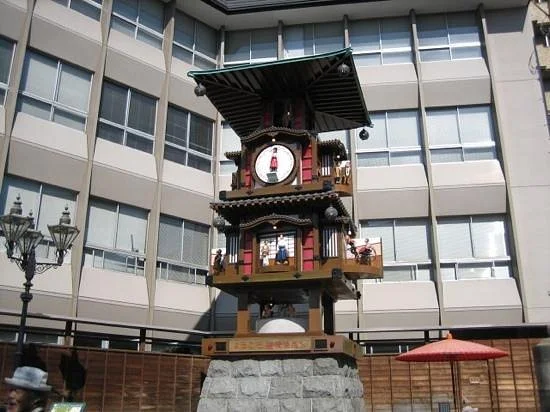
• • Botchan Gizmo Clock — Admirers of the aforementioned Botchan may enjoy watching the Gizmo Clock beside Dōgo Onsen Station at the mouth of the shopping arcade when it chimes every hour and half hour. Botchan Karakuri Tokei was completed in 1994 to commemorate the 100th year of the last reconstruction of Dōgo Bathhouse, and the animatronics that emerge during the musical interlude depict special scenes from the novel. — Address: Dōgo Yunomachi Hōjōen — Hours: Chimes between 08:00-21:00 — Price: Free — Phone: +81 89-948-6557
• • Dōgo Park & Yuzuki Castle Ruins — From mid-March through April, the typically peaceful Dōgo Park is overwhelmed by inebriated locals and hawking vendors who come to take part in the most ancient of activities, hanami, or viewing of sakura (cherry blossoms). An oval shaped patch of green in the overdeveloped Dōgo neighborhood, Dōgo Kōen is an important part of Matsuyama's identity because it harbors the ruins of Yuzuki Castle. Yuzuki-jō was the residence of the Kōno Clan (河野), who ruled Iyo Province (伊予, now Ehime) from the 13th to the late 16th century, when war lord Toyotomi Hideyoshi (豊臣秀吉) sent an army to Shikoku to conquer and unify Japan. The excavation of the 30,000-m² site took over 14 years, but the castle, gardens, and residences were all recovered. Within the recreated homes, mannequins silently act out the daily lives of the elite during that time, drinking tea and writing renga (poems composed by a group). There is also a library and a volunteer English-speaking guide can show visitors around with advance reservations. — Address: Dōgo Park — Hours: Dōgo Park: 24 hours, Yuzuki Castle Ruins: Tu-Su 09:00-17:00, closed 29 Dec-3 Jan — Price: Free — Phone: +81 89-941-1480 — Website: http://www.dogokouen.jp/
• • Isaniwa Shrine — Sitting upon Dōgo Hill and accessible by car or climbing 135 stone steps, this important cultural asset is one of three great examples of Shinto Hachiman-zukuri (God of War) architecture in Japan. It was promised by the lord of Matsuyama Castle, Matsudaira Sadanaga (松平定長), if the gods awarded him victory in the 1667 Edo Castle Yabusame (horseback archery) competition. The outer walls are modeled after the Iwashimizu Hachiman Shrine in Kyoto, while the inner sanctum (the oldest part of the shrine) is designed in various Shinto styles of the 17th century. Memorials honoring the warlords who fought against the Kamakura battalion are guarded by stalwart dogs who watch over the four deities adorning the four corners of the vermilion structure. There are exhibitions of feudal era armor (including Matsudaira's helmet) and swords (Tachi Mei, a mid-Kamakura era piece crafted by the famous Kuniyuki Rai). — Address: 173 Sakuratani — Hours: 24 hours — Price: Free — Phone: +81 89-947-7447 — Website: https://isaniwa.official.jp/
• • Iyo Kasuri Folk Craft Museum — Learn about the process of making Iyo's signature cloth and then create some of your own. Reservations necessary. — Address: 1165 Kumanodai — Directions: Near Kinuyama — Hours: 08:10-16:50 — Price: ¥50 adults, ¥40 children — Phone: +81 89-922-0405 — Website: http://e-hime.jp/kasuri/
• • Kōshinan Historic Park — This small teahouse was built in 1790 as a gift to Kobayashi Issa (小林一茶) by his friend Kurita Chodō (栗田樗堂), from one poet to another. The design was inspired by Matsuo Bashō's idyllic hut and the name comes from the sexagenary cycle of the year. It has been restored to its former beauty. When the fujidana wisteria are in bloom, Kōshinan Shiseki Teien is truly a sight to behold. It is free to tour, but reserving the rooms is also possible. — Address: 2-6-7 Misakechō — Hours: Th-Tu 10:00-18:00 — Price: Free — Phone: +81 89-915-2204
• • Matsuyama Castle — Situated on the 130-m-tall Katsuyama Hill in the center of the city, this sprawling fortress is one of three remaining multi-wing, flat hilltop Japanese castles. It was constructed by the feudal lord Katō Yoshiaki (加藤嘉明) over the course of 25 years, completed in 1627. Four of its eight strategic gates are designated national cultural treasures, and with the wealth of historical artifacts within its majestic walls — swords and armor belonging to the three occupying families, calligraphy and official documents from the feudal era (English available) — Matsuyama-jō is well worth the hike. The castle is accessible by hiking a wooded trail, but the ropeway (¥500 roundtrip) can be boarded at the east entrance. — Address: 1 Marunouchi — Hours: 09:00-17:00, closed 29 Dec — Price: ¥500 adults, ¥150 children — Phone: +81 89-921-4873 — Website: http://www.matsuyamajo.jp
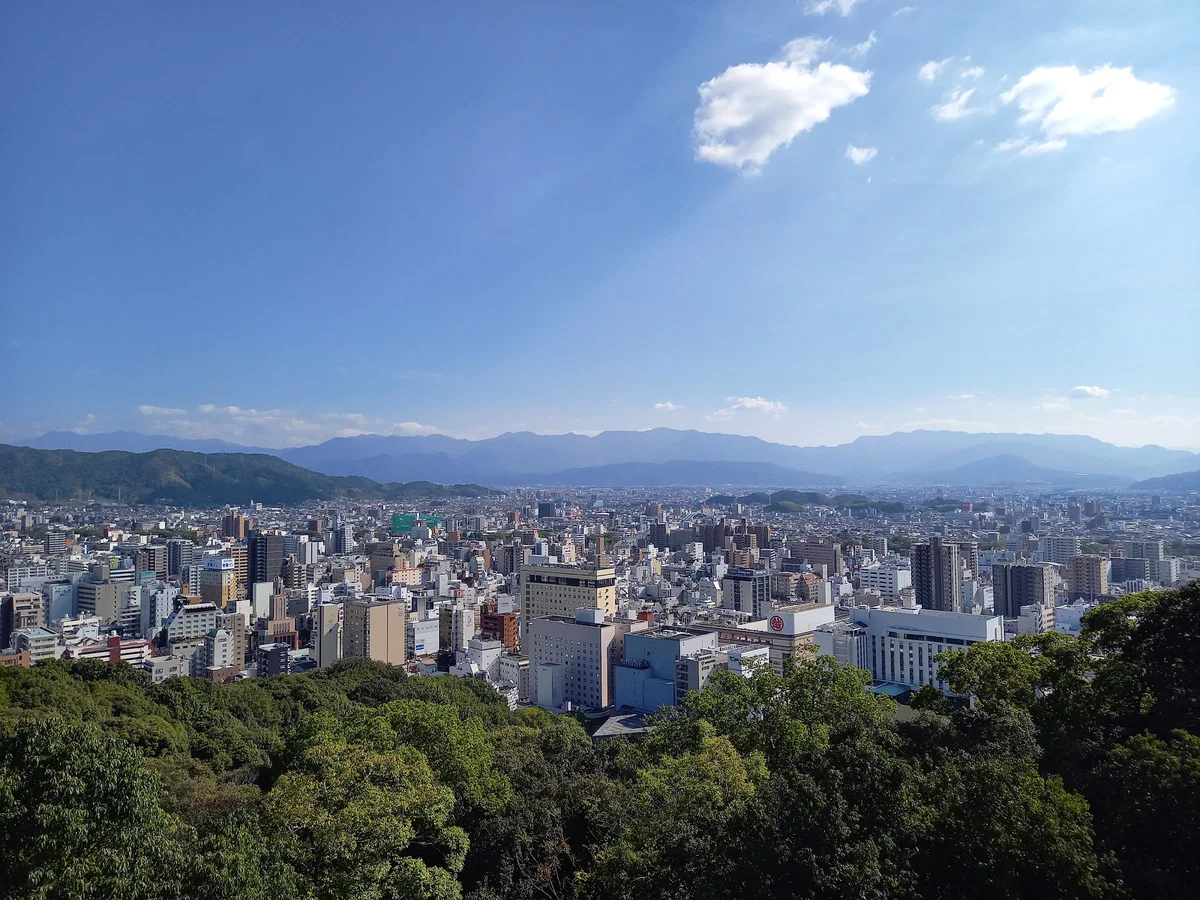
• • Matsuyama Central Park — Curiously styled as a European fortress wall and atop a hill high enough to parallel the castle, Matsuyama Sōgō Kōen provides a panoramic view of Matsuyama and features a playground for children. — Address: 1-1633-2 Asahigaoka — Hours: 24 hours — Price: Free — Phone: +81 89-923-9439
• • Museum of Art, Ehime — Ehimeken Bijutsukan is a surprisingly discreet 10,300-m² facility in Shiroyama Park (at the base of the castle and surrounded by a moat) and houses a permanent collection from Ehime natives such as Takubo Kyōji (mixed media sculptor) and Oki Kangaku (ink painter) as well as temporary exhibits from all over the globe. There is a rental gallery where Ehime residents can display their pieces, along with free workshops, a library, and a café. — Address: Horinouchi — Hours: Tu-Su 09:40-18:00, closed Dec 29-Jan 3 — Price: ¥300 adults, ¥200 students — Phone: +81 89-932-0010 — Website: http://www.ehime-art.jp/
• • Ninomaru Historical Garden — Located southwest of the castle on the hillside, Ninomaru Shiseki Teien is another excellent point for viewing the city. The ruins of the Matsuyama Clan estate are preserved and celebrated in a romantic mixture of contemporary fountain designs and ancient garden aesthetics. Viewable from the castle's donjon, mystical Takigi Nō (nocturnal plays by bonfire) performances take place here throughout the year, and families enjoy picnics in its quiet serenity. Many cultural events (tea ceremonies, doll exhibitions, drum performances, etc.) are hosted here. — Address: 5 Marunouchi — Hours: 09:00-16:40, closed Dec 29 — Price: ¥100 adults, ¥50 children — Phone: +81 89-921-2000 — Website: http://www.matsuyamajo.jp/ninomaru/
• • Russian Soldiers' Cemetery — During the Russo-Japanese War, a number of Russian soldiers ended up in prison camps in Matsuyama. Not viewed as criminals but rather as warriors who loved another nation, these prisoners are said to have had a relatively easy life here. To this day, volunteers of the community respectfully tend to their tombs, which are in the center of a sacred circle of temples and shrines. — Address: 1-525 Miyuki — Hours: 24 hours — Price: Free
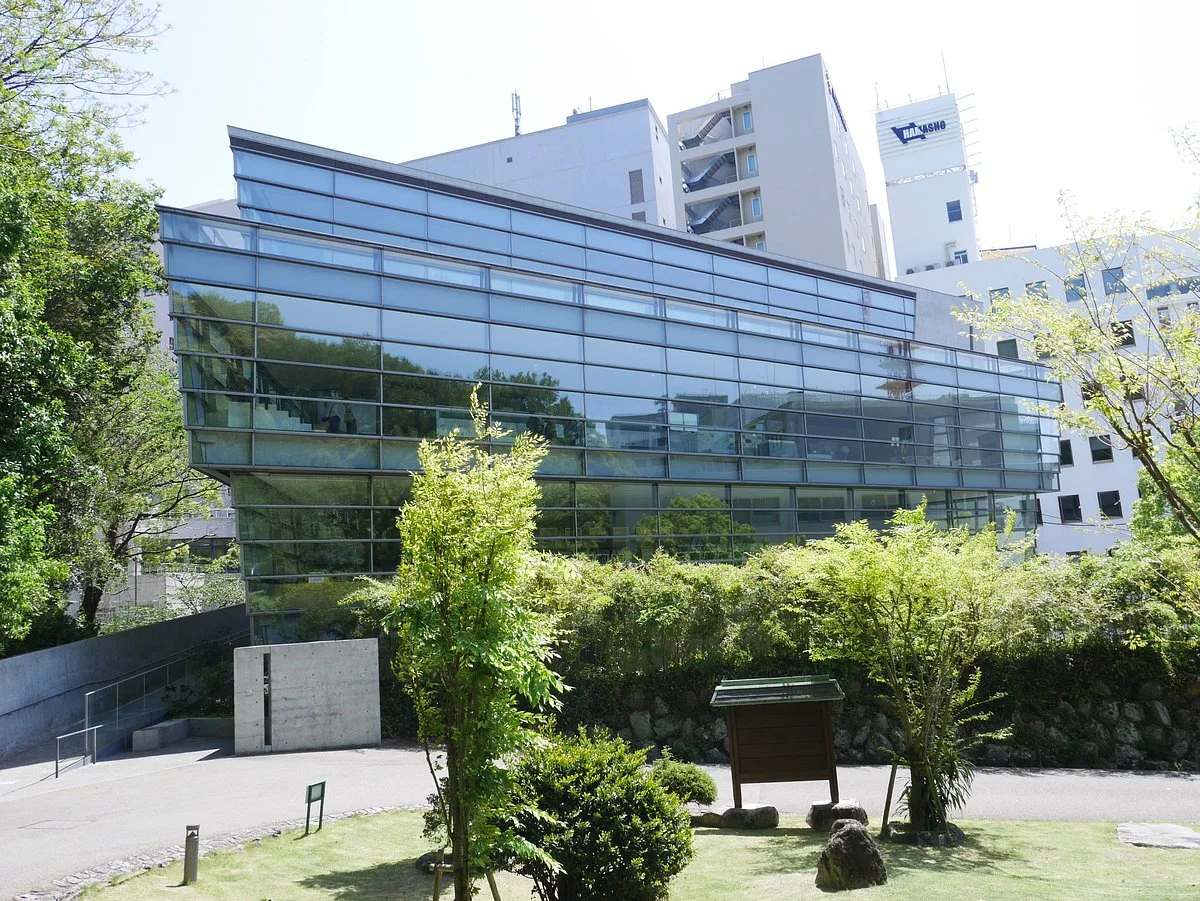
• • Saka no Ue no Kumo Museum — The name means "The Cloud Over an Upward Slope", and refers to the title of a book written by Shiba Ryōtarō (司馬 遼太郎) depicting the struggles Japanese people encountered as they rebuilt their country after the Meiji Revolution and the conflict with Russia. This impressive building, designed by well-known architect Ando Tadao (安藤忠雄), tells the stories of the aforementioned Akiyama Brothers and Masaoka Shiki. The ¥400 admission may be a little steep for non-Japanese readers as there is absolutely no English inside, but the Meiji Karakuri Theatre (moving 'stick' figures) is quite entertaining. — Address: 20-3 Ichibanchō — Hours: Tu-Su 09:40-18:00, closed first Tu each month and Dec 29-Jan 3 — Price: ¥400 adults, ¥200 students — Phone: +81 89-915-2600 — Website: http://www.sakanouenokumomuseum.jp
• • Shiki Commemorative Museum — Located in the Dōgo area, the Shiki Kinen Hakubutsukan has a large collection of literature, artwork, and special exhibits about the life of Shiki. — Address: 1-30 Dōgo Kōen — Hours: Tu-Su 09:00-17:00 — Price: ¥400 adults, ¥320 students — Phone: +81 89-931-5566 — Website: http://www.sikihakutomonokai.jp/
• • Shikidō — The main rooms of the house where Shiki spent the first 17 years of his life were replicated and set up in Shōjuji near the center of the city. The desk and artifacts from his childhood are displayed as he would have had them. The facility is complete with literary and artistic works discovered after his death, pictures, and even some monuments dedicated to other renowned haiku poets. — Address: 16-3 Suehiromachi — Hours: 08:30-17:00 — Price: ¥50 — Phone: +81 89-945-0400
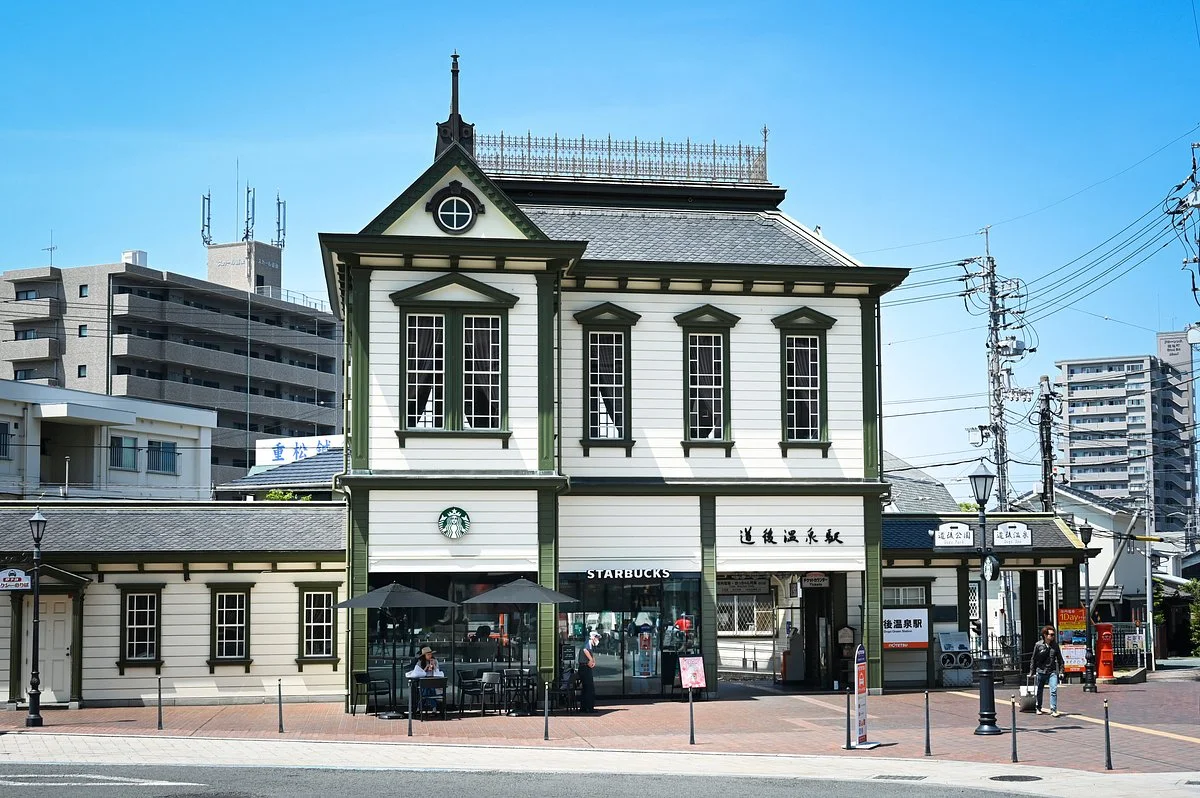
Read more Do • • Dōgo Onsen Honkan — Grab your towel and go bathing! Dōgo Onsen is the oldest and most famous onsen in Japan, with a history stretching back over 3,000 years. Quite a few legends surround these waters. One says that the springs of Dōgo were discovered when, during the age of the gods, a heron placed his injured leg into hot water streaming out of a rock and was miraculously healed. Another claims that when an ill god bathed in the hot spring, the god recovered and danced for joy. The heron motif is everywhere inside the building. Tama no ishi or Yudama, the round rock from which the healing waters sprang, is the source of the symbol for Dōgo, though it looks more like a chestnut to some. There are two types of baths in the honkan for both men and women.;
In January 2019, renovation works started on the Dogo Onsen Honkan during which the bath house is closed partially over the period of seven years. During the first of two phases of the renovation works, two small baths on the first floor remain open to visitors (one for each gender), while the rest of the building, including the rest areas on the second and third floors, gets closed. Some parts of the building will be covered up by scaffolding; however, some of the building's sides (the front and north sides during the first phase of the renovations) will intentionally be kept free of scaffolding to reduce the impact on tourism. — Address: 5-6 Yunomachi, Dōgo — Phone: +81 89-943-8342 — Website: http://www.dogo.or.jp/
• According to legend, Prince Shotoku (574-622) used to partake of the waters, and in 1899, the annex Yushinden, was built so that the Imperial Family could enjoy Dōgo in privacy. The last time the Emperor visited Dōgo was in the 1970s, but the curious can peek into the rooms (15-minute tour without bathing: ¥250 adults, ¥120 children.) There is also an exhibition room that features artifacts from the various stages of Dōgo's history.
• • Kami no Yu 1F — The "Bath of the Gods" is a simple public style bath in a pseudo-Mediterranean setting. Towels and soap are not provided but can be cheaply rented at the front. Includes access to the Exhibition Room and Botchan's Rooms. — Hours: 06:00-23:00 — Price: Adults ¥400, children ¥150
• • Kami no Yu 2F — Bathers can use the lounge, wear a Dōgo yukata, and have tea with sembei (rice cracker) for 60 minutes. Includes access to the Exhibition Room and Botchan's Rooms. — Directions: The path marked in blue. — Hours: 06:00-22:00 — Price: Adults ¥800, children ¥400
• • Tama no Yu 2F — The "Bath of the Spirits" 60-minute course includes use of Kami no Yu, lounge, a yukata, snacks, towel, the two aforementioned rooms and a 15 minute Yushinden tour. — Directions: Follow the red path. — Hours: 06:00-22:00 — Price: Adults ¥1200, children ¥600
• • Tama no Yu Private Room 3F — This course is 80 minutes. The room is private, and the provided yukata has a heron design. Botchan dango (rice dumplings) are served. — Directions: Follow the yellow path. — Hours: 06:00-22:00 — Price: Adults ¥1500, children ¥750
• • Ehime Children's Castle — This vast playground (350,000 m²) consists of five play zones with slides, roller coasters and even workshops for cooking and crafts. Great for families and couples. — Address: 108 Nishinochō, Otsu — Hours: Tu-Su 09:00-17:00, closed Dec 29-Jan 1 — Price: ¥300 adults, ¥100 children — Phone: +81 89-963-3300 — Website: http://www.i-kodomo.jp/
• • Haiku Monument Tour — Many well-known haiku writers came from or have made pilgrimages to Matsuyama, giving it the title "Town of Haiku" (俳句の里). As you tour the city, you'll find dozens of stones engraved with timeless verses. Haiku no Ro features a number of these stones. Some of the haiku artists on display are Takahama Kyoshi (高浜 虚子), Ishida Hakyō (石田波郷) and Yanagihara Kyokudō (柳原 極堂). — Hours: 24 hours — Price: Free
• • Koto Lessons — Taught by volunteers. The koto (stringed musical instrument) and picks are provided, but reservations are required. — Address: Matsuyama Information Center, 4-20-6 Sanbanchō — Hours: Tu-Su 09:00-17:30 — Price: Free — Phone: +81 89-943-2025
• • Zazen Meditation — Zazen, "seated meditation", is a form of Buddhist meditation used to empty the mind and simply exist in the moment. Try it out for some travel stress relief. — Address: Keitokuji, 3-2-5 Takasagochou — Hours: 07:00-08:00 — Price: Free — Phone: +81 89-923-0568
• • Matsuyama Putt Golf — A family-friendly mini-golf course just outside of Matsuyama. Managed by a Canadian expat and his wife. — Address: 229-1 Myouka, Tobe, Iyo District — Directions: Route 33 — Hours: M-F 12:30-20:00, Sa Su 10:00-20:30 — Price: ¥1000 (3 games) — Phone: +81-89-962-6269 — Website: https://puttgolf-matsuyama.amebaownd.com/
Read more