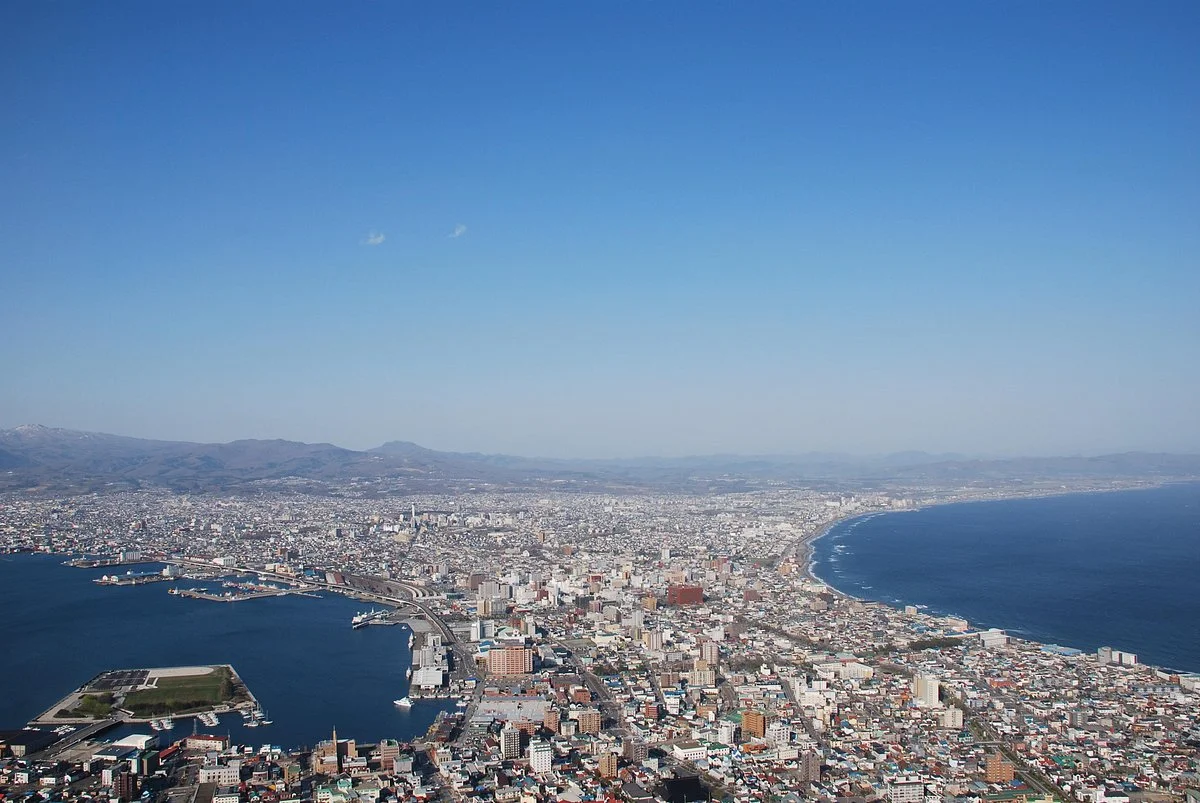
Hakodate (函館市, Hakodate-shi) (formerly written as Hakodadi) is a city and port located in Oshima Subprefecture, Hokkaido, Japan. It is the capital city of Oshima Subprefecture. As of January 31, 2024, the city had an estimated population of 239,813 with 138,807 households, and a population density of 354 persons per km² (920 persons per mi²). The total area is 677.86 square kilometres (261.72 sq mi). The city is the third biggest in Hokkaido after Sapporo and Asahikawa.
Hakodate's signature fish is squid and its signature dish is Hakodate shio rāmen (noodle with salty soup. not to be confused with shoyu ramen), a version of the ubiquitous noodle dish prepared with — you guessed it — squid stock instead of the usual pork. Nearby Mori-machi is also reputed to have Japan's finest ika-meshi, rice-stuffed squid. If you dare, eat the odori-don or ike ika-don dish, where a live squid is caught from the fish tank, its head removed, sliced and served as a side dish, and the rest placed on top of a rice bowl. The squid is so fresh that you can still see it change colours and move its tentacles on the plate as you pour the soy sauce!
There are two main drinking districts in Hakodate, Daimon, which is close to the station, and Goryōkaku, in particular Hon-Cho. Foreigners seem to be more catered to in the Goryōkaku area.
=
Hakodate Airport is connected to notable spots in the city by buses through these stops:
Otherwise, National Route 278 follows the south coast towards Hakodate Station while Prefectural Route 100 goes through the northern edges of the city proper towards Hokuto. Taxis are plentiful, if relatively expensive. Price estimates are as follows (20% surcharge added between 10 PM and 5 AM):
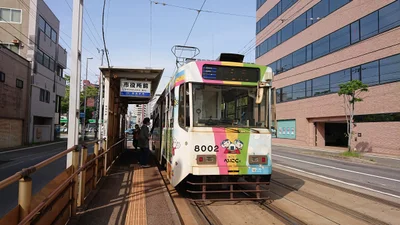
Hakodate is connected by two (practically one that branches to the SW of the city) streetcar lines and roughly two-hundred bus lines. Take a ticket or tap the IC card reader when boarding, then drop the ticket in the ticket box or tap again when getting off.
Nationwide IC cards can be used in Hakodate, but using the local ICAS nimoca cuts ¥160 off bus-bus/bus-streetcar transfers, though it's probably not worth the hassle for travelers to create a card for this discount alone.
Pay exact amounts in cash, and use the 両替 machine next to the ticket box to exchange coins or ¥1000 bills to smaller denominations if needed. Larger bills and the new (silver core with gold ring) ¥500 coins can only be exchanged with the driver.
Day passes costs ¥600 for the streetcar, ¥800 for the bus, or ¥1,000 for both. Most passes can only be purchased from the DohNa!!! website , but streetcar-only paper passes can still be purchased from the driver when delighting. The two streetcar lines are Route 2 (Y, red), and Route 5 (D, blue). Both lines run from 湯の川 (Yunokawa) until it branches in 十字街 (Jūjigai). Stops on these lines are as follows:
1 Some cars terminate here later in the day. Avoid these cars when traveling westward.
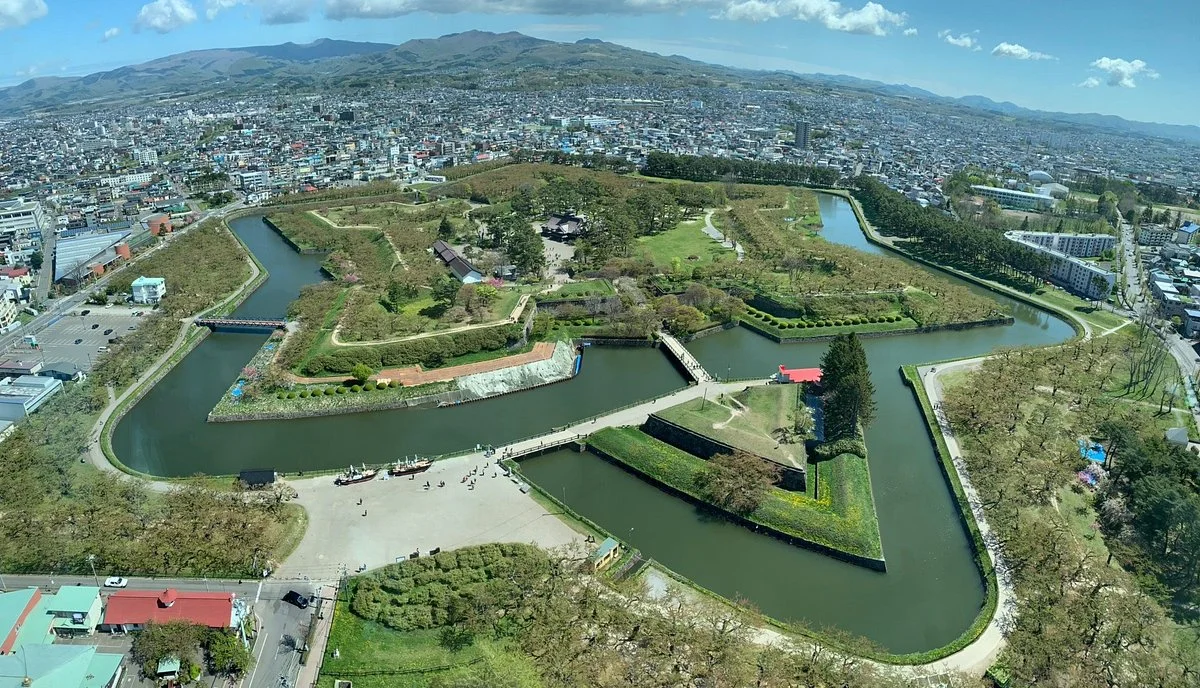
2 Nearest stop to Goryōkaku Park and Goryōkaku Tower. Not to be confused with Goryōkaku Station (五稜郭駅)
3 Adjacent to Hakodate Station (函館駅)
4 Not to be confused with the ferry terminal.