Kurume (久留米市, Kurume-shi) is a city in Fukuoka Prefecture, Japan. As of 1 February 2024, the city had an estimated population of 295,367 in 137,140 households, and a population density of 1309 persons per km². The total area of the city is 229.96 km2 (88.79 sq mi).
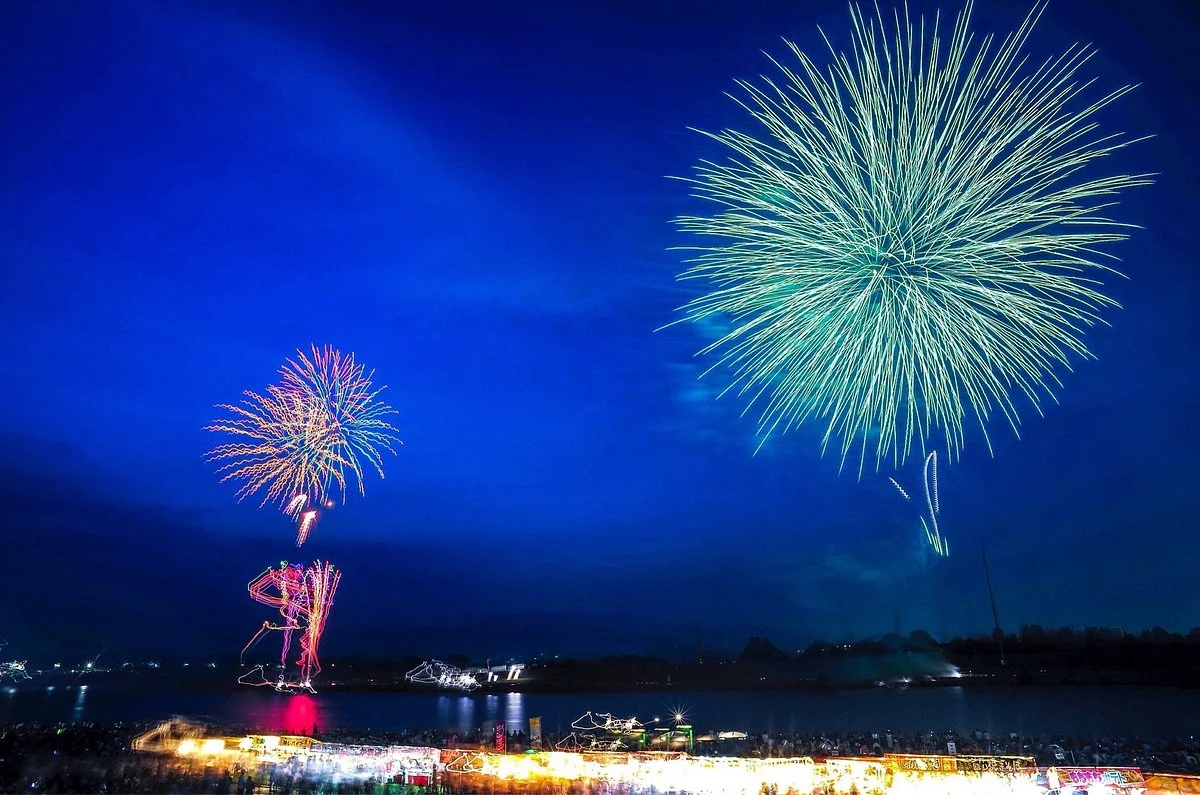
Kurume is host to Japanese festivals and parades, occurring regularly throughout the year. Events usually take place on Japanese holidays, and will include dressing up in yukata, which are cotton kimono worn in the summer, and walking through the hooded shopping street for matsuri games such as fishing and balloon tosses. In the summer, there are also fireworks which will coincide with matsuri events at the local temple.
While at first glance there isn't an abundance of restaurants in Kurume, in reality there are plenty if you know where to look.
In the "Ichibangai" pedestrian mall across from the Nishitetsu Kurume train station, there are 3 or 4 larger Japanese Izakaya restaurants which are worth a visit if you're hungry. They are all right next to the am/pm store.
About one block down from the station to the west is a good Korean restaurant, which can be quite busy on weekends, so you might want to make reservations. Another delicious Korean restaurant named Uji is located in Shojima-machi between JR and Nishitetesu kurume stations. Follow the road south that runs in front of Nishitetsu station past Kogashiramachi park. It is located 2 blocks past the park on the right.
Also, lining the small canal to the west of "Ichibangai" are a number of quaint restaurants, such as Toride (French/Italian), Nixon (fusion) and Le Peu (french), as well as a new Mexican restaurant called "El Sol" a little further away.
There is also an Okinawan restaurant called little Okinawa near St. Mary's Hospital that has occasional live music.
Don't forget to try Taiho Ramen for some of the best Kurume ramen out there.
A small shopping mall named EMax (エマックス emakkusu) is located above the Nishitetsu train station. Stores include InCube variety store, Quest bookstore, and a variety of clothing stores.
Across the main street from the station is "Ichibangai", a long covered pedestrian mall with stores that change often. There are a few restaurants there as well.
About 10 minutes by bus from the station is one of Western Japan's growing chain-mall locations, YouMe Town (ゆめタウン, yume taun). Take the #20 bus from the Nishitetsu station and get off right in front of the large mall complex.
Kurume is famous for its kasuri - a typically indigo-dyed ikat-weave cloth used to make kimono and other traditional Japanese clothes and goods, though kasuri techniques appear in other famous Japanese fabrics such as meisen, a hard-faced silk fabric that became popular in the 1930s when it was dyed and woven using kasuri techniques to create Art Deco-influenced designs.
You're not likely to find much kasuri in Kurume itself, however. Nearby Yanagawa actually sells more Kurume kasuri than Kurume itself, both in cloth and kimono form, and it looks a lot more like a traditional Japanese town, too.
Kurume is also the home of Bridgestone tires and famous for its ramen noodles, which are available in plentiful supply.
=
Kurume is on the JR Kagoshima Main Line.
From Hakata station in Fukuoka there are generally one local and two rapid trains per hour operating to Kurume, with more trains during rush hours. Rapid trains take 40 minutes, and local trains take about an hour, at the same cost of ¥720.
Paying a ¥600 surcharge (¥900 for a reserved seat) will allow you to travel on one of the many limited express trains that operate on the Kagoshima line, which will bring you from Fukuoka to Kurume in half an hour. These trains operate on the same or higher frequency than regular trains, and include the Relay Tsubame for Kagoshima (connecting to the Kyushu Shinkansen), the Ariake for Kumamoto and Hikarinomori, and the Yufu trains for Yufuin, Oita and Beppu.
If you have a Japan Rail Pass you can take any of these limited express trains at no extra charge; for unreserved seating, simply show your pass to the conductor on the train.
Kurume is also on served by Nishitetsu Railway on the Tenjin Omuta Line, stopping at Nishitetsu Kurume station which is about 2.5 km east of the JR station. From Nishitetsu Fukuoka station in the Tenjin area of Fukuoka, take any Omuta-bound train. Train tickets can be purchased from the ticket machines at the station, and cost ¥600. Limited Express trains depart every 30 minutes on the hour and half-hour, and take approximately 30 minutes.
Although Kurume has the appearance of a city with cramped quarters and tall buildings, it is very small and can be easily navigated by bicycle.
The main bus center is located on the ground floor of the Nishitetsu train station. Buses depart frequently. Although there is no English-language time table posted, a travel agency on the same floor may be able to offer some advice during business hours.
= The local tourist association has a multilingual guide site.