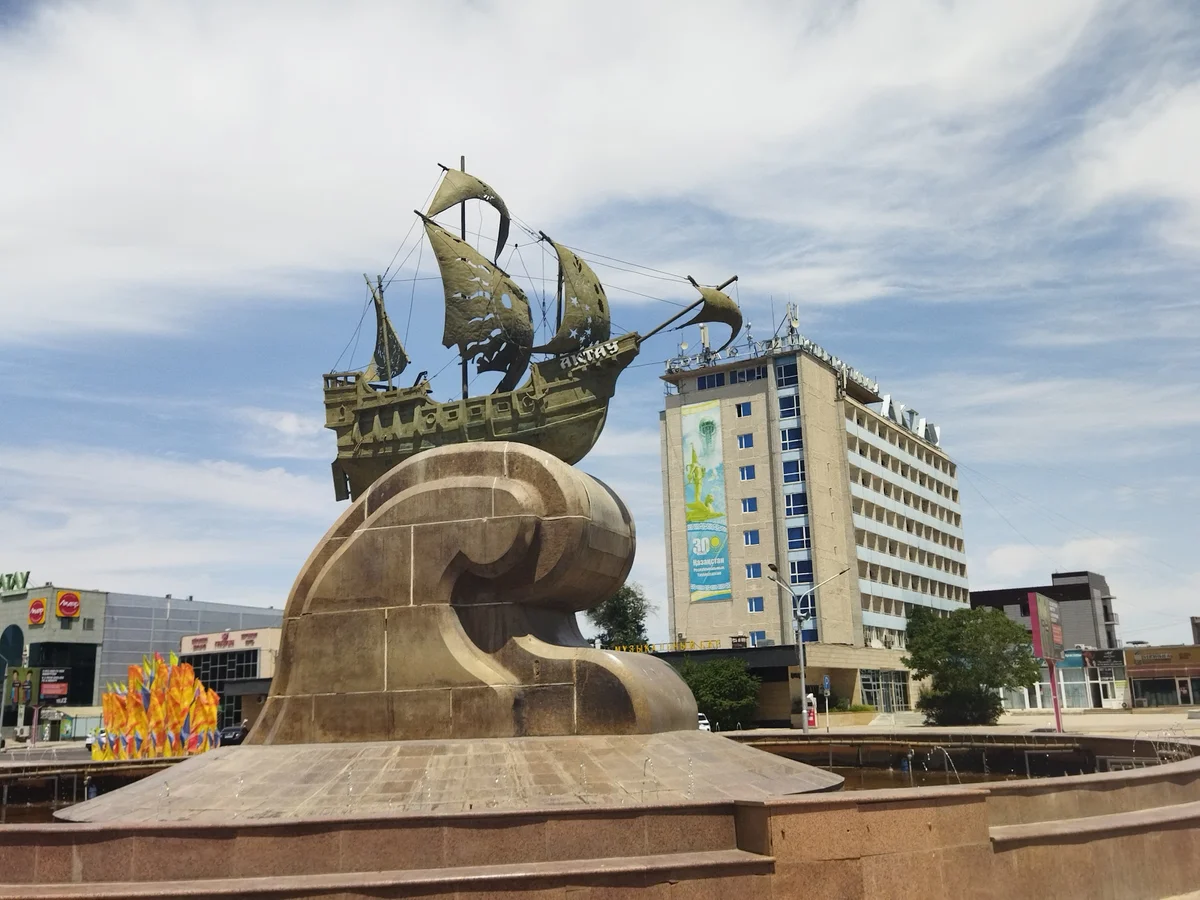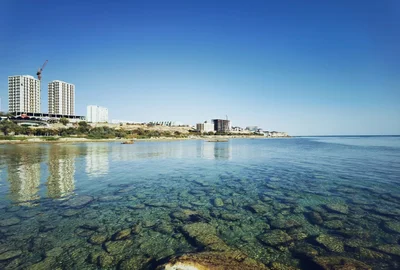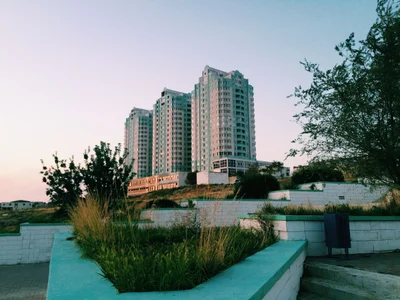
Aktau or Aqtau (Kazakh: Aqtau, Ақтау (), Russian: Актау) is a city in Kazakhstan, located on the eastern shore of the Caspian Sea. Its current name means 'white mountain' in Kazakh, which may be due to its cliffs that overlook the Caspian. From 1964 to 1991, the city was known as Shevchenko. Its former name was given due to the eponymous Ukrainian poet's period of exile in the area. It is located on the Mangyshlak Peninsula and is the capital of the Mangystau Region.
Aktau is known for its unique block address system. Almost no streets in Aktau have names; instead, addresses generally consist of three numbers: the district number (also known as micro-region/micro-district/block), the building number, and the apartment number. This is because Aktau was originally planned as a camp for the workers of the oil industry.
There is a Soviet-era plane on a pedestal just down the hill from the Asian-themed World War II memorial. At this memorial, an eternal flame (Russian: Вечный Огонь) burns under a circle of partial-white arches, which are reminiscent of a yurt. Across from the memorial, there is a drama theater with regular productions in Russian.
Just south of these structures, on Aktau's middle north-south thoroughfare, you will find a collection of restaurants, night clubs and shopping centers. A well-appointed grocery store (Ramstor), movie theater and night club are in the Ardager shopping complex (district 9). Beyond that, in the furthest shopping center to the south is "Shoom" (ШУМ) (district 4), which has a large variety of low-quality stores.
To the north, in district 16, you can find Aktau's new mall. The mall includes a very small ice-skating rink, movie theater and a number of low and high quality shops (low quality children's clothes on the top floor, Hugo Boss on the main floor). The mall includes arguably the best deal in town for food at Asorti on its top floor.
District 10 has little of note, but it serves as a great viewing point of the huge frescoes, which cover one side of decrepit Soviet apartment buildings across the main street in district 9. The frescoes depict various "national fathers" of Kazakhstan, and rumor has it that current president Nursultan Abishuly Nazarbayev is keen to have his picture painted in a similar fashion. For now, there is an enormous banner draped over an apartment building on that row.
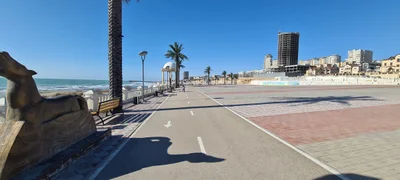
The beaches of Aktau have nice water, and you are allowed to swim anywhere. However, the amount of glass on the beaches can make your beach experience dicey in many locations. Watch out for water snakes in the more rocky parts. Usually, the locals stick to the beaches below the Renaissance. Behind the beach-side grills and clubs there, the beaches are fairly clean and sandy.
Unfortunately you cannot kick back just anywhere on the edge of the Caspian, or around the town for that matter, and down a sunset drink. You are not allowed to drink alcohol outside of these beach-side bar and grills, although there are absolutely no signs to warn you otherwise. The local police take advantage of this situation and the general fear that many tourists have are the corrupt policemen. If you are caught drinking, they only want 1000 tenge as a bribe, even if you don't speak Russian or Kazakh. Most of the locals drinking on the street are ignored by police or pay the small bribe.
Bowling and pool are very popular in the city. There are at least 2 bowling alleys of good quality: just down the steps from the Soviet plane is Alia Bowling Hall (in between districts 7 and 9) and in Aktau Mall (district 16). Pool is available at those places and in Elite Alliance (building 38 in district 8) in two places: near the corner of the main road in the small Baiterek Center and one directly behind the building in between Elite Alliance and apartment building 7. Nautilus Restaurant also offers pool.
Beach volleyball is available in the summers at Aktau Mall sports center in district 16 and on the beach near the Renaissance Hotel.
Grand Hotel Victory will let you use its saunas, gym, Turkish baths, etc. for one day for 4000 tenge.
The prices in Aktau are high even by Western European standards. Quality electronics, clothes, western-style foods, hotels, entertainment and gyms are readily available. However, all of these are marked up anywhere from 100 to 300% above American or German prices. It is best to go local in Aktau and/or buy anything of any consequence before you come.
There are a few bazaars in Aktau. All of them have bad reputations for fleecing foreigners: Yellow Bazaar (Жёлтый Рынок) in district 31, Wave Bazaar (рынок Волна) in district 5, Old Bazaar (Старый Базар) in district 22, and White Bazaar in district 8 (Ак Базар).
Aktau is the type of city U2 may have been talking about when they sang about a place where the streets have no names. The city is divided up into largely unlabeled and chaotically numbered districts (including district 9). These are called "micro-raion" in Russian, which even Kazakhs use to describe them in Kazakh.
Addresses in Aktau are generally written as follows: 14-42-30, where 14 indicates the district, 42 indicates the apartment or commercial building and 30 indicates the apartment number. House numbering is not sequential. Building numbers are marked based on history of construction or clockwise around the block.
City bus fares: 50 tenge (routes available here). Flag fare for taxis should be 200-400 tenge to anywhere within the city center, but this is often 300 tenge for foreigners. Most cars in Aktau will stop and pick you up informally and there is no need to wait for an official taxi to pass by. Official taxi drivers are usually from the Caucasus, and they rarely speak Western European languages. Locals driving newer cars are a better bet if you aren't comfortable communicating in Russian or Kazakh. When you get in the car, you can simply say 'micro-raion' and then state the district's number in Russian. Afterwards, say the building ("Zdanie" or apartment building "Dom") followed by the number.
If you should choose to experience a decrepit form of transportation, you can pay 50 tenge for buses. You will see them plowing their routes on the three main roads in Aktau (north and south coastal, middle north and south road, and the eastern north and south road).
Useful map of Aktau available here: http://www.aktau-business.com/gmap/ Map includes a lot of helpful marks like hotels, cultural centres, markets, cafe, restaurants, tourist's companies, plain & train tickets etc.
Aktau means "white mountain" in Kazakh, and the city is the capital of the Region of Mangystau. While the city itself is relatively young, there is a number of ancient historical and nature sites of significance that can be visited in the area.
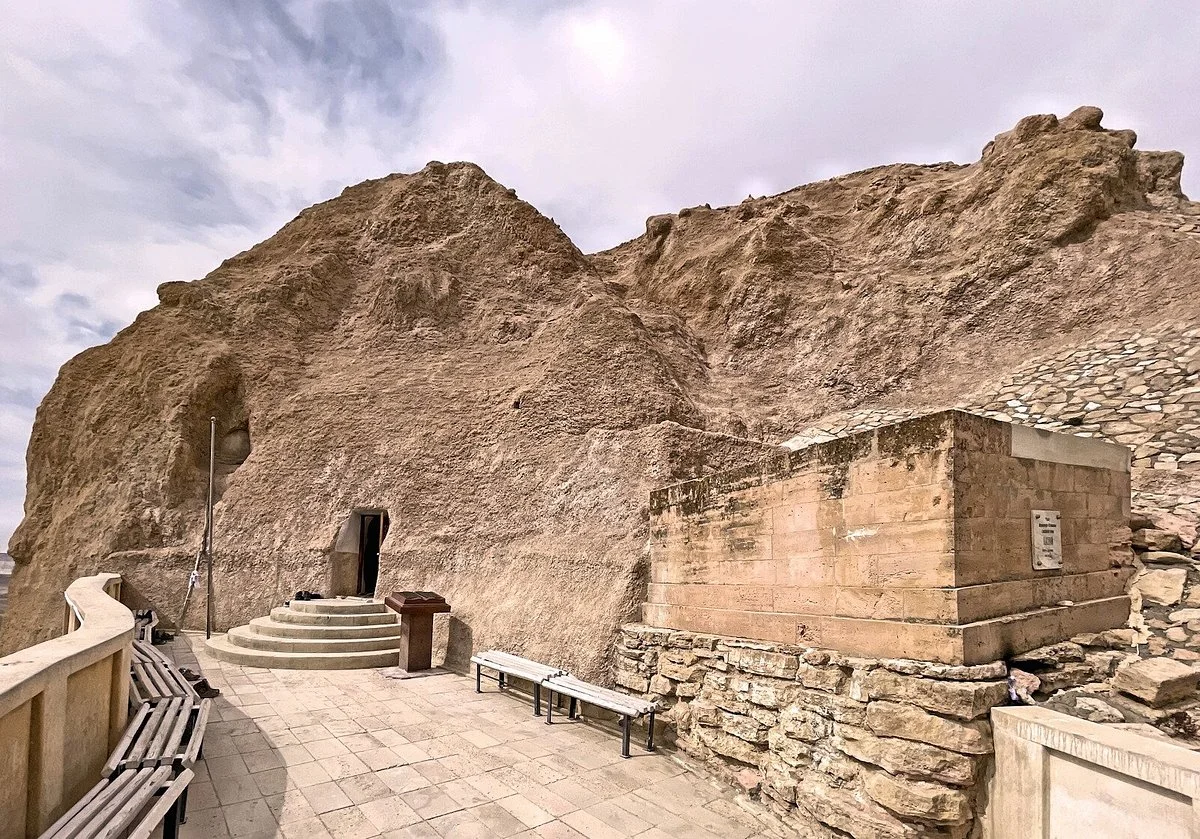
Mangystau translates roughly from Kazakh as "eternal mountains", although the region is actually home to the Karagiye Depression - one of the lowest points in the world at 130 meters below sea level. The region is also home to Sufi-pilgrimage sites such as Beket-Ata, Shakpak-Ata, Shopan-Ata and Masat-Ata, which exist due to Mangystau's location on ancient, but minor, land trading routes around the Caspian. The region is also home to some minor, albeit beautiful, natural attractions such as "Fire Mountain" (Kazakh: Отпантау), oases Tamshali and Saura, and Radon Hot Springs and Mudbaths. The Mangystau region is principally populated by Kazakhs of the Aday Tribe, which is one of the "little brother" tribes in Kazakh history.
Aktau was created as a uranium mining town in 1961 and was named Shevchenko, after the Ukrainian national poet Taras Hryhorovych Shevchenko (Ukrainian: Тара́с Григо́рович Шевче́нко). The Soviets built a major nuclear power plant and desalinization plant and the desert was transformed into a livable city. After independence, the Kazakhs renamed Shevchenko, and the city has become Kazakhstan's only port. Due to the large amount of oil and gas exported from Kazakhstan, the city has boomed and is now home to many new developments, which have stretched the infrastructure to its breaking point.
If you come to this city, you will be able to experience the paradox of large supplies of hydrocarbons, uranium and seawater coupled with frequent brown-outs and water shortages.