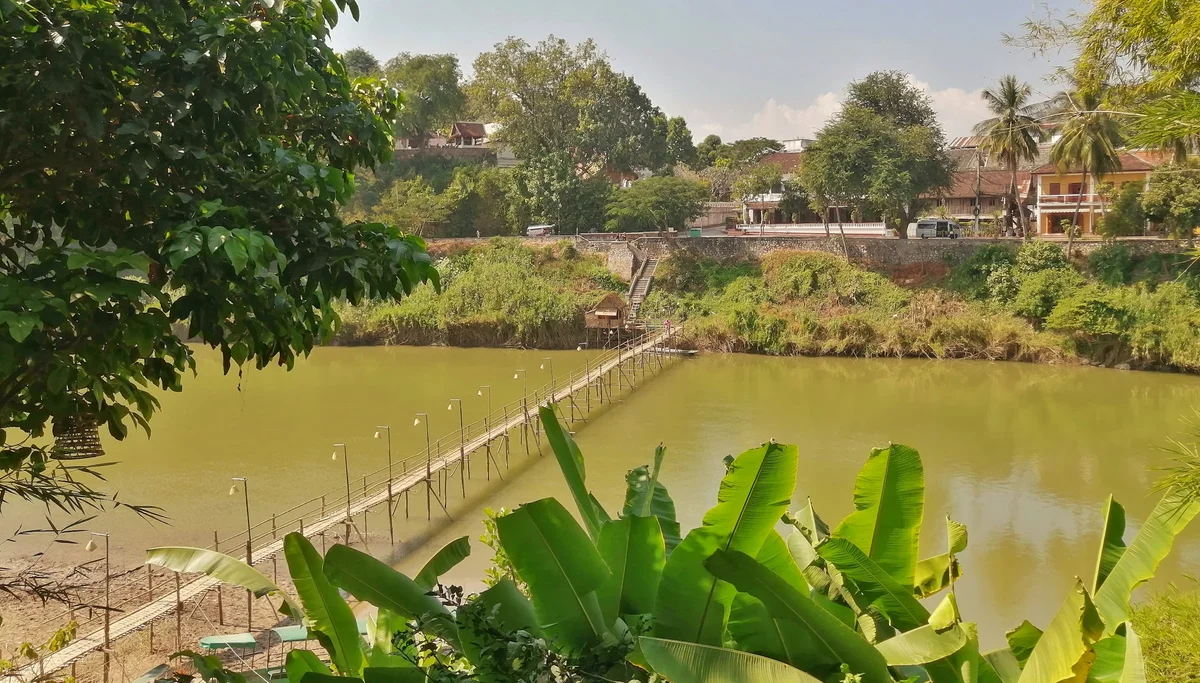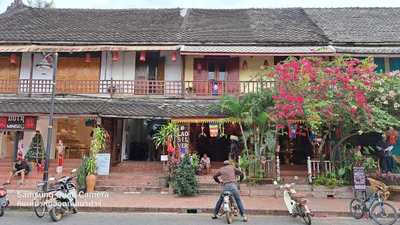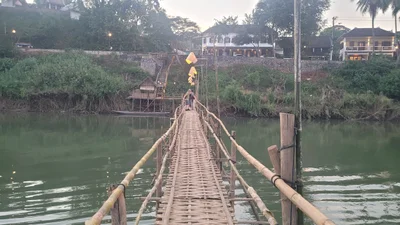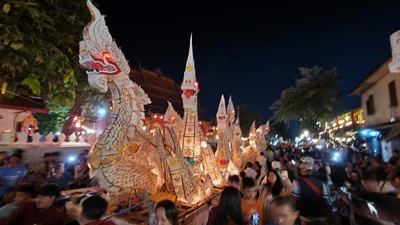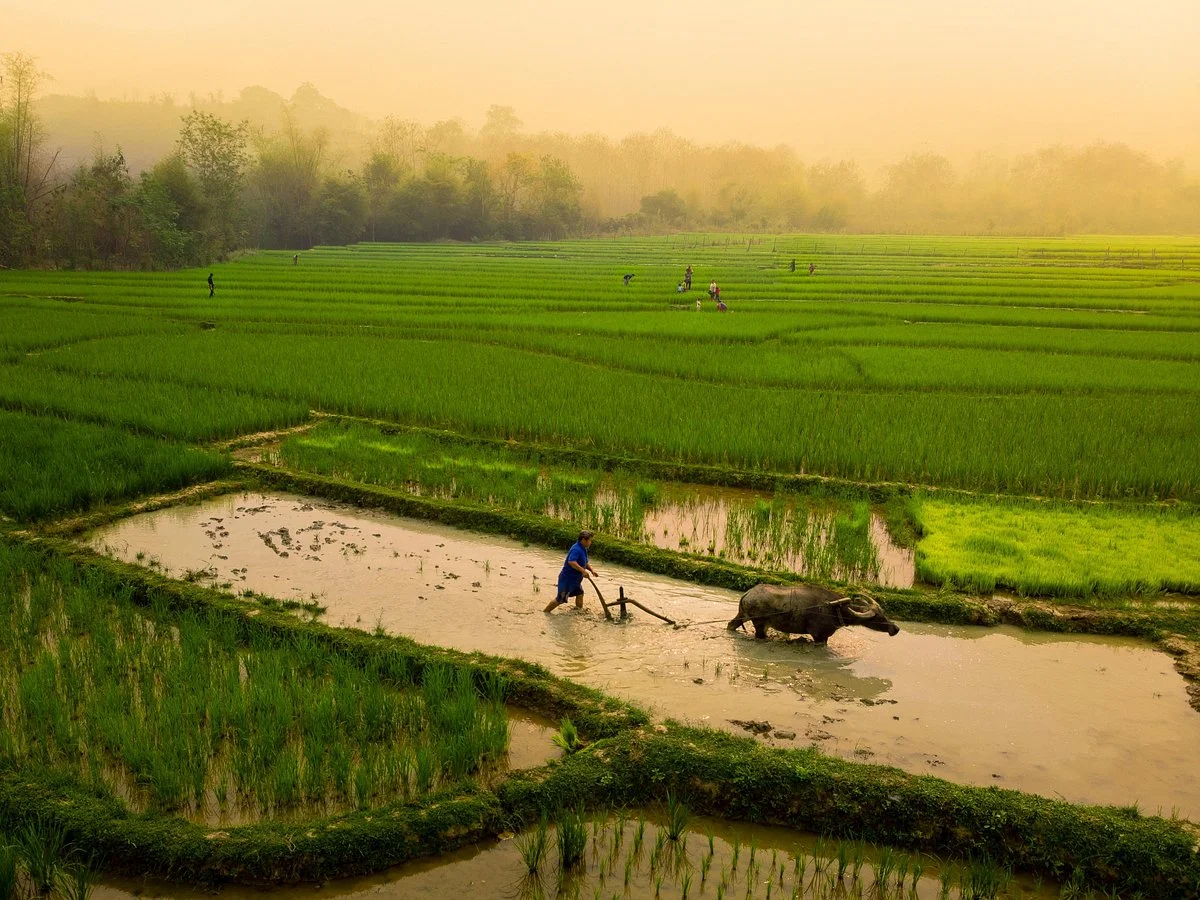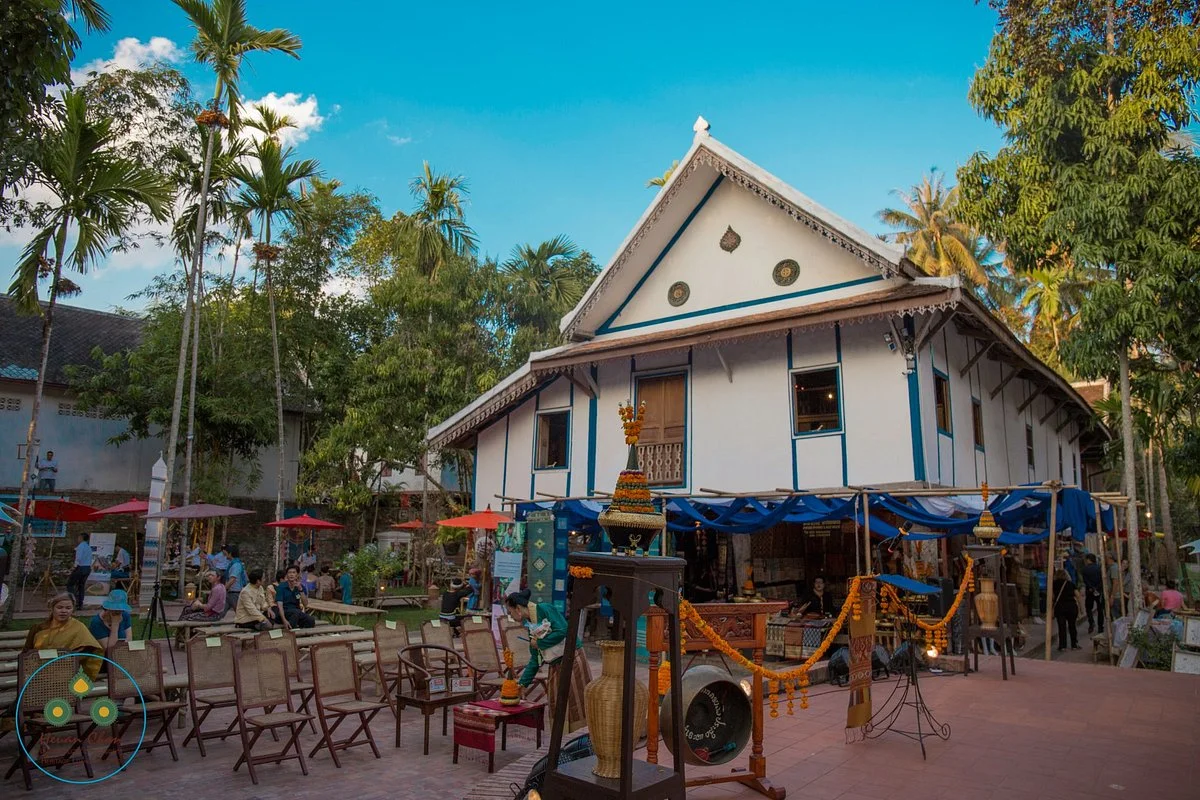
Luang Phabang, (Lao: ຫລວງພະບາງ/ຫຼວງພະບາງ) or Louangphabang (pronounced [lǔaŋ pʰa.bàːŋ]), commonly transliterated into Western languages from the pre-1975 Lao spelling ຫຼວງພຣະບາງ (ຣ = silent r) as Luang Prabang, literally meaning "Royal Buddha Image", is a city in north central Laos, consisting of 58 adjacent villages, of which 33 comprise the UNESCO Town of Luang Prabang World Heritage Site. It was listed in 1995 for unique and "remarkably" well preserved architectural, religious and cultural heritage, a blend of the rural and urban developments over several centuries, including the French colonial influences during the 19th and 20th centuries.The centre of the city consists of four main roads and is located on a peninsula at the confluence of the Nam Khan and Mekong River.
Luang Prabang is well known for its numerous Buddhist temples and monasteries.
Every morning, hundreds of monks from the various monasteries walk through the streets collecting alms. One of the city's major landmarks is Mount Phou Si; a large steep hill which despite the constrained scale of the city, is 150 metres (490 ft) high; a steep staircase leads to Wat Chom Si shrine and an overlook of the city and the rivers.The city was formerly the capital of a kingdom of the same name.
It had also been known by the ancient name of Xieng Thong.
It was the royal capital and seat of government of the Kingdom of Laos, until the Pathet Lao takeover in 1975. The city is part of Luang Prabang District of Luang Prabang Province and is the capital and administrative centre of the province. It lies approximately 300 km (190 mi) north of the capital Vientiane.
Currently, the population of the city as a whole is roughly 56,000 inhabitants with the UNESCO protected site being inhabited by around 24,000.
=
There are no multi-national fast food outlets in Luang Prabang. Restaurants line Sisavangvong Rd and the roads along the Mekong and Nam Khan. Food runs the gamut from standard SE Asian backpacker fare to more traditional Lao dishes, including buffalo sausage right up to very high quality French cuisine. There are also numerous market stalls for cheaper food, including baguettes, crepes, and pancakes.
Typical prices for Beerlao is 25,000 kip for a large bottle and 20,000 kip for a small, which generally are standard throughout the country. Most riverside places offer the same prices for beer and similar food, although prices for food can vary wildly. Shop around and don't be shy about asking prices if anything is unclear.
Probably the most recommended food is the Lao version of fried spring roll, vegetable at 3,000 kip or pork at 5,000 kip per piece.
A speciality of Luang Prabang worth trying is khai phaen (ໄຄແຜ່ນ), made by collecting green algae from the Mekong, drying it as sheets and jazzing it up with sesame seeds, chillies, oil, etc. The end product resembles Japanese nori seaweed, and it's widely sold from street stalls, but is not meant to be eaten raw! Instead, find any bar and try it flash-fried, which transforms chewy plastic into a delicious, crispy, salty snack that goes well with beer.
Other local specialities include:
There are a number of places to drink around Luang Prabang, though the late-night club scene is pretty much nonexistent. The liveliest and busiest bars are in a small cluster between Mt Phousi and the Nam Khong.
Luang Prabang's status means that curfews are strictly enforced here. Bars start winding down at 23:00 and close at 23:30 sharp. The only late-night options permitted are outside the main part of town, a discothèque patronised mostly by locals and bizarrely, a ten pin bowling alley.
If you do plan on staying out after hours, check the arrangements with your guesthouse first to avoid being locked out.
If you're simply looking to relax and enjoy the river views, most riverside restaurants have tables outside where you can sit back with a beer or two.
Thai baht and USD are widely accepted but the exchange rates vary. There are some ATMs that accept Visa, MasterCard, Maestro and Eurocards. These ATMs are mostly on Sisavangvong Rd near the end of the Night Market. The ATMs dispense currency in Lao kip, and generally allow a maximum withdrawal of 1,000,000 kip with a charge of 20,000 kip. Banque Franco-Lao allows a maximum withdrawal of 2,000,000 kip with a charge of 40,000 kip. Multiple withdrawals are allowed to a daily maximum of 5,000,000 kip. If you arrive by plane, there is an ATM and a money changer at the airport which is only open for a few hours of the day. Also, their rates are significantly worse than the banks in town.
Money changers/exchange For Malaysians, it is best to change ringgit to baht, then change the baht to kip in Laos. This is because they give not so good rates in Laos for Malaysian ringgit.
There are a number of money changers who generally do not offer good rates, and are either on Sisavangvong Rd or in the permanent markets further east. One is next to the ATM near the Night Markets, another is about 50 m further north along the street, in front of one of the first restaurants (looks like a little tollbooth/shack). The rates offered may vary, so shop around before you change. Better maybe to use official money changing services at a bank which are easily found. There are reports of scam by using money changers to take cash advance. They will charge you more in US dollars with a different exchange rate than posted. Even after complaining it's not possible to cancel the transaction.
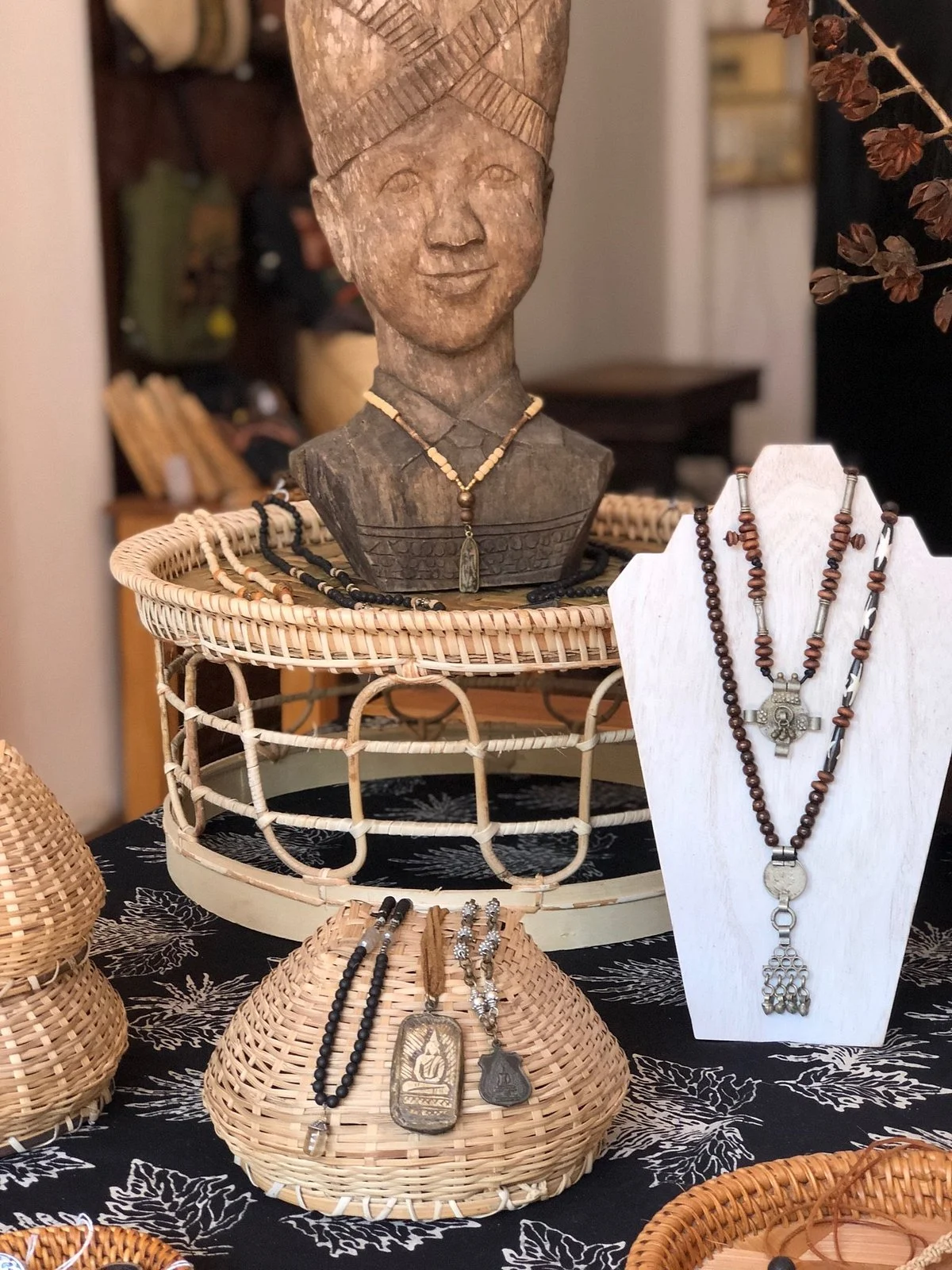
The Night Market (on Sisavangvong Road) caters to tourists with every kind of souvenir you could want and closes at about 22:00. Particularly good are the duvet covers, cushion covers, and pillow sets. They can even make one up to your dimensions by the next day. It is well worth a look and the hawkers are very pleasant to deal with and amazingly non-pushy by the standard elsewhere in Asia. Traders range from young children to the elderly who usually make crafts, art, and goods by themselves. Good-natured bargaining is advisable, but don't obsess over this and ruin your experience as well as giving the trader a bad day. The quality and design of goods is lower in the market than in the legions of increasingly chic stores in the city. There may be some souvenirs available made from endangered animals. Avoid buying rare pets, leather, ivory, talons, dried sea creatures (starfish, etc.), fur, feathers, teeth and other animal products. This is the best place to buy lower end souvenirs and hone your bargaining skills.
Laotian aesthetic sense is quite evolved. For instance check out some of the higher end stores:
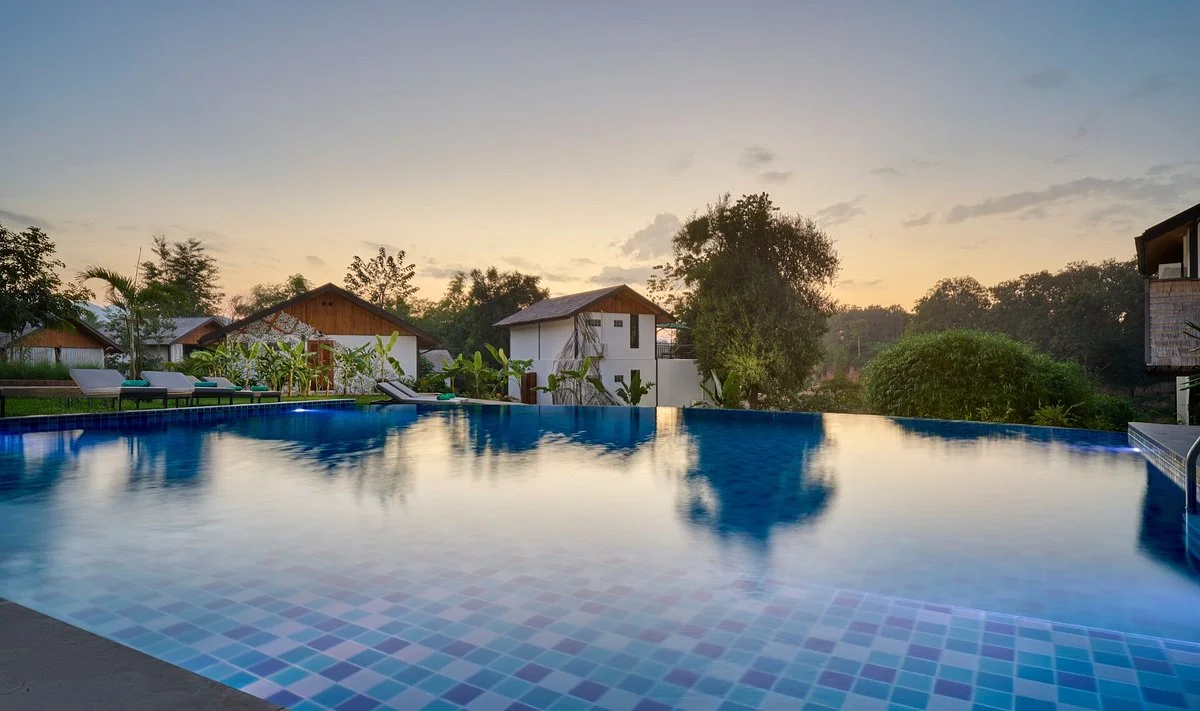
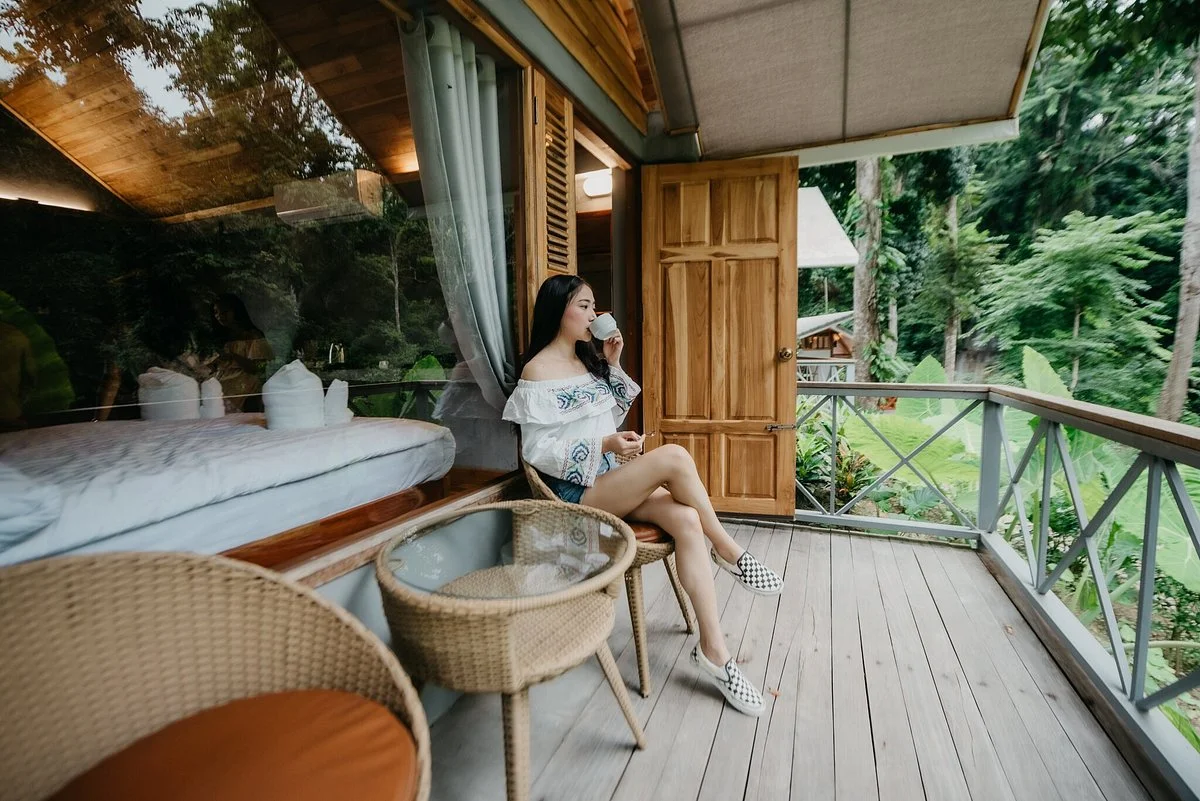
Luang Prabang has the best selection of accommodation in Laos, with something to suit every budget. There is everything from tent sites under a roof for 20,000 kip per night up to super luxury at US$1,500 per night.
Don't expect though that the whole kit and caboodle that you can find in Vietnam or Cambodia, air-con, cable TV, Internet, can be found in LP for US$12.
While the big chains have yet to make an appearance, there's plenty of "boutique" accommodation, although this heavily overused word runs the gamut from quirky to luxury. Most of the lanes and alleys all through Luang Prabang have places to stay, with a large selection also found in the lanes south of the Post Office. Free Wi-Fi is quite common in budget guesthouses.
=
Visa-on-Arrival is available at the airport, costing US$40 (as of 2022) for most eligible countries, and $20 for citizens of China or Vietnam, plus an extra $1 service fee. You need a passport photo to obtain a visa. If you don't have one, they'll scan your picture from your passport and charge you an additional US dollar.
ASEAN nationals do not need a visa to enter Laos for stays not exceeding 30 days.
Visa extensions are possible at the immigration office opposite the Rama Hotel. The cost is US$2/day plus a US$2 form fee. The process is very easy. Turn up in the morning with your passport and one photo. Fill in a form (in Luang Prabang they do this for you) and come back in the afternoon for your extension.
A tuk-tuk costs 80-100,000 kip (Mar 2020). There is a taxi counter at the exit of the arrival hall. Taxis are a flat rate of 80,000 kip for 1–2 people (as of Dec 2022). If you're traveling light, a walk from the airport to the town center takes about 1 hour.
There are four ATMs just outside the arrival hall.
Luang Prabang's Old Town is only about 1.5 km long and 500 meters wide, which makes it small enough to comfortably cover on foot, and this is in fact the only way to climb Phousi Hill. The city is also quite flat, which makes cycling an attractive option, although the ever-increasing traffic makes this dangerous at times.
For longer trips, your options are basically negotiating with open-air tuk-tuks, or arranging a tour package with your hotel or a travel agent, which will likely see you crammed into one of the ubiquitous silver Toyota minivans. (Large buses and trucks are both banned in the old town.) Prices for both are always per person unless you explicitly negotiate a charter. Loca ridehailing is also available.