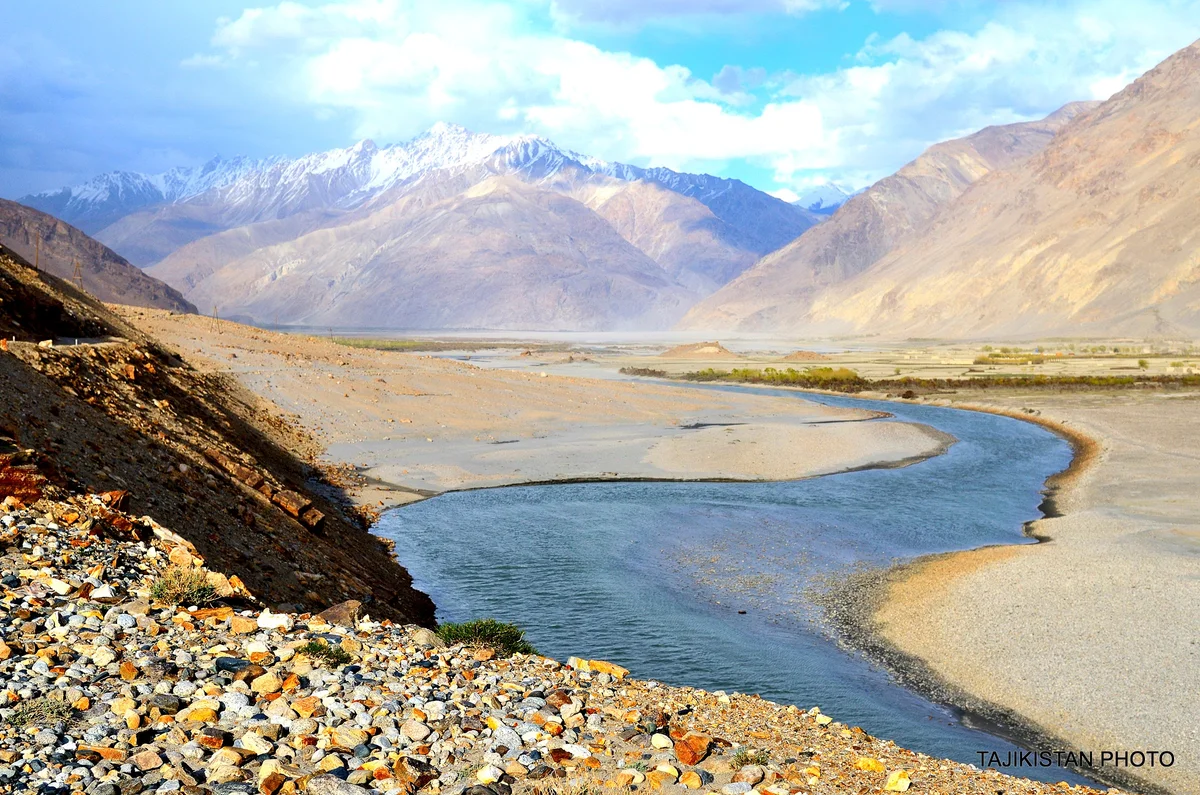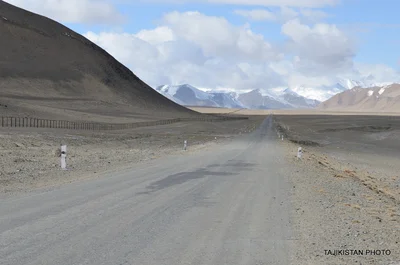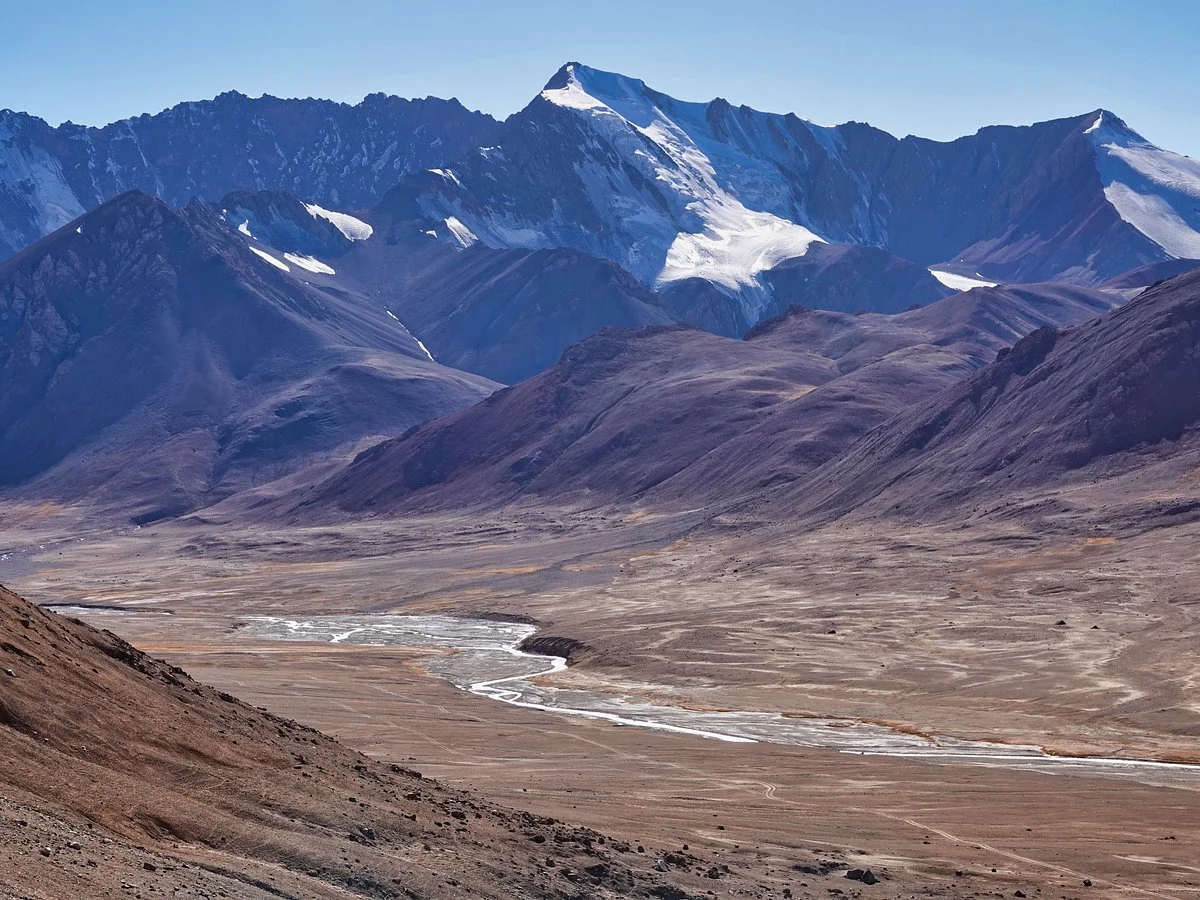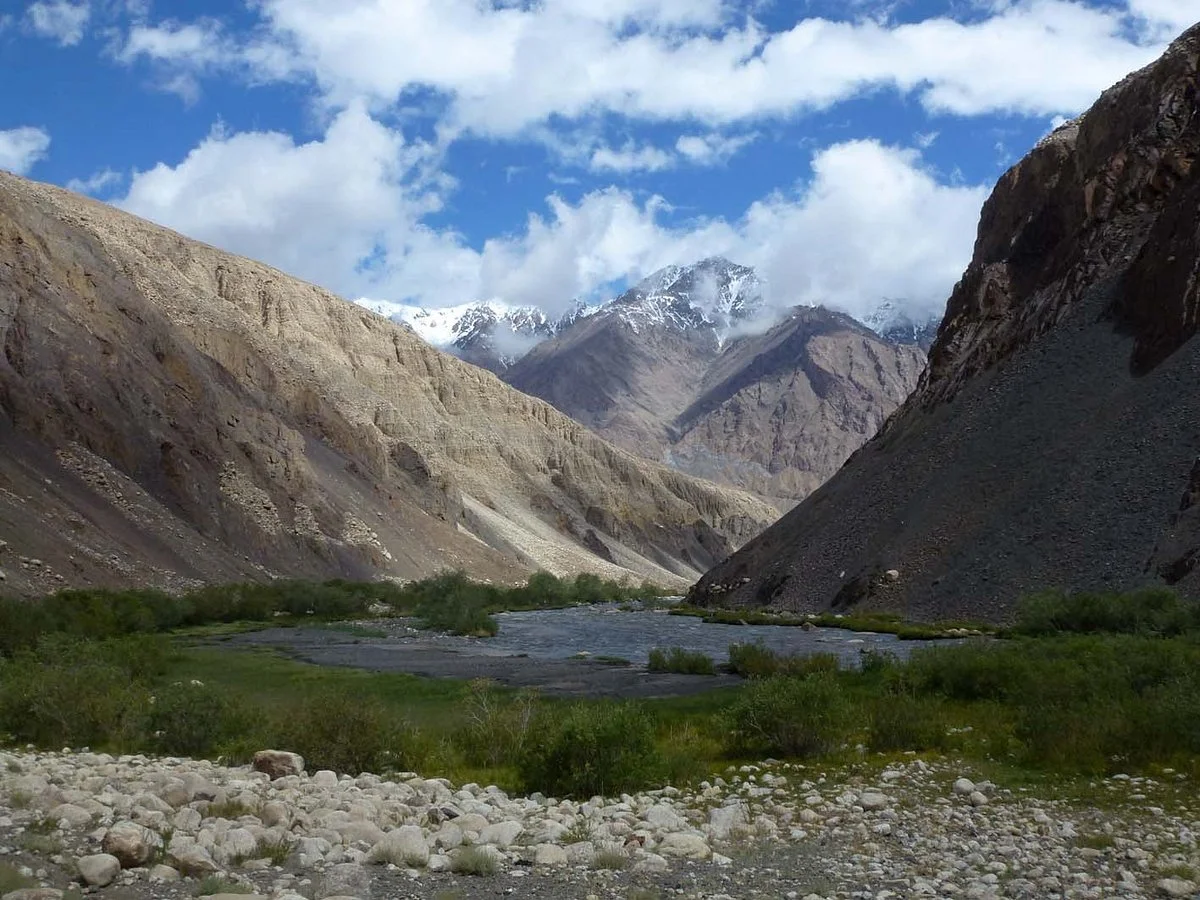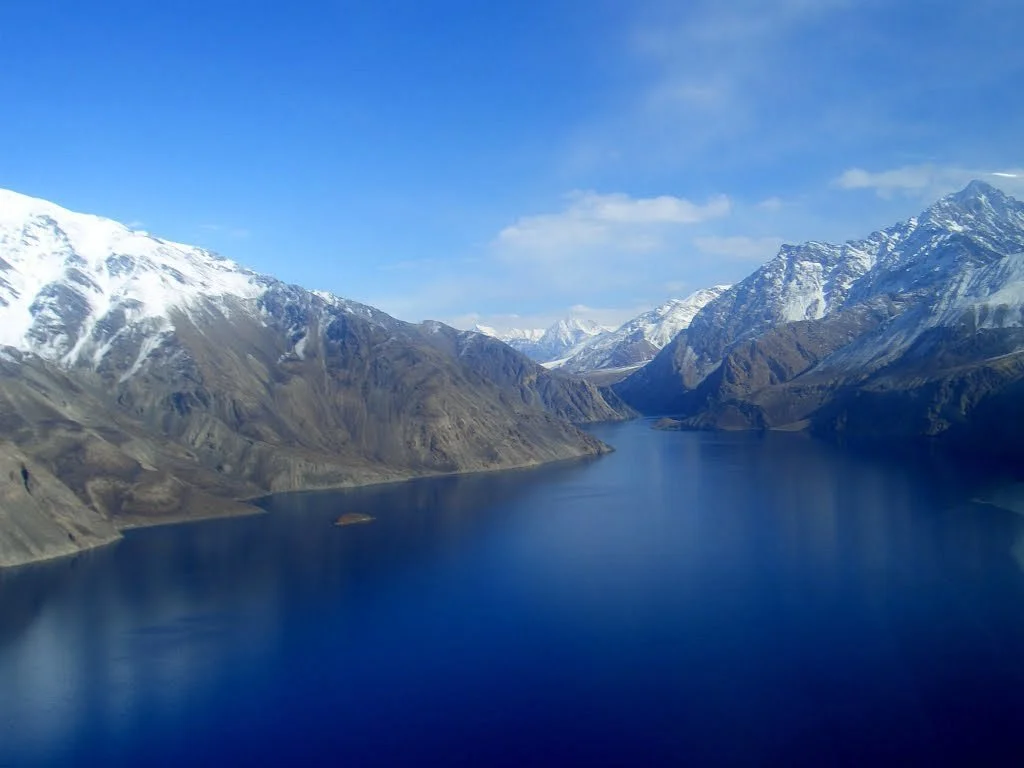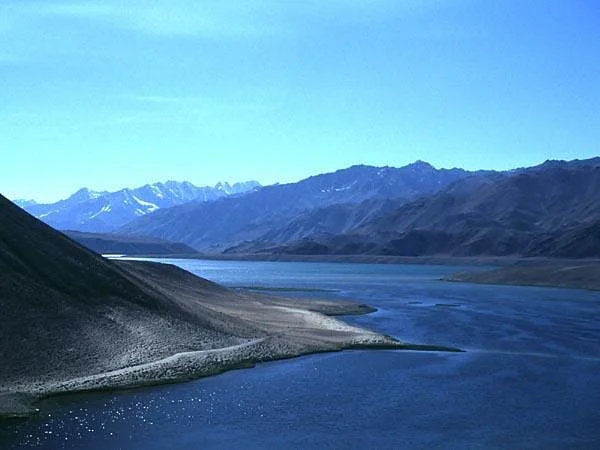
Murghob (Tajik: Мурғоб) or Murghab (Russian: Мургаб, Murgab, from the Persian word margh-ab, meaning 'prairie river') is the capital of Murghob District in the Pamir Mountains of Gorno-Badakhshan, Tajikistan. With a population of just under 7,500, Murghob is the only significant town in the eastern half of Gorno-Badakhshan. It is the highest town in Tajikistan (and of the former Soviet Union) at 3,650 meters above sea level.
It is where the Pamir Highway crosses the Bartang river.The Pamir Highway goes north to Sary-Tash and on to Osh in Kyrgyzstan and southwest to the region's capital Khorugh. Another road goes east over the Kulma Pass to the Karakoram Highway in China connecting to Tashkurgan to the south and Kashgar to the north.
In town there is nothing to do. Internet is available for 10 somoni per hour at ACTED during weekdays.
The surroundings are really beautiful, and several trips can be made from Murghab. Most require your own transport and are costly.
For those keen on walking, you can walk to Gumbezkul in the Pschart valley (35 km), sleep there in a yurt (25 somoni), hike up the pass and walk all the way back to Murghab (31 km).
There are only basic food supplies in Murghab. You can buy rice, flour, oil, alcohol, sugar, potatoes, onions, some dried fruits, confectionery and cakes in the bazaar. Try the ice cream sold in the little shack near the bazaar. Few basic restaurants around bazaar are open only in daytime. Most hotels and homestays could provide meal, which is often included in the price (US$1-5 per time per person).
There are homestays/guesthouses and hotels. Prices can be bargained for, depending on the inclusion of food and time of year. Expect to pay US$4-20.
One is not so far from bazaar: go up to the main highway, cross it and walk more about 100-200 metres up. Then you will see some empty area, behind that there is a hotel on the left hand side. It has no signs even in Russian, but if you people for 'gostinitsa' they should be able to direct you.
There are shared vans/jeeps to Khorog almost everyday from the bazaar, 100-120 somoni per seat (2012). They wait for passengers and depart when full. There are fewer passengers on weekends, though. Small Chinese vans should be cheaper, since they spend less fuel than normal jeeps. If you want go to Dzhelondy, Khargush, and similar places, the drivers would nevertheless ask the full fare to Khorog, so hitchhiking may be a better option. Just head south along the highway, cross the bridge, walk up to the check point (3-4 km from the centre). You can hitch the trucks coming from China or some vans, 40-50 somoni to Dzhelondy or 60-80 to Khorog should be enough.
Shared jeeps from Osh are less frequent and depart only when they find enough passengers. Normally, there are 1-2 jeeps every day or every second day. The price is 150 somoni to Osh. You have to be at the parking lot ('stoyanka') at the bazaar at 07:00-08:00, as sometimes they start early. Arranging with the driver in the evening of the previous day may be even better, but don't rely on one driver, who will likely 'promise' you that he will find the remaining passengers tomorrow. He may find them, or may not find and eventually not go. It is better to wait at the parking lot, because there is some occasional transport every now and then. Hitchhiking is also possible. Some cars start or terminate at small settlements between Murghab and Kyzyl-Art. Each 40-50 km there are settlements or road worker's houses along the highway, where you can sleep or have tea. You can walk from Tajik border post to the Kyrgyz border post in 3-4 hours, all the way down, nice walk. And from the Kyrgyz border post it is a bit longer hike over 25 km, across Alai valley to Sary-Tash with abundant transport to Osh.
If you are hiring a car all the way from Osh, ensure it is a Kyrgyzstani car, or the driver has all necessary papers for border crossing.
No public transport in the town, but given that it is fairly small there is no real need for it. You could just flag down any car on the street, most would be happy to bring you around the town for 2-5 somoni.
It was founded as a Russian military outpost in the 1800s and later turned into a dedicated living area by the Soviets, so the town is largely Russian-speaking unlike most of rural Tajikistan. You can get by very well only knowing Russian and not Tajik. Also because of Russian influence, alcohol is common although the population is largely Muslim.