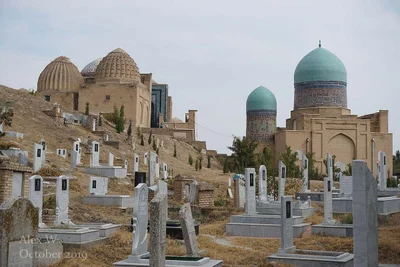
Samarkand or Samarqand ( SAM-ər-kand; Uzbek and Tajik: Самарқанд, pronounced [sæmærqænd, -ænt]; Persian: سمرقند) is a city in southeastern Uzbekistan and among the oldest continuously inhabited cities in Central Asia. Samarqand is the capital of Samarqand Region and a district-level city, that includes the urban-type settlements Kimyogarlar, Farhod and Khishrav. With 551,700 inhabitants (2021), it is the third-largest city of Uzbekistan.
There is evidence of human activity in the area of the city dating from the late Paleolithic Era. Though there is no direct evidence of when Samarqand was founded, several theories propose that it was founded between the 8th and 7th centuries BCE. Prospering from its location on the Silk Road between China, Persia and Europe, at times Samarqand was one of the largest cities in Central Asia, and was an important city of the empires of Greater Iran. By the time of the Persian Achaemenid Empire, it was the capital of the Sogdian satrapy. The city was conquered by Alexander the Great in 329 BCE, when it was known as Markanda, which was rendered in Greek as Μαράκανδα. The city was ruled by a succession of Iranian and Turkic rulers until it was conquered by the Mongols under Genghis Khan in 1220.
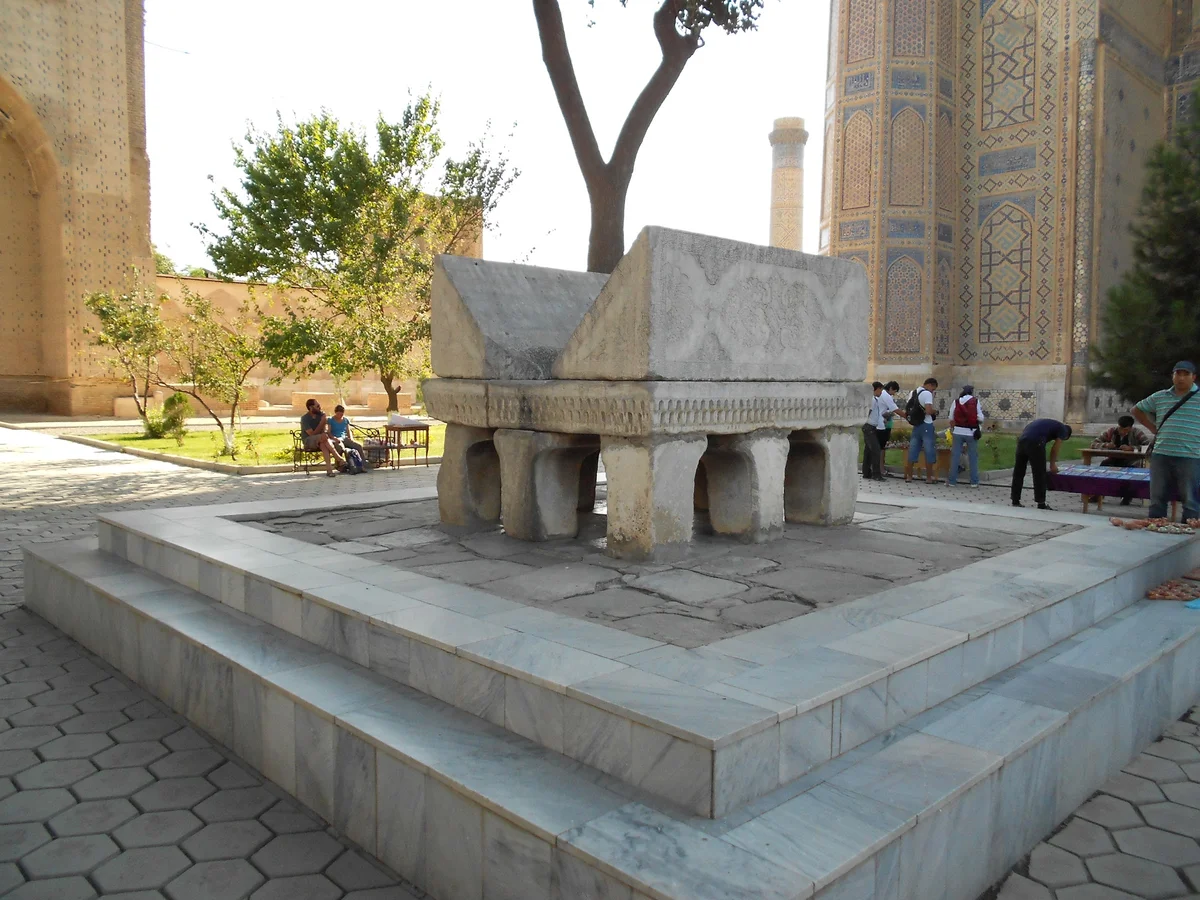
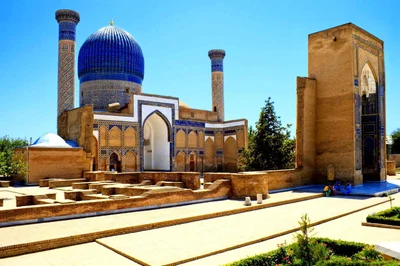
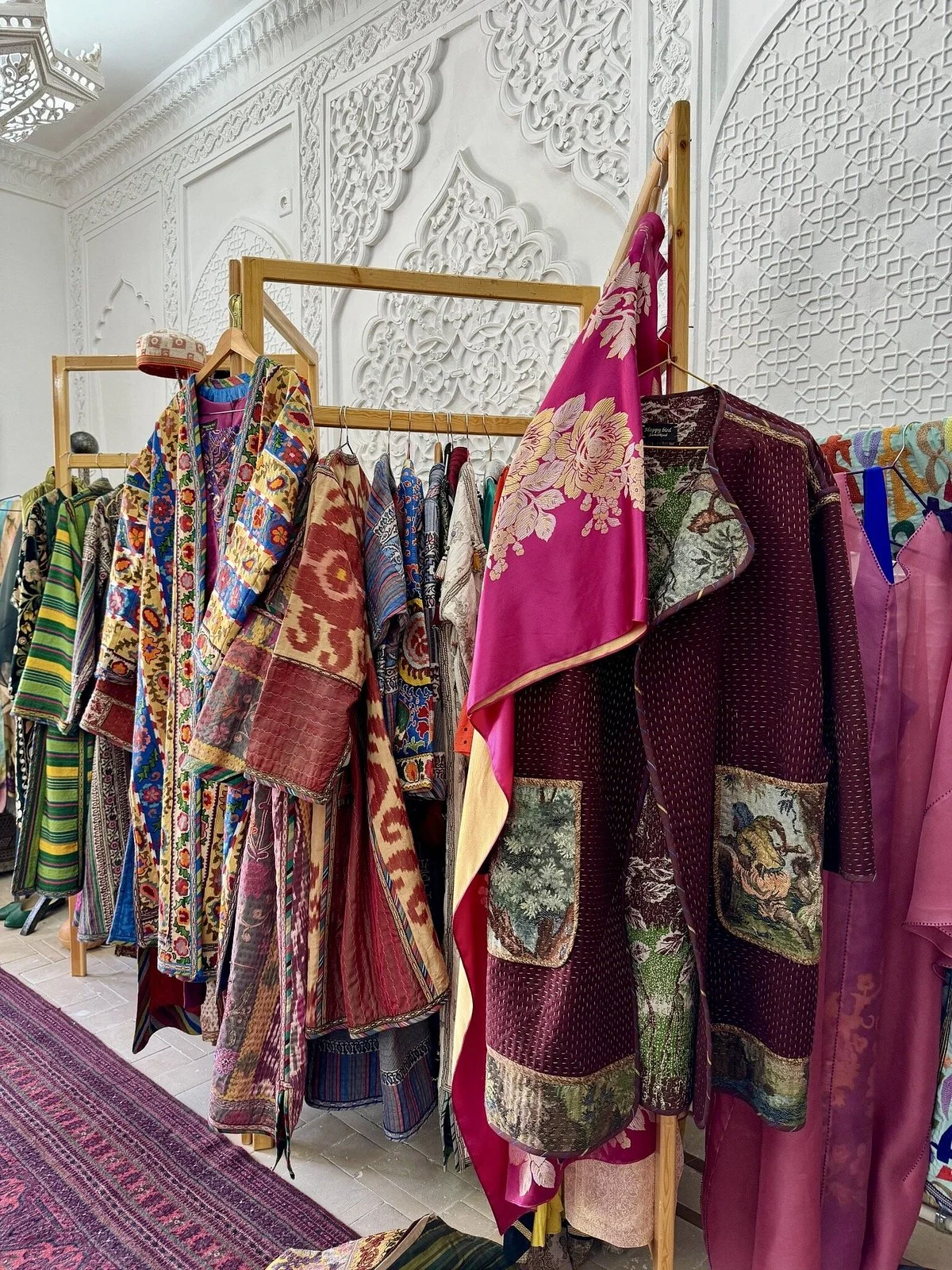
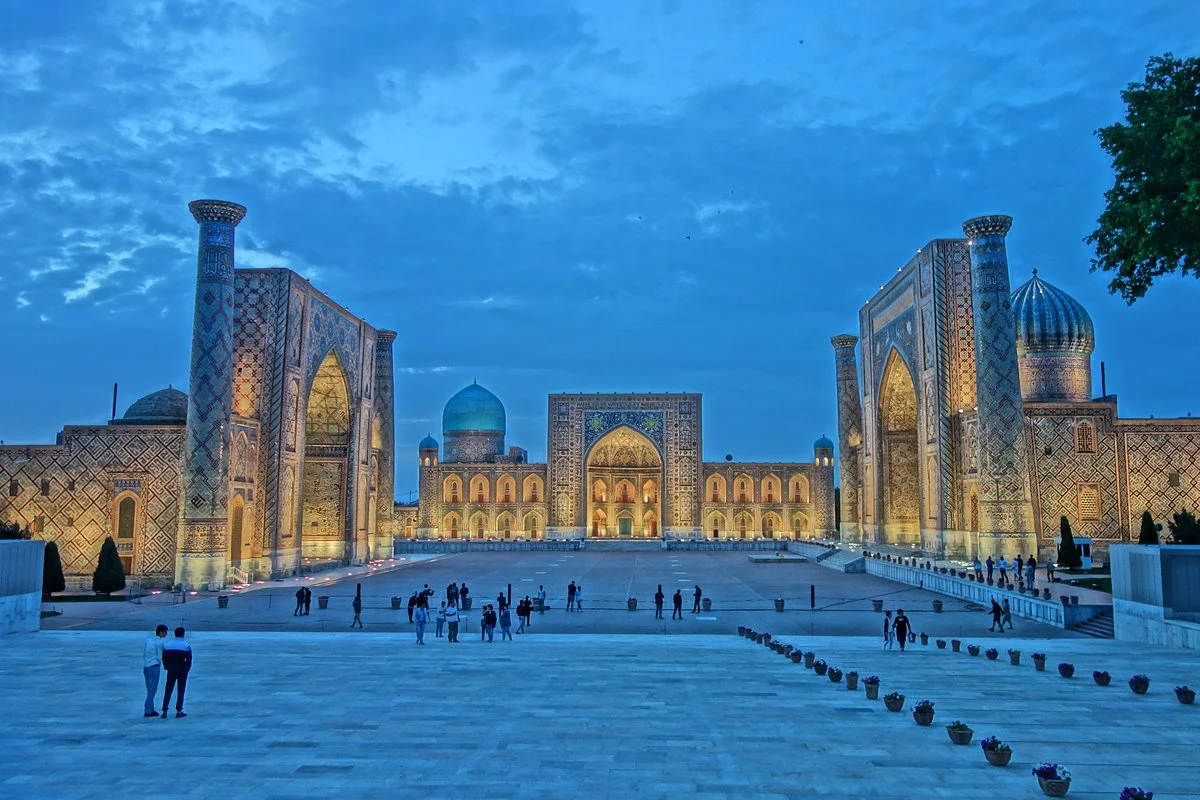
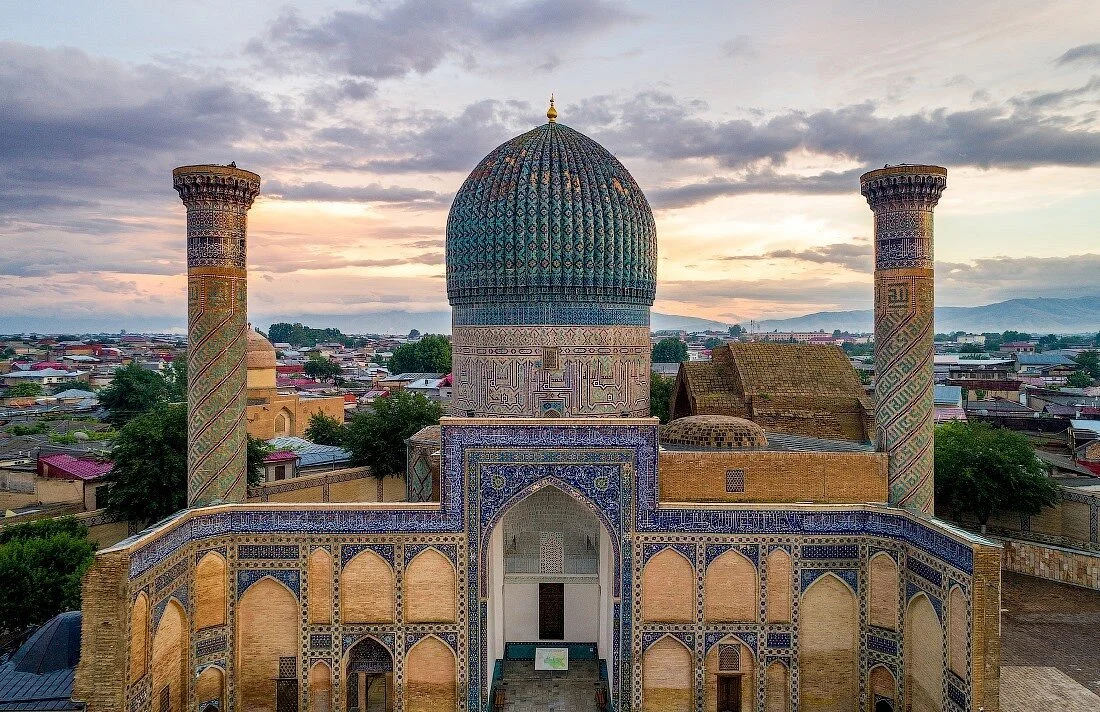
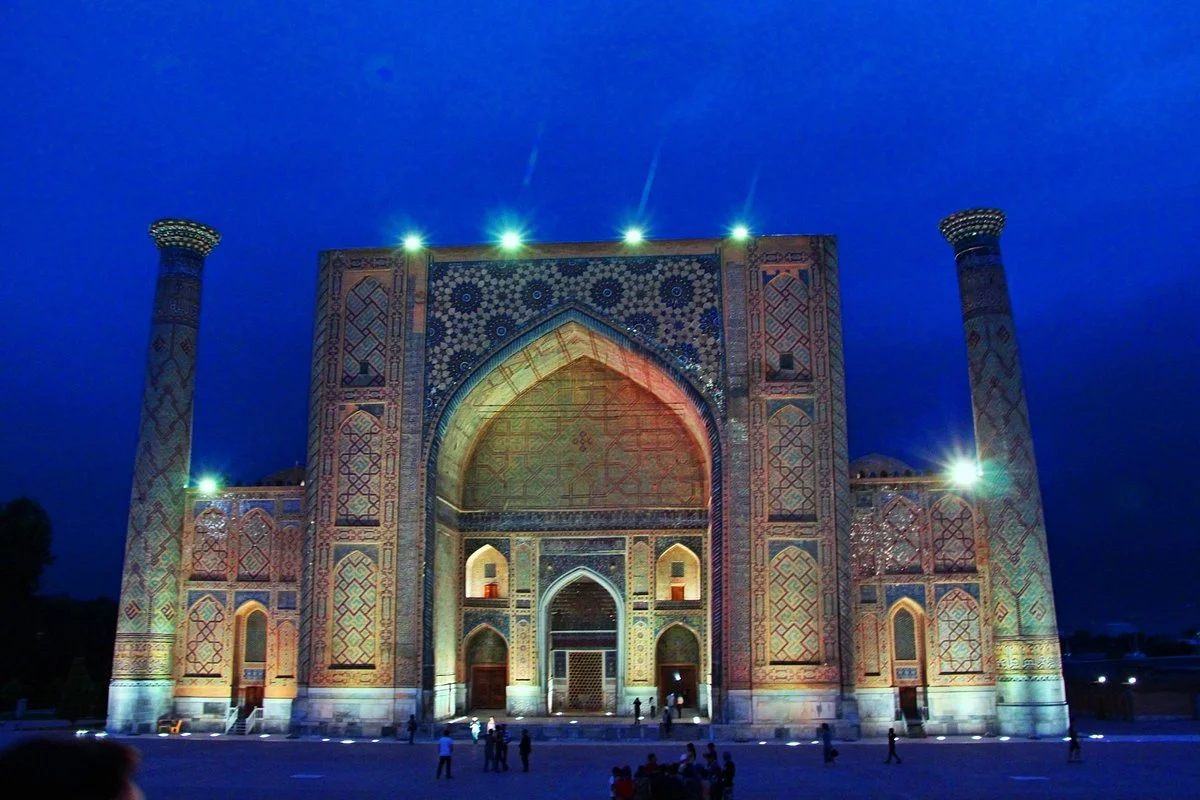
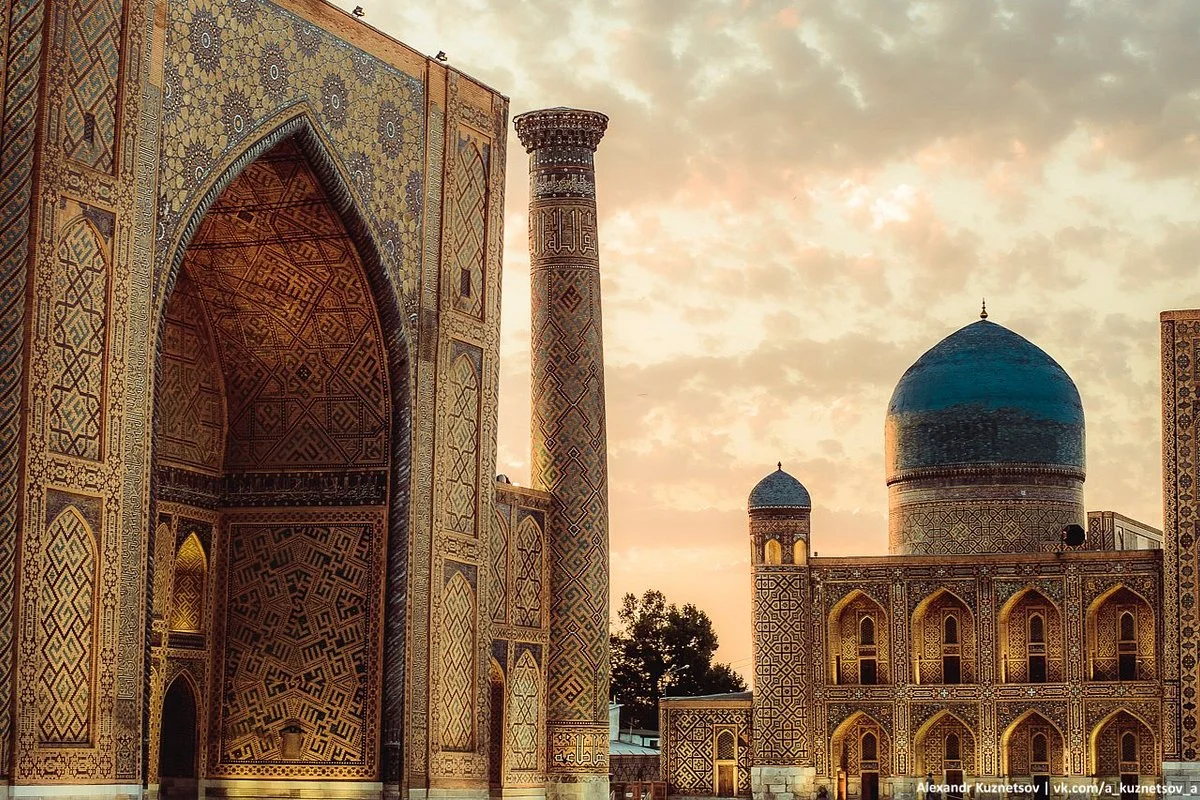
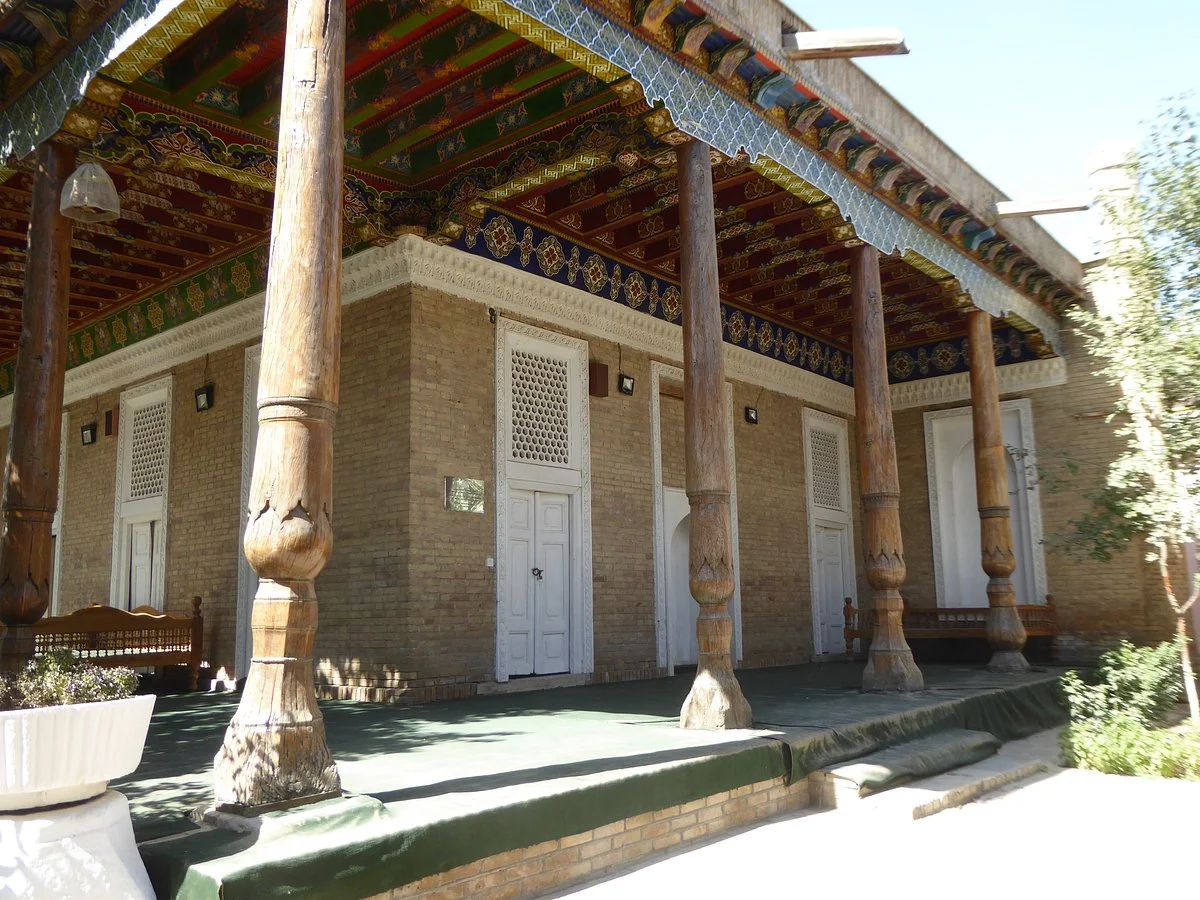
The city is noted as a centre of Islamic scholarly study and the birthplace of the Timurid Renaissance. In the 14th century, Timur made it the capital of his empire and the site of his mausoleum, the Gur-e Amir. The Bibi-Khanym Mosque, rebuilt during the Soviet era, remains one of the city's most notable landmarks. Samarqand's Registan square was the city's ancient centre and is bounded by three monumental religious buildings. The city has carefully preserved the traditions of ancient crafts: embroidery, goldwork, silk weaving, copper engraving, ceramics, wood carving, and wood painting. In 2001, UNESCO added the city to its World Heritage List as Samarqand – Crossroads of Cultures.
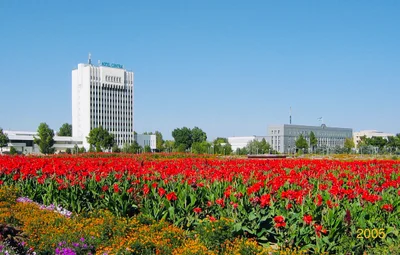
Modern Samarqand is divided into two parts: the old city, and the new city, which was developed during the days of the Russian Empire and Soviet Union. The old city includes historical monuments, shops, and old private houses; the new city includes administrative buildings along with cultural centres and educational institutions. On September 15–16, 2022, the city hosted the 2022 SCO summit.
Samarkand has a rich multicultural and plurilingual history that was significantly modified by the process of national delimitation in Central Asia. Many inhabitants of the city are native or bilingual speakers of the Tajik language, whereas Uzbek is the official language and Russian is also widely used in the public sphere, as per Uzbekistan's language policy.
The most famous product of Samarkand is their bread, "Samarkand Non". A visitor will rarely find anybody leaving Samarkand without buying Non as a gift. There are so many interesting stories about "Samarkand Non".
If you haven't had your fill of plov by the time you visit Samarkand, the Samarkandi version uses more oil and yellow carrots than other varieties. You can also find plov made with horse meat.
Samarkand is a conservative city as compared with Tashkent. There are few night clubs and bars. In Afrosiab Hotel there is a night club and bar. In President Hotel guests can have beer in nice environments. Incante Show Club is at a walking distance from Afrosiab Hotel and in the evening visitors can watch pole dance.
ATMs: There are many ATMs ("bankomat") in the city centre and many of them accept Visa, with MasterCard being less widely accepted. Do not confuse the domestic payment terminals with ATMs, although if there are multiple payment terminals in one location, there is usually an ATM in the group. As a standard, ATMs dispense Uzbek som for a processing fee of 1.5%, some also dispense US dollars, altough with lower limits and potential additional fees as well.
Although you may have heard of Samarkand rugs, these rugs did not actually originate in Samarkand, but in the cities of Kashgar, Khotan and Yarkand further east in what is now the Chinese province of Xinjiang. They are widely known as such due to Samarkand's former status as an important city on the Silk Road, where rugs from those three cities had to pass through on their way to Europe.
=
=
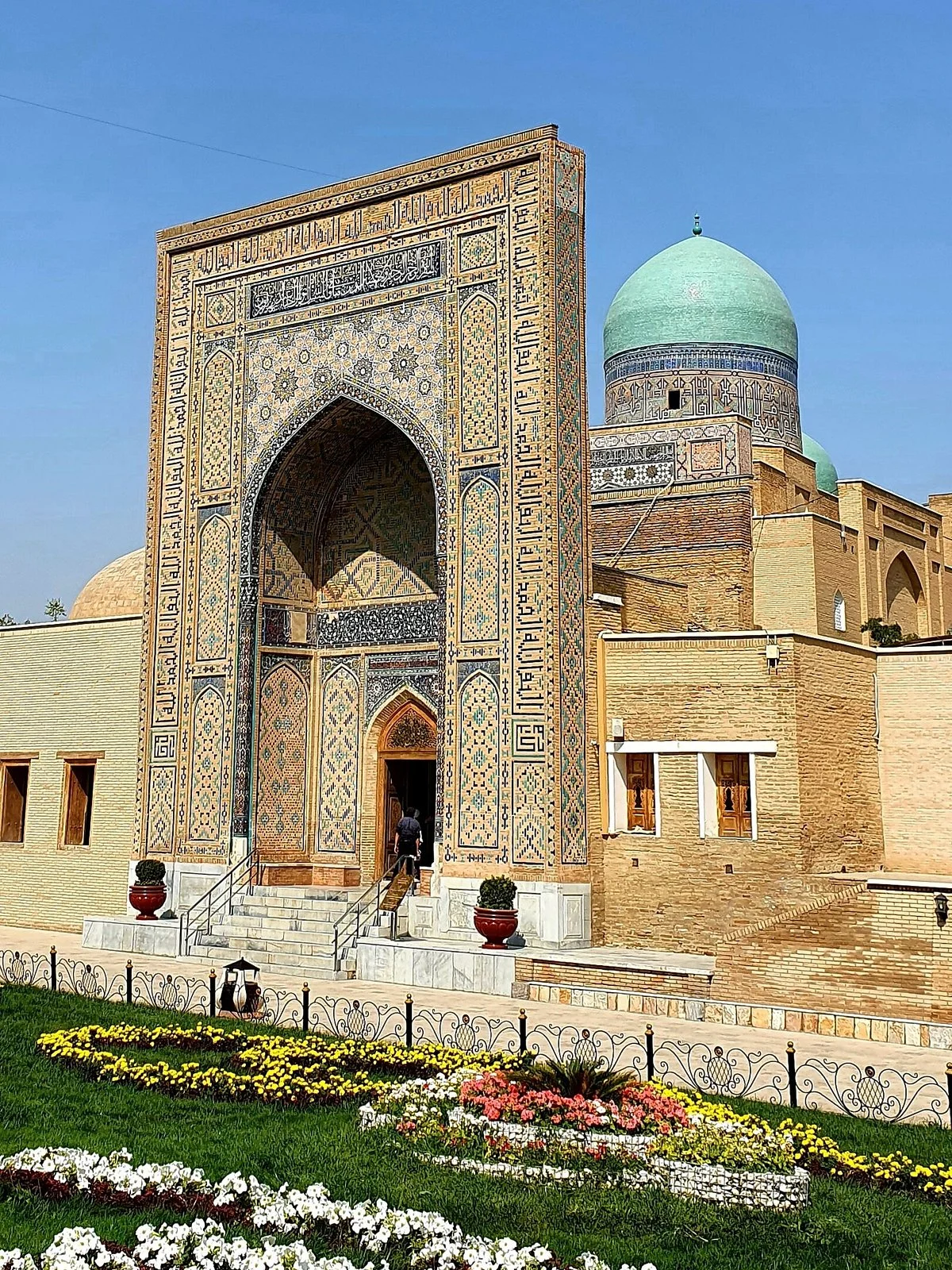
The main sights of Samarkand are clustered into two nearby groups: Gur-i Amir and the Registan; and Bibi-Khanym Mosque, Shah-i Zinda, and Afrosiyab. You can walk between all of these, but the section between the Registan and Bibi-Khanym Mosque is far enough that you might prefer to take a vehicle. To get to the Ulugh-Beg Observatory, it's another 2km northeast from Afrosiyab; you can walk this if you want, but vehicles are probably better to use unless you want to get your steps in for the day.
Two light rail lines have been constructed as of November 2023. Perhaps the most useful line runs from the train station to an area just north of the Siyob Bazaar, about 1-1.5 km north of the Registan.
Yellow taxis can be taken all over. 5,000 som is a standard fare pretty much anywhere in the city, an additional two thousand for the outskirts. Some will try to overcharge (as much as 10,000 som), some won't. Don't bother trying for cheaper than 4,000 som but it's quite easy to haggle it down from any higher than that.
The Yandex Taxi app works well in the city center and will offer you a variety of price ranges depending on category selected, local SIM card recommended, as drivers may try to contact you by phone if they can't find you.
City buses (white minibuses) are tired and wheezy. Catching them is a slow and frustrating experience. You can plan your travel using WikiRoutes app, but it is not completely accurate. You might not be able to exit at desired station if the bus is tightly packed. Standard fare is 2000 som which you pay upon leaving.