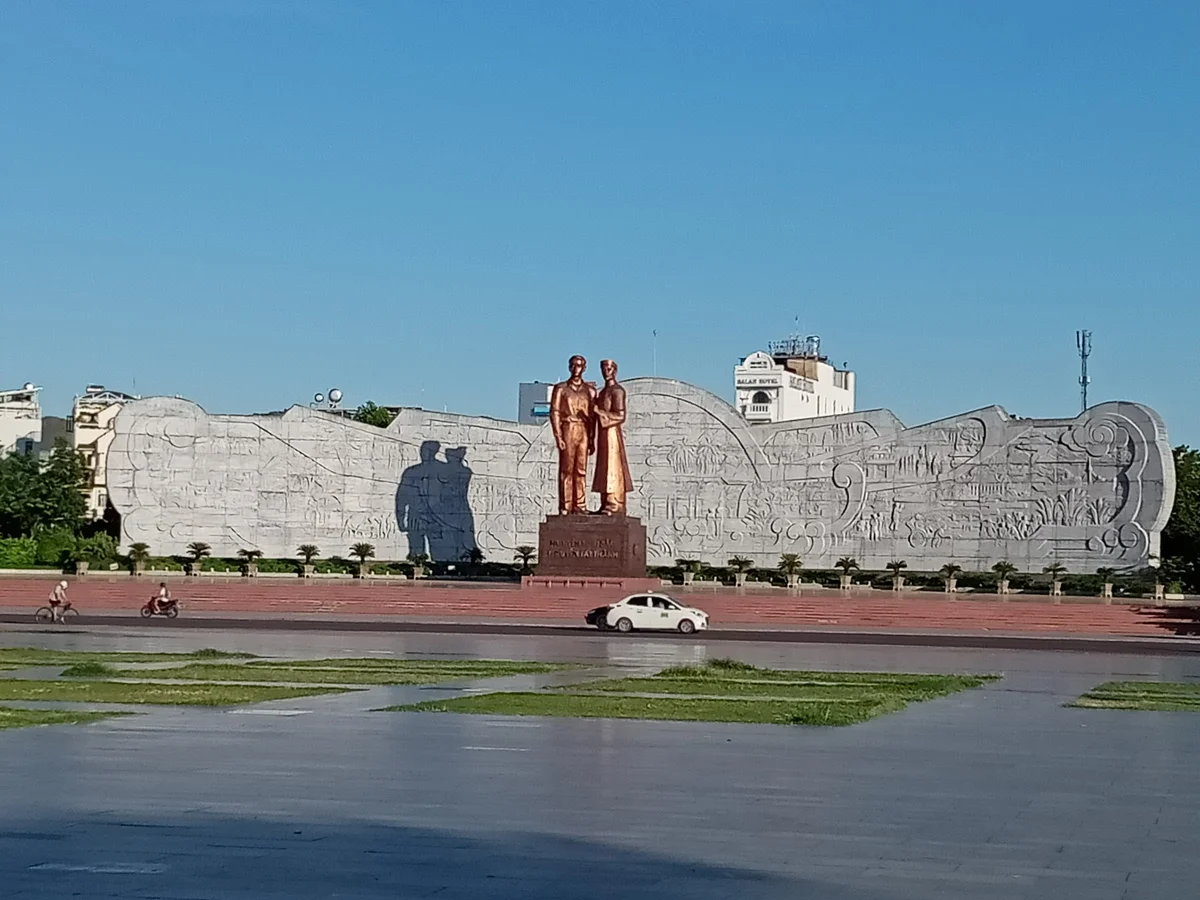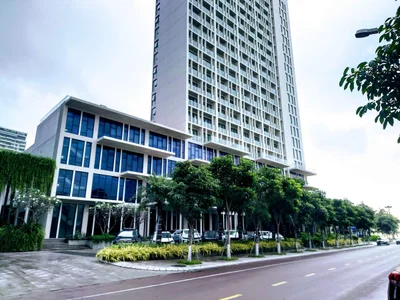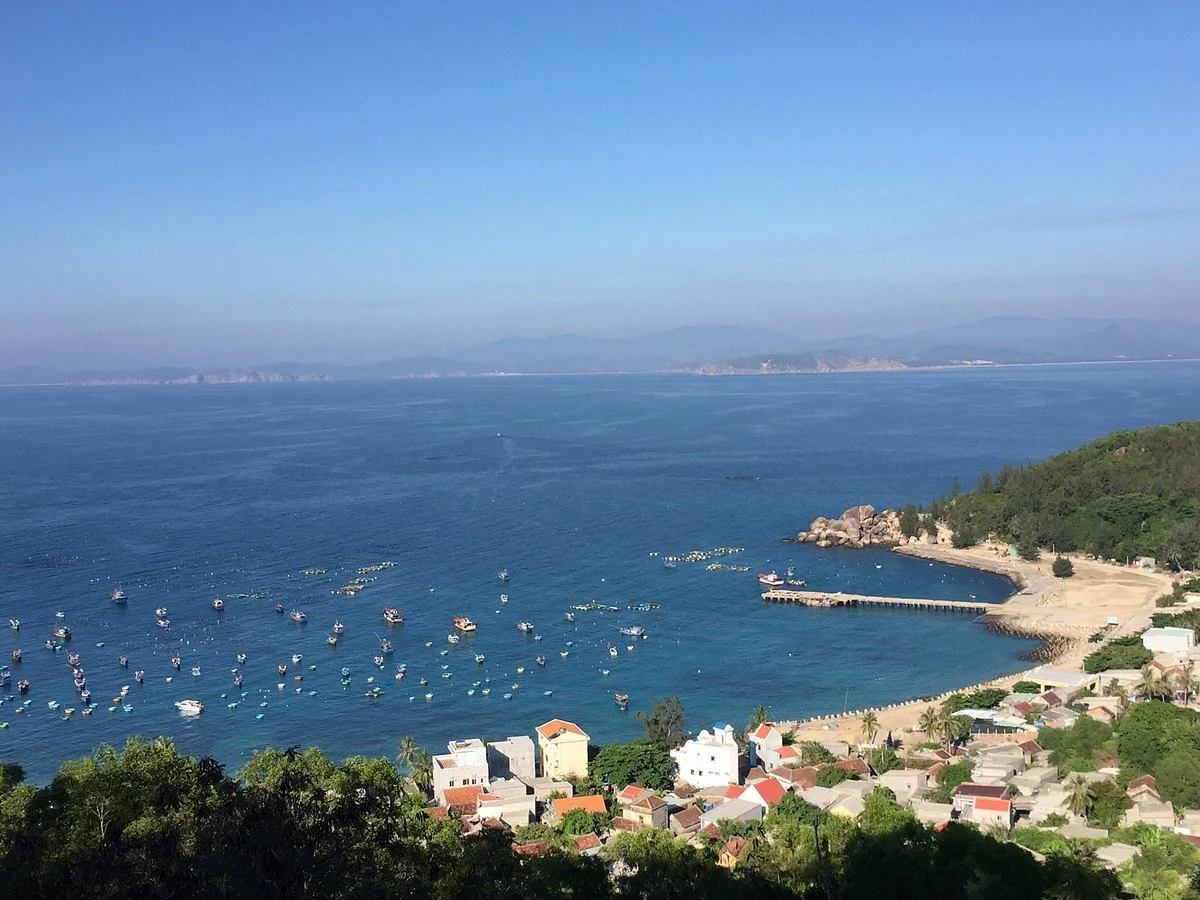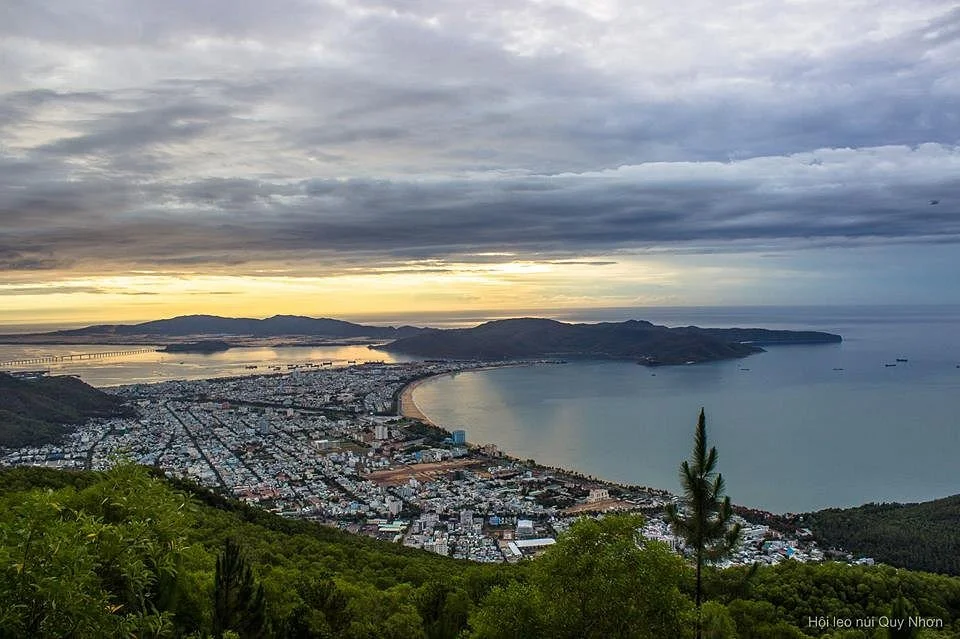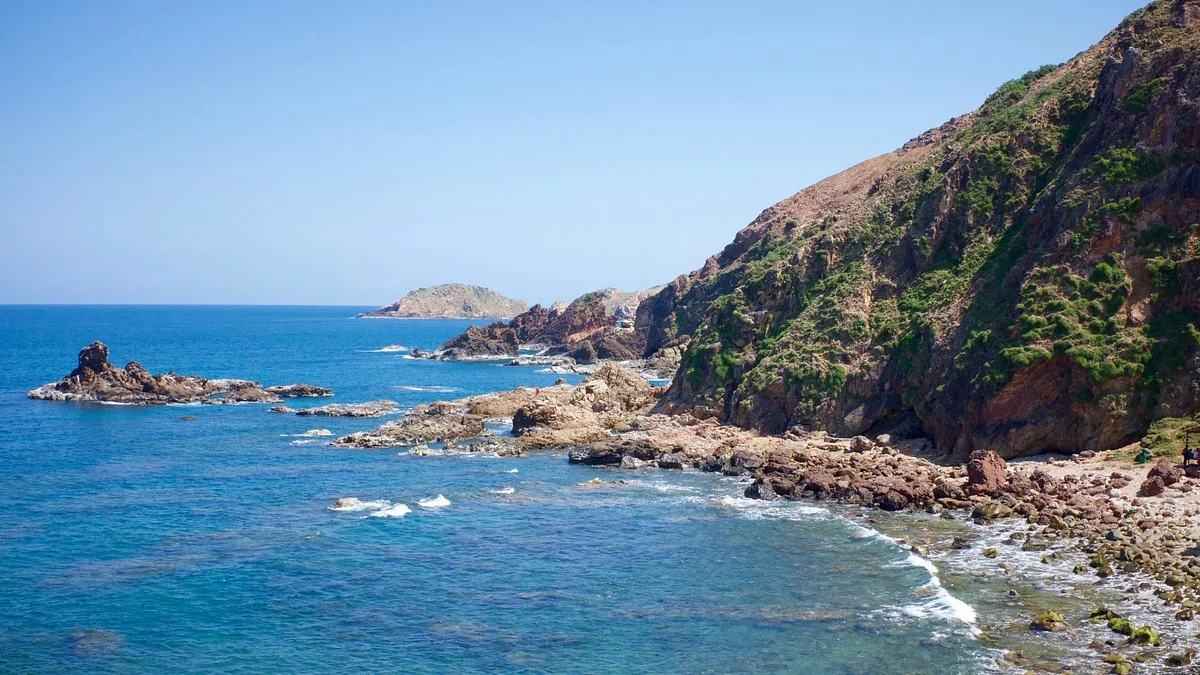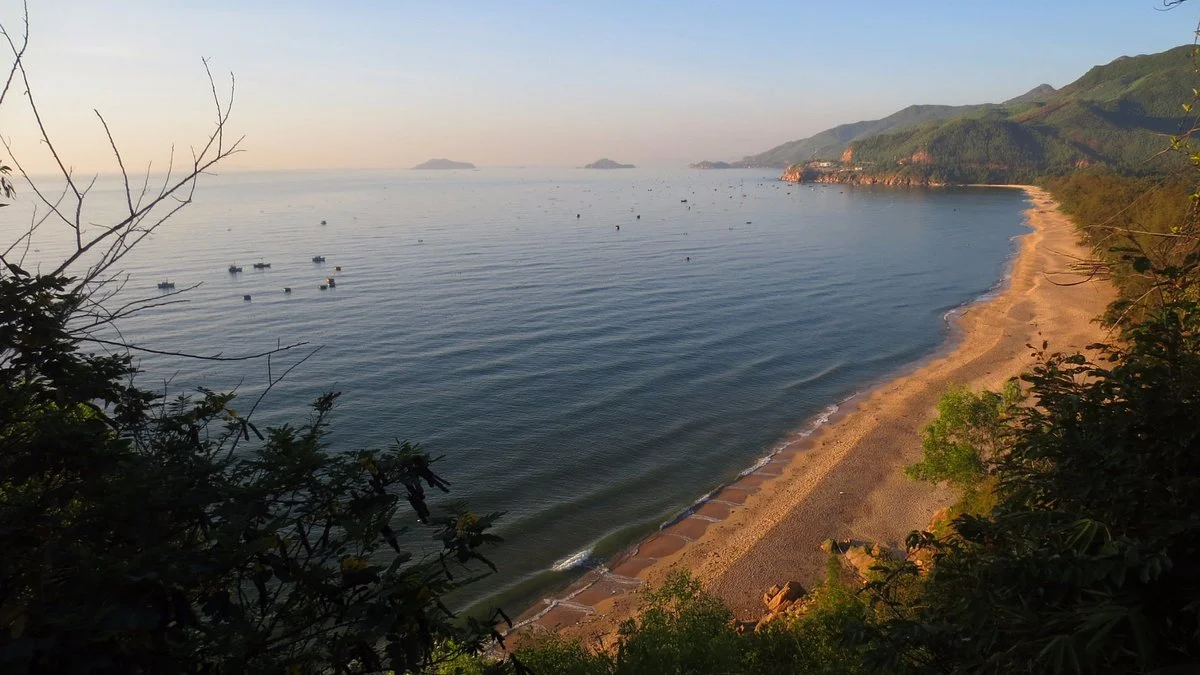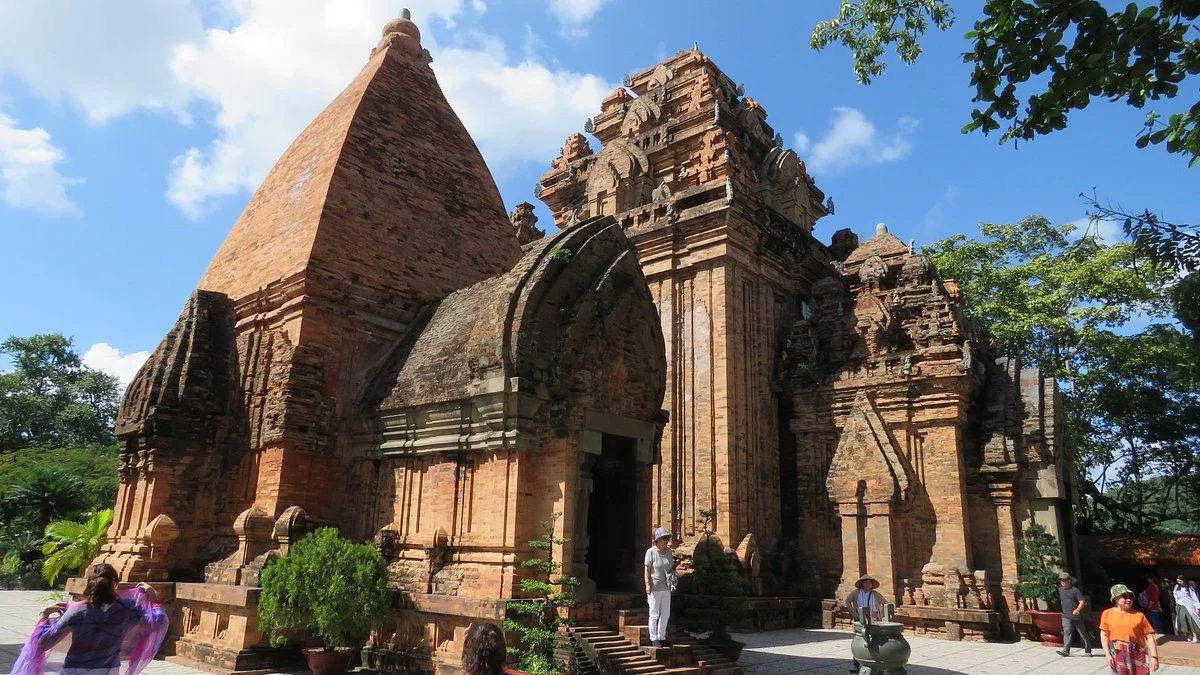
Quy Nhon (Vietnamese: Quy Nhơn Vietnamese: [kwi ɲəːŋ] ) is a coastal city in Bình Định province in central Vietnam. It is composed of 16 wards and five communes with a total of 284 km2 (110 sq mi). Quy Nhon is the capital of Bình Định province.
As of 2019 its population was 457,400. Historically, the commercial activities of the city focused on agriculture and fishing. In recent years, however, there has been a significant shift towards service industries and tourism.
There is also a substantial manufacturing sector.
= Approaching from the east, the first tower is the 13-metre (42-foot) gate. Up the hill from the gate are the three larger towers. The biggest is 20 metres (65 feet) high, with intricate carvings of humans, birds, flowers, and the elephant god Ganesa and the monkey god Viyu in dancing pose. The architectural style is unique among Cham ruins for the vertical columns and grooved tiles, the use of sandstone for the roof edges, and false doors topped by soaring arches in the shape of spears. The site held many statues, but sadly, most of them were shipped off to Europe by French colonialists in the late 19th century. The most impressive of the artworks, an intricately-carved 11th-century statue of a three-eyed Shiva seated on a lotus, is held in the Musée Guimet in Paris, while copper statues of Genesha, Uma, and Brahma vanished into private French collectors' hands in the early 20th century. If you're feeling particularly adventurous, the undeveloped countryside around the main towers is full of small centuries-old ruins. Although only the four complete towers survive, the area had many more buildings, and poorly-funded archaeological surveys haven't had the resources to completely investigate the grounds. Small fragments are hidden in many places in the undergrowth, and, with luck, you can even find complete corner pieces of several buildings overgrown by trees, particularly to the east of the main site. But don't disturb anything: you're allowed to explore the ruins, but it's illegal to take, sell, export, or damage any historical relics in Vietnam. The Bánh Ít site is just east of the junction between Highway 1A and Highway 19. Halfway between Quy Nhơn and Phù Cát airport, you can easily combine a visit with a trip to or from the airport. As with all sites outside the city centre, driving your own car or motorbike is the most convenient transportation option as it gives you the flexibility to explore the surrounding countryside. A taxi from the city takes 15–30 minutes to the towers and costs about 100,000 dong from the north centre of the city and up to 200,000 dong if coming from the southwest beach side. Two bus routes, T4 and T6, run infrequently from stops in the city at the Quang Trung roundabout and Tháp Đôi Towers, leaving you a 20-minute walk from the towers at the junction of Highway 1A and Highway 19. The bus costs 10,000 dong, but if you're tight on time, stick to a taxi: the bus schedule is infrequent and even the scheduled buses often fail to appear. Another transportation option is the airport shuttle bus which services arriving and departing flights. From the airport, the shuttle bus travels south down Highway 1A. If you stand on the west side of the road, you can hail the bus. Tickets normally cost 50,000 dong from the airport, but if there's space in the shuttle, the driver will pick you up and take you to the city for 25,000 dong from the towers. — Address: Đại Lộc village, Tuy Phước district — Directions: halfway between Quy Nhơn and Phù Cát airport — Hours: Daily 07:00–11:00 and 13:30–17:00 — Price: Entry to the towers is 10,000 dong and parking 5,000 dong, but the site is little visited and it's possible you might enter and never see anyone or be asked for money Renting your own motorbike is the cheapest and most convenient transportation option. A taxi from the city costs 500,000–600,000 dong one-way. There is no bus. The towers can be combined with a day trip to the Quang Trung museum 10 km to the west. — Directions: 50 km (30 mi) northwest from Quy Nhơn — Hours: Daily 07:00–11:00 and 13:30–17:00 — Price: Entry ticket — when the caretaker is present and awake — costs 3,000 dong
With hundreds of fishermen hauling in their daily catch each morning and kilometres of open-air beach restaurants, Quy Nhơn is a great city for fresh seafood. But beyond its well-earned fame as a year-round pescatarian paradise, it also offers the adventurous traveller the chance to try specialties little known outside Bình Định province. And for a small city, Quy Nhơn can boast of a surprisingly huge selection of vegetarian restaurants.
Compared to other Vietnamese cities, restaurants are informal and cheap. Customers usually sit directly on the street or inside the multi-use living room of the restaurant owner. In all but the most expensive places and a few mid-budget venues, tables and chairs are wobbly and often-broken contraptions made of cheap plastic and aluminium. Even nicer places are often set inside a semi-open garden rather than what you'd imagine as a more typical indoor restaurant. The price of any dish in Quy Nhơn is much cheaper than in bigger cities — an entire plate of shellfish costs less than one shell in Saigon — and you can easily fill yourself for just a few dollars in most restaurants and for less than a dollar in vegetarian places.
Still very far off the international traveller circuit, restaurants cater only for the tastes of local residents and Vietnamese tourists. As long as you stay away from the very few places marketed to international visitors, you'll almost always be the only foreigner anywhere you go as you discover steamed rice-cakes, guava-leaf pork rolls, fish-cake noodles, pots of shellfish simmering in lemongrass broth, scallops still in the shell grilled with peanuts and chili sauce over open fires, spit-roasted veal, goat skewers, snails cooked in herbs and coconut milk, and vegetarian dishes in homestay-style settings.
It's the stuff of underground foodie-fantasies: a coastal city with a wide range of locally-caught and freshly-prepared food choices, completely unspoiled by international chains and still undiscovered by mass tourism. Take a plunge into the local restaurant scene and you'll experience a side of Vietnam that you can't find anywhere else.
Cafes are the centre of social life in Quy Nhơn. They come in all sizes: huge and impressive, small and quaint, tiny and jammed between parked motorbikes in a family's living room. They're in every style: knee-high tables on street corners, outdoor gardens with wooden verandas, hipster joints infused with attitude, cubbyholes serving milk tea to teenagers on bamboo floors, tables set amidst bonsai forests. And with over 1,000 cafes for a city of only 300,000 people, you find them everywhere: on the beach, in the city centre, on the sides of the mountains, on median strips in the middle of streets.
Cafe hours can be tricky to predict. Most cafes are open in the prime hours in the late afternoon and evening, and many are also open in the early morning. But the exact hours vary a lot from place to place. Even at one cafe, the hours will vary from day to day based on customer flows, the weather, and the owner's schedule. Lunchtime is also hit-or-miss: some cafes always take a siesta break, some always work through lunchtime, and many just open or close based on the whims of the day. As a general reference, a typical schedule might be to open at 07:00 or 08:00 in the morning, close for a break from 11:00 to 15:00, then serve until 21:00 or so.
As for nightlife.... the answer is "no". Quy Nhơn has no real nightlife to speak of. There's one slightly dodgy neon-and-smoke-machine nightclub. Most restaurants open at night have beer — or will find some for you — and many cafes serve cocktails, but there's nothing like a bar scene where people mingle over drinks. The majority of places close by 22:00, and by midnight the city is almost deserted. So kick back in an open-air cafe or restaurant, lap up the sea views and ocean breezes, and enjoy the city's sleepy small-town vibe.
= There are ATMs throughout the city, including the free ones, VP Bank, TP Bank and ACB for JCB and European Visa cards.
The biggest concentration of ATMs is found just north of the Coopmart on Trần Thị Kỷ between Nguyễn Tất Thành and Lê Duẩn streets. Six banks offer ATMs within a short distance from each other: Techcom, VietinBank, Agribank, Dong A Bank, ACB, Maritime Bank.
Foreign money can be exchanged at numerous bank offices throughout the city. Bills must be fairly new and in good condition; bills which are slightly worn or older than 10 years are often rejected. No passport required.
Several gold and jewellers shops in the centre also exchange dollars quickly and often at rates slightly better than the banks. They are also more willing to accept older or more worn bills, albeit at lower rates.
Almost all visitors to Quy Nhơn are local Vietnamese tourists, and the accommodation options cater to them in terms of hotel styles, food, and service. On the plus side, though, you will find prices that are significantly cheaper than in other beach cities in the country, no scams or higher rates for foreigners, and a personal friendliness that overcomes all language difficulties (well, many of them, at least).
Online reservations are available through the standard international booking websites. Hotel growth hasn't been massive, but it definitely has outpaced tourist numbers in the last decade, and even in the Tết holiday period or peak summer months, you will never have a problem finding a room for the night if you just ask around a bit.
=
Phù Cát is served by carriers Vietnam Airlines, VietJet Air, and Bamboo Airways with return flights from Ho Chi Minh City and Hanoi.
Getting there and away:
Cyclos have fallen out of favor and are barely anywhere to be found, not to mention that they did never cater for tourists in the first place.