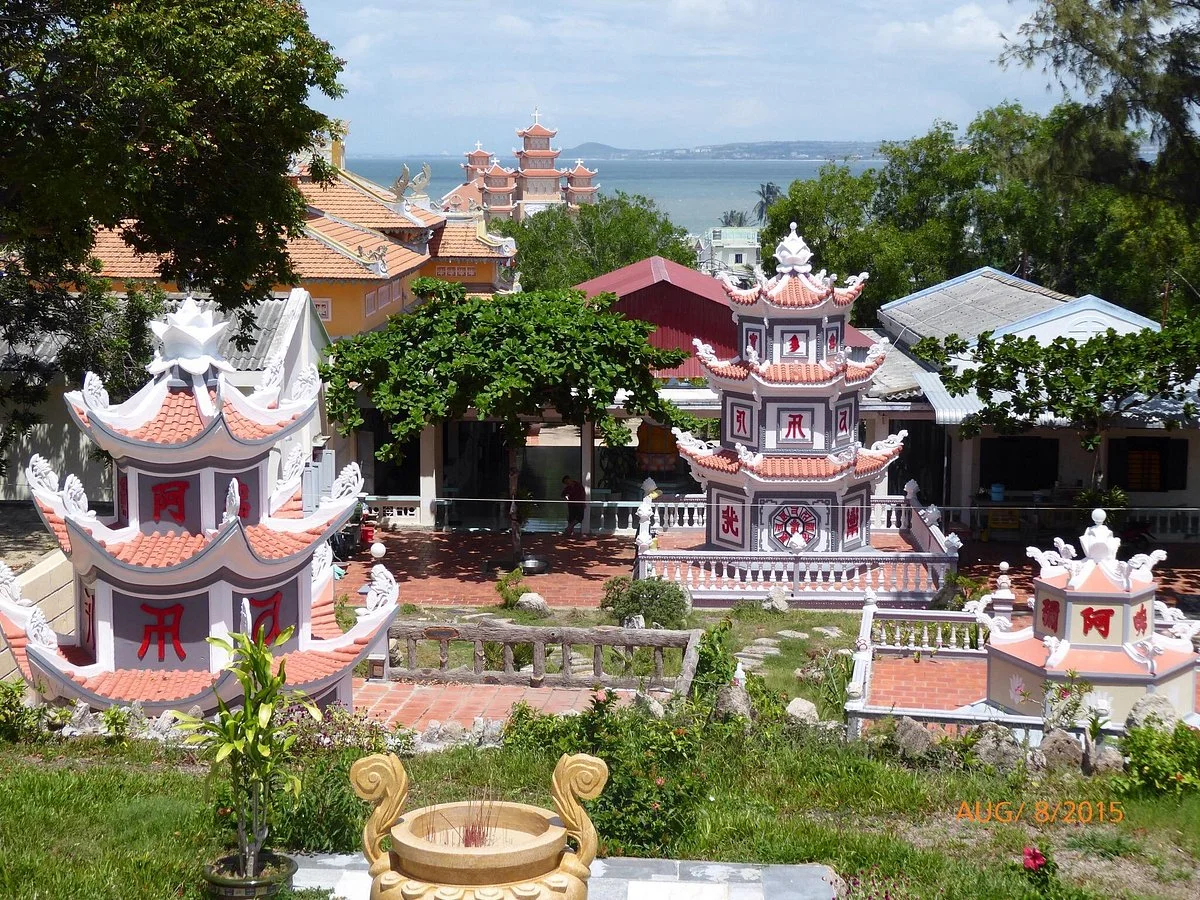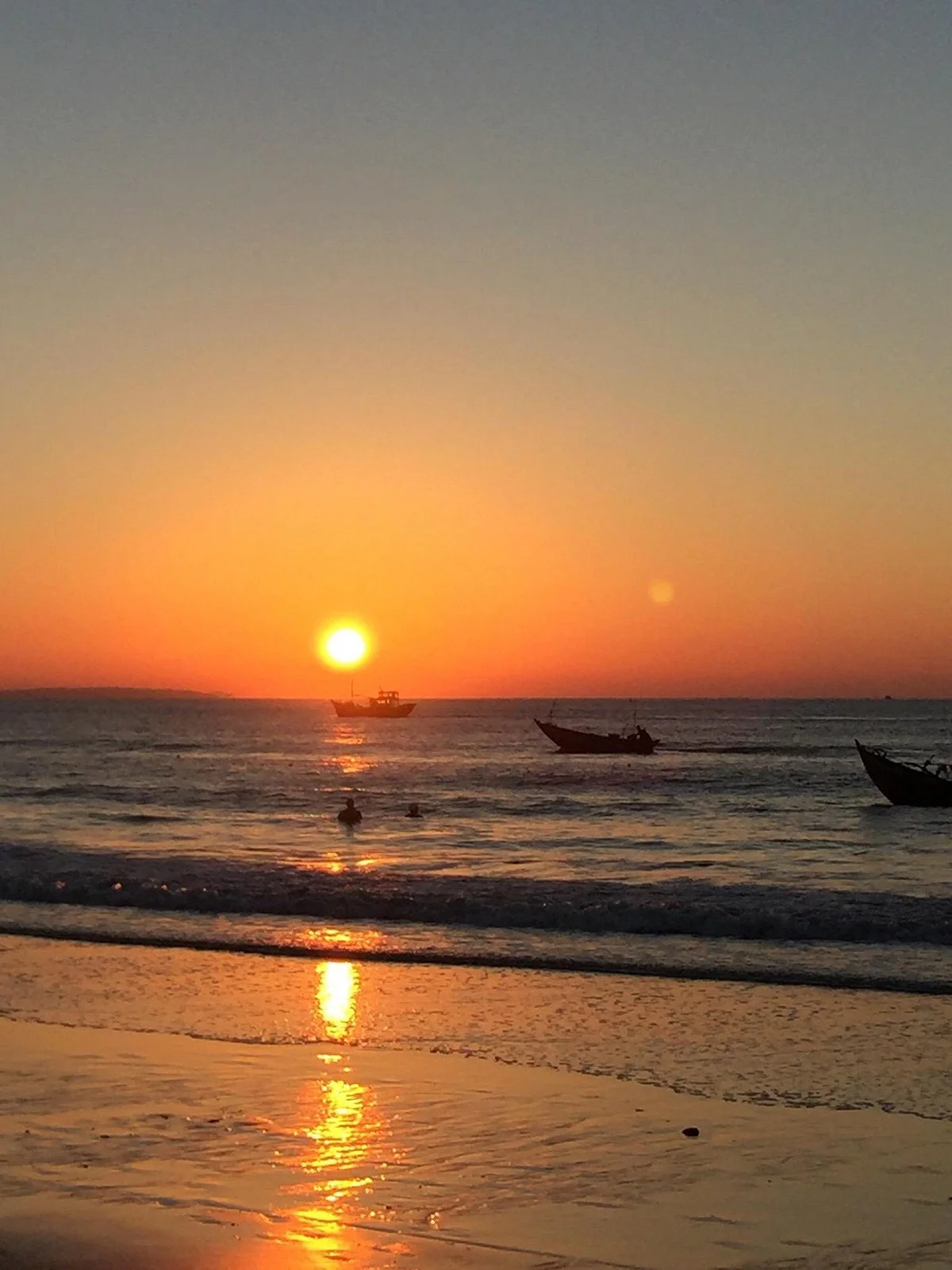
Mũi Né is a coastal fishing town in the south-central Bình Thuan Province of Vietnam. The town, with approximately 25,000 residents, is a ward of the city of Phan Thiết. Mui Ne and the other wards of Phan Thiet stretch along the coast for approximately 50 kilometers and have been transformed into a resort destination since the mid-1990s, when many visited the area to view the solar eclipse of October 24, 1995. Most notably, tourism has developed in the area from the Phan Thiet city center to Mui Ne, which has more than a hundred beach resorts, as well as restaurants, bars, shops and cafes.
Mũi Né ward has two beaches; Ganh Beach and Suoi Nuoc Beach, both with a number of resorts and a few shops and restaurants. But the most highly developed area is Rang Beach in Ham Tien ward (often erroneously called "Mui Ne Beach" by foreigners), which extends west of Mui Ne.
The tourist season is from December to April. The average temperature is 27 °C, and the climate is hot and dry much of the year.
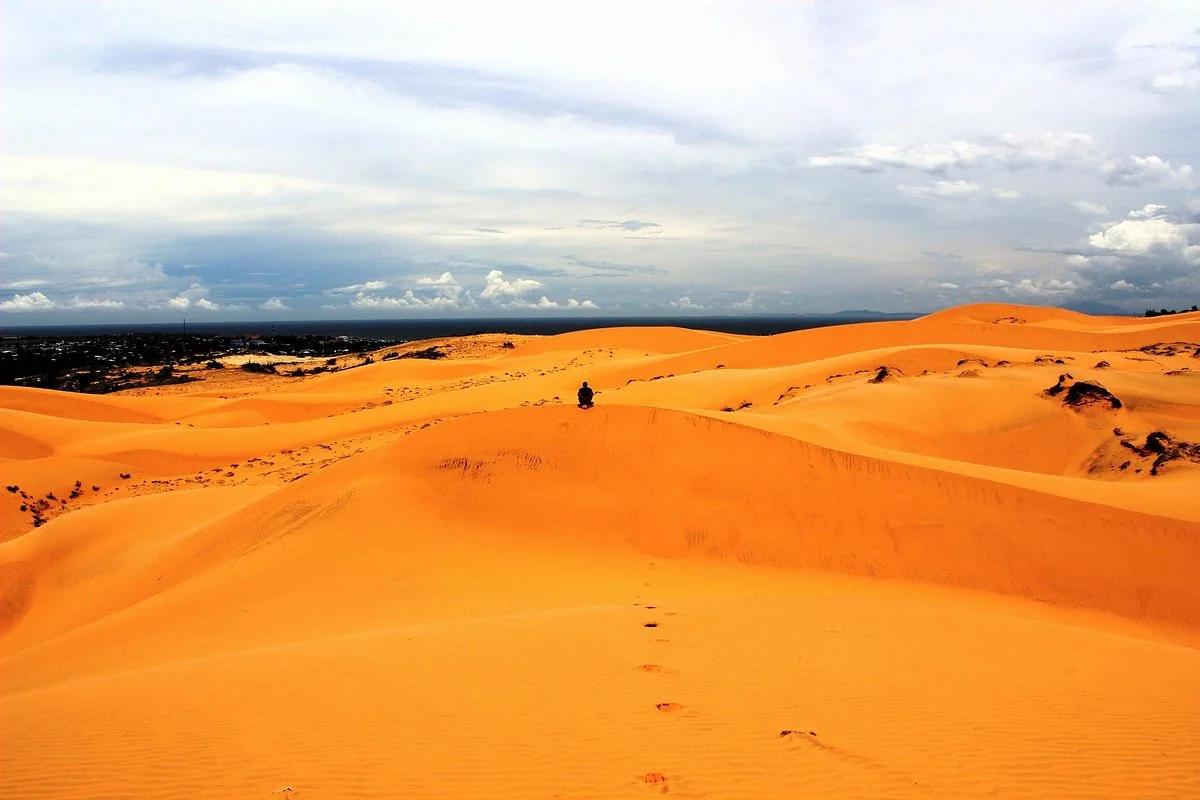
Mui Ne is well known for unique white sand dunes, featuring several lakes and even swamps straight in the middle of sandy terrain.
Every resort area in Ham Tien and Mui Ne is surrounded by restaurants specializing in seafood. The food is invariably fresh, well-prepared, and served in friendly and interesting surroundings. By all means get out of your hotel and try one of the local restaurants. The best restaurants are a motorbike ride away, found outside of the tourist/resort district on the ocean.
= There are numerous ATMs along the strip, including ACB.
Mui Ne and Ham Tien have over 200 accommodations to choose from, in every price category (from 100,000 dong), along the main ocean strip of Nguyen Dinh Chieu, Huynh Thuc Khang ("HTK"). Small guest houses, family-run beach hotels and some big luxury resorts can also be found east of the town center of Mui Ne proper, along the road leading to the Red Sand Dunes, where Ganh Beach offers long sandy beaches and excellent kite-surfing on the east side of the Mui Ne peninsula.
Accommodations at higher addresses of Nguyen Dinh Chieu towards HTK and Mui Ne ward tend to be smaller and less expensive, somewhat removed from the main tourist section in Ham Tien and more mixed in more with local life. If a sandy beach is important to you, some research is called for before booking in that area. Many "beach side" resorts are actually against a sloping cement wall that leads into the sea. The sand itself migrates up and down the long coast seasonally leaving some areas with expansive beaches and others with little at any given time.
Remember that during Tet (Vietnamese New Year), hotels and resorts are booked way in advance.
Unless you arrive directly by tourist or open tour bus, Phan Thiet to the west is the main transport hub for this region and Mui Ne.
You can't get lost in Mui Ne and Ham Tien, since the whole place consists of one long strip along a main street, Nguyen Dinh Chieu. Even-numbered addresses are on the sea side of the street, and odd numbers on the inland side. Even and odd addresses are not aligned, thus 39 on the odd side can be several hundred metres from 40 on the even side.