Eat Although not a culinary capital like the ancient imperial capital Hue, Da Nang still has more than enough variety to keep you well fed throughout your stay. Seafood (hải sản) is popular, so you shouldn't be surprised to see plenty of fish (cá), shrimp (tôm), squid (mực), clams (nghêu), snails (ốc), the list goes on. There are many vegetarian restaurants which are listed as "Quán chay" ("vegetarian") or less frequently "Quán ăn chay" ("vegetarian restaurant"), and most are vegan. The vegetarian restaurants have a wide selection of dishes and are generally cleaner than places that are not vegetarian.
Then there are regional specialities like mì Quảng, or Quang Nam-style noodles, featuring chicken, shrimp, quail eggs, peanuts and rice crackers in a turmeric-spiced broth; bún chả cá, or rice vermicelli with fish sausage; and bún mắm, or rice vermicelli served with a strong fish sauce that's not for the weak of palate. Central Vietnamese love their food to be spicy, so be warned that the chili peppers (ớt) can be strong even if small.
Read more See For years, tourists have bypassed Da Nang on their travel itineraries, preferring to spend their time viewing the ancient imperial court at Hue or walking the streets of the old town in Hoi An. And yet, as those who call it home are aware, Da Nang has plenty of interesting and beautiful sights of its own. Nestled between the Annamite Range and the South China Sea on the banks of the Han River, Da Nang's natural beauty is hard to miss; a trip up into the mountains and down to the beach should be on your to-do list. Culturally, Da Nang once lay at the northernmost reaches of the Kingdom of Champa; the Museum of Cham Sculpture, located in the city centre, should be mandatory if you're planning on visiting the ruins at nearby My Son.
• • Ba Na Hill Station — Ba Na is 1,487 m above sea level in the Truong Son Mountains. In the 1920s, it was a French resort that boasted 200 villas, restaurants, and clubs. It is known as the second Dalat or Sa Pa in central Vietnam. Its temperate climate, unspoiled forest, and spectacular views over the South China Sea and the Lao mountains made Ba Na a popular retreat for both the French and the wealthy Vietnamese. Today the area still attracts locals and tourists alike thanks to a cable car system that was opened in 2009 and set two Guinness World Records for its height and length. Great view from the top but it's really useless to stay overnight since the accommodation options are shabby and overpriced (US$80-150 per night). — Directions: about 40 km west — Price: You need to get a taxi to Suoi Mo Station (US$25 one-way from Da Nang) then pay 550,000 dong per adult (250,000 dong for children between 1-1.3 m tall, free admission for children under 1 m tall) for the ticket to the cable car and the Fantasy Park — Phone: +84 236 3791 999 — Website: http://www.banahills.com.vn/en/
• • Dragon Bridge — A 2013 bridge built in the shape of a dragon, breathing fire and water each Saturday and Sunday night at 21:00.
• • Han River Promenade — The beauty of the Han River has inspired poets and composers throughout Da Nang's history, and any local will probably be able to sing you a few lines of Sông Hàn Tình Yêu Của Tôi (Han River, My Love) as they stroll the edge of the water. The promenade on the western bank of the river is well built up, stretching from the Dragon Bridge in the south to the city port in the north. The promenade passes underneath the famous Han River Bridge, a swing bridge built in the late-1990s, one of four bridges across the Han you can glimpse from here (the others are the Thuan Phuoc, Dragon, and Tran Thi Ly bridges). All of the bridges light up with colorful patterns at night, making a walk by the river a delightful (and certainly romantic) escapade. Locals often gather here in the evenings to watch the water, play hacky-sack, or bring their children for a run. During the Tet season, the promenade is festooned with sculptures and art. The annual Fireworks Festival is also based here, but you're better off seeing the show from afar, as it tends to get quite crowded. — Address: along Bach Dang Rd — Directions: between Dragon Bridge and Da Nang Port
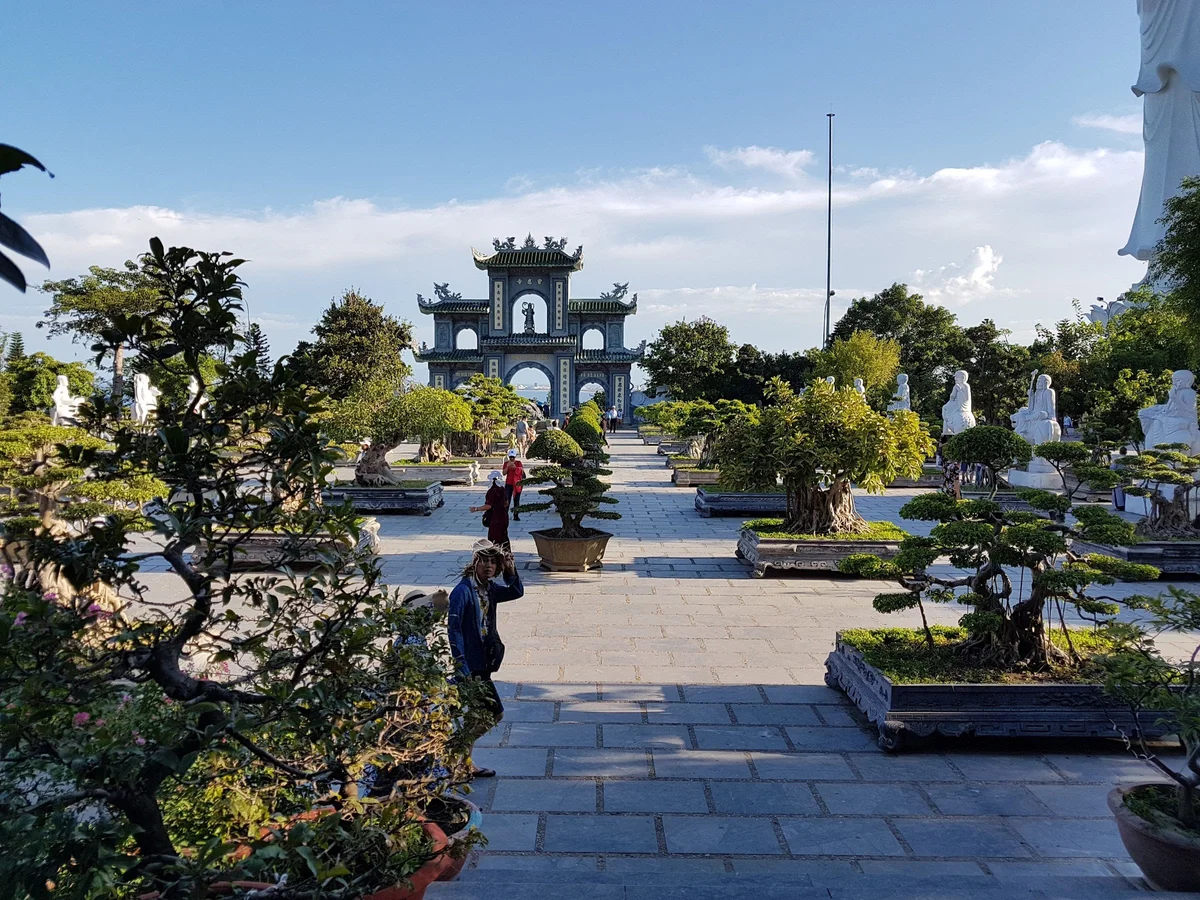
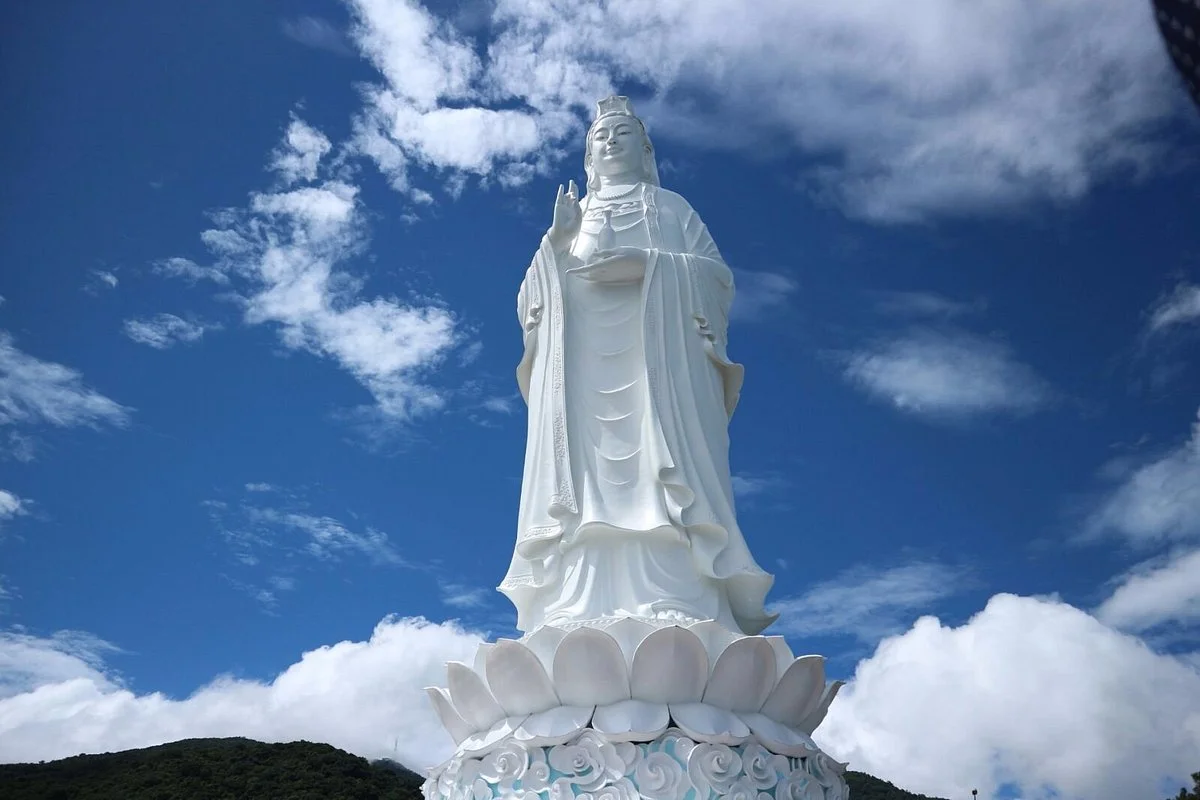
• • Linh Ung Temple — Located on Son Tra Mountain and clearly visible from My Khe Beach, this temple has stunning views of the sea, the sky, and a 67-m tall statue of "Quan The Am" (Guanyin, the Goddess of Mercy) facing the ocean. The pagoda was built in 2010. — Address: Hoang Sa Rd — Directions: Bai But, Son Tra Peninsula
• • Marble Mountains — The group includes Kim Son (Mountain of Metal), Moc Son (Mountain of Wood), Thuy Son (Mountain of Water), Hoa Son (Mountain of Fire), and Tho Son (Mountain of Earth). Several Buddhist temples have been built into the caves and grottoes, and it's a popular pilgrimage site. The real fun, though, is at the Am Phu cave, where you can make the steep climb up toward the light and a view from the top of the mountain, surrounded by approving sacred images; or head in the opposite direction, physically and spiritually, down to the crude Hieronymous Bosch-esque statues of sinners getting their due in the caverns below, with appropriately eerie lighting. Either way, wear walking or climbing shoes. Open-tour buses will stop here, but you'll be rushed along; any motorbike taxi in Da Nang or Hoi An will be happy to take you and let you set the schedule. Guides are available. Watch out for the rapacious statue-sellers outside. — Directions: 9 km S of downtown and across the street from many of the larger beach side resorts — Price: 40,000 dong but may enter for free if arriving before 08:00; tickets for a ride up by elevator are 15,000 dong — Phone: +84 511 961114
• • Museum of Cham Sculpture — Founded in 1915 by the École Française d'Extrême Orient, it houses a collection of stone sculptures from the Hindu-practicing Cham civilization, which occupied much of central Vietnam in the first millennium CE to about the 14th century. The museum can be toured in about an hour. The sculptures are nearly all made of sandstone, and some have weathered badly over the centuries, but you can still appreciate the delightful artistic quality of the figures, which include shiva, garudas, nagas, lions, monkeys, and elephants. The collection also includes striking examples of the ancient Hindu icons of fertility: lingam altars decorated around the sides with rows of breasts. The sculptures were mostly removed from the facades or interiors of Cham ruins (which would have been looted otherwise.) The ruins themselves, such as nearby My Son, now tend to be crumbling piles of bricks and somewhat disappointing, giving little sense of the spectacular artwork produced by the Cham civilization. Any visit to My Son should be paired with a visit to the Cham Museum. The collection is also interesting to compare with Balinese sculpture and the early, Hindu phase of Angkor Wat in Cambodia. The museum was given a makeover in 2019, but post-COVID the souvenir shop, cafe, interactive displays, and even the air-con has been switched off. Arrive early to beat the heat, and beware of the awkward 2.5-hour siesta during the middle of the day. — Address: • 2, September 2nd Rd — Directions: next to western end of Dragon Bridge — Hours: 07:30–11:00, 13:30–17:00 — Price: 40,000 dong
Read more Do =
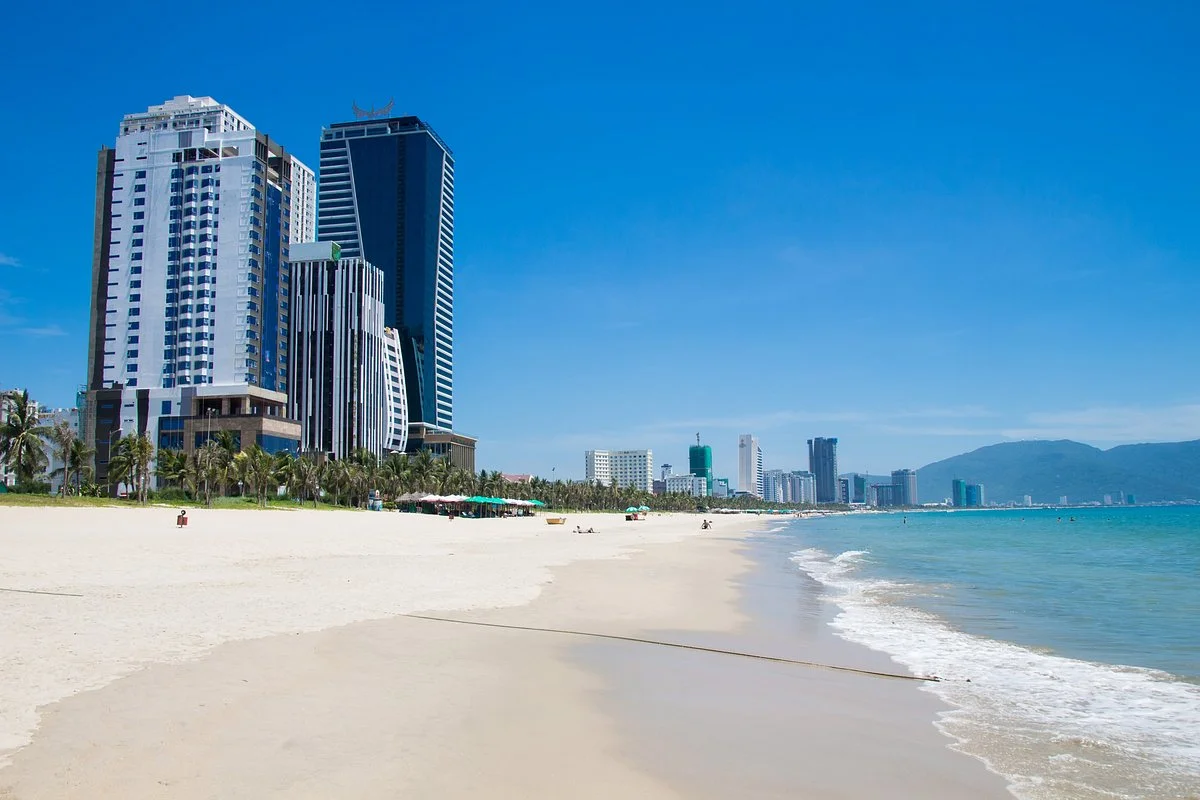
Danang is justly famous for its beaches. My Khe Beach — known as China Beach during the Vietnam War, although the name is rarely if ever used locally — to the east is the top draw, gently curving nearly 40 km south towards Hoi An. While the beach is uninterrupted, it changes names several times along the way, becoming Non Nước near the Marble Mountains, Hà My beyond that, and finally An Bàng and Cửa Đại at the Hoi An end. To the northwest of the city is another long beach variously known as Nguyễn Tất Thành and Xuân Thiều (Red Beach), running all the way up towards the Hải Vân Pass.
• • My Khe Beach — Across the Han River from the city centre, My Khe Beach is a wide, sandy beach long known for its beauty. Locals will often gather here as early in the morning as 05:00 to enjoy the surf while the sun rises over the ocean. Tourists often arrive later on, when the locals have already started their day; you'll probably find that by 09:00 or 10:00 the beach is mostly deserted. An even larger local crowd gathers in the late afternoon, with folks wading, picnicking and strolling along the beach well into the night. The beach isn't steep, meaning that you can swim far out and still feel your feet touch the bottom. During busy times, lifeguards float around in coracle boats, whistling at those who venture too far out. While access to the beach itself is free, the public showers charge a token 2000 dong/person for entry (motorbike parking extra) and the beachfront cafes rent out beach chairs with a shade for around 40,000 dong. — Address: Hoang Sa Rd
Read more