Gubbio (Italian pronunciation: [ˈgubbjo]) is an Italian town and comune in the far northeastern part of the Italian province of Perugia (Umbria). It is located on the lowest slope of Mt. Ingino, a small mountain of the Apennines.
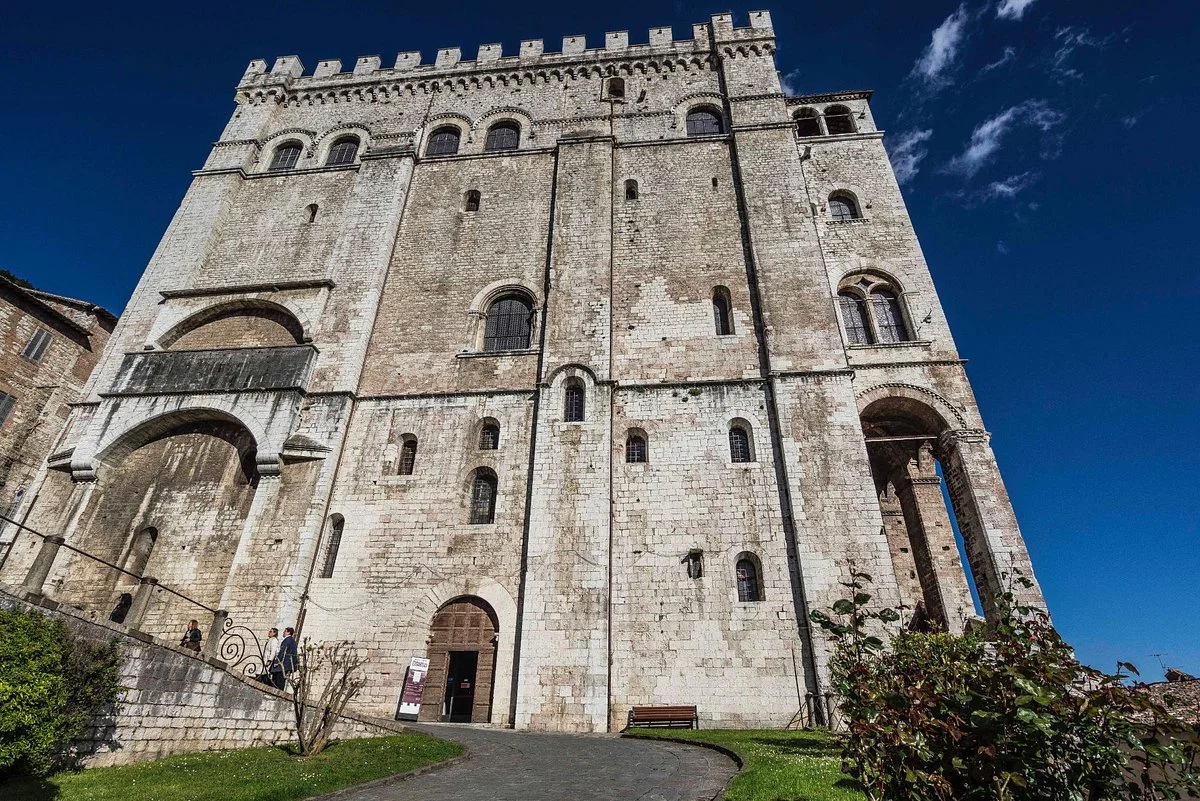
| address=in the Palazzo dei Consoli | lat= | l | directi | ph | tollfree= | fax= | hours=10.30-13.00 and 15.00-18.00 | price= | cAn archaeological museum and art gallery. Notable for the Iguvine Tablets, which were seven bronze tablets discovered in Gubbio in 1444. They are also known as the Eugubian tablets. The earliest ones were probably written in the 3rd century BC. The tablets are written in the Umbrian language and shed much light on the grammar of this ancient dead language. }} *
*The Festa dei ceri is a fantastic representation organized every year on 15 May. It consists of a crazy race of three big wooden candles, each weighing around 300 kg, in the narrow streets of the city.
In a country well-served by railways Gubbio is unusual in that the closest station, on the Rome-Ancona line, is 18 km away at Fossato di Vico station. There is a bus service from there. An alternative is to take the train to Perugia and take a bus from there (40 km).
Within the walls, traffic is restricted, so be prepared to walk, if you are physically able.
*The Funivia. This is a very basic cable car in which you stand in a two-person cage. It takes you from the center, near Porta Romana, up to the Basilica of St. Ubaldo.
No information available