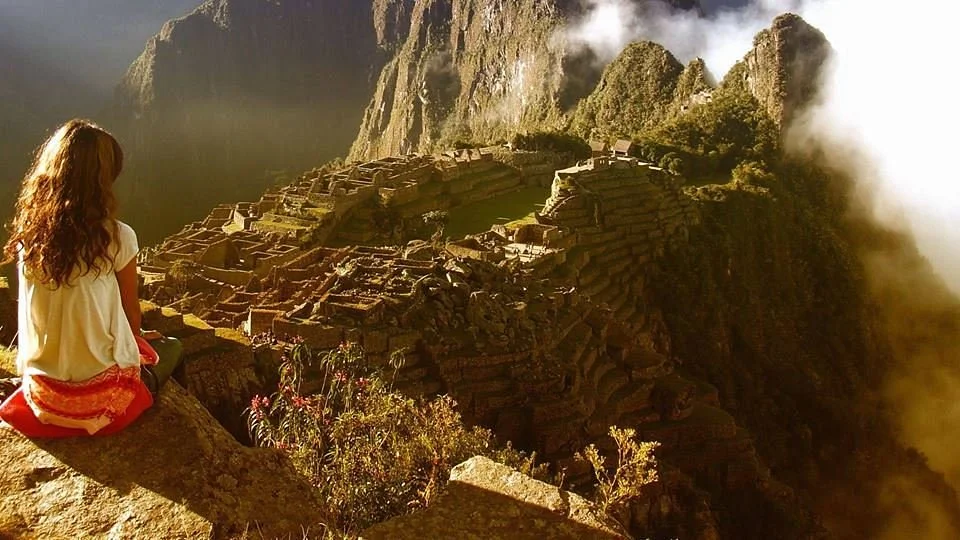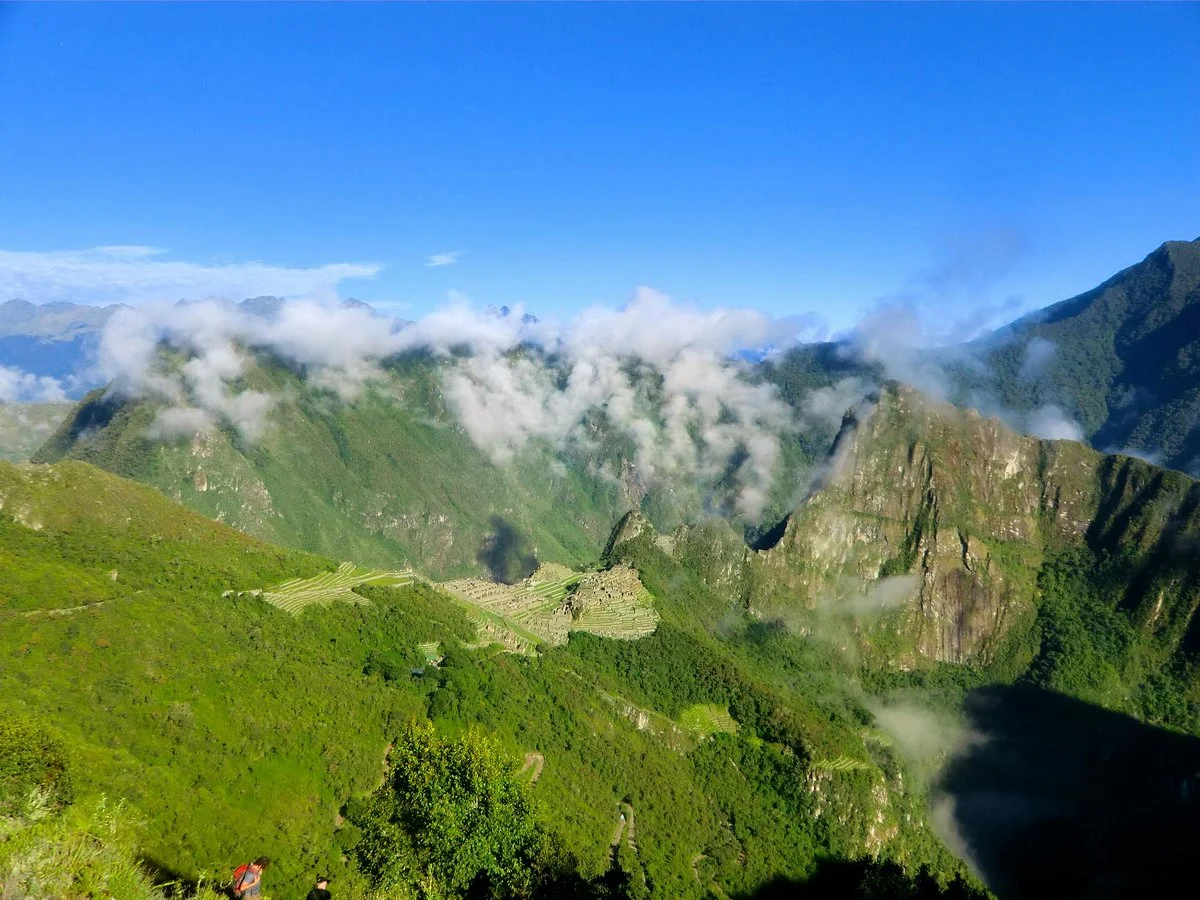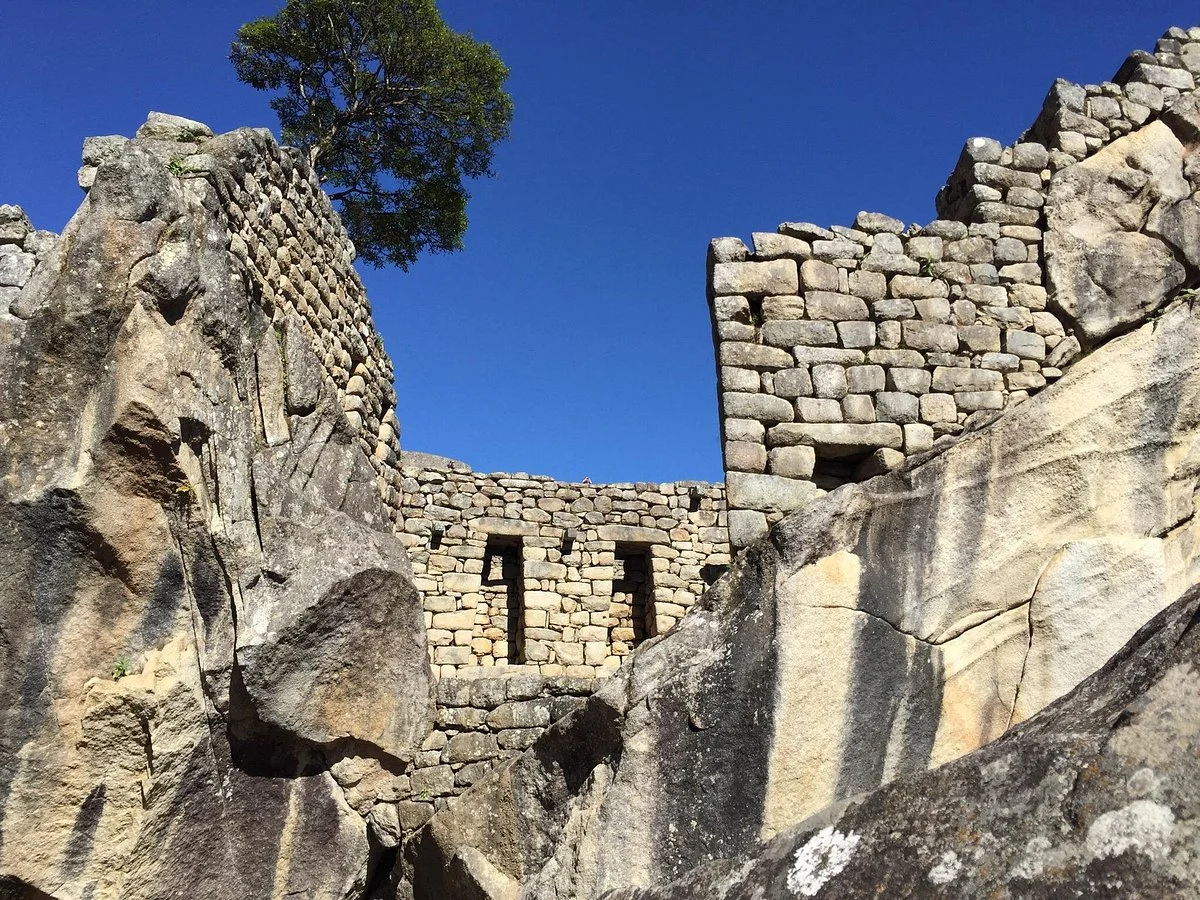
Machu Picchu is a 15th-century Inca citadel located in the Eastern Cordillera of southern Peru on a 2,430-meter (7,970 ft) mountain ridge. Often referred to as the "Lost City of the Incas", it is the most familiar icon of the Inca Empire. It is located in the Machupicchu District within Urubamba Province above the Sacred Valley, which is 80 kilometers (50 mi) northwest of Cusco. The Urubamba River flows past it, cutting through the Cordillera and creating a canyon with a tropical mountain climate. In reference to the site's name, for most English or Spanish speakers, the first 'c' in Picchu is silent. In English, the name is pronounced MAH-choo PEE-choo or MATCH-oo PEAK-choo, in Spanish as [ˈmatʃu ˈpitʃu] or [ˈmatʃu ˈpiɣtʃu], and in Quechua (Machu Pikchu) as [ˈmatʃʊ ˈpɪktʃʊ].
The Inca civilization had no written language and following the first encounter by the Spanish soldier Baltasar Ocampo, no Europeans are recorded to have visited the site from the late 16th century until the 19th century. As far as historical knowledge extends, there are no existing written records detailing the site during its period of active use. The names of the buildings, their supposed uses, and their inhabitants, are the product of modern archaeologists based on physical evidence, including tombs at the site. Machu Picchu was built in the classical Inca style, with polished dry-stone walls. Its three primary structures are the Temple of the Sun, the Temple of the Three Windows, and the Intihuatana. Most of the outlying buildings have been reconstructed in order to give visitors a better idea of how they originally appeared. By 1976, 30 percent of Machu Picchu had been restored and restoration continues. Most recent archaeologists believe that Machu Picchu was constructed as an estate for the Inca emperor Pachacuti (1438–1472). The Incas built the estate around 1450 but abandoned it a century later, at the time of the Spanish conquest. According to the new AMS radiocarbon dating, it was occupied from c. 1420–1532. Historical research published in 2022 claims that the site was probably called Huayna Picchu by the Inca people themselves, as it exists on the smaller peak of the same name.Machu Picchu was declared a Peruvian Historic Sanctuary in 1982 and a UNESCO World Heritage Site in 1983. In 2007, Machu Picchu was voted one of the New Seven Wonders of the World in a worldwide internet poll.
All the views from above, but be sure before you do it that there are no clouds (early in the morning is always cloudy, it is recommended to do it at noon).
Take your time walking around the site, there are many places to see and explore. Although it is not required, taking a guided tour does provide a deeper insight into the ancient city, its uses, and information on the geography of it. As of Mar 2018, a 2-hr guided tour is S/200, but can be negotiated down depending on how busy the site is. If you wish to save money, you can team up with other tourists who would like to have a guided tour. As a cheaper alternative to a guide, there are several apps providing virtual audio tours of the site.
Relatively little is known about the history and uses of the ruins, and some of the stories told by the guides are based on little more than imaginative hearsay.
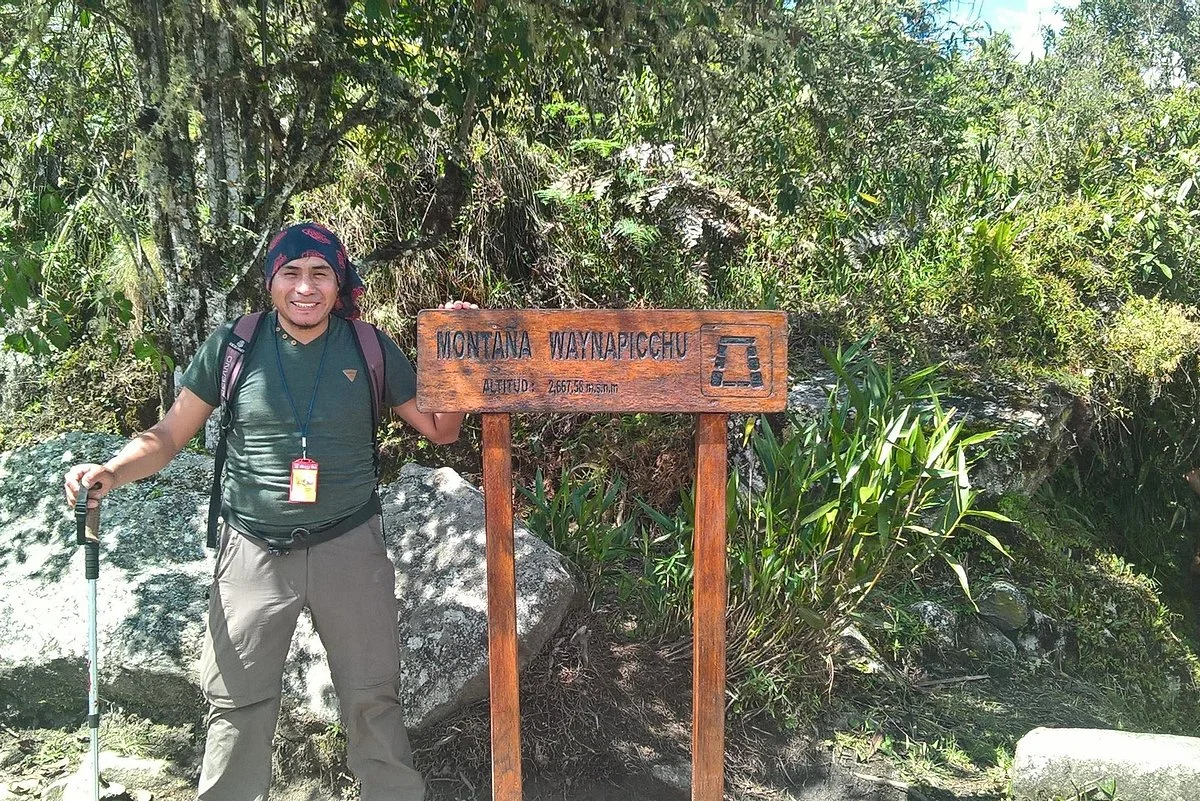
If you got some energy in you, there are a few great hikes involving a bit of legwork. Do make sure that you've taken the time to acclimate to the elevation either in Cuzco or Aguas Calientes for a couple days before exerting yourself too much, especially on Huayna Picchu.
No information available
No information available
No information available
Because this is a protected park, further construction in the area is nearly impossible. Thus, there is only one very expensive hotel at the site itself. Almost everyone who wants to overnight near Machu Picchu books a hotel in nearby Aguas Calientes.
Visitors to Machu Picchu typically either hike the Inca Trail or leave by rail from Cuzco or Ollantaytambo, either on a day trip, or overnighting in Aguas Calientes. The only ways to get to Aguas Calientes are by train or on foot — no roads go there.
Overnighting allows you to visit the park early or late in the day and avoid the worst of the crowds, and on sunny days, gives you a nice window of reprieve from the beating sun. The wet season in Peru is from November (often only really taking off in December) until the end of March, so then it is best to include a few extra days for flexibly dealing with delays.
From Aguas Calientes, there are two ways to reach the ruins: by bus or walking (free steep hike), as described below.
Depending on when you arrive, the site may be quite crowded or nearly deserted. The busiest periods are in the dry season (June–August), with the slowest being in February, the height of the rainy season, when the Inca Trail is closed. Most visitors arrive on package tours and are in the park between 10:00 and 14:00.
To access the site, you must have both a bus ticket (unless you plan on hiking) and ticket for Machu Picchu - which are available on in advance from the official website or from the ticket offices in Cusco and Aguas Calientes. Machu Picchu tickets are not sold at the entrance gate and are limited to 2500 per day, with entrance to Huayna Picchu being further limited to 400.
It is obligatory to bring your passport to enter Machu Picchu. Even if your ticket is on your national id card, the officer will still ask for your passport.
There are no vehicles of any kind in the park, so bring some comfortable walking shoes, especially if you plan to do any of the hikes such as Huayna Picchu. No walking sticks are allowed in the main area, except for visitors who have difficulty walking; however, they are allowed on Huayna Picchu, where they help significantly with the climb, especially down. The main ruins are fairly compact and easily walk-able.
Many of the paths are one-way, so be careful – you can easily find yourself missing a spot you wanted to see or forced into the exit accidentally.
Mobility-disabled visitors can arrange wheelchair/accessible tours via private tour groups, and see a substantial portion of the site.