
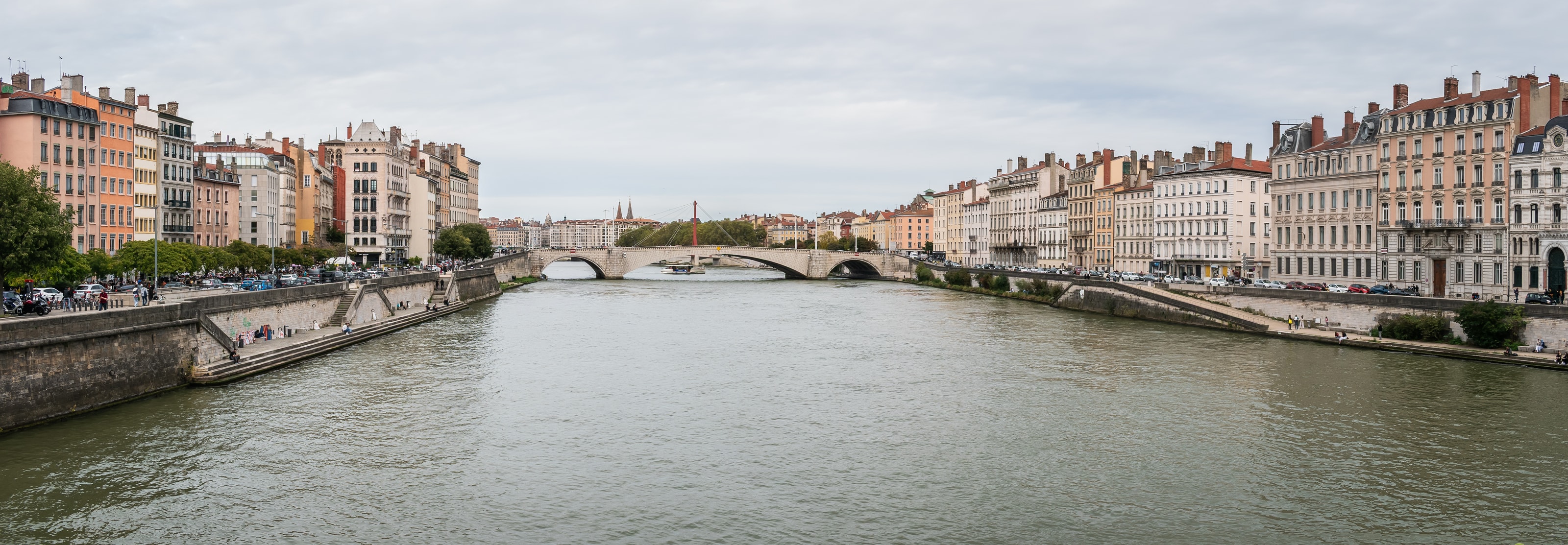
The most useful map of Lyon begins with two names. The Saône and the Rhône are not interchangeable blue lines around a list of monuments. They make a peninsula, establish different approaches to the city and eventually meet at its southern end. Follow their relationship and a visit gains a shape before a single museum ticket has been booked.
Start by choosing one bank rather than trying to consume both rivers in a continuous march. Lyon's attraction is partly the way one urban scene leads to another: an older street, a crossing, an open bank, a district with a different architectural scale. The city rewards comparison. A view seen twice, from opposite sides of the water, can be more revealing than several famous addresses collected without the walk between them.
A city that kept its earlier chapters
UNESCO's account of historic Lyon emphasises the survival of successive stages of urban development. Roman remains, medieval streets, Renaissance buildings and later districts are part of a city whose growth did not simply replace every earlier centre in the same place. The value lies in their relationship, not in a claim that everything visible is equally old.
That makes the river an effective organising line. In the central city, begin with a view across the Saône and then turn back towards the streets. Compare the scale of a waterfront frontage with the closer grain of the route behind it. The long view gives an outline; the street supplies entrances, changes of level and the practical evidence that an historic district is still occupied.
Resist the invitation to regard every open doorway as public access. Homes and workplaces do not become museum rooms because the surrounding neighbourhood has heritage status. Enter only places clearly open to visitors, keep conversations quiet in shared spaces and leave people room to pass. Respect is most useful when it changes a small action rather than remaining a general intention.
The Saône is a route with variations
The tourist office describes the landscaped Saône banks as a project extending through urban and more pastoral settings, with contemporary artworks along the way. Its published description includes different stretches between the Confluence area, Île Barbe and communities farther north. It should not be read as a promise that every kilometre forms one uninterrupted, universally accessible pavement.
Choose a section that suits the day and check its approaches. A riverside route can have stairs, a closure or an exit that is less convenient than the map suggests. For a short visit, the central city provides enough material without making the northern reaches compulsory. A good turnaround point is one agreed before the walk begins, not one discovered after the last comfortable opportunity to stop.
The artworks introduce another pace. Instead of moving from one recognised building to the next, allow a particular object or stretch of bank to hold attention. You need not like every intervention to find the conversation interesting. The question is what happens when an established urban edge becomes a place for a contemporary work: how it meets the water, nearby buildings and the movement of pedestrians.
Across to the Rhône
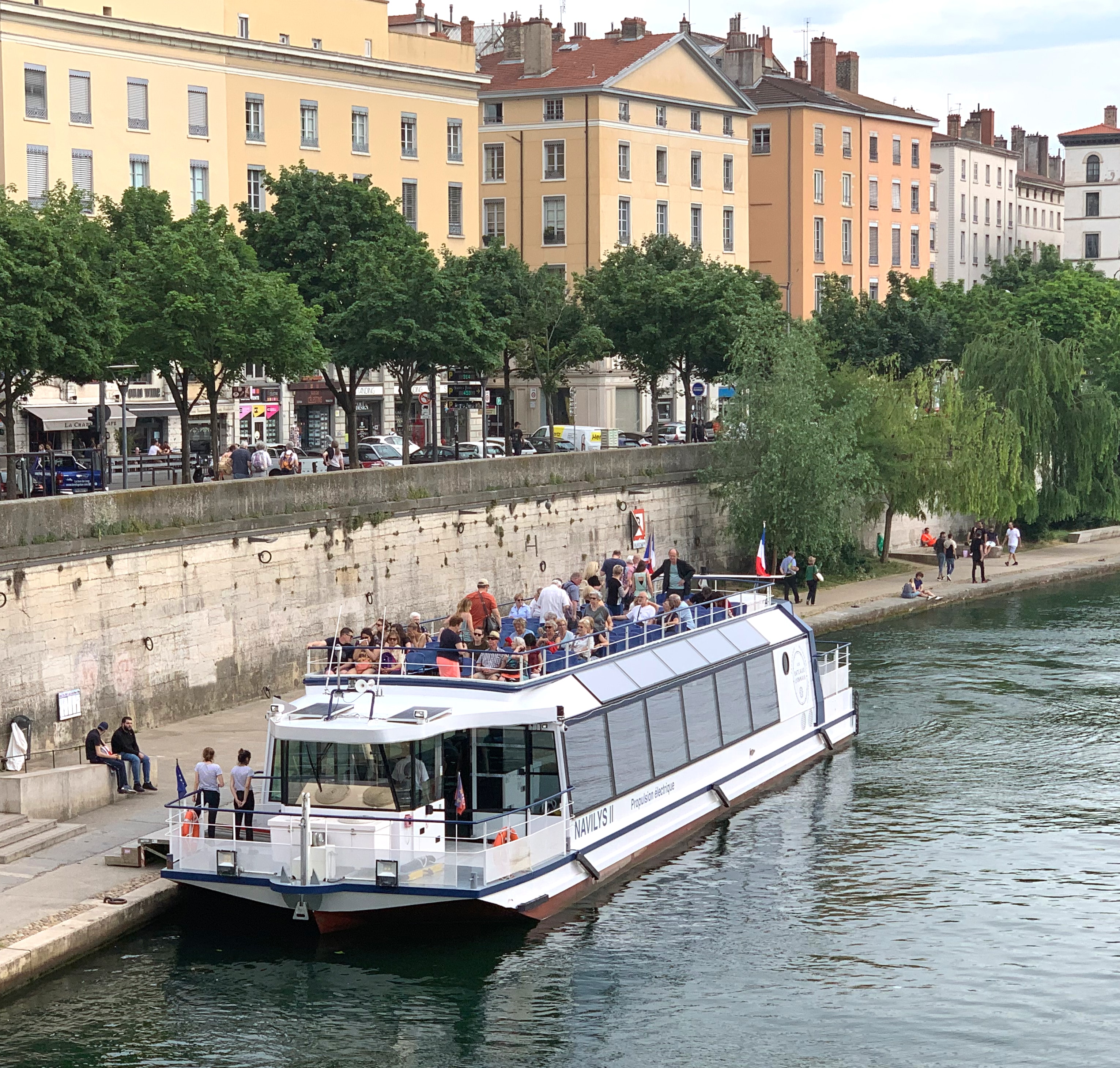
Crossing the peninsula gives the day a useful change of scale. The tourist office presents the Rhône-bank redevelopment as a route linking the areas of Tête d'Or and Gerland, with space for pedestrians and other forms of movement. Seating, recreation and circulation share the river edge. This is civic space as much as visitor space.
That mix calls for ordinary awareness. Keep to the appropriate part of the route, look before changing direction and move out of the flow before taking photographs. A broad-looking bank is not an empty stage. People use it for exercise, a journey across town or an interval in the working day. Watching those overlapping uses can tell you something about Lyon that a façade alone cannot.
There is no need to walk the full north-to-south extent to understand the contrast with the Saône. Select a modest stretch and then decide whether to continue. In cooler or wetter conditions, an indoor pause may be the most sensible next chapter. A travel plan that depends on every outside hour remaining pleasant is not particularly attentive to the city it claims to admire.
Where the two names meet
The Confluence district makes the southern end of the peninsula a destination in its own right. The tourist office describes the area's transition from manufacturing and transport uses into a major urban-renewal project. It offers a different context from an old-town walk: the question becomes how a city makes new districts, not only how it preserves earlier ones.
Do not collapse the district, the geographical meeting of the rivers and the Musée des Confluences into a single stop with a single meaning. They relate to each other, but each deserves a little time. The museum's name is apt to its setting; its collections are not simply an explanation of the two local waterways.
The museum's permanent themes include origins, living species, societies and ideas about death. Choose one thread that genuinely interests you. An hour spent reading selected objects and their labels can be more satisfying than an attempt to cover every room at equal speed. Leave time to notice how an object came into the collection, not just what the display says it represents.
An indoor anchor, checked properly
For a November visit, check the museum's calendar afresh. Its current published regular hours are Tuesday to Sunday, with a late opening on the first Thursday of the month; holiday exceptions can differ. Confirm the details for your actual date and any booking conditions. An expired school-holiday notice is not a reliable guide to the following week.
Its ticket guidance also distinguishes access to exhibitions from particular activities. Check the product you intend to buy, concession evidence if relevant, and any arrangements needed for your visit. A ticket is an admission agreement, not a guarantee that every gallery will be quiet or that no entrance queue will form.
Give the museum an unhurried interval rather than using it solely as a weather emergency. A river walk and a collection visit ask different kinds of attention from the same day. They can improve each other when there is a proper break between them: something to eat, a seat, and enough time to arrive without spending the first room recovering from a rushed transfer.
Two visits to the same view
A simple two-day structure works well. On the first day, concentrate on the central Saône and the historic city, allowing one crossing to change the view. On the second, choose a Rhône-bank section and a separate interval at Confluence. These are editorial suggestions, not a timed tour; shorten or rearrange them around access needs and the weather.
Budget in euros and distinguish public-space walking from transport, meals and paid interiors. Check the current local transport journey planner from your accommodation before committing to a long walk between districts. Do not assume that a route along water will always provide the easiest step-free approach to a museum or station.
If there is time at the end, return to one of the first views. The buildings have not acquired extra beauty because you know more, but the frame may contain more information: which side leads to the older streets, which direction reaches the confluence, and why a crossing matters. Lyon's two rivers offer a route through its history without asking the city to stop being contemporary. The best souvenir is the ability to tell them apart.
“The long view gives an outline; the street supplies the practical evidence that an historic district is still occupied.”
A considered route
- Day oneCentral Saône
Choose a manageable bank section and one crossing, with time for the streets behind the waterfront.
- Day twoRhône and Confluence
Pair a short Rhône-bank walk with a separately planned museum interval; check the connection.
- ReturnThe first view again
Revisit one early viewpoint if time and conditions allow, without adding another long detour.