
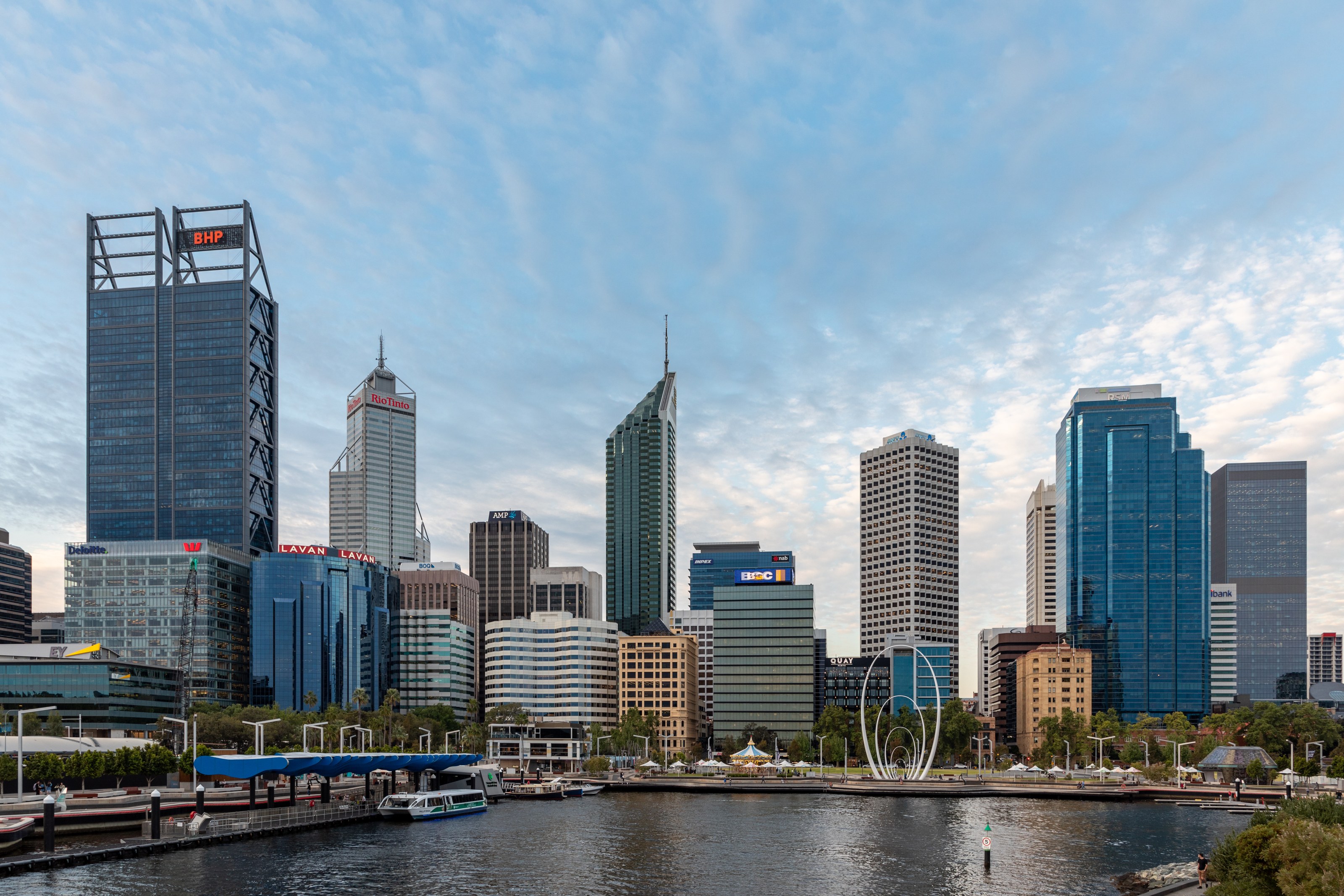
At Elizabeth Quay, the skyline makes a persuasive case for standing still. The towers rise behind the water, their heights gathered into a single composition. Yet the more revealing move is a crossing. From the other bank, a building that filled your view becomes one part of a wider arrangement; a waterfront that seemed like the destination becomes a place from which you departed. Perth's river offers this small adjustment of scale without requiring an expedition out of the city.
The Transperth ferry connects Elizabeth Quay and Mends Street jetties. That practical fact is the starting point, not a promise about the next departure. Check the current timetable, service updates and fare information before setting out. A public transport crossing can be part of a thoughtful day precisely because it does not need to be sold as a special event. Allow the journey to do two jobs: take you somewhere useful, and give you a different way to see where you have been.
A river with more than one frame
The Swan Canning Riverpark is on Whadjuk Country. The state parks authority acknowledges Whadjuk people as the traditional owners of its land and waters. That recognition belongs at the beginning of a visit, not in a historical footnote after the skyline. A city can give its newest waterfront structures prominent names and photographs while older and continuing relationships with the river require more deliberate attention from the visitor. Looking carefully includes attending to who is doing the naming.
Do not turn that acknowledgement into a licence to improvise cultural explanations. Read interpretation where it is provided, notice the names of the people who created it, and seek Indigenous-led learning when you want to go further. Distinguish a public artwork's own account from something you have inferred by looking. You can be curious without pretending to possess the knowledge that curiosity has led you towards. This matters particularly at the water, where easy language about an empty landscape or a newly discovered view can obscure what is already there.
Mindeerup, beside the South Perth arrival point, offers a concrete place to practise that attention. The city identifies the name as meaning place of the shore. It also credits Noongar artist Yondee Shane Hansen, working with Art +, for Yedi Waangki-ny, or Songlines: ground-level works set into the paving. The municipal interpretation connects their patterns with elements including storm clouds, emu feathers, rocks and waterholes. Look down as well as across. The skyline is not the only thing asking to be seen.
A small work underfoot can change the tempo of a waterfront visit. Rather than moving from one large photograph to the next, stop to read its attribution and consider its position. Why might something made to be encountered at walking pace occupy this point of arrival? That is a question about your experience of the site, not a substitute for the artist's explanation. Let the published interpretation establish the facts, and keep your own response recognisably your own.
The useful crossing
Plan the ferry as transport. Identify the correct jetty, check how you will pay and leave time to board without rushing. If you are travelling with a mobility aid, a pushchair or other equipment, ask Transperth about the arrangements that apply to the service you intend to use. Do not treat the accessibility of a nearby public space as proof of the whole journey. Getting to the jetty, boarding and leaving at the other end are separate parts of the trip.
For the same reason, avoid making the return dependent on the very last departure that might suit you. Check options before walking away from the landing, and keep an alternative route in mind. The point is to make space for an unhurried crossing, not to prescribe a universal schedule. Timetables are operational information: the right one is the one that applies to your travel date, including any service changes. An old transport PDF can be beautifully clear and still be the wrong document.
On board, let the river interrupt the instinct to organise everything around the camera. Find a permitted place to sit or stand, follow crew instructions and keep access clear. Look back after you have settled rather than trying to secure a view during boarding. The change in perspective is available without turning the journey into a shoot. Sometimes it is enough to register that the quay has receded and the separate towers have begun to form a skyline.
Read the pictures as dated evidence
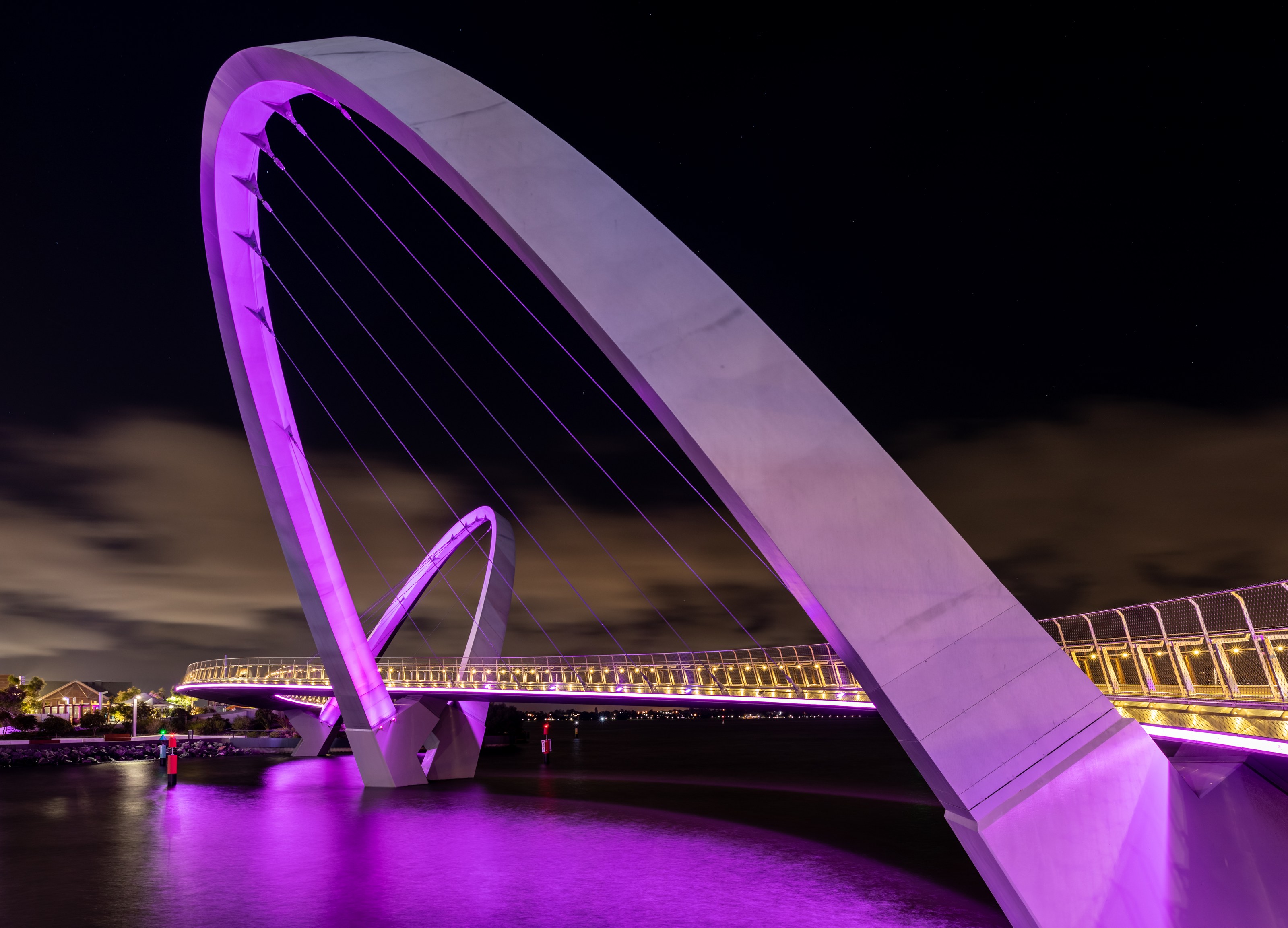
Our Elizabeth Quay photograph was made in October 2019. A moored ferry, looping sculpture and towers share the frame. It is a useful record of the relationship between water and built form at that moment, not a current operational image. The second photograph shows the bridge at night, its illuminated arch reflected in dark water. The photographer used tone-mapped HDR; the caption retains that information because the treatment is part of how the picture was made.
Neither image promises the same light, illumination or composition on your visit. In particular, a night photograph is not an instruction to postpone a return journey until darkness. Choose a time that suits your plans and conditions. If you do stay later, confirm transport and the suitability of your route afresh. A photograph can help you notice a structure without dictating the circumstances in which you must encounter it.
There is also no obligation to reproduce the photographer's position. A waterfront view changes with a few steps, and those steps may be less useful than a pause. Try comparing the relationship between the near bank and distant buildings from two safe public places. What fills the foreground? What becomes smaller? Which elements remain recognisable? The exercise gives the crossing a purpose beyond collecting a second version of a familiar image. You are learning how the city assembles itself from different distances.
Two banks are enough
For a first visit, keep the scope deliberately narrow: Elizabeth Quay, the crossing and a considered pause around Mindeerup. This is an editorial suggestion, not a timed walking circuit. It leaves room for reading, rest and a meal without requiring you to make a long shoreline walk fit between other commitments. More destinations can always be added later. Start with an afternoon whose important parts you can actually attend to.
On the South Perth side, allow the waterfront to be a place to stop rather than merely the foreground of the central city. Read the interpretation before choosing what to photograph. If you use a shared path, leave room for others to pass and keep a group from spreading across it. Practical courtesy is especially valuable in places where some people are moving purposefully and others are looking around. Neither use needs to crowd out the other.
Plan for outdoor exposure even when the route feels urban. Bring sun protection and drinking water, consult the forecast and choose breaks that suit your group. If weather or service changes make the crossing unsuitable, keep the visit on one bank. You have not failed to understand the river by declining to travel over it. The route is a means of paying attention, not a test that must be completed.
Keep wildlife encounters observational. Do not touch sick or dead wildlife; follow the parks authority's reporting advice. Give animals room, do not entice them into a photograph, and follow current park notices rather than assumptions drawn from a pleasant setting. A waterfront within a city still belongs to a larger river environment. That need not turn an afternoon into an ecological survey; it simply asks for behaviour that does not make the place less hospitable to what already lives there.
The return crossing can be the quiet conclusion. Elizabeth Quay will be recognisable, but the view has acquired another bank, a name and a set of relationships. The city is no longer only the line of towers in front of you. It includes the land and water acknowledged as Whadjuk Country, the work encountered at Mindeerup and the ordinary service that brought the two sides into the same afternoon. A short journey has not explained Perth. It has made the next question more precise.
“The skyline is not the only thing asking to be seen.”
A considered route
- OrientElizabeth Quay
Check the ferry and return plan before concentrating on the skyline.
- CrossMends Street Jetty
Travel only when the service and boarding arrangements suit your needs.
- AttendMindeerup
Read the credited public-art interpretation and allow a quiet shore-side pause.