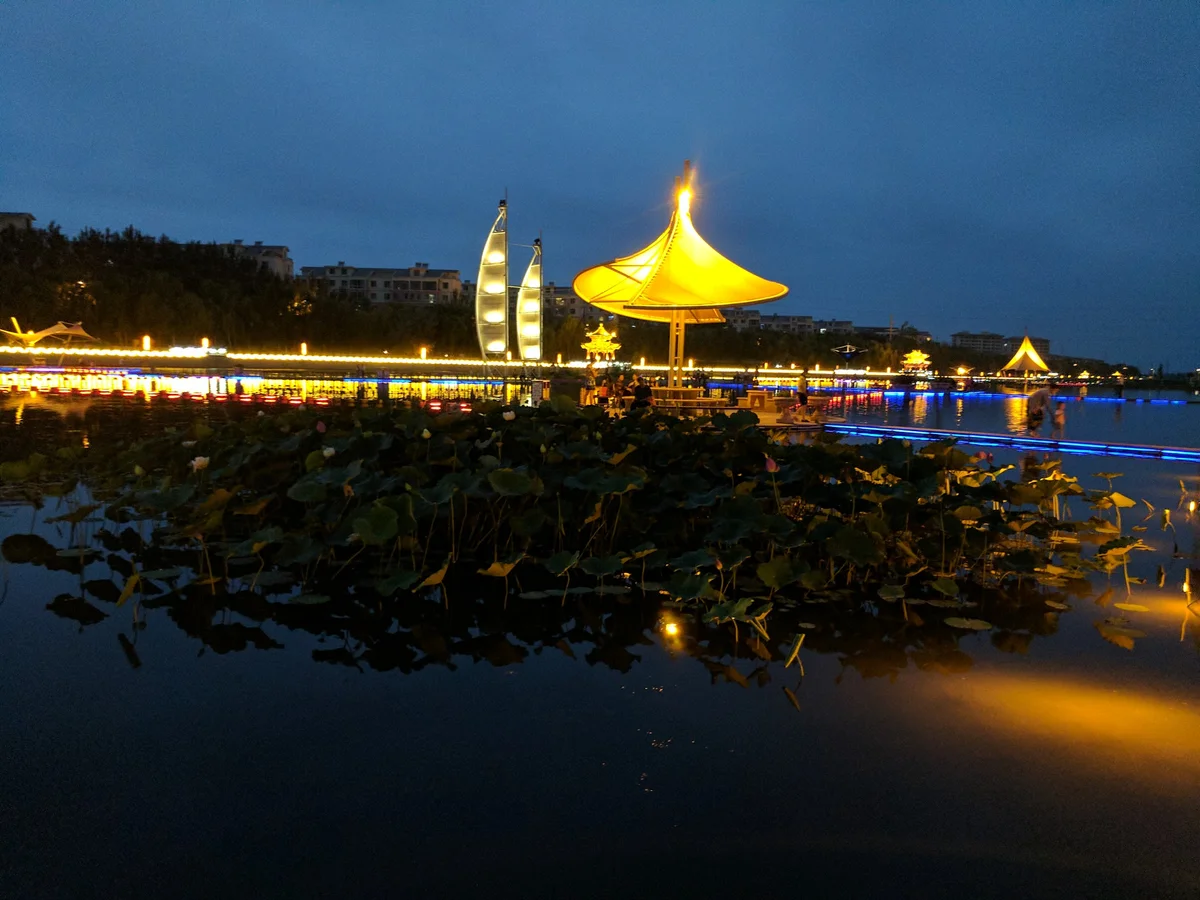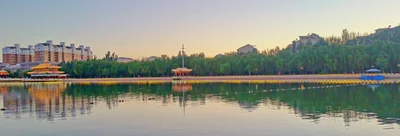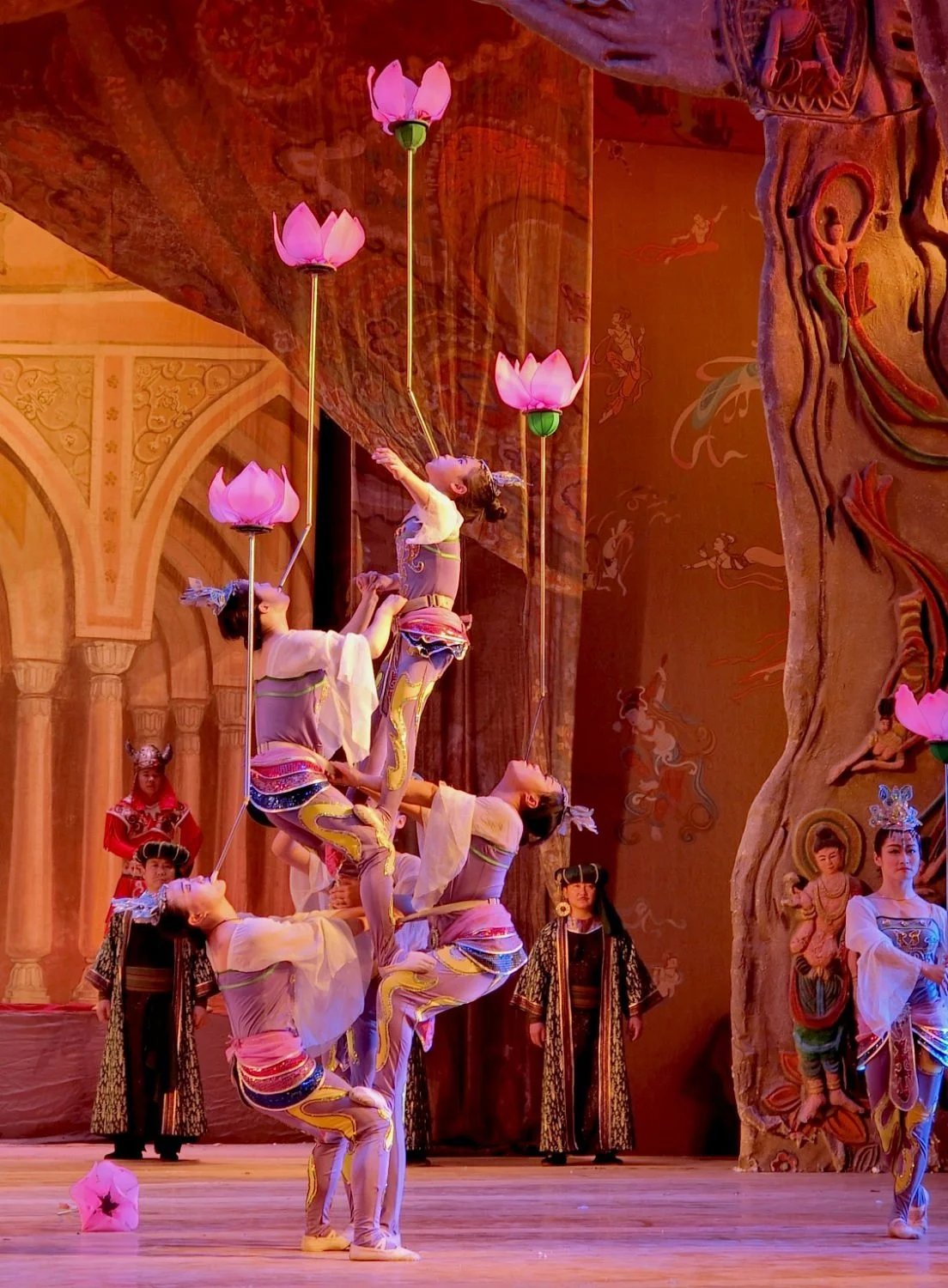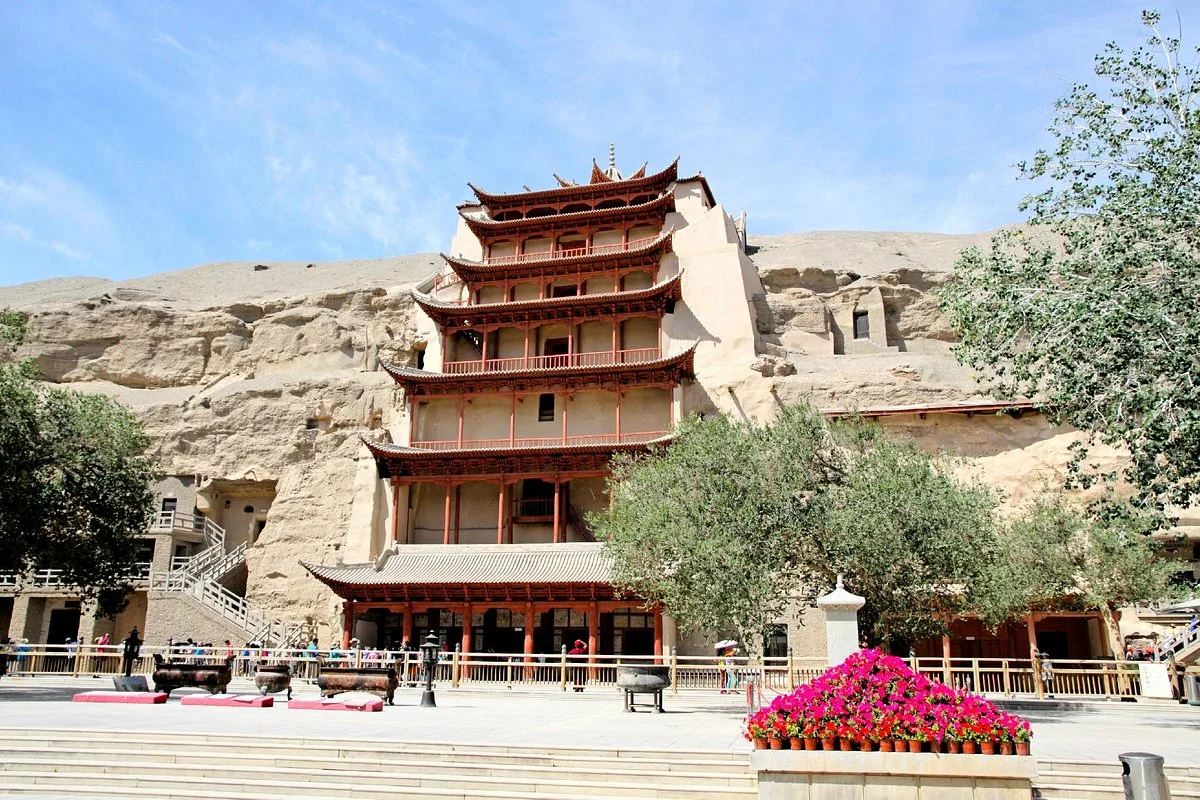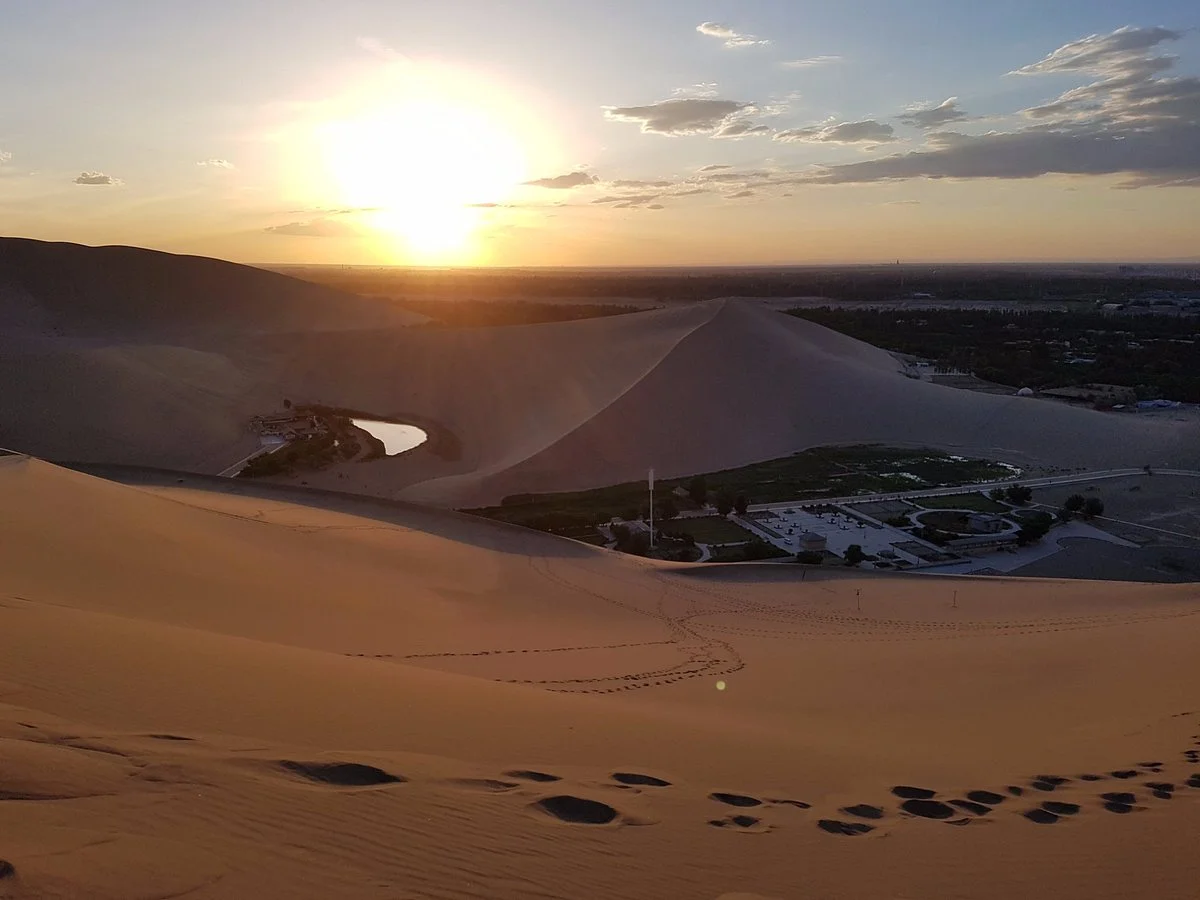
Dunhuang () is a county-level city in northwestern Gansu Province, Western China. According to the 2010 Chinese census, the city has a population of 186,027, though 2019 estimates put the city's population at about 191,800. Sachu (Dunhuang) was a major stop on the ancient Silk Road and is best known for the nearby Mogao Caves.
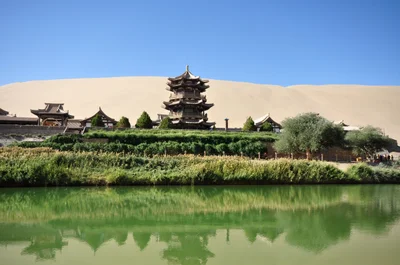
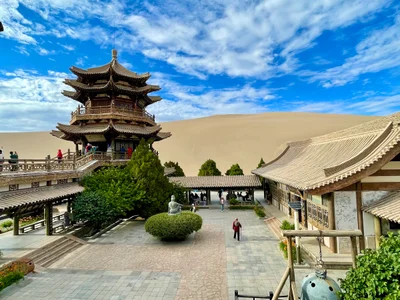
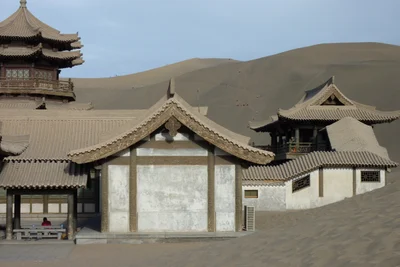
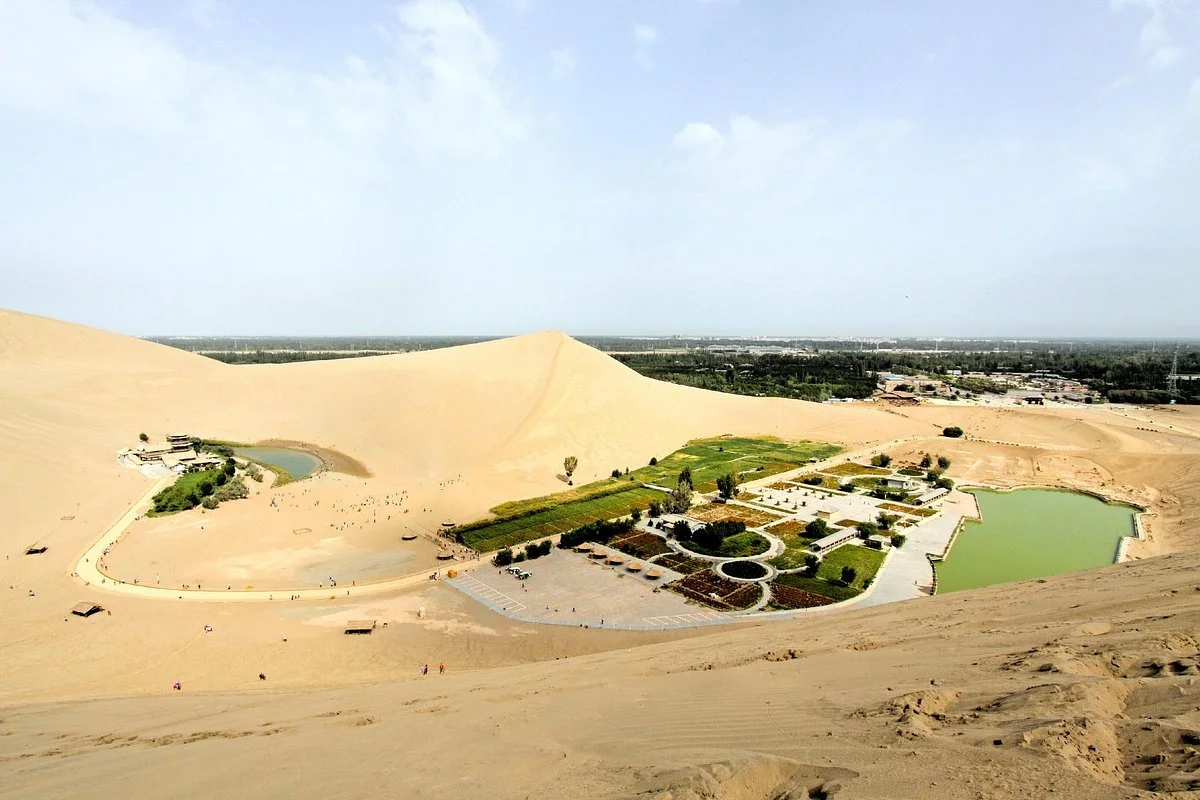
Dunhuang is situated in an oasis containing Crescent Lake and Mingsha Shan (鳴沙山, meaning "Singing-Sand Mountain"), named after the sound of the wind whipping off the dunes, the singing sand phenomenon. Dunhuang commands a strategic position at the crossroads of the ancient Southern Silk Route and the main road leading from India via Lhasa to Mongolia and southern Siberia, and also controls the entrance to the narrow Hexi Corridor, which leads straight to the heart of the north Chinese plains and the ancient capitals of Chang'an (today known as Xi'an) and Luoyang.Administratively, the county-level city of Dunhuang is part of the prefecture-level city of Jiuquan. Historically, the city and/or its surrounding region has also been known by the names Shazhou (prefecture of sand) or Guazhou (prefecture of melons). In the modern era, the two alternative names have been assigned respectively to Shazhou zhen (Shazhou town) which serves as Dunhuang's seat of government, and to the neighboring Guazhou County.
There's a normal-priced supermarket opposite the long-distance bus station (beside Feitian Binguan) to stock up on water, snacks and other groceries.
A public bus service operates in Dunhuang's urban area, which is useful for getting to a small number of sights such as the Dunhuang Museum and the Singing Sand Dunes & Crescent Lake Park, but most of the major attractions in Dunhuang are quite far from the urban area. Fortunately, a special tourist shuttle bus service is also available.
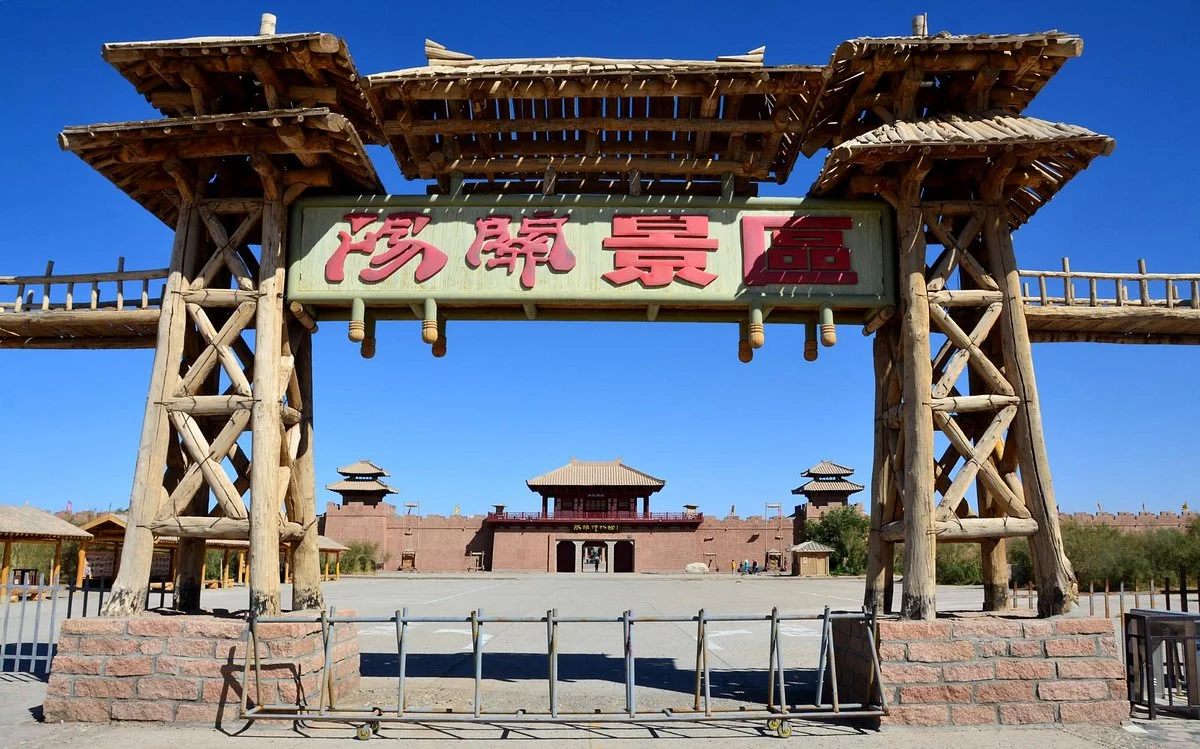
The shuttle bus has two major routes: the western route and the eastern route. The eastern route takes passengers to the Mogao Caves and the Singing Sand Dunes & Crescent Lake Park. The western route on the other hand, normally stops at the Ancient City of Dunhuang Movie Set, Yang Pass, Yumen Pass and Dunhuang Yardang National Geopark. As of January 2021, however, the Dunhuang Yardang National Geopark is temporarily closed, so the bus is stopping at the Western Thousand Buddha Caves instead.
Shuttle buses on the eastern route can usually pick you up from any hotel in the city whereas the shuttle buses on the western route may only pick you up at select locations. You can confirm the pickup location when you purchase the tickets.
Tickets for the shuttle bus can be purchased at the following locations:
The standard fare for both routes is ¥78. This fare does not include anything other than the bus ride. Entry tickets for the various attractions must be purchased separately.
The city was founded by Emperor Wudi of the Han dynasty in 111 BC at the crossroads of two trading routes on the Silk Road, and the name 'Dunhuang', meaning to 'to flourish and prosper,' gives some indication of the town's prominence in ancient China. It is much less important today.
Buddhism reached China via the Silk Road and this is one of the more important Buddhist sites on that route. The Tangut or Western Xia ruled a substantial kingdom in the area, with its capital at Yinchuan, for centuries until the Mongol conquest in the 1200s. They were the main sponsors of Buddhist construction at Dunhuang.