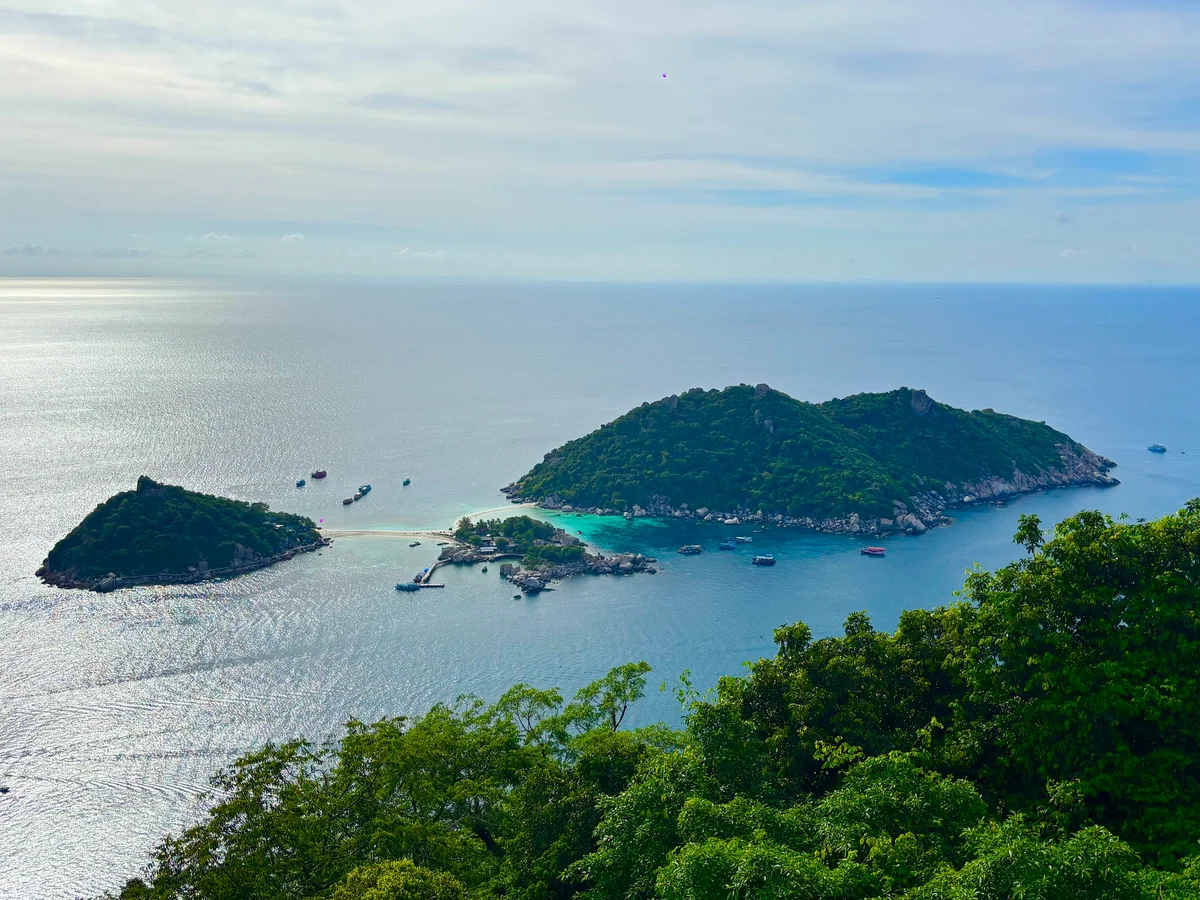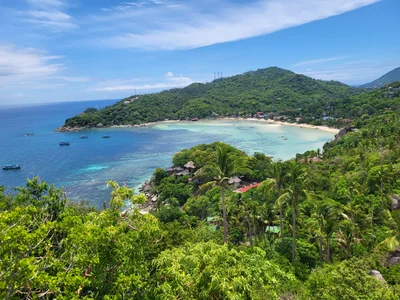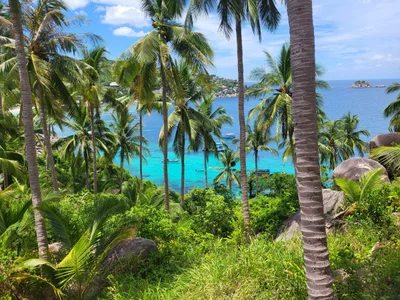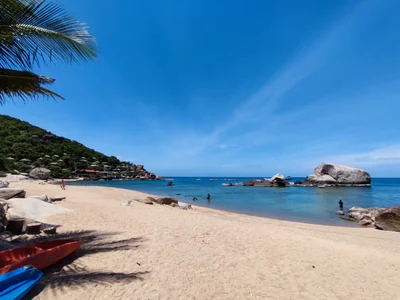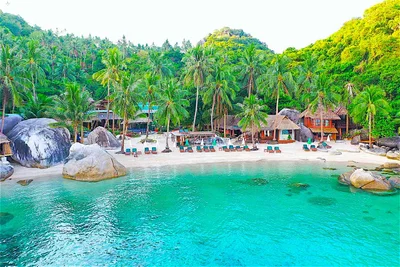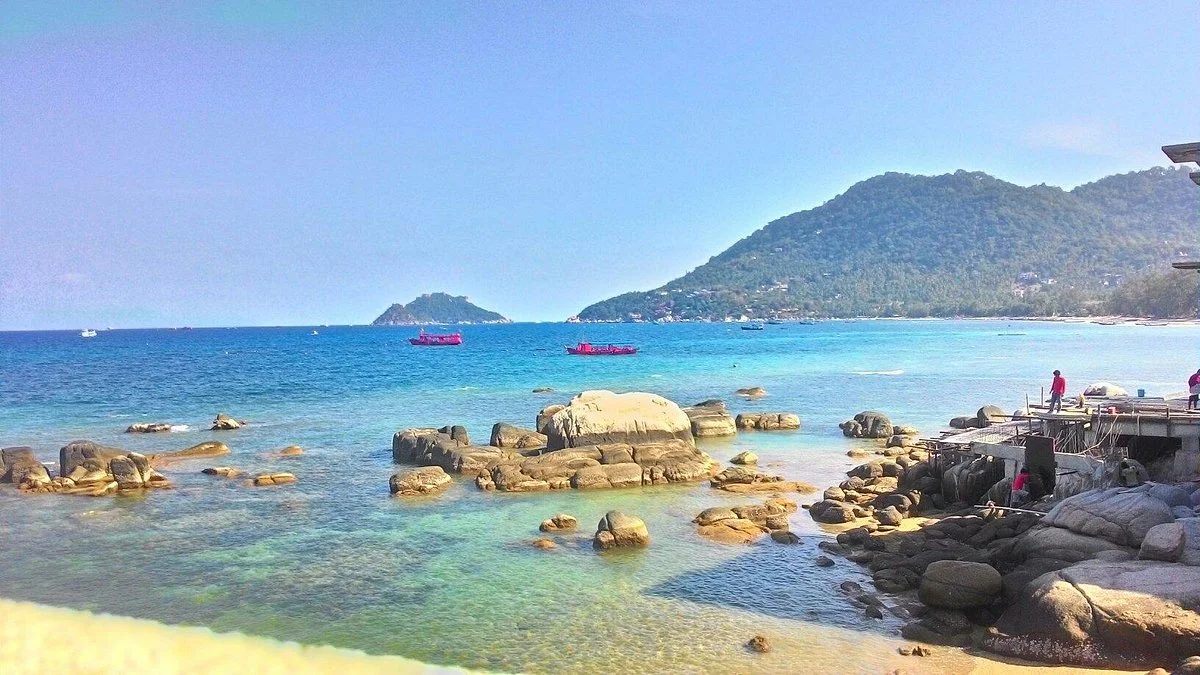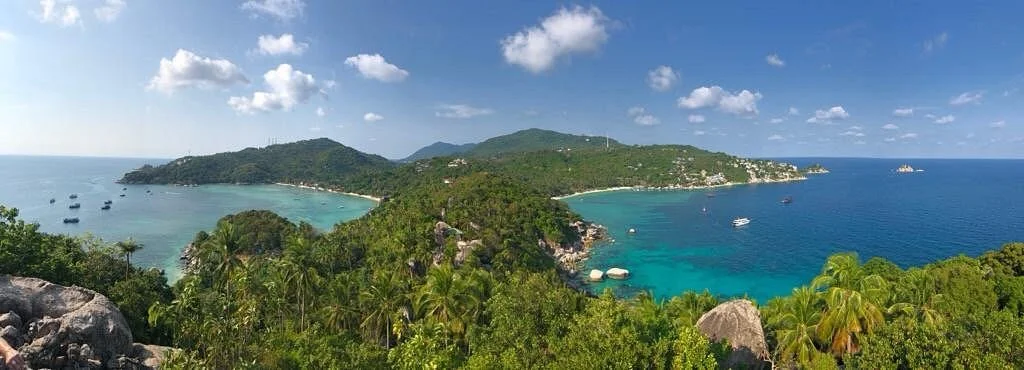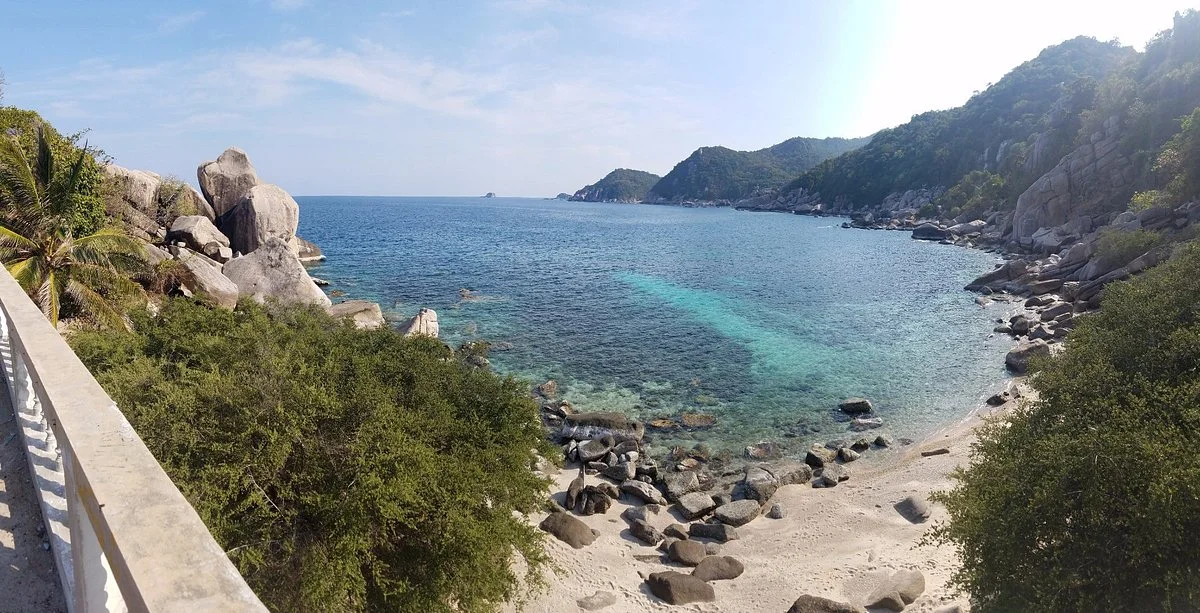
Ko Tao (Thai: เกาะเต่า, pronounced [kɔ̀ʔ tàw], lit. Turtle Island) is an island in Thailand and is part of the Chumphon Archipelago on the western shore of the Gulf of Thailand. It covers an area of about 21 km2 (8 sq mi). Administratively it is a subdistrict (tambon) of Ko Pha-ngan District (amphoe) of Surat Thani Province. As of 2006, its official population was 1,382. The main settlement is Ban Mae Haad.
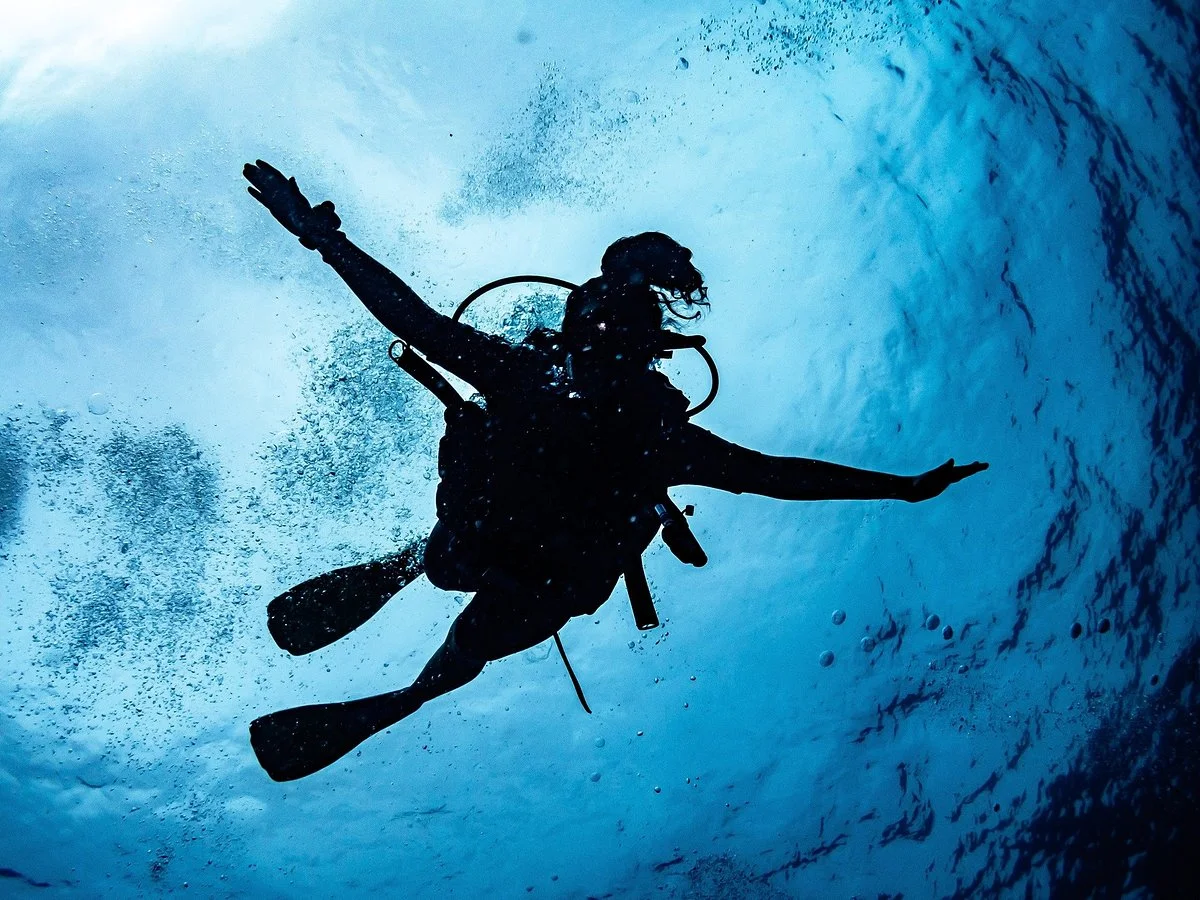
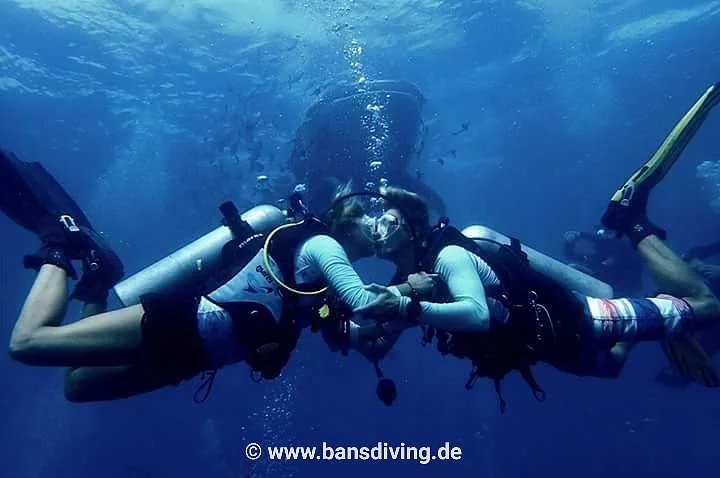
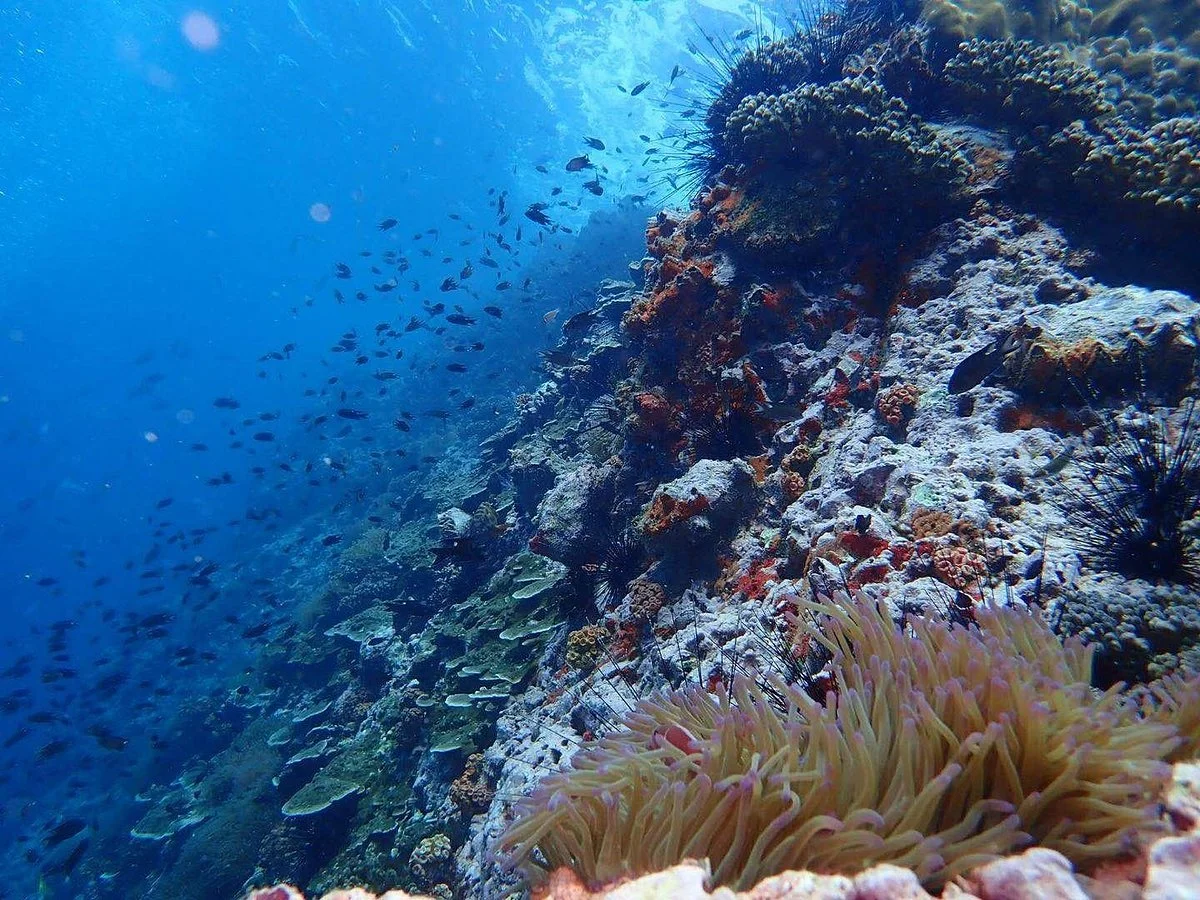
The economy of the island is almost exclusively centered on tourism, especially scuba diving. Scuba diving is extremely popular in Ko Tao due to clear visibility, inexpensive pricing, warm water, and the range of sealife to be seen.
Take a bike around the island. Shark Bay is a good place to go snorkelling for the day (don't worry, they are only small black-tip reef sharks, harmless to humans). Ko Nang Yuan, Freedom Beach, Laem Thian, Mango Bay, Hin Wong Bay, and Tanote Bay are good day excursions, accessible by road or boat. If you rent a scooter, be prepared to turn around or continue by foot since some roads (e.g., to Mango Bay) may be in such condition that you need a dirt bike or a car to travel them. While there are legally no private beaches in Thailand, some are relatively inaccessible by land making a paid longtail boat a necessity, and some are "owned" or only accessible via "private roads" that charge 100-200 baht entrance fees..
However, to see the best places, go by foot or longtail as some places are inaccessible to motorists. There are a number of good viewpoints around the island such as John Suwan mountain viewpoint in the south of the island, Two View in the centre, and Fraggle Rock in the north.
= Freedive training and education worldwide is generally done through AIDA, SSI, and Apnea Academy, though PADI offers freediving courses.
A huge selection of Thai food is available, including lots of seafood. Barbecued fish is one of the local favourites. As a large portion of the population are expats, you will find plenty of other cuisines too. 2011 prices ranging from 60 baht for stuff-on-rice (still possible in 2015, especially if you have a look around the gas station on the main road, about a kilometre south-east from the piers) through to 250 baht for a nice hunk of fresh barbecued fish at a decent restaurant. 30 baht would get you a fresh banana pancake, and 60 baht a bowl of porridge with honey at a budget resort's restaurant. 200-300 baht would get you a bowl of freshly made Italian pasta, and 160-200 baht for pizza. Fresh fruit juices are available at many stalls for 30-40 baht.
When you get a break from diving, there are a few bars on the island. The bars on the island rotate nights, so the best bet is to ask someone working at dive shop which bar will be crowded that night or check the posters. Many start off the evening at the bars located at the northern end of Sairee, and after they close at 01:00, go onto whichever club is open for the rest of the evening at the south end of Sairee.
No information available
You can usually find accommodation at the pier when you arrive. However, during peak times it is worth booking ahead unless you want to sleep on the beach or spend the night in one of the more expensive lodgings. If you are planning on taking a scuba diving course whilst on the island, most dive schools have an attached resort and will either discount the accommodation or throw it in for free when you book a course. During busy periods, most resorts with dive outfits will not want you to stay unless you are diving at least every second day with them. If you don't want to stay with your dive operator and use their free accommodation, you may want to ask for a discount.
The majority of the accommodation on Ko Tao are centred around three main areas: Sairee Beach, Mae Haad, and Chalok Ban Khao.
There is one main road running north to south on the island that connects Sairee, Mae Haad, and Chalok, with many smaller roads branching off from it. Some roads lead over the spine of small mountains that run along the middle of the island and are all dirt, can become impassable after rain, and can be challenging even to a skilled driver. If you are looking for an adventure, the dirt roads are a good place to find it. Also be aware that distances can be quite deceiving due to the quality and elevation changes of the trail. As of October 2016 many of the roads are actively being replaced with freshly poured concrete, though this has led to an increase in speeding compared to the older worn down/dirt roads. The other main thoroughfare is a pedestrian pathway known locally as the "Brick Road" (or "Yellow Brick Road" despite being gray) that runs along the majority of Sairee Beach from Mae Haad to the main intersection of Sairee. Despite being a pedestrian path there's still numerous scooters weaving and bobbing, so be sure to keep an eye out.
You can rent bicycles and motorcycles at many places around the island, though an increasing number of rental shops are running motorbike scams where they hold your passport hostage and insist on you paying large amounts of money for non-existent scratches upon their return — primarily shops on/near the "Up Road" from the Mae Haad pier or near the Sairee 7-Eleven. Make sure you note and photograph all scratches and dents when you take delivery of a rental bike, including the underside of the bike as it inevitably will take a few bumps once off the main road (if the shop is charging less than 200 baht/day for a 125 cc scooter, chances are they're making up the difference elsewhere). Taking passports as the deposit is standard even at reputable shops, though some will alternatively take a deposit of 8000-10,000 baht for a typical 125 cc scooter if you ask.
Ko Tao was once a detention place for political prisoners. Today it is one of Thailand's top tourist destinations, along with the nearby islands of Ko Samui and Ko Pha Ngan. The island is geared more towards relatively affluent divers than backpackers on a budget. Thus, you won't find cheap food stalls here. There are hardly any ocean currents and there is a wide selection of dive sites and dive shops, dive schools, and resorts. Activities other than diving are on the increase and the food and nightlife options are some of the best in the Gulf of Thailand.
Ko Tao is a small island of approximately 21 km 2 and receives over 100,000 visitors per year. This is a heavy tourist load for a small island with rudimentary sanitation infrastructure. Everything that can't be burned has to be taken away to the mainland. There is no sanitation department to clean the roads or other public areas, so don't dump your waste thoughtlessly. Avoid the unnecessary plastic bags that are given out mindlessly for virtually every purchase. Water is scarce and electricity expensive, so don't waste them.
Peak seasons in Ko Tao are from December-March and July-August. It is a quite popular destination among Thais also, so it can be nearly fully booked on Thai holidays.