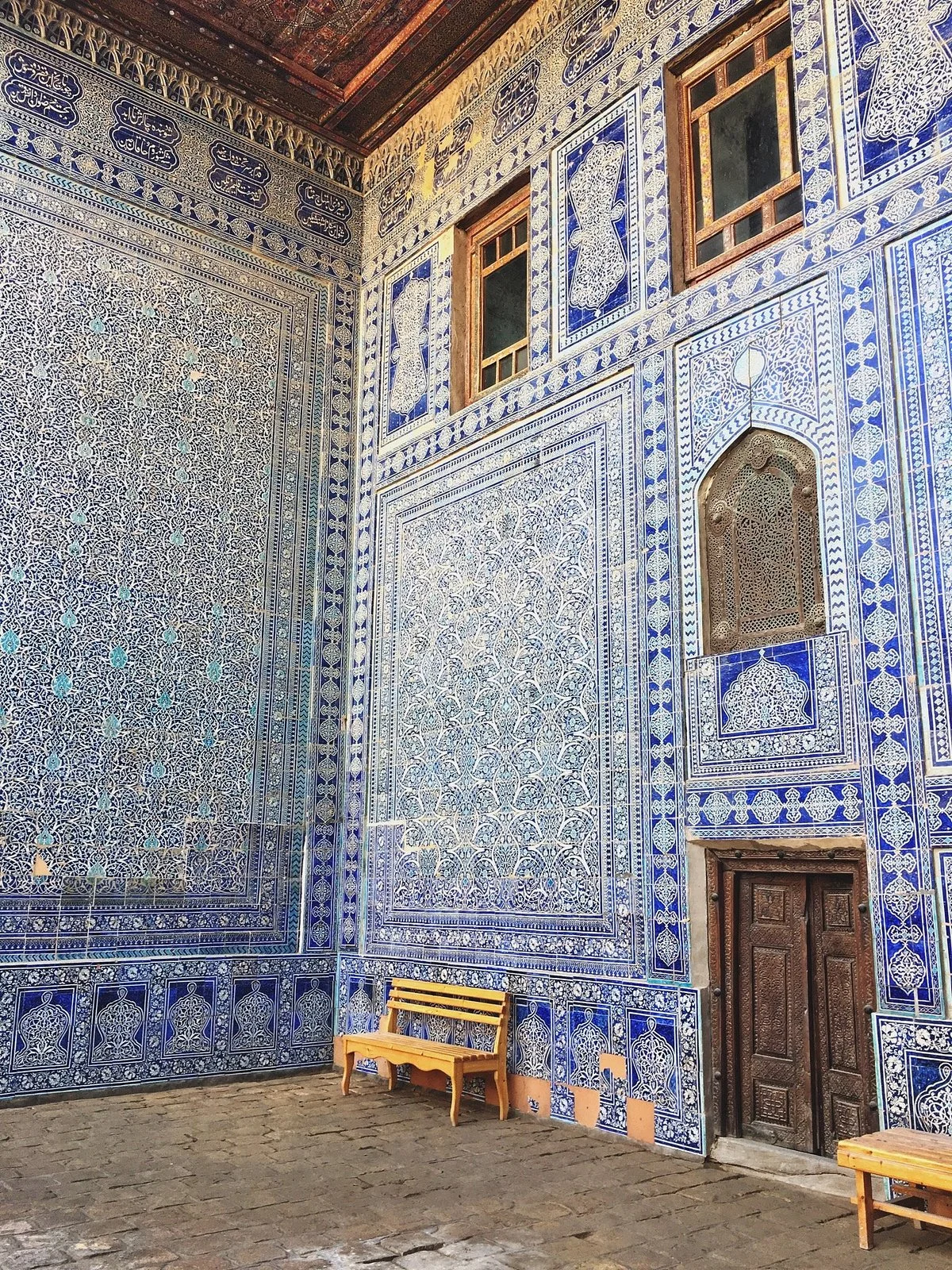
Xorazm Province is an ancient region in Uzbekistan, known for its UNESCO-listed sites, desert landscapes, and Silk Road history.
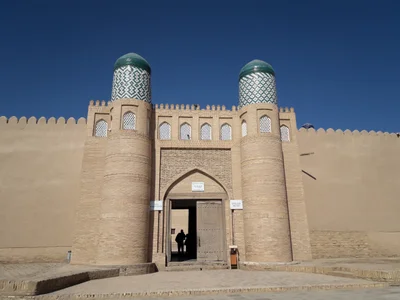
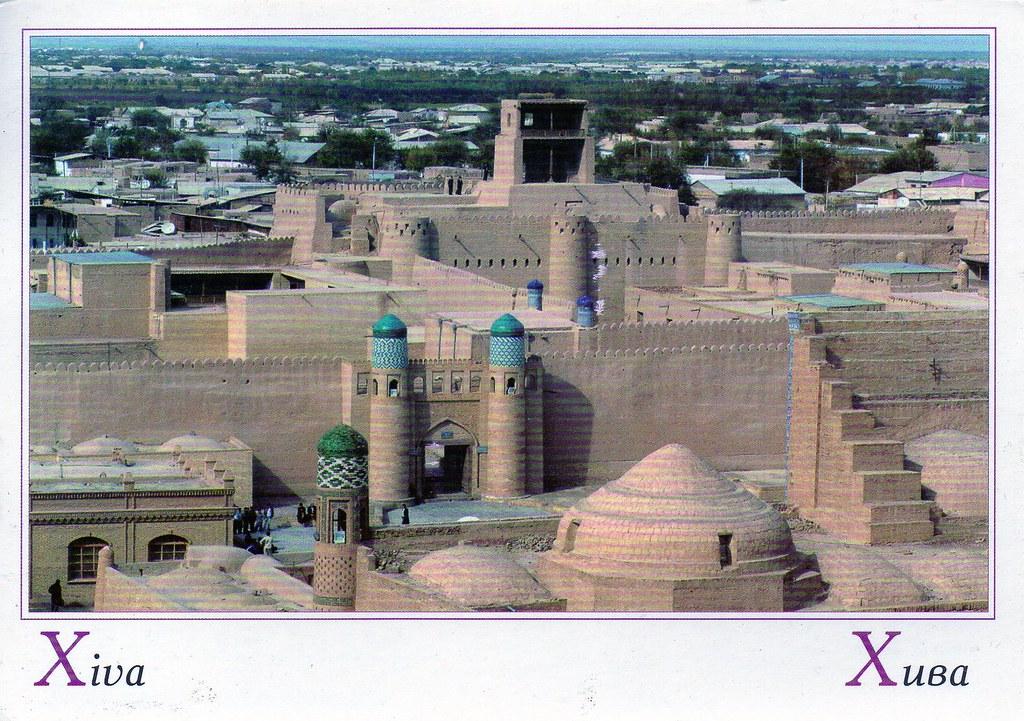
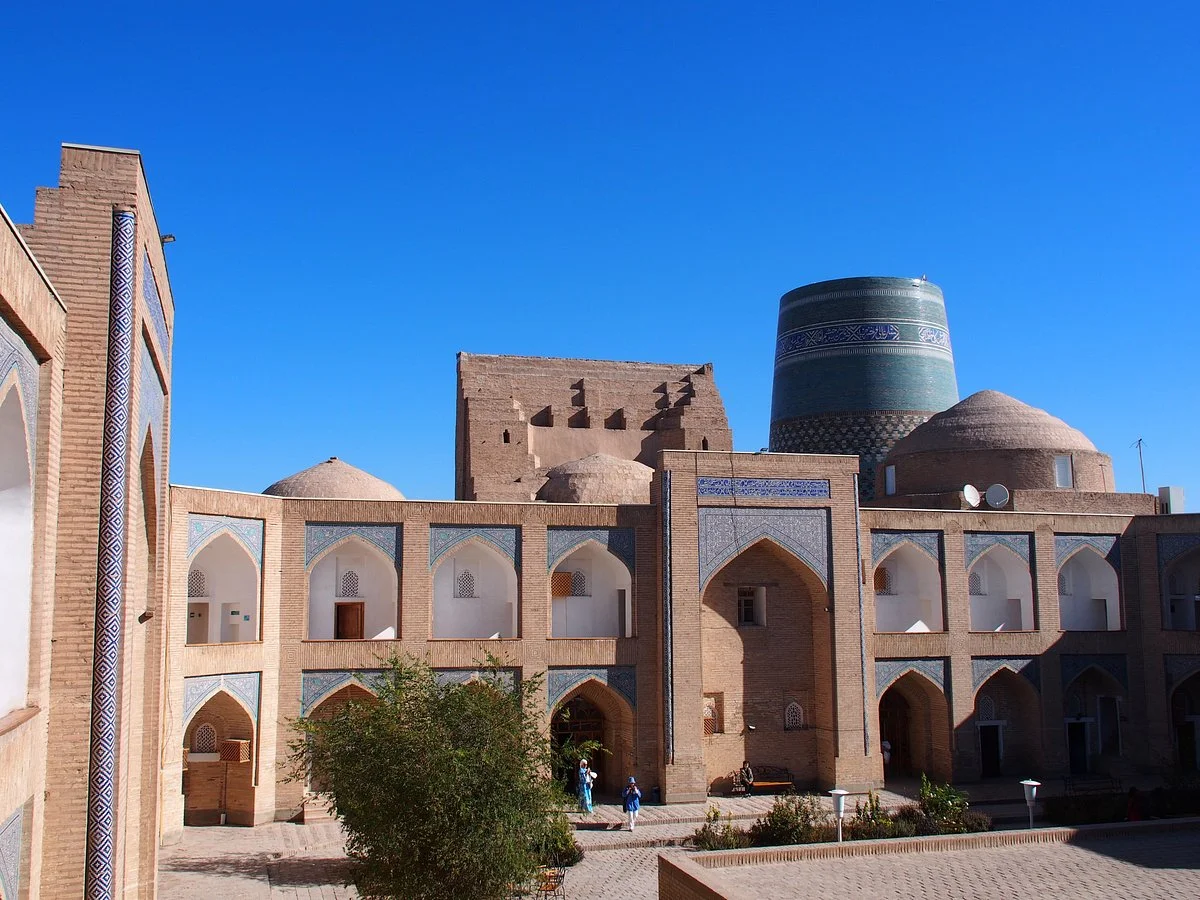
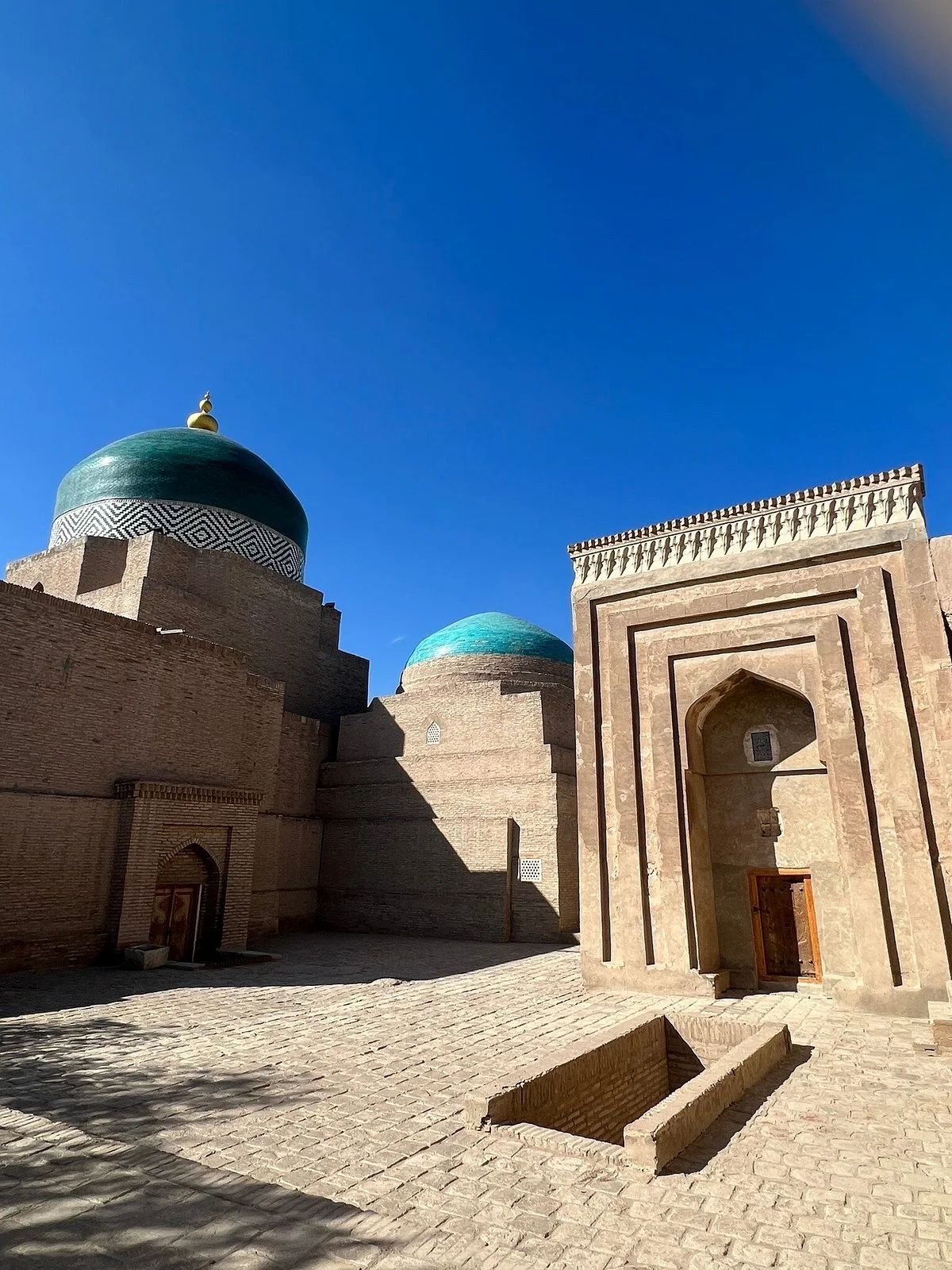
Khiva (Uzbek: Xiva, Хива, خیوه; Persian: خیوه, Xīveh; alternative or historical names include Orgunje, Kheeva, Khorasam, Khoresm, Khwarezm, Khwarizm, Khwarazm, Chorezm, Arabic: خوارزم and Persian: خوارزم) is a district-level city of approximately 93,000 people in Khorazm Region, Uzbekistan. According to archaeological data, the city was established around 1,500 years ago. It is the former capital of Khwarezmia, the Khanate of Khiva, and the Khorezm People's Soviet Republic. Itchan Kala in Khiva was the first site in Uzbekistan to be inscribed on the World Heritage List (1991). The astronomer,
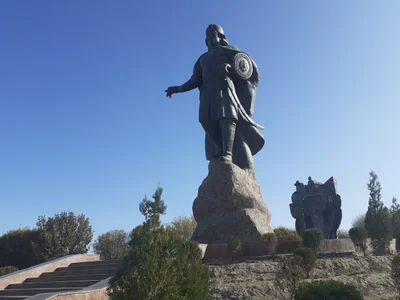
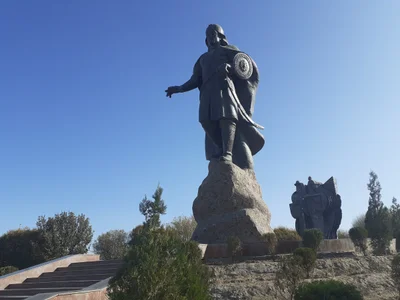
Druzhba is a populated place in Xorazm Province, Uzbekistan.
Gurlan is a town and seat of Gurlan District in Khorazm Region in Uzbekistan. It is located near the border with Turkmenistan in western Uzbekistan, 42 kilometres (26 mi) north-west of Urgench, north of Shovot, and south of the Amu Darya river. Gurlen is a major centre for cotton production, and rice and yams are also significant other crops.
Hazorasp, also known as Khazarasp, or by its more ancient name Hazarasp, is an urban-type settlement in Uzbekistan, administrative centre of the Hazorasp District. It lies at the head of the Amu Darya delta south of the Aral Sea.
Qo’shko’pir is a populated place in Xorazm Province, Uzbekistan.
Shovot, also Shavat, is a town and seat of Shovot District in Xorazm Region in Uzbekistan. The town is located 37 km north-west of Urgench. It has a railway station on the line Turkmenabad - Beineu. It attained city status in 1981. It contains an Asphalt concrete plant.