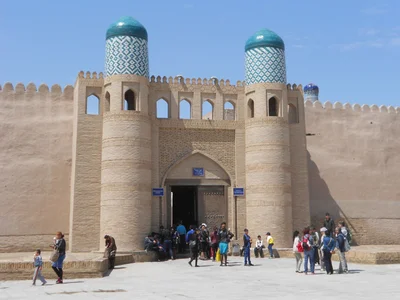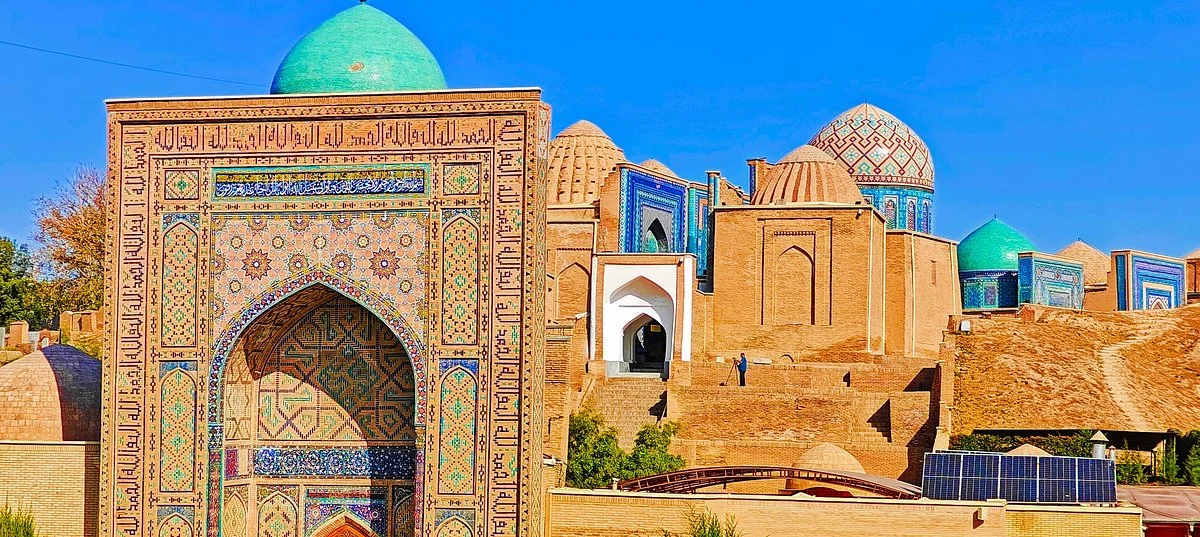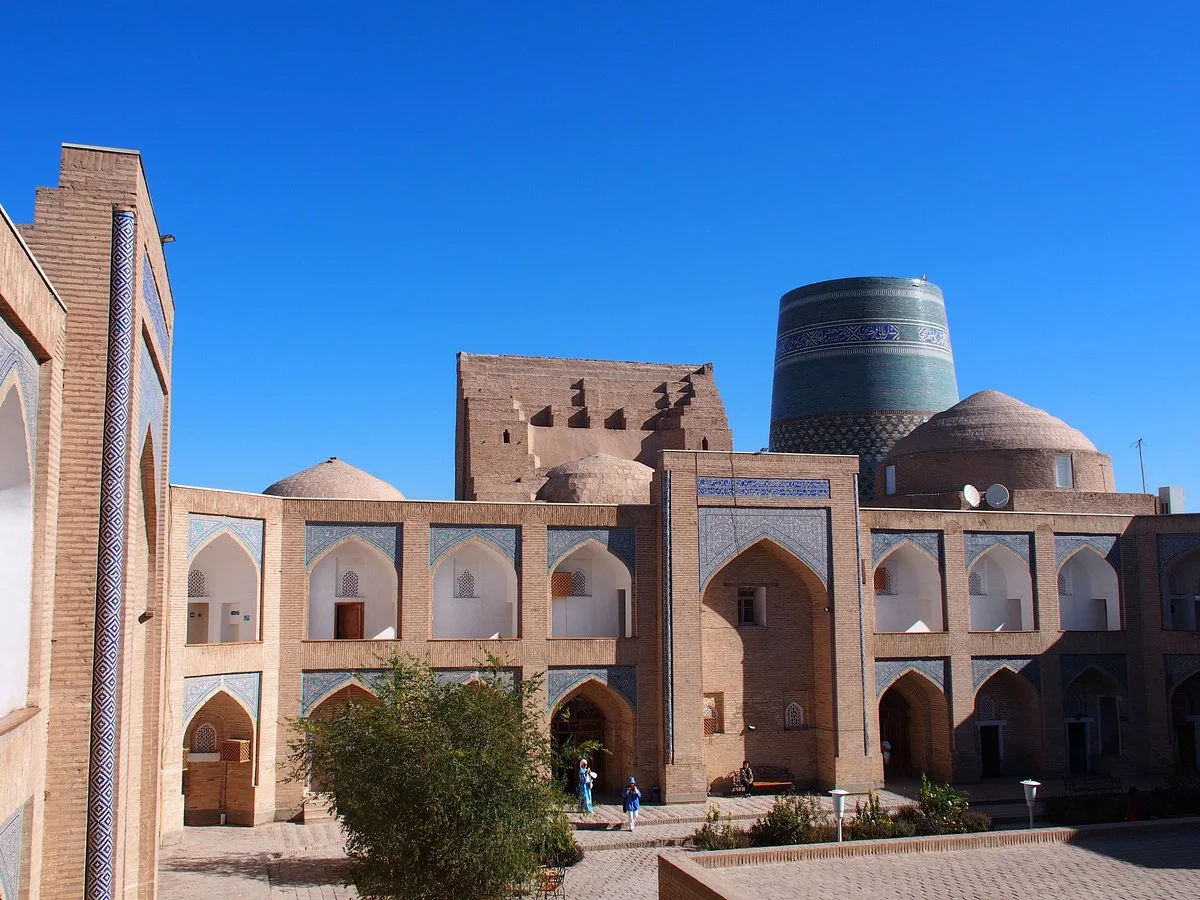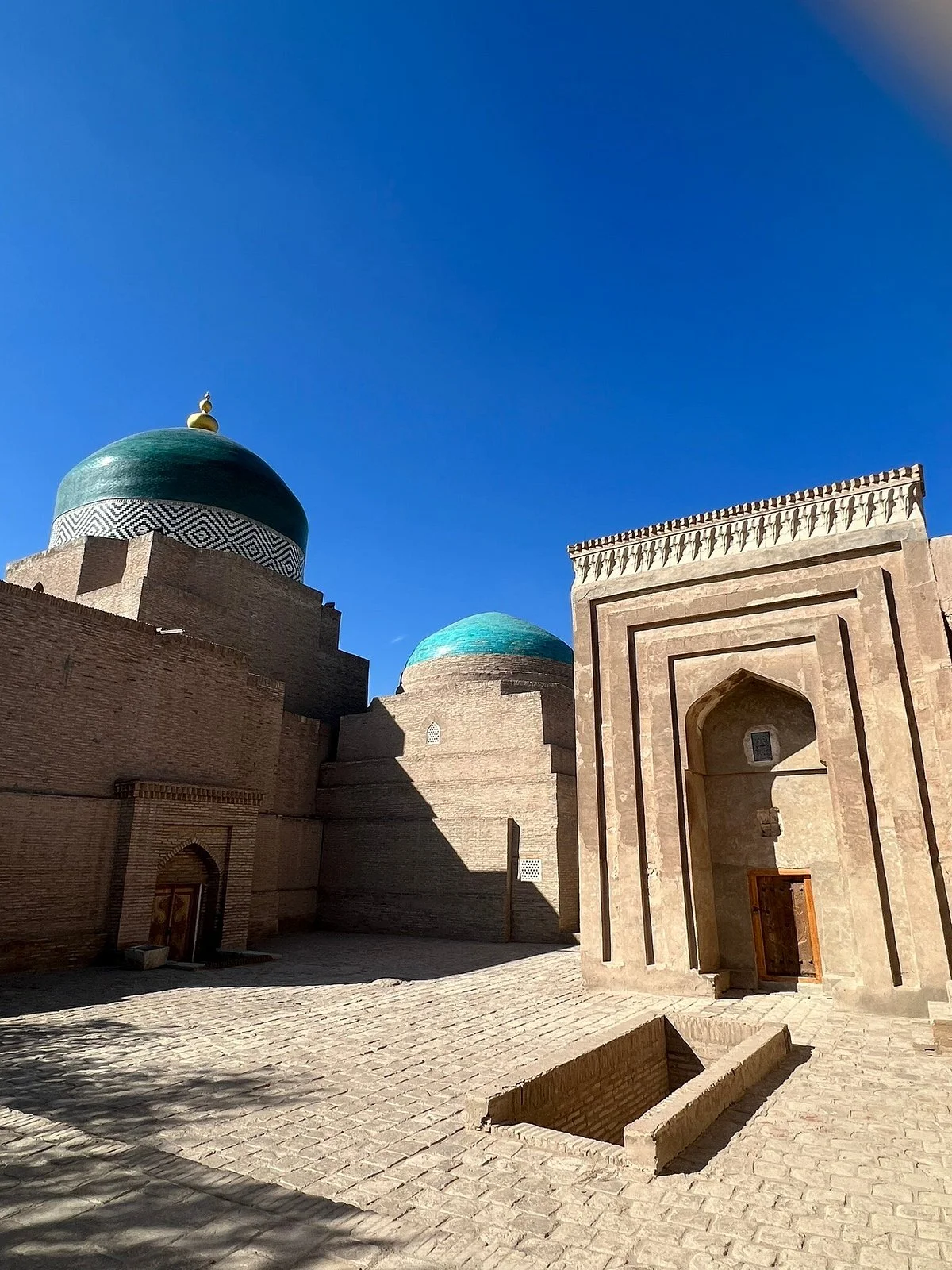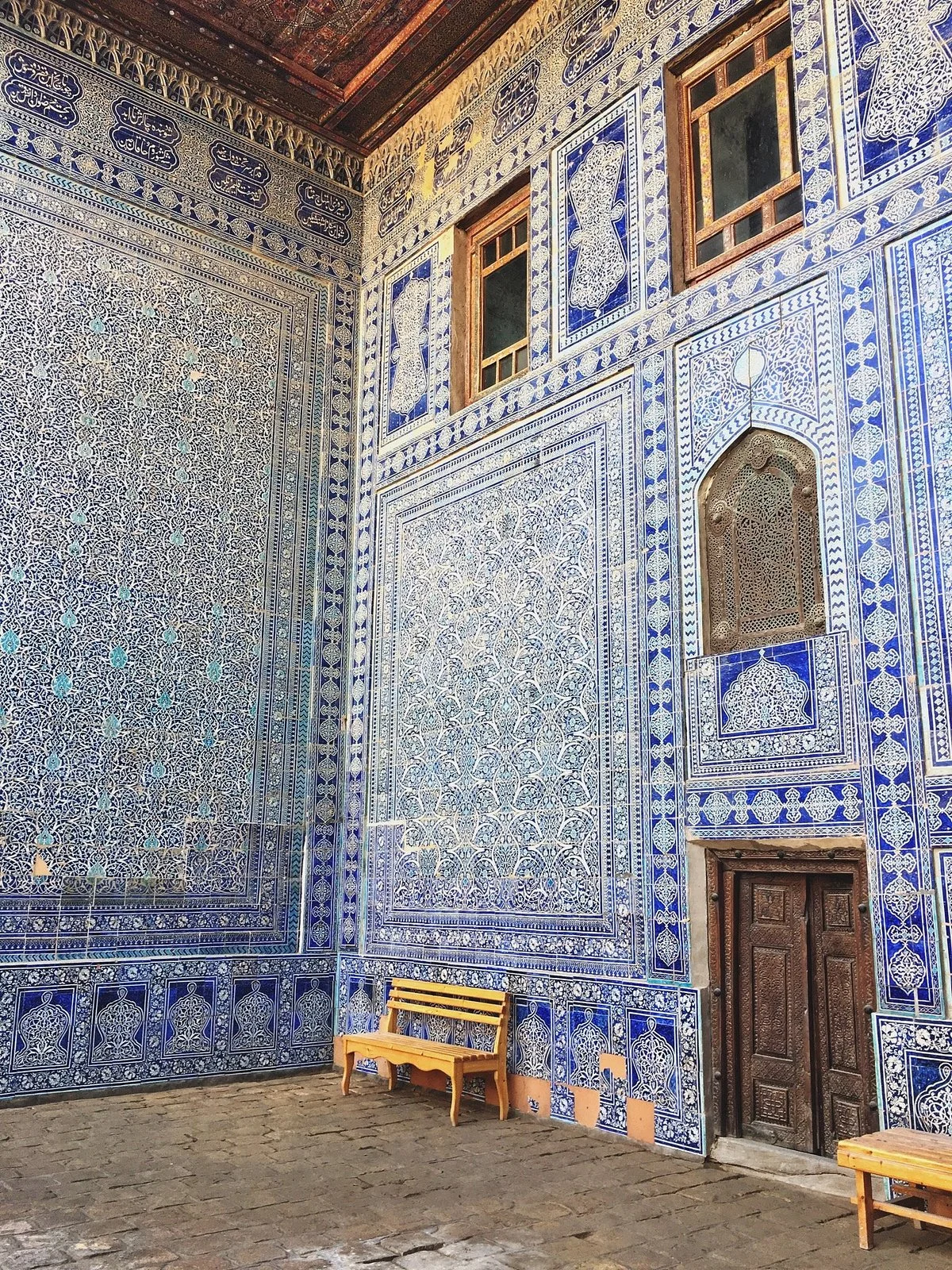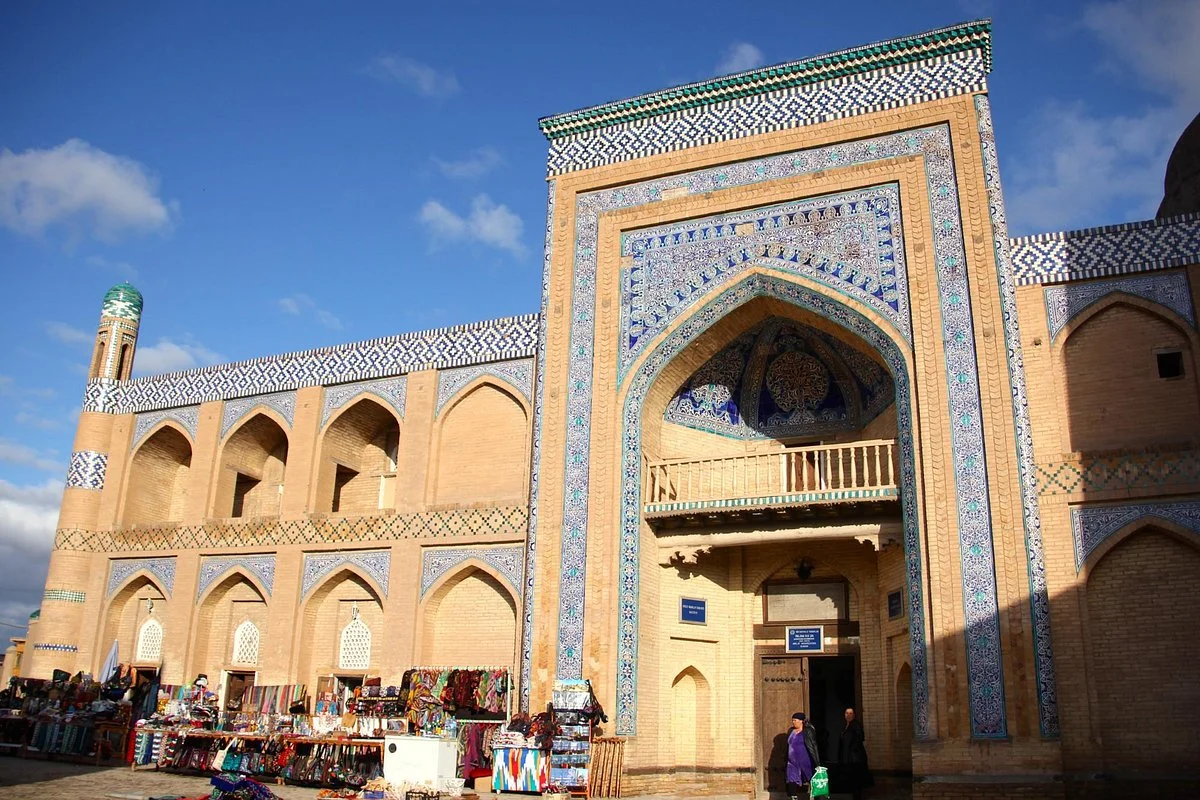
Khiva (Uzbek: Xiva, Хива, خیوه; Persian: خیوه, Xīveh; alternative or historical names include Orgunje, Kheeva, Khorasam, Khoresm, Khwarezm, Khwarizm, Khwarazm, Chorezm, Arabic: خوارزم and Persian: خوارزم) is a district-level city of approximately 93,000 people in Khorazm Region, Uzbekistan. According to archaeological data, the city was established around 1,500 years ago. It is the former capital of Khwarezmia, the Khanate of Khiva, and the Khorezm People's Soviet Republic.
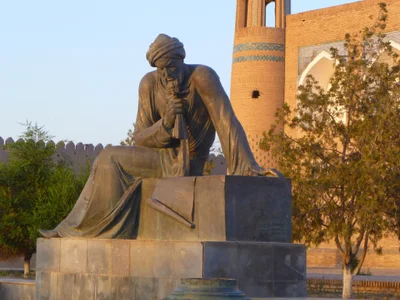
Itchan Kala in Khiva was the first site in Uzbekistan to be inscribed on the World Heritage List (1991). The astronomer, historian and polymath, Al-Biruni (973–1048 CE) was born in either Khiva or the nearby city of Kath.
Tap water is generally not potable. Carefully check bottom of the bottles of water for any deposits otherwise you can buy counterfeit bottled water.
There are many souvenir vendors in Khiva and they all will want to sell something to you, trying to attract your attention with some knowledge of English. Souvenirs might be more expensive than in Samarkand and Bukhara, but you can bargain quite a lot and get some very good deals.
A good place to buy is the UNESCO-sponsored silk workshop in Qqozi Kalon Medressa. It sells unique silk handcrafts. Although they might be more expensive than in other places, you support the workers there directly:
Most of the hotels lie within the Ichon-Qala, with a few exceptions. Homestays are a good idea if you happen to be on a budget and it's a great way to meet locals and experience the almost overwhelming hospitality that is unique to Uzbekistan and Central Asia. If you're coming with a tour group, you're guaranteed a spot in one of the more "upscale" tourist hotels.
Khiva is about 1390 km from Andizhan, 470 km from Bukhara, 1370 km from Fergana, 630 km from Karshi, 740 km from Samarkand, 1270 km from Kokand, 200 km from Nukus, 750 km from Shakhrisabz, 1020 km from Tashkent and 850 km from Termez.
When travelling via the regional capital of Urgench, whether it's by air, bus, or shared taxi, then with the exception of flying where the rates are fixed (most of the time) you might be subject to ticket agents at the bus and share taxi stations charging you a bit higher for a fare because you look like a tourist. Ask a guide or local for correct information, as Uzbeks are usually willing to assist you in getting the correct price. You will, however, be expected to haggle for the price of your cab everywhere, with the unusual exception of the taxi from the Urgench bazaar to Khiva (see "by car").
There are no taxis in the Ichon Qala, however it is so compact it's easy to take a leisurely stroll.
Outside the walls, Khiva is still a very walkable city. You can access the main bazaar, either through the Caravanserai through the Ichon-Qala east gate or you can walk around the Ichon-Qala walls on the north side until you see the produce sellers sitting near the western wall. A few of the better authentic Uzbek restaurants lie within a half-kilometre of the Ichon-Qala walls as well as some great beer stands. If you want to explore the residential northern and western ends of town, flag down an informal "taxi" and negotiate a fare, which should run between 1,500 and 3,000 som per hour.
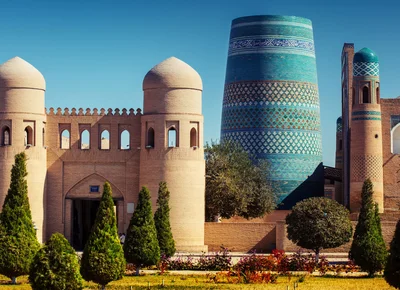
Famous for its long and brutal history as a slave trading post sandwiched in between the vast Kyzylkum and Karakum deserts, Khiva is now a quiet, sleepy oasis that awaits busloads of tourists instead of caravans of captives. It's difficult to imagine what exactly ancient Khiva was like, considering the historical areas were restored to a scrubbed and squeaky-clean look by the Soviets in the 1970s. However, the clustered array of mosques, madrassahs and tiled minarets within an area of less than 3 km give you a sense of how crowded and bustling this town must have been throughout its history.
Khiva is 35 km from the regional capital of Urgench and 5 km from the border of Turkmenistan.
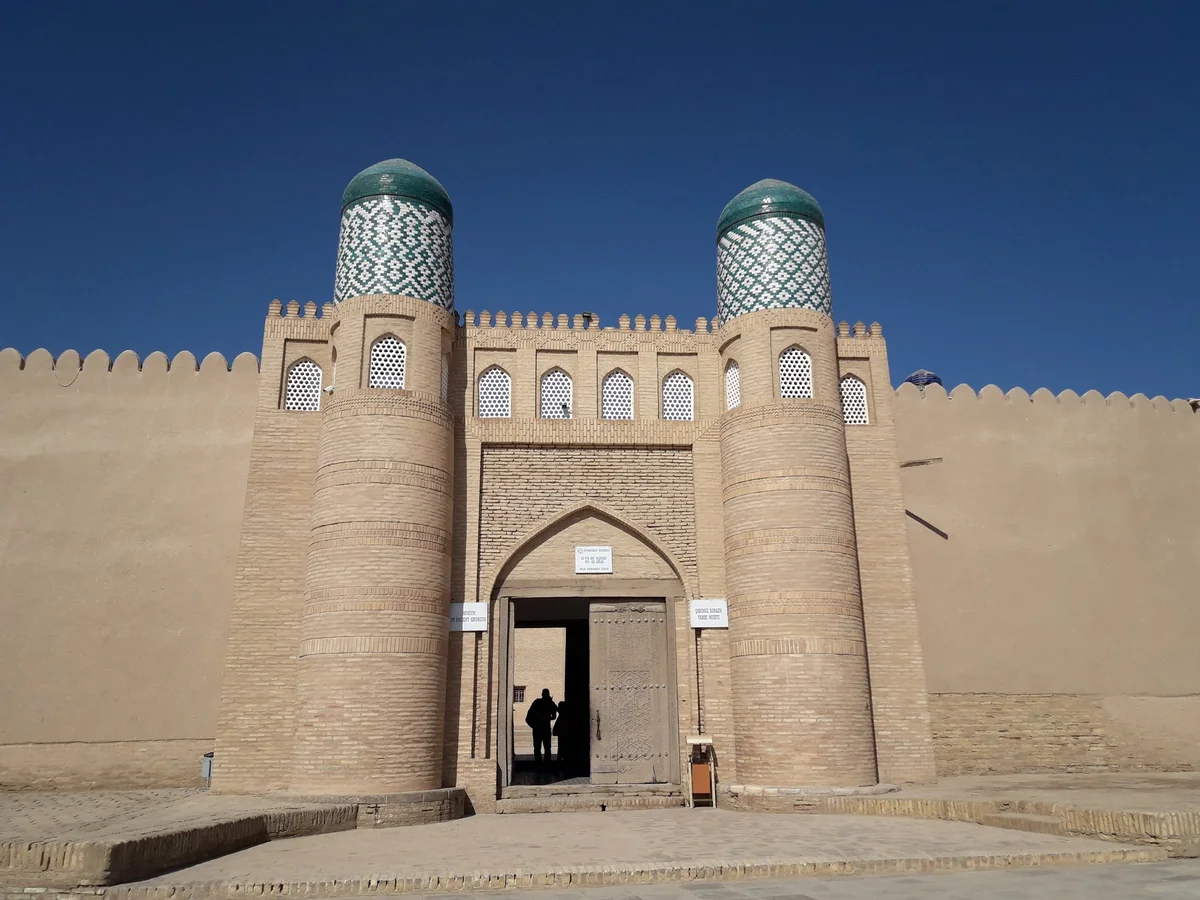
Khiva is divided into two distinct sections; one being the older, museum-like Ichon-Qala or Itchan Kala (literally: within the wall) where striking examples of Islamic architecture were built over the span of 600 years; and the modern Dichon-Qala (literally: outside the wall) where both the majority of the population live and where all of the modern buildings exist, but glimpses of Khiva's greatness as a center of Islamic power still linger.