
# Bornholm, Clay and Sea
An island gives every object a visible journey. Fuel, clay, glaze material and packaging arrive by route; finished work leaves by ferry, post or careful hand luggage. On Bornholm, ceramics are often described through local clay and a long workshop tradition, but the contemporary story is broader. Makers choose bodies for performance, combine local and imported materials, teach, exhibit and ship work into markets far beyond the Baltic.
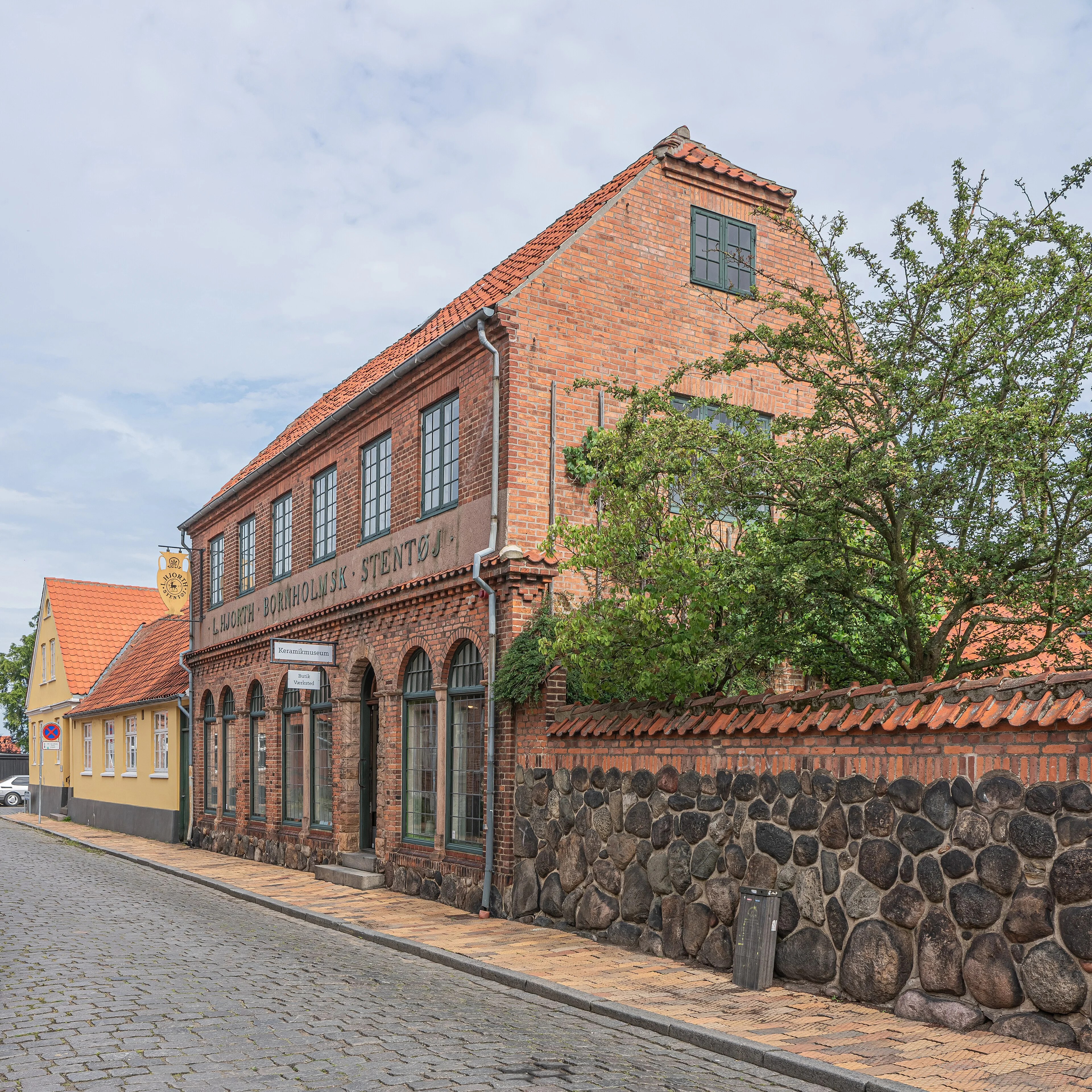
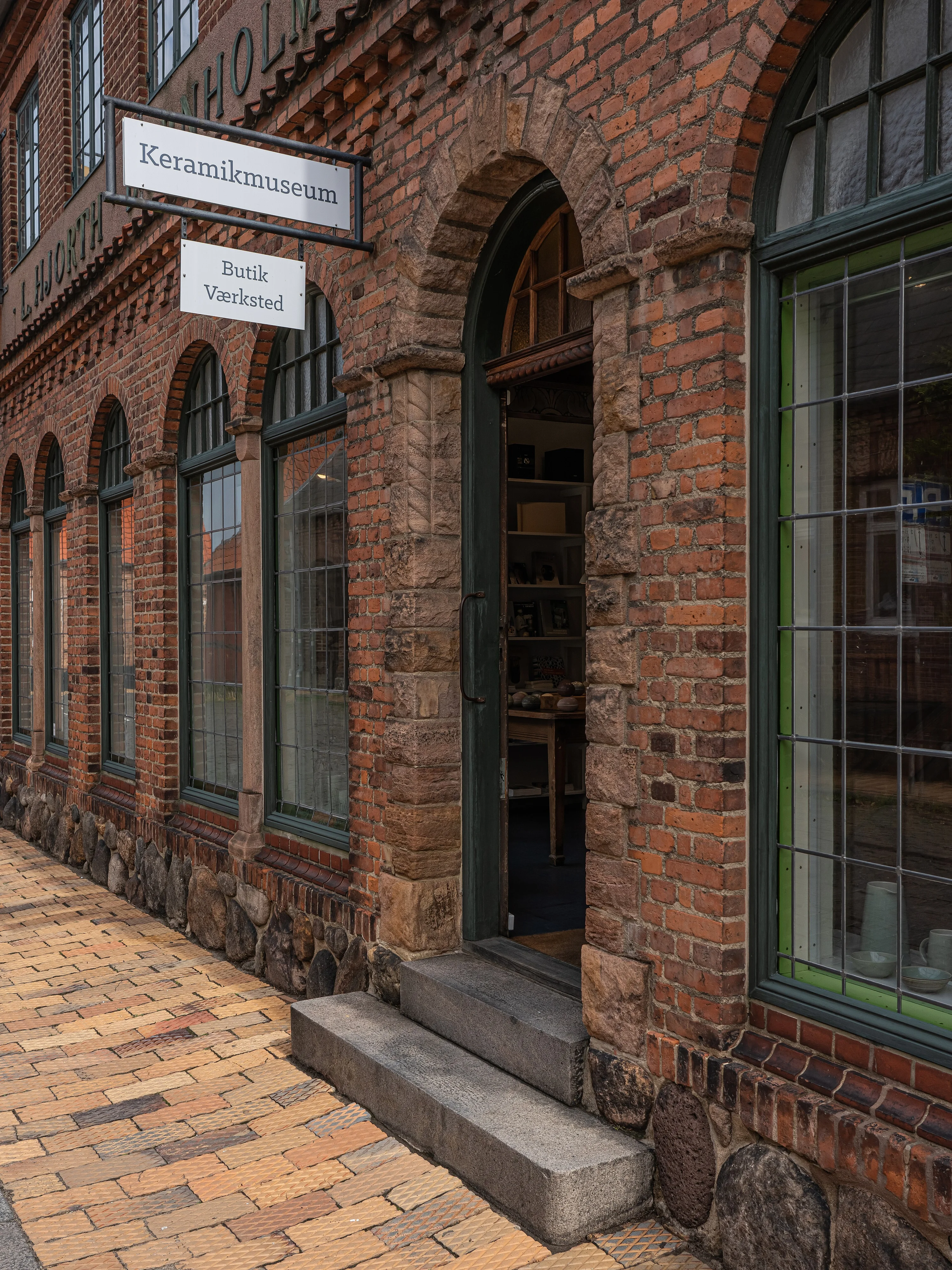
Bornholm has been recognised through the World Crafts Council’s craft-city programme, while institutions such as Hjorths Fabrik preserve the material history of ceramics in Rønne. Begin there, where kilns, machinery and production spaces show that island craft was never merely a solitary potter at a wheel. Industrial organisation and specialised labour belong inside the story.
Then visit a contemporary studio or exhibition by appointment and on its stated terms. The contrast matters. Heritage machinery explains scale and repetition; current work reveals how makers negotiate form, firing, livelihood and environmental cost now.
Clay is a recipe
Local clay is an appealing phrase, but ceramic bodies are selected and mixed for plasticity, colour, strength and firing temperature. Ask a maker what the body contains and why it suits the object. Imported material does not erase island identity, and local origin does not guarantee fitness for every use.
At Hjorths Fabrik, notice preparation before form: raw material, mixing, moulds, drying racks, glaze areas and kilns. Each stage can fail. A cup that emerges intact carries the invisible cost of pieces that warped, cracked or disappointed. Price includes that risk.
Do not touch unfired or recently arranged work. Greenware may be fragile enough to mark under a finger, while kilns and glaze areas present heat, dust and chemical hazards. Stay within visitor routes and follow staff instructions even when machinery is quiet. Historic equipment is not safer because it has stopped moving.
A throwing or hand-building class can provide material understanding without pretending to confer mastery. Confirm whether firing is included, how long it takes and whether the finished piece can be shipped. Clay changes through drying and heat; a same-day object may not be ready to travel.
Fire and the island bill
Kilns require substantial energy. Electric, gas and wood firings produce different possibilities and constraints, but no fuel becomes sustainable through a romantic description. Ask about firing schedules, shared kiln loads, insulation, renewable supply and how studios handle failed pieces. Specific practice is more credible than a green label.
Glazes add another layer. Materials must be measured and handled safely; some surfaces are decorative rather than intended for food. Ask whether tableware is food-safe and what testing or use guidance the maker provides. Microwave and dishwasher suitability are separate questions. Keep written care instructions.
Water and waste also matter. Clay can be reclaimed before firing, while fired ceramic is difficult to return to raw material. Studios may settle clay from wastewater, reuse test tiles or design smaller batches. A visitor cannot audit the system, but can avoid demanding instant custom work or treating a firing demonstration as costless theatre.
The island context sharpens these questions because transport is never abstract. Packaging must protect fragile work across sea and road. A large object may require professional crating and insurance; a small functional piece may travel more sensibly. Shipping cost is part of the material truth of the purchase.
Studio doors and ferry clocks
Bornholm’s studios are dispersed, and opening times can be seasonal. Check each maker’s official channel, book where requested and group visits geographically. Do not knock at a private address because an old guidebook describes a workshop. A closed door may mean production, teaching or the only day off in a short visitor season.
Ferries, buses, cycling routes and weather determine the day. Use current operator information and protect the return connection. Strong wind and rain can alter cycling comfort; rural roads require visibility and care. An island route should contain margin rather than a string of appointments whose success depends on perfect transport.
Accessibility varies between historic factories and small studios. Ask about steps, surfaces, seating, toilets and parking before arrival. A museum collection or gallery can be the primary encounter, not a consolation, when the working studio cannot safely accommodate a visitor.
Photography requires permission. Shelves may hold commissions or experimental work not yet public, and a maker’s home can sit beside the studio. Ask separately about people, process and finished objects. If social sharing is welcomed, use the maker’s preferred name and link without publishing private location details.
Choosing a useful vessel
Begin with purpose. A bowl for daily breakfast needs different information from a sculptural piece. Hold an object only when invited, feel its weight, inspect the foot and ask how the glaze responds to cutlery, heat and staining. Handmade does not mean impractical, but it does not guarantee universal use.
For sets, accept variation as part of the process while checking that dimensions and capacity work. For commissions, agree form, finish, approximate variation, price, deposit, delivery and what happens after a firing failure. Kiln outcomes cannot be scheduled with the certainty of factory stock.
Keep maker, studio, material, date and care advice together. A box or card that seems excessive at purchase becomes valuable years later when repair, insurance or attribution is needed. If a piece chips, contact the maker or a conservator before using household glue on foodware.
Eating on the island can return craft to use. Notice tableware without assuming it was locally made; ask if the restaurant chooses to share the maker. Local food claims deserve the same precision as local clay. A useful object belongs in life, not only in a display of regional virtue.
Galleries can widen the route beyond the studios able to receive visitors. Ask whether work is held on consignment, how the artist is credited and whether the gallery manages shipping. A group exhibition makes differences between makers visible without requiring a sequence of private appointments. It can also show which questions are active now—scale, glaze chemistry, local geology, energy or function—so the island’s ceramic identity remains a conversation rather than a period style.
Give that conversation unhurried time.
The vessel crosses water
A Bornholm pot contains no automatic essence of the island. Its relationship to place is more interesting: training, workshop networks, available materials, weather, visitors and the ferry timetable all shape how it was made and sold.
Let the object keep that complexity. Use it, follow the care instructions and repair it if possible. Clay became durable through fire; its story remains durable when the maker’s choices are not replaced by an easier myth. Leave time for the island, its weather and its makers to revise the route.