
# Chiang Mai, Paper and Silver
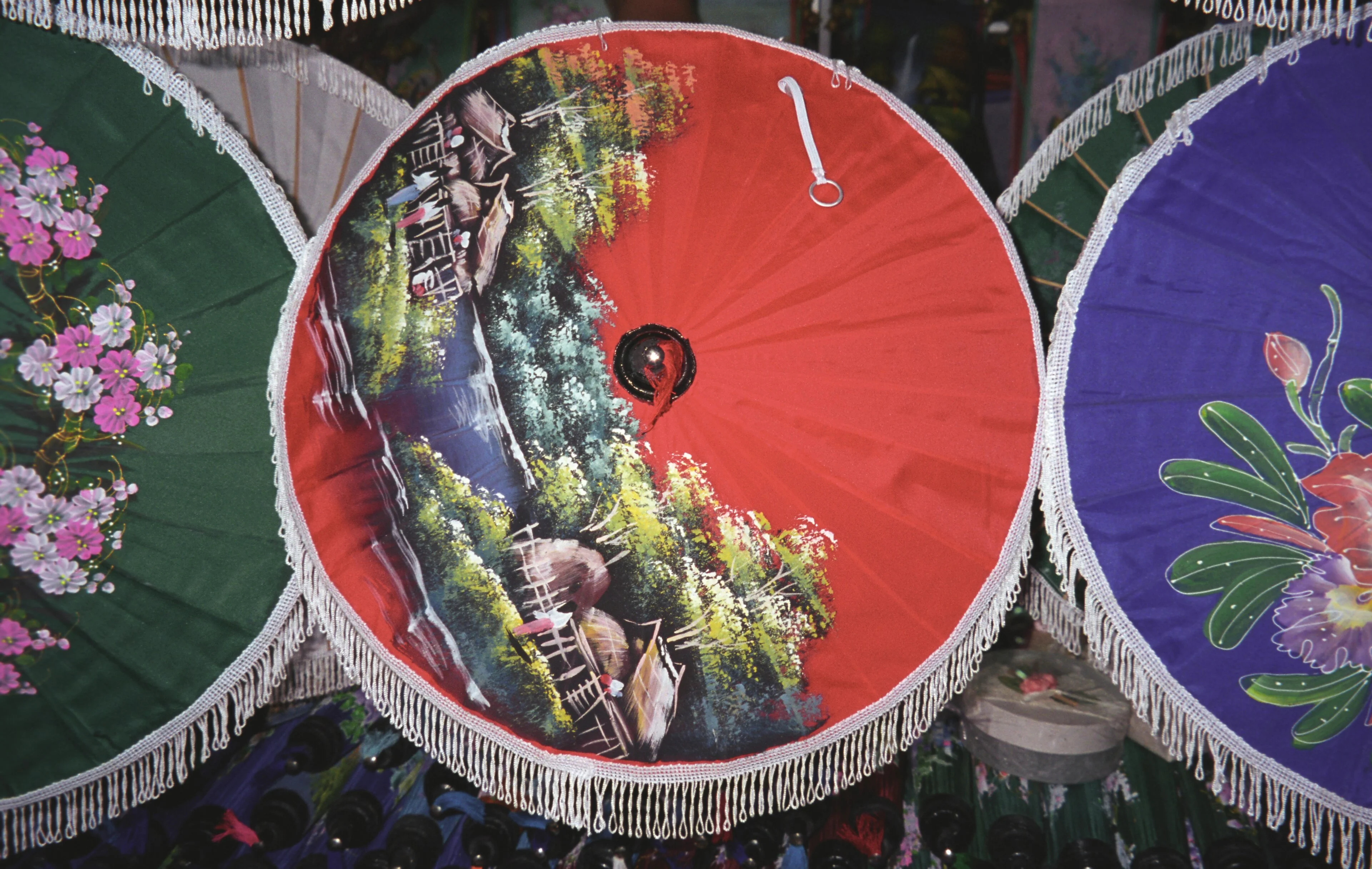
Paper flowers hang lightly enough to move in a fan's breeze. Silver panels carry the opposite impression: weight, hammer marks and reflected heat. Chiang Mai's craft story lives between those surfaces, but neither should be treated as a decorative shorthand for northern Thailand.
The city is part of UNESCO's Creative Cities Network for Crafts and Folk Art. Workshops and markets connect Lanna histories, Buddhist institutions, regional trade, hill-community knowledge, formal design education and contemporary business. The visitor's task is not to sort every object into traditional or modern. It is to ask who made it, from what, under which terms and for what use.
Begin with a design or cultural institution such as TCDC Chiang Mai, a museum or a curated exhibition whose current programme names practitioners. Context helps distinguish a community technique from a generic souvenir and reveals how designers adapt material without claiming ownership of every inherited form.
Paper is a plant and a process
Saa paper is commonly associated with the bark of paper mulberry. Visitor explanations may show soaking, beating, dispersing fibre in water, lifting a screen and drying a sheet. Ask which stages happen on site, where fibre comes from and whether dyes, flowers or other inclusions are added.
Plant-based does not automatically mean impact-free. Water use, bleaching, colour, transport and wastewater matter. Recycled fibre may be included. A workshop able to explain its process specifically is more credible than one relying on the words natural and eco-friendly.
Bo Sang and surrounding areas are known for umbrellas and paper products, but transport and workshop access should be planned rather than improvised. Choose a place that welcomes visitors, charges transparently and permits photography. Do not enter production areas, touch wet sheets or ask a worker to repeat a task solely for video.
Paper is vulnerable to humidity, light and crushing. Ask whether a lampshade, notebook or artwork is colourfast, how it should be stored and whether it is safe near heat. Large umbrellas may be difficult to carry and ship. A small useful object with clear provenance can support the same skills without becoming luggage damage.
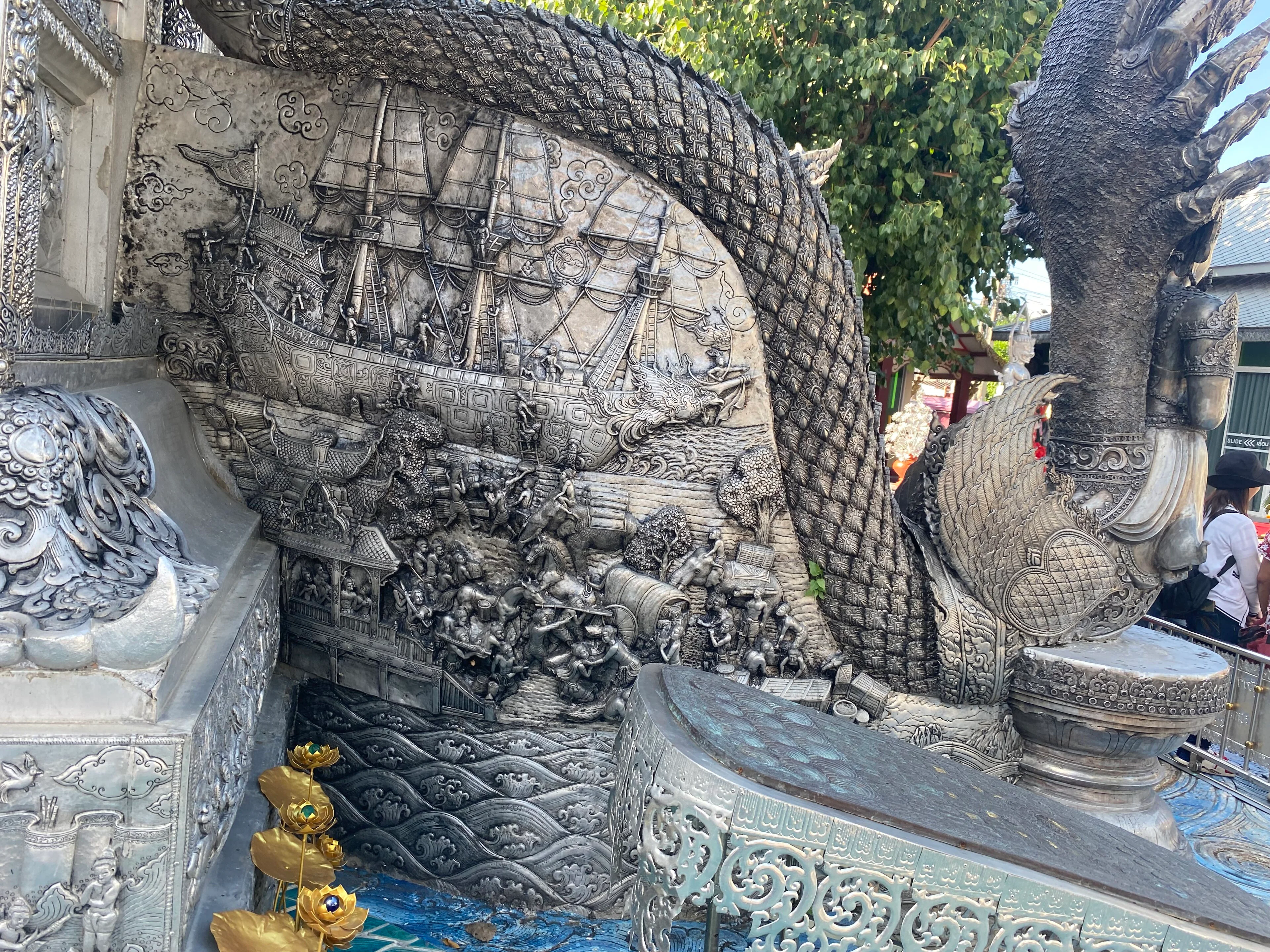
Silver and the sound of work
Wua Lai is associated with silversmithing and metalwork. Hammered relief can involve drawing, repoussé, chasing, forming, soldering and finishing performed by one person or several specialists. Ask whether an item is sterling silver, another alloy, silver-plated or aluminium. Visual brightness is not a metal assay.
Temples and community spaces in the area are active religious sites, not craft showrooms. Dress appropriately, follow rules for entry and photography and never interrupt worship for a close view of metal decoration. Some spaces may restrict access by gender or ceremony; current local guidance takes precedence over an old travel account.
In a workshop, eye and hearing protection, ventilation and hot tools matter. Stay behind the indicated line and do not handle chemicals, torches or sharp sheet. Close photography of a maker requires consent. A hand positioned dramatically beside a hammer is still a person's hand at work.
Hallmarks, receipts and material descriptions become important for a significant purchase. Ask weight, purity, maker and care. Soft silver scratches; oxidised finishes change; plated objects need different treatment. For older or religious-looking pieces, do not buy without clear provenance and lawful export documentation.
Markets after context
Chiang Mai's night markets are useful for seeing price and product range, but they mix local production, regional goods, factory-made items and imports. That mixture is not inherently deceptive. Mislabeling is the problem. Ask a short sequence—where made, by whom, material, care—and listen for a specific answer.
Bargaining conventions vary by stall and shop. Keep negotiation courteous and proportionate. Do not ask for wholesale prices on one object or use another maker's lower price as a threat. Fixed-price cooperatives and studios may be protecting agreed returns to members.
Food should not become an afterthought between purchases. Choose busy stalls or restaurants with visible hygiene, state allergies clearly and use treated water. Northern dishes vary in ingredients; do not assume a familiar name guarantees the same nuts, shellfish, meat or fermentation. Keep market aisles open and ask before photographing vendors.
Credit becomes complicated when shops represent makers from several provinces or ethnic communities. Ask for the name the maker or group uses and avoid replacing it with a broad hill-tribe label. Some visual forms carry ceremonial, family or status meanings; a retailer should not invent a universal interpretation to secure a sale. When the explanation is uncertain, describe the material and technique rather than guessing at symbolism.
Cooperatives and social enterprises vary in governance. A sign alone cannot prove how decisions or revenue are shared. Look for specific information about membership, price-setting, training and leadership. Direct purchase can be valuable, but it does not automatically solve unequal access to tourists, online markets or capital.
Shipping paper and metal creates different risks. Paper needs flat, dry protection; repoussé work can dent; silver may require customs declarations and secure transport. Ask for a detailed receipt, dimensions, weight, material and insurance. Do not ask a small workshop to mark a parcel as a gift or lower its value. The true cost of carrying the object belongs in the decision to buy.
Smoke, rain and the calendar
Season determines whether a craft itinerary is comfortable. Northern Thailand can experience serious seasonal air pollution, while monsoon rain and heat affect travel at other times. Check official air-quality and weather information, not photographs from the same month in another year. Poor air is a reason to reduce outdoor exposure, change plans or postpone—not a backdrop to edit out.
Religious festivals, public holidays and community events change opening hours and access. They are not guaranteed visitor performances. Confirm arrangements through current local sources and accept that a workshop may close for family, ceremony or production needs.
Use licensed songthaews, taxis or app-based transport according to current rules, and agree or understand the fare before departure. Workshops outside the centre require realistic return planning. Do not rent a motorbike without the correct licence, insurance, helmet and experience simply because it appears convenient.
Weight and light
The paper flower and silver panel do not need to represent all Chiang Mai. One is light because fibre was beaten, lifted and dried; the other holds the repeated force of a tool. Both become more meaningful when material and labour replace a vague promise of local craft.
Leave space in the itinerary for the maker who explains a process slowly and for the workshop that is closed. Pay for instruction. Buy only what can be credited and cared for. The city will remain larger than the object, which is exactly why the object can carry an honest fragment of it home.