
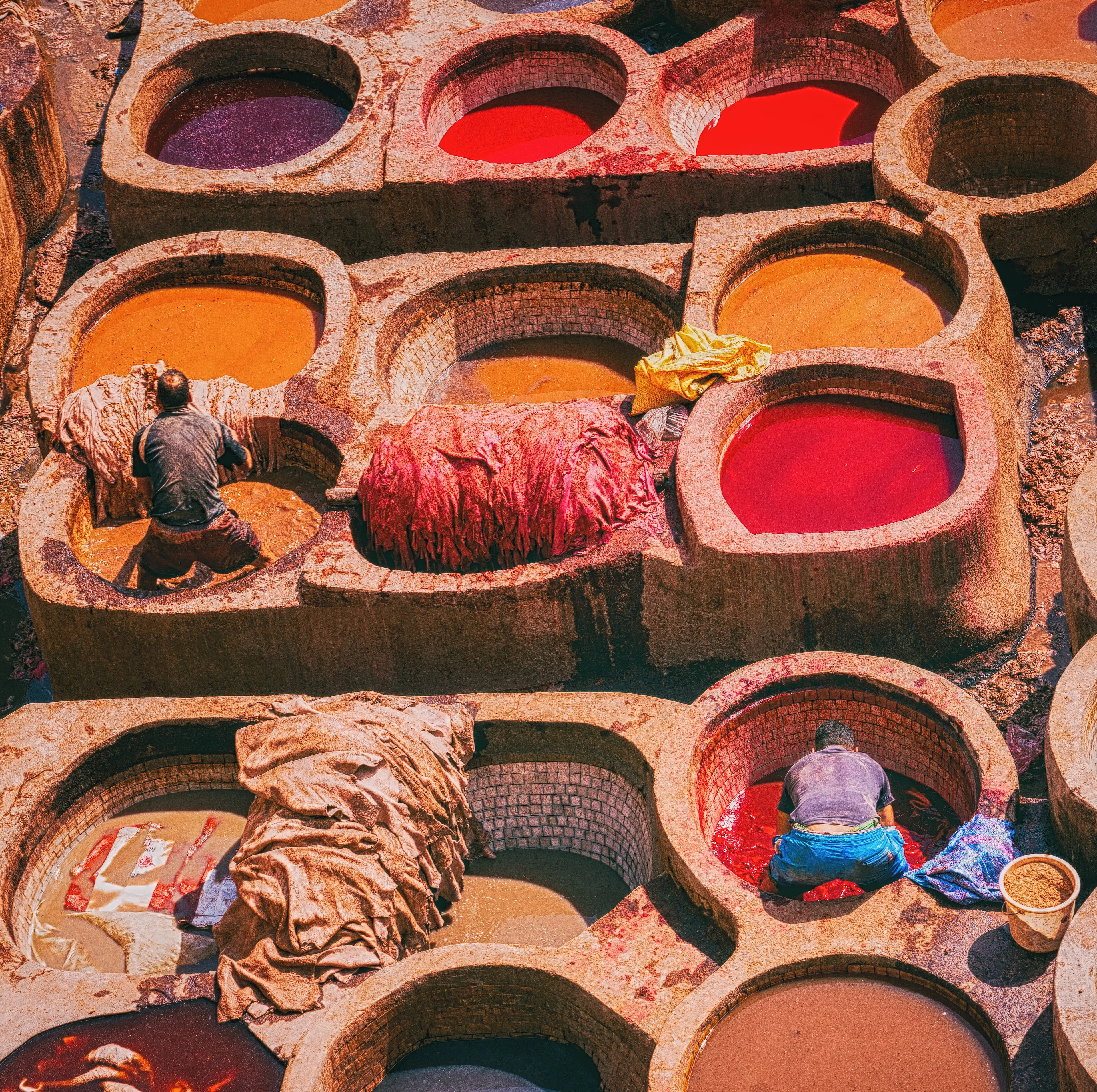
# Fez, Between Tannery and Loom
From a terrace above the tanneries, Fez is often reduced to colour: stone vessels, wet hides, red, yellow and brown arranged as if for a painter. The view is extraordinary, but it can also turn labour into pattern. Below are people working with water, weight, chemicals, repetition and heat. A responsible visit begins by restoring depth to the image.
The Medina of Fez is inscribed on UNESCO’s World Heritage List. Its streets hold homes, worship, schools, workshops, food, deliveries and trade within a dense historic fabric. A visitor’s route must work around that life rather than demanding that every doorway behave like an exhibit. Hire a licensed local guide when context, navigation or language would improve the visit, agree the duration and fee, and ask whether workshop stops involve commission.
Start with the material chain. Leather is not made at the viewpoint. Hides are received, cleaned, treated, dyed, dried, cut and sewn. The sequence varies by product and workshop; a guide should be able to distinguish what is visible from what happened earlier. Do not repeat a colourful explanation simply because it was memorable. Ask which statements are current and which belong to a general account of the craft.
The rooftop and the worker
Many tannery views are reached through leather shops. Clarify whether entry is free, whether a purchase is optional and which terrace is being offered. A sprig of mint may soften the smell; it does not make the environment harmless. Keep behind barriers, supervise children and do not enter a working area without explicit authorised access and appropriate safety measures.
Photography needs restraint. A wide view of a production site is different from a close portrait of an identifiable worker. Ask through the guide or host, and accept that consent may not be practical from a distant terrace. A person should not become the dramatic centre of an image merely because the photographer is above and anonymous.
The physical demands of tanning deserve plain language without voyeurism. Work can involve heavy wet material, prolonged exposure and difficult conditions. A brief visit does not qualify a traveller to audit labour standards or pronounce the entire sector unchanged. It does permit sensible questions: Who owns this workshop? How are workers protected? What processes are used? Where is water treated? Specific answers matter more than a promise that everything is natural.
Colour is similarly complex. Plant-derived materials may be used alongside other substances; stages and recipes change. “Traditional” does not automatically mean safe or environmentally benign. Avoid repeating claims about ingredients unless the source can identify the stage and current practice. Respect a workshop’s refusal to disclose a commercial recipe.
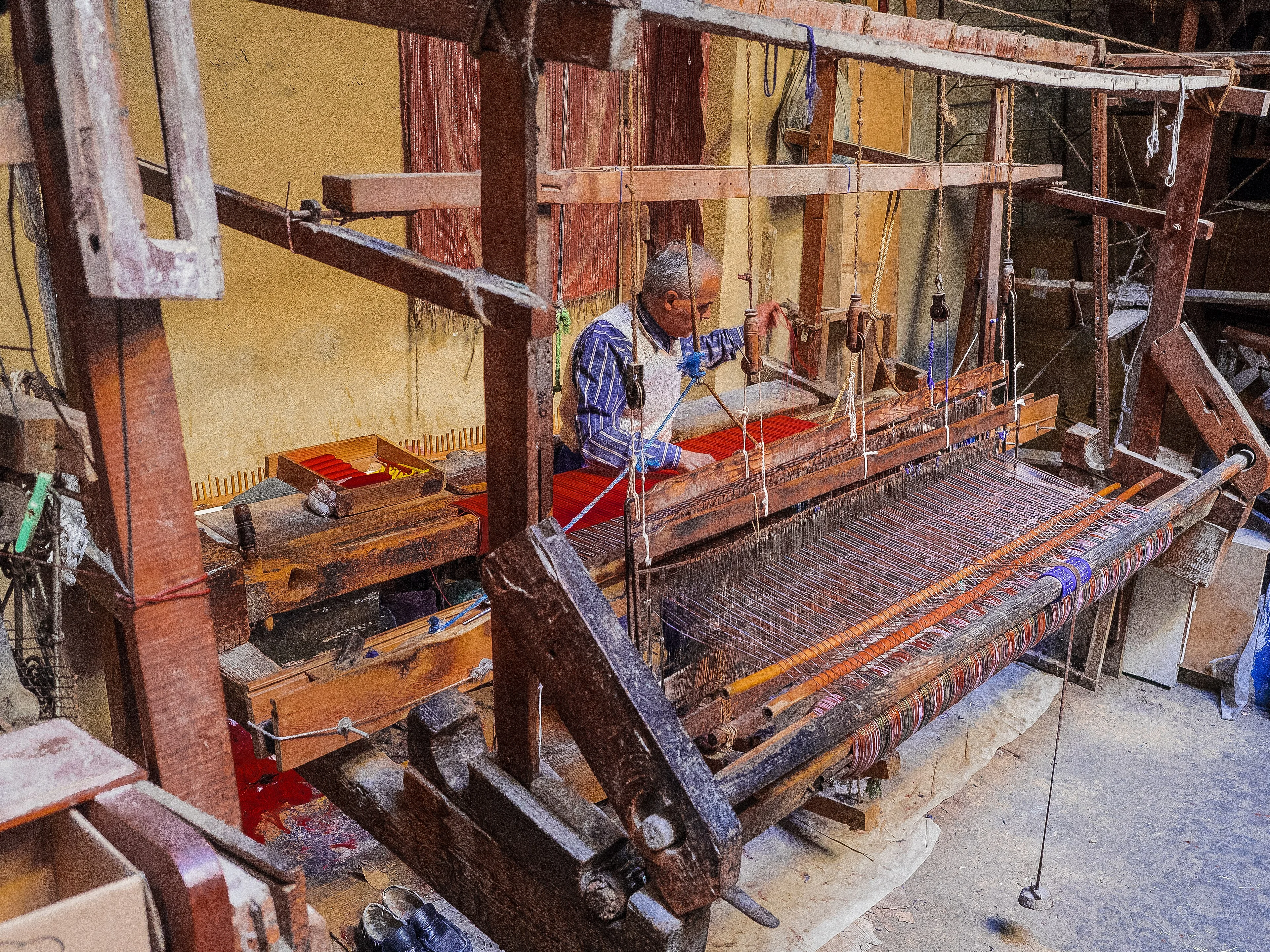
Cloth behind the doorway
Looms offer another rhythm. In a weaving workshop, ask whether the cloth is woven on site, whether yarn is spun or dyed elsewhere and who designed the pattern. A demonstration may show a few passes through a prepared warp; the preparation itself can be a major part of the work. Name it even when it is not photogenic.
Do not touch a loom under tension. Keep bags and loose clothing away from moving parts, and ask before sitting or attempting a pass. If a short lesson is offered, confirm the fee and whether filming is allowed. Recording instruction can expose a maker’s teaching material without compensation.
Textiles in the medina arrive through many routes. A seller should distinguish local weaving, regional work, vintage material and new production. Those categories can all be valuable when they are labelled honestly. Age, tribal identity and symbolism are especially easy to exaggerate. Request provenance for significant claims and prefer an accurate description over a seductive story.
Measurements, fibre and care decide whether a purchase will survive home. Ask if colours may bleed, whether the cloth can be washed, how it should be stored and what repair is possible. Sun, moisture and moths matter. A folded rug or blanket can also exceed airline weight limits, so include transport in the decision before bargaining.
Buying without the theatre
Negotiation is part of many sales in Fez, but there is no need to perform aggression. Establish the object, material and asking price first. Decide a genuine budget, make a respectful offer where appropriate and be prepared to leave courteously. Tea and conversation do not create an obligation to buy; equally, time and hospitality should not be treated as props in a traveller’s game.
Leather quality cannot be certified through smell or softness alone. Ask what animal, tanning and finish are represented; inspect stitching, lining, hardware and edges. For footwear, fit both feet and walk. For bags, consider dye transfer and weight. Keep a receipt naming the shop and material, and do not ask for an understated customs declaration.
Animal materials can face import restrictions, particularly exotic species. Ordinary claims at the point of sale do not replace destination-country rules. If the species or legality is uncertain, do not buy. Contemporary vegetable-fibre, textile or clearly documented leather work offers abundant alternatives without an improvised border problem.
Guides and shops should be credited accurately. If a guide introduced the workshop, name that role rather than presenting the meeting as accidental discovery. If commission influenced the route, transparency helps the traveller understand price and recommendation. It does not automatically invalidate the visit.
The medina at working pace
Plan fewer stops than the map suggests. Narrow streets handle residents, carts, animals, deliveries and visitors simultaneously. Keep to one side, move when asked and avoid blocking a workshop entrance for a photograph. Comfortable closed shoes, water and a clear meeting point reduce the pressure to rush.
Access varies sharply. Surfaces can be uneven, passages steep and workshops reached by stairs. Ask a guide for a route matched to mobility and stamina, and request honest descriptions of seating and toilets. A ground-floor shop, museum or craft school may provide more meaningful contact than forcing access to a famous terrace.
Prayer, religious study and family life shape the day. Follow dress and photography guidance, lower voices near worship and leave when a private moment takes priority. Ramadan and festivals can change hours and energy; seek current local advice rather than demanding a timetable preserved for tourism.
Finish outside the sale. Sit for a meal, notice deliveries, and let the medina remain a neighbourhood after the leather bag has been wrapped. Food allergies should be stated clearly, water chosen carefully and popular places booked when needed. Spending with several locally run businesses distributes the encounter beyond one commissioned circuit.
Colour regains its depth
Return to the rooftop image after learning the sequence. The vats are still vivid, but the picture is no longer flat. Water, material, workers, shopkeepers and the city’s infrastructure sit inside it. The loom’s pattern likewise begins before the shuttle and continues after the sale.
Fez rewards attention that can hold beauty and work together. Ask who made the object, how it should live and what the view left out. The souvenir becomes less romantic and more valuable when the people below the terrace remain visible.