
# Jaipur in Block Print
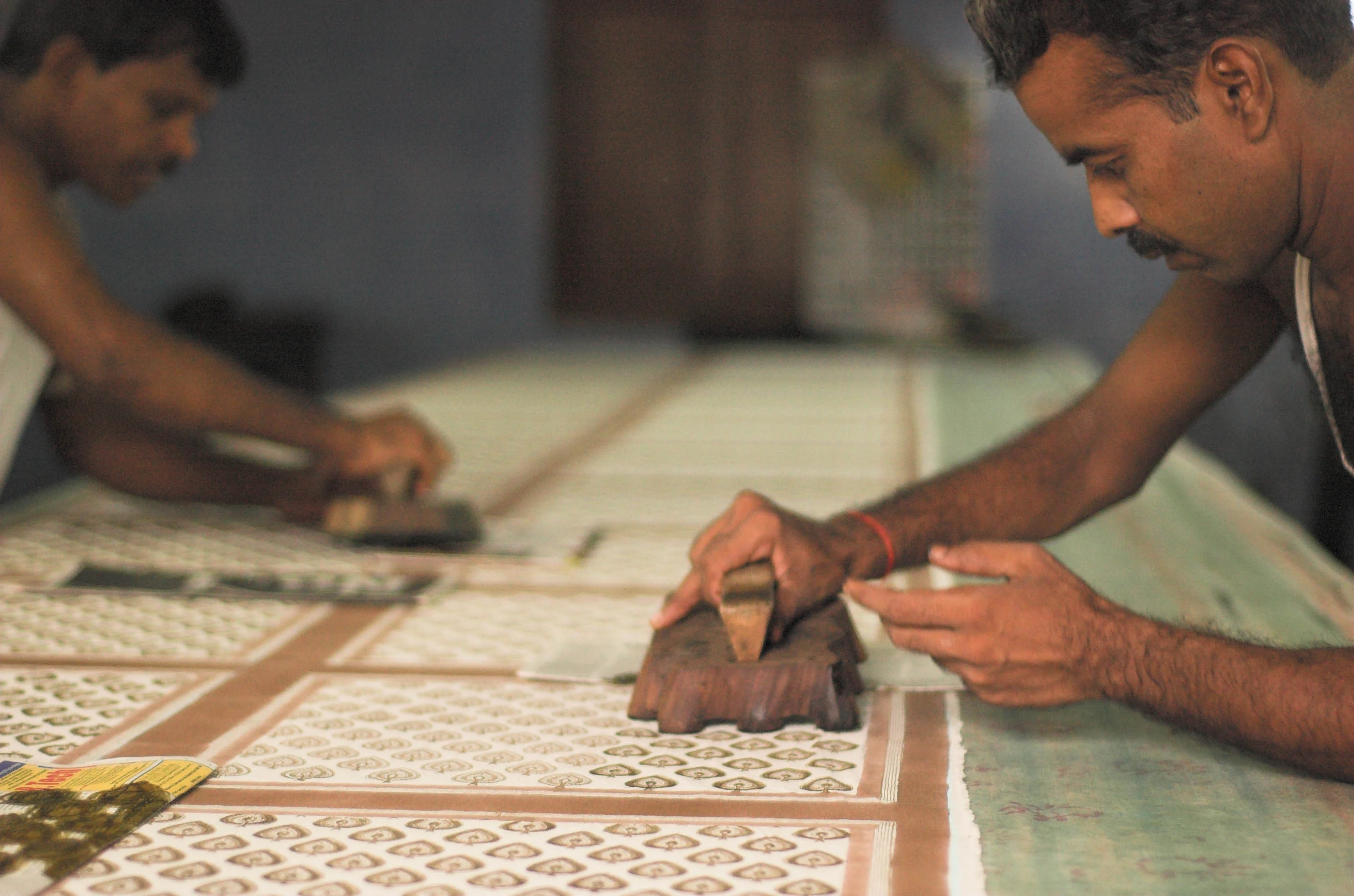
A wooden block holds a pattern in reverse. The printer lowers it towards cloth, finds the register and strikes. One impression is small; a length of fabric may require hundreds, each close enough to build rhythm while retaining the minute evidence of a hand. Jaipur’s block-printing world begins in that balance between repetition and judgement.
The city is recognised by UNESCO both as a World Heritage city and within the Creative Cities Network for Crafts and Folk Art. Those designations give useful historical and institutional context, but they do not certify every textile sold in Jaipur. Factory printing, screen printing, digital printing and hand block work share the market. The first courtesy is accurate naming.
Begin at the Anokhi Museum of Hand Printing, whose collection and demonstrations can establish vocabulary before shopping. Learn the difference between a carved block, a printed outline, a filler, resist and the stages of washing or dyeing. Then visit a workshop only through a current public programme, appointment or reputable guide.
The block before the cloth
Block carving is a craft within the craft. A design must be translated into a durable printing surface, with negative space and registration considered from the beginning. Some patterns use several blocks for outline and colour; each must meet the previous impression. Ask whether blocks are carved locally, who designed them and how worn blocks are repaired or retired.
Do not assume an old-looking block is antique. Staining and wear can accumulate quickly in production. Genuine older tools may carry value or cultural significance and should have provenance. A newly carved block bought directly from its maker can be a clearer and more ethical keepsake than an object sold through an invented story of age.
At a demonstration table, wait for instruction. Wet dye, padded surfaces and aligned cloth are easy to disturb. If invited to print, acknowledge that the fabric and block were prepared by others. The single impression teaches pressure and placement; it does not reproduce the skill of maintaining alignment across metres.
Photograph blocks and patterns only with permission. A workshop may be preparing an exclusive order or protecting a current design. Buying one length of cloth does not grant a licence to reproduce the motif on products, packaging or digital assets.
Water, colour and weather
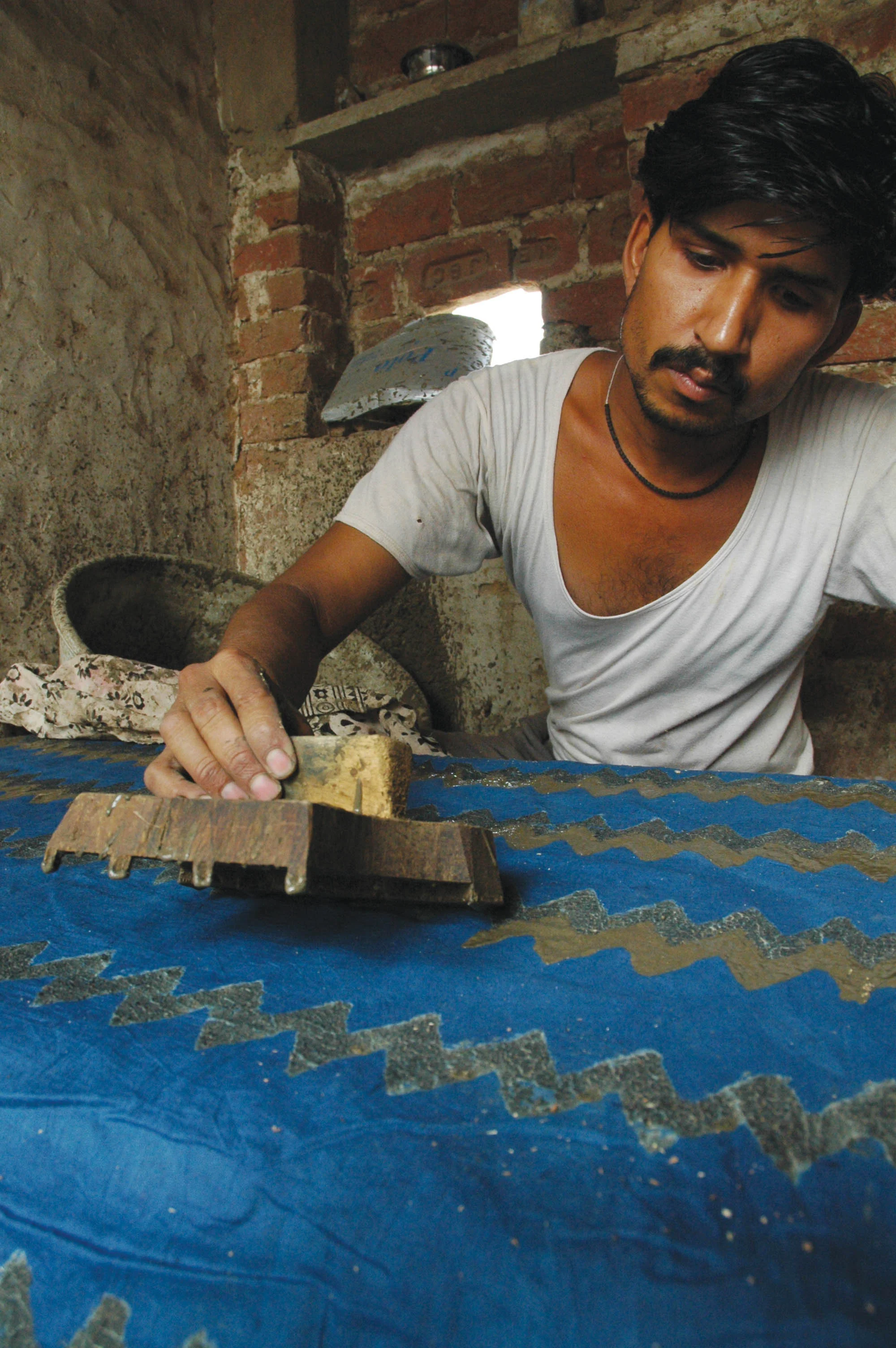
Printing is not confined to the moment of impact. Cloth may be prepared, printed, rested, dyed, washed and dried through multiple stages. Water quality, temperature, humidity and season can affect the result. The sunlit field of drying fabric is part of production, not an unrestricted photography set.
Natural and synthetic dyes both require accurate explanation. Plant or mineral origin does not guarantee harmless processing, while modern chemistry does not automatically mean careless work. Ask how colour is fixed, how water is managed and what safety practices are used. A short tour cannot audit every claim, but a specific answer is more useful than an unqualified eco label.
Bagru and Sanganer are associated with distinct histories and practices; they should not be merged into “a village outside Jaipur.” Confirm the actual location of a visit, the technique being shown and the workshop’s relationship to the community. Travel time and traffic are real. One properly arranged visit is preferable to collecting several names in a day.
Weather matters for people as well as cloth. Jaipur heat can be severe, while monsoon conditions change roads and drying. Begin early, carry water, use shade and follow current weather and local advice. Do not ask workers to move into direct sun or repeat a stage for a photograph.
Read the repeat
Small variations in pressure and register can signal hand printing, but irregularity alone proves little. It can be imitated, and poor alignment is not automatically evidence of virtue. Ask for the workshop’s explanation and assess the whole object: fabric, colour, edges, seams, labelling and intended use.
Printed cloth may be sold by length, as garments or as household pieces. Confirm fibre, shrinkage, colourfastness and washing instructions. Strong colour can bleed in early washes; follow the maker’s guidance and test responsibly. If tailoring is offered, agree measurements, lining, fitting, delivery and alterations before payment.
Price includes design, carving, preparation, printing, dyeing, washing, finishing and retail. Bargaining practices differ between market stalls, cooperatives and fixed-price shops. Do not use a machine-printed imitation as leverage against skilled work. If a piece is beyond budget, buy less fabric or pay for a workshop rather than demanding the labour disappear.
Geographical Indication registration may protect certain named goods, but a traveller should not treat a logo as the only evidence worth asking for. Read the exact registered name, producer information and product description. The most important habit remains preserving the maker or workshop identity with the textile.
Jaipur beyond the showroom
The walled city, museums, workshops and markets cannot all be handled in one compressed circuit. Choose an indoor anchor, one production visit and enough unclaimed time for transport. Use licensed taxis, arranged drivers or current public options; do not assume a workshop address is suitable for unscheduled arrival.
Religious spaces and residential lanes keep their own terms. Dress appropriately, ask before portraits and keep entrances clear. A market is not a cast of vendors performing for visitors. Purchase, conversation and photography are separate requests.
Food and rest improve discernment. State allergies clearly, choose drinking water safely and allow the hottest part of the day to slow the itinerary. An exhausted buyer is more likely to accept an implausible claim or purchase cloth without understanding care and size.
Shipping should be discussed before a large order. Obtain an itemised invoice, fabric composition, dimensions, declared value, dispatch date, tracking and responsibility for duties. Never ask a workshop to mark commercial goods as gifts. Trust is not built by transferring customs risk to the maker.
Keep room for contemporary design. New scales, colours and combinations do not cancel the discipline of block printing; they show how printers and designers keep the technique economically and creatively alive. Ask how a collaboration is credited and whether the workshop may be named. A traditional process can produce a new visual language without becoming less rooted in place. The most honest label is the one that identifies both technique and present-day authorship.
The last impression
The final block lands because every earlier mark established where it must go. That dependence is the real beauty of a repeat: design, carving, preparation, colour and skilled movement remain in conversation across the cloth.
Jaipur offers spectacle easily. The more rewarding journey learns to see the hidden alignment beneath it. Turn the fabric over, keep the receipt, follow the care instructions and credit the people who made repetition feel alive.