
# Kanazawa in Gold and Indigo
Gold leaf is nearly weightless, but it changes the room. A breath can lift it; static can fold it; a trained hand can settle it across wood, lacquer, paper or confectionery until light seems to belong to the surface. In Kanazawa, gold is the most visible entrance to a much broader craft culture. Kaga-yūzen dyeing, lacquer, ceramics, metalwork and mizuhiki knotting each hold different materials, lineages and working conditions.
UNESCO’s Creative Cities Network recognises Kanazawa in Crafts and Folk Art. The designation is useful as a map of institutions and commitments, not a certificate attached to everything sold near the station. Begin at the National Crafts Museum or another collection that names techniques and makers. Then choose one workshop or demonstration where the scope, price and photography policy are clear.
The city’s craft ecology is often linked to historical patronage under the Maeda domain, but a traveller should resist making contemporary makers supporting characters in a feudal story. Training, design education, tourism, galleries and present-day markets now shape the work. Continuity survives through adaptation, and not every respected object needs to resemble a museum case.
Gold thin enough for weather
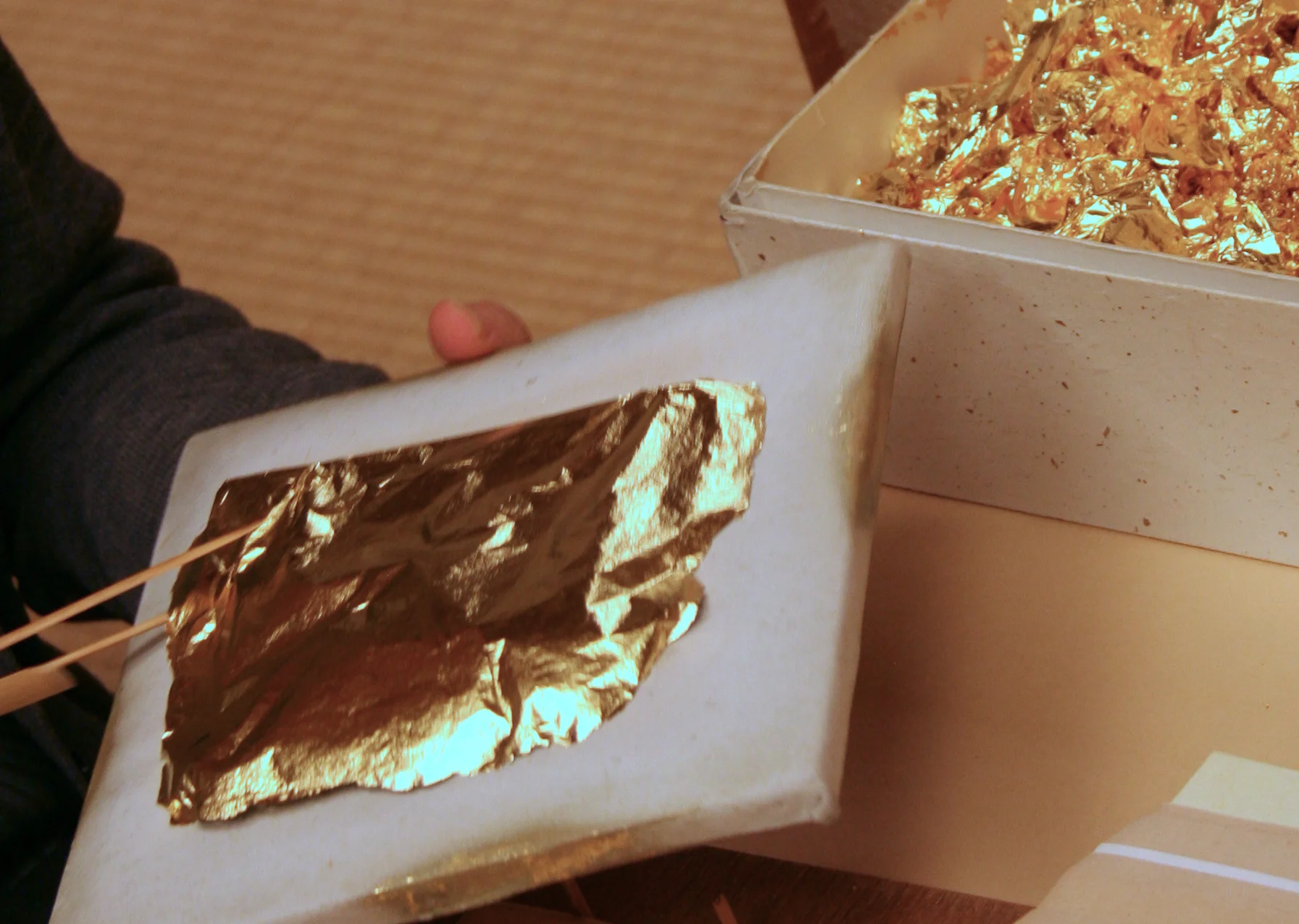
Gold leaf production depends on repeated beating and specialised papers until metal becomes extraordinarily thin. A visitor demonstration may show handling or application rather than every stage. Ask exactly what is made on site, what arrives prepared and which part the demonstrator performs. Precision is more respectful than the vague claim that one person made the whole object.
Leaf is used across sacred, decorative and commercial settings. A gilded screen, Buddhist fitting, lacquer object and sweet do not carry the same purpose. Follow the host’s explanation and avoid collapsing them into a single luxury aesthetic. At religious sites, photography and access rules take precedence over the search for sparkle.
Hands-on sessions can offer a good introduction to application. Confirm whether the blank and design are prepared, how excess leaf is recovered and whether the finished object is suitable for food or washing. The exercise demonstrates one controlled step; it does not make a short-term participant a gold-leaf artisan. Describe it accurately afterwards.
Gold attracts exaggerated claims. Ask about material content, substrate, maker and care. “Gold-coloured” and genuine leaf are different descriptions; neither excuses poor labelling. For jewellery or higher-value work, obtain a detailed receipt. Never assume that visual brightness proves purity.
Colour drawn rather than filled
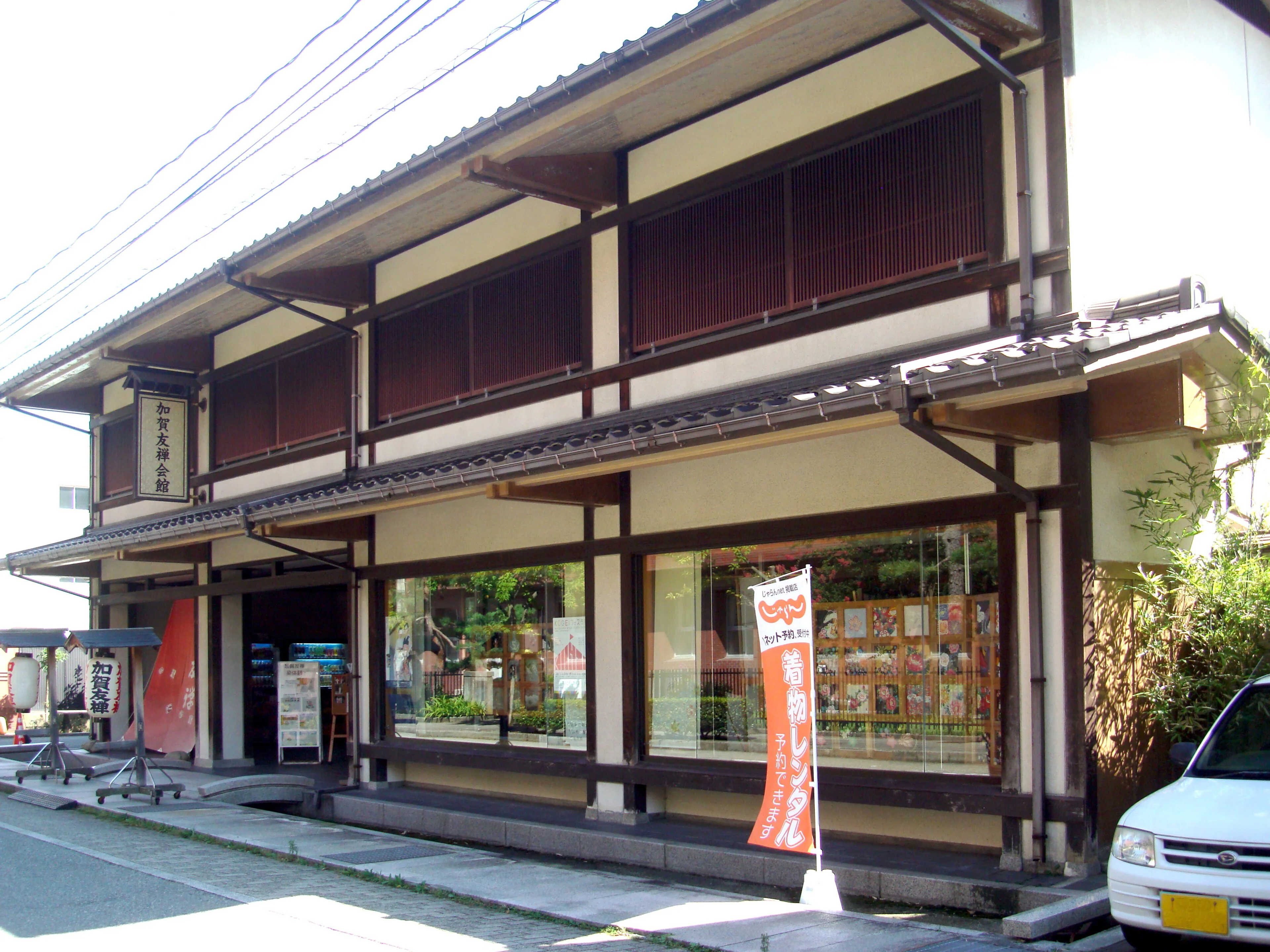
Kaga-yūzen is associated with resist-dyeing and carefully developed pictorial designs. A finished kimono can be read as a field of colour, but the process involves drawing, resist application, dyeing, washing, correction and specialised knowledge. A centre or authorised studio can explain the sequence without inviting visitors into every production space.
Indigo may appear in the wider textile vocabulary, but not every blue textile in Kanazawa is Kaga-yūzen and not every Kaga-yūzen work is indigo. Labels should identify technique and maker rather than asking colour to do all the work. If a shop uses several terms, request the distinction and keep it with the receipt.
Kimono are garments with dimensions, conventions and care needs, not rectangular art bought without context. Ask whether a piece is new, vintage, made to measure or sold as fabric; whether alterations are possible; and how it should be stored. Older textiles may show wear, staining or repair. Condition should be described honestly, and age should never be inferred from pattern alone.
Photography of designs requires permission. A pattern may be newly commissioned or closely identified with a studio. Purchasing cloth does not include reproduction rights for branding, print or digital products. Share the maker’s chosen public images and link when possible rather than extracting a design from its context.
A city of specialists
Craft objects often pass between specialists. A lacquer piece may involve body preparation, coating, decoration and polishing; a textile may move through drawing, dyeing and finishing. Collaboration is not a flaw concealed behind a singular maker myth. Ask how authorship is credited and whether the studio, lead artist or group name should accompany the object.
At the National Crafts Museum, place contemporary work beside historical technique. Read why a material was chosen and how form responds to use. Museum time prevents a workshop visit from carrying the impossible burden of explaining an entire field. It also offers an accessible alternative when a small production space has stairs, dust or restricted movement.
Appointments matter. Workshops plan around commissions, drying and private work, and some cannot safely accept visitors. Confirm language, duration, fee, accessibility and whether children can participate. Arrive with compact bags, follow tool boundaries and never touch a surface because it appears dry.
The city is walkable in sections, but craft addresses are not all clustered. Use current bus information and group visits geographically. A route that combines one institution, one booked workshop and an ordinary meal leaves more room for attention than a race through souvenir counters. Weather can be wet; protect paper and textiles before leaving the shop.
Buying for a life, not a shelf
Decide what the object will do. Lacquer needs appropriate cleaning and should not be treated like generic plastic. Ceramics require clarity about food, microwave and dishwasher use. Textiles need light, moisture and moth protection. Gold leaf can be delicate under abrasion. The maker’s care instructions are part of the purchase.
Packaging and repair reveal confidence. Ask whether the studio can repair or recommend someone, and how international shipping is handled. A fitted wooden box may protect work and preserve attribution, but it also adds weight. Declare value accurately and understand import taxes before asking a small studio to ship.
Price reflects specialisation and failure as well as visible time. Do not compare a museum-quality technique with an industrial object simply because both share a motif. Equally, do not assume every expensive item fairly compensates its makers. Named production and a clear explanation are stronger evidence than prestige language.
Food can offer another encounter with craft through bowls, trays and seasonal presentation. Notice how objects support the meal without turning the restaurant into a showroom. Ask before photographing closely, state allergies and reserve limited places. A thoughtful craft journey still needs to behave like a guest in ordinary hospitality.
Light held in place
Gold leaf appears effortless only after the room has been made still enough to receive it. Dyed cloth appears fluid only after line, paste, colour and water have been controlled. Kanazawa’s beauty lies in that relationship between delicacy and organisation.
Leave with fewer objects and better records. Keep the maker’s name beside the care instructions. Use what was made for use, and let repair extend the relationship. Light may draw the traveller into the shop; provenance is what allows the object to remain luminous after the journey ends.