
# Oaxaca, After the Loom
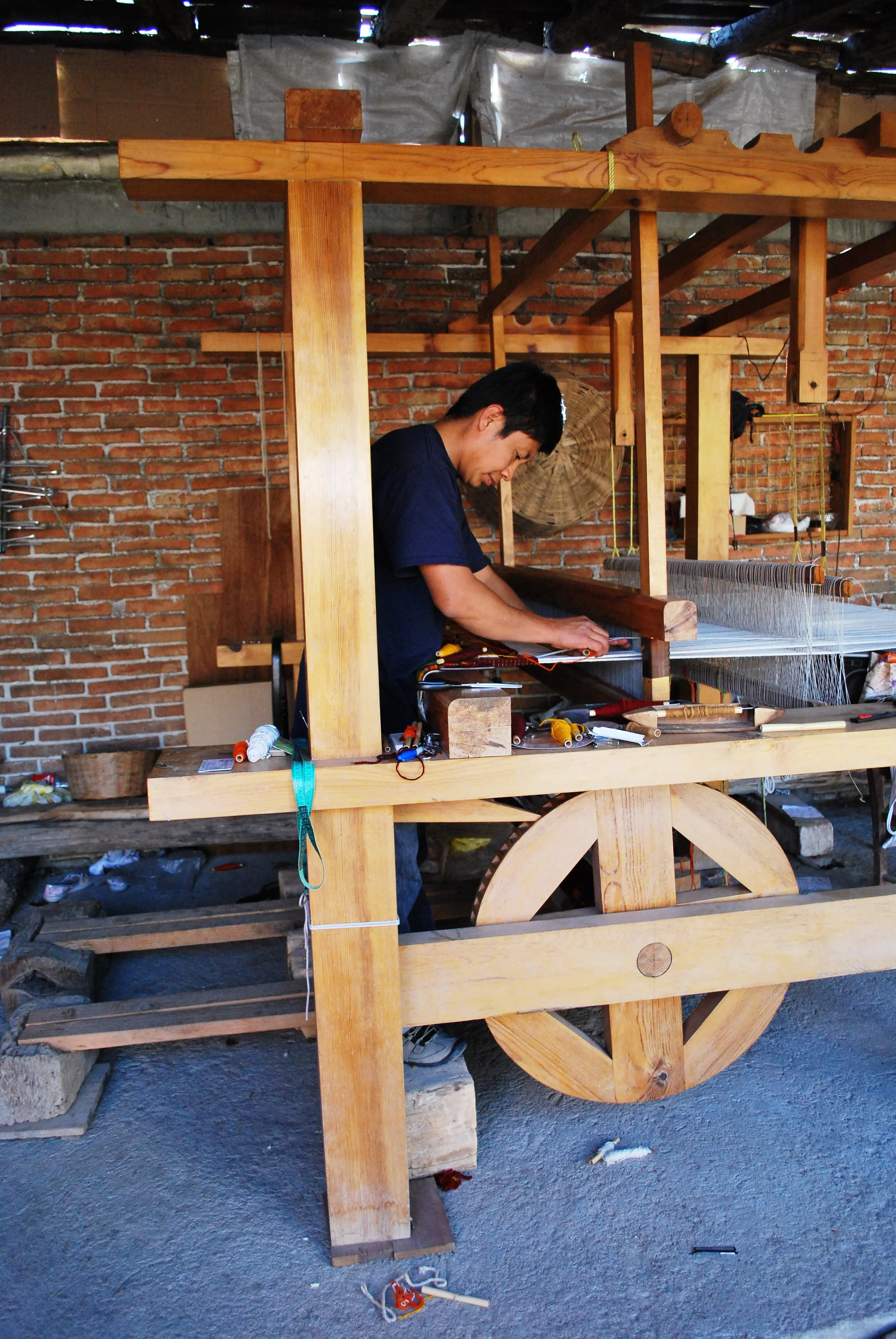
The loom announces itself through sound: a wooden knock, a treadle, the brief pull that settles one line against the next. In the weaving towns of Oaxaca’s Central Valleys, visitors are often invited to watch pattern appear. The spectacle is immediate; the system behind it is not. Wool has been sourced, washed, carded and spun. Colour has been planned and prepared. A design may belong to a family vocabulary, respond to a commission or begin with an experiment that has no obligation to look ancient.
Start in Oaxaca City at the Museo Textil de Oaxaca. A collection gives language to structure, fibre, technique and region before a shop window asks for judgement. Read labels closely. “Oaxacan textile” contains many places and practices, and a museum object’s date or ceremonial role should not be casually transferred to something made for today’s market.
The historic centre is recognised by UNESCO, but the city should not become a decorative gateway through which villages are consumed. Markets, museums, studios and surrounding communities each set different terms of access. A thoughtful route uses the city for context, arranges one workshop visit in advance and leaves enough time for ordinary meals and movement rather than treating makers as stops on a shopping circuit.
The thread before the pattern
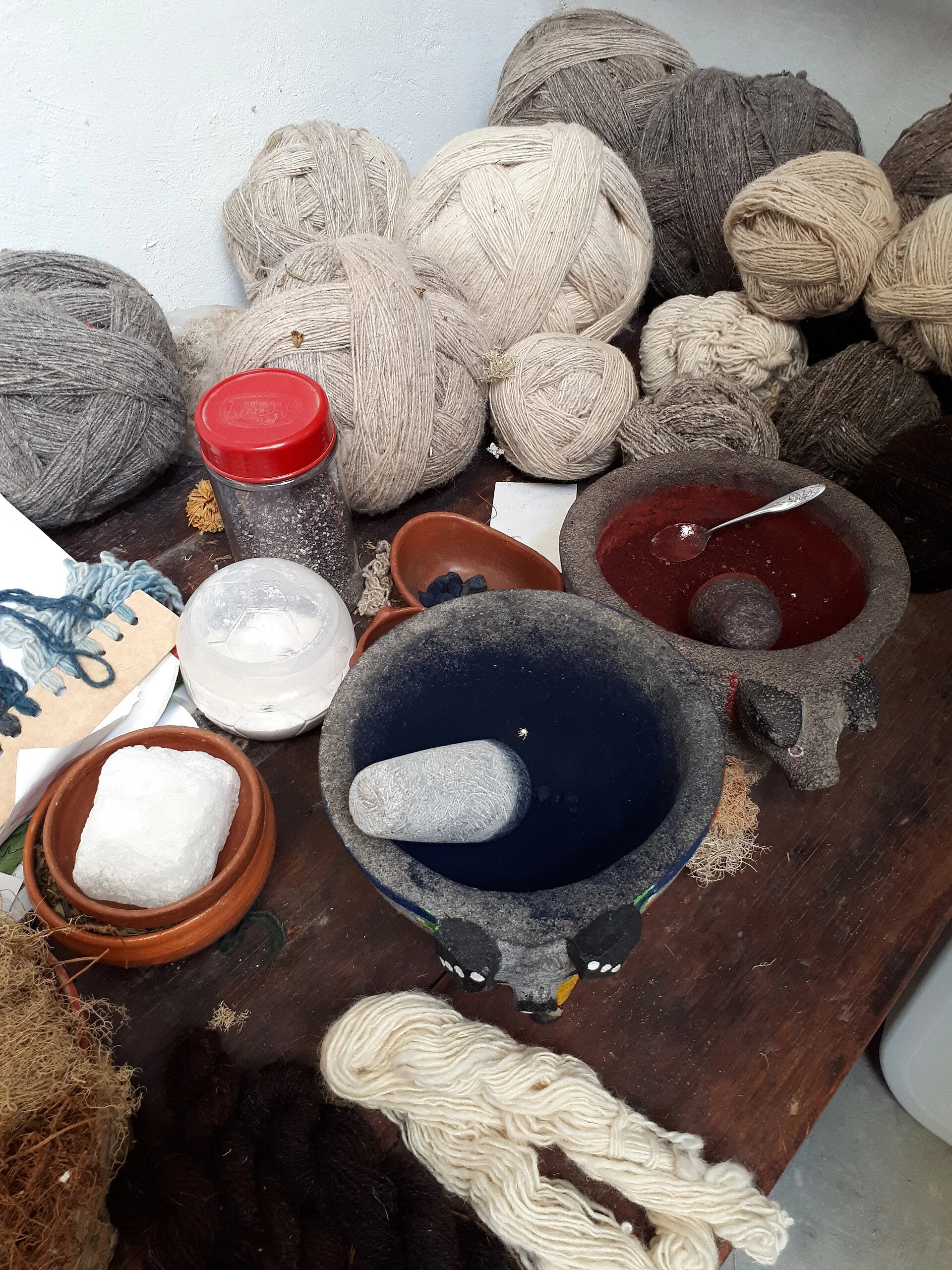
Ask about fibre before asking about motif. A workshop may use locally produced wool, yarn from elsewhere in Mexico or commercial material selected for consistency and price. Some spinning is done by hand, some by machine, and many objects combine stages. The point is not to reward the purest origin story; it is to understand what the maker chose and what the label promises.
In Teotitlán del Valle and other weaving communities, a workshop visit may include carding, spinning, dyeing and the pedal loom. No short demonstration can reproduce the time of a full piece. Ask which stages are being shown, which normally happen elsewhere and who does them. If several family members contribute, keep more than one name when credit is offered.
Do not touch yarn, dyestuff or a work under tension without invitation. Cochineal, indigo and plant materials are often presented as a palette of wonders, but colour depends on preparation, concentration, fibre, mordant, water and repeated judgement. “Natural” is not a complete environmental claim. Ask how water and residues are managed, and accept that a workshop may protect a recipe or supplier.
Photography can reveal designs intended for a commission or convert a private workspace into an open studio online. Obtain permission for people, interiors and close details separately. If the answer is no, record the maker’s preferred public link and write notes. Attention does not require an image.
Colour without mythology
Cochineal produces a wide range of colour through chemistry and technique, not a single miraculous red. Indigo likewise asks for control beyond the theatrical moment when cloth meets air. A responsible demonstration explains what has been prepared in advance and what the visitor is seeing now. The maker need not expose proprietary knowledge to prove skill.
Stories around dyes can drift quickly into universal symbolism. Meanings vary by community, family, period and object. Unless the maker or a reliable source identifies a specific significance, describe what is visible: a stepped form, a repeated line, a field of colour. An uncertain caption is better than an invented cosmology.
Contemporary palettes deserve the same seriousness as colours marketed as ancestral. Makers respond to changing tastes, export requirements, available materials and their own ideas. A bright new combination is not evidence of lost authenticity. A muted palette is not proof of antiquity. Tradition lives through decisions, not through the visitor’s preferred colour chart.
Workshops that welcome travellers should explain fees and purchase expectations before the visit. Paying for a demonstration protects the encounter from becoming a sales trap. If buying is optional, let it remain optional. If a guide receives commission, transparency is more useful than pretending no commercial relationship exists.
Read the reverse
Turn a rug or textile over with permission. The reverse can reveal joins, carried colour and finishing; the edge shows how the object is expected to live. This is not an authenticity test performed by an amateur. It is a way to ask how the piece was constructed and how it should be used.
Measurements matter. A rug that looks modest on a wall may exceed luggage limits; a runner may need a non-slip underlay at home. Ask whether colours are lightfast, whether the piece may be washed and what repair is possible. Keep the maker’s instructions and receipt with the object. If shipping, agree value, tracking, insurance and responsibility for customs in writing.
Price includes more than hours visible at the loom. Design, yarn preparation, dyeing, failed colour, finishing, rent, market fees and teaching all sit inside it. Bargaining is not mandatory everywhere. Where it is welcomed, keep the conversation courteous and do not compare a named workshop’s price with an anonymous factory imitation as leverage.
Some patterns are widely shared; others may be closely associated with a maker or community. Buying a textile does not transfer the right to reproduce its design on products or branding. WIPO’s work on traditional cultural expressions helps explain why collective heritage does not fit neatly inside a buyer’s idea of public domain. Ask before copying, and credit precisely when sharing.
City, village and an honest route
Plan transport before accepting an invitation outside Oaxaca City. Use a reputable driver, organised workshop route or current public transport information; confirm the return rather than assuming a taxi will appear. Roads, demonstrations, weather and festivals can change journey times. A single well-arranged visit is better than racing between villages.
Communities are not open-air markets. Stay on the agreed route, keep doorways clear and do not photograph children or domestic courtyards without explicit permission. Religious and civic celebrations set their own rules. If a procession or assembly changes access, step back instead of treating interruption as bonus content.
Eat near where the day unfolds, but keep recommendations current and specific. Ask about ingredients and allergies in clear language. Markets are working spaces; sample only when invited, pay stated prices and avoid turning every vendor into a portrait subject. The textile route becomes more accurate when food, traffic, school hours and household life remain visible around it.
Back in Oaxaca City, compare the workshop story with the museum labels. Notice what the short visit could not contain: other fibres, ceremonial contexts, regions and histories of exchange. One family’s practice cannot stand for a state. The point of context is not to certify the purchase but to keep the claim proportional.
The cloth keeps its address
A textile can cross a border without losing its address. Preserve the invoice, workshop name, town, material and date. When it is photographed at home, credit the person or group whose name was offered. If the piece needs repair, return to that information before a loose thread becomes structural damage.
The best workshop visits replace the fantasy of effortless tradition with admiration for organised labour and present-day judgement. After the loom, the object should not become anonymous again. Let the colour remain specific, the price remain fair and the person who made it remain inside the sentence.