
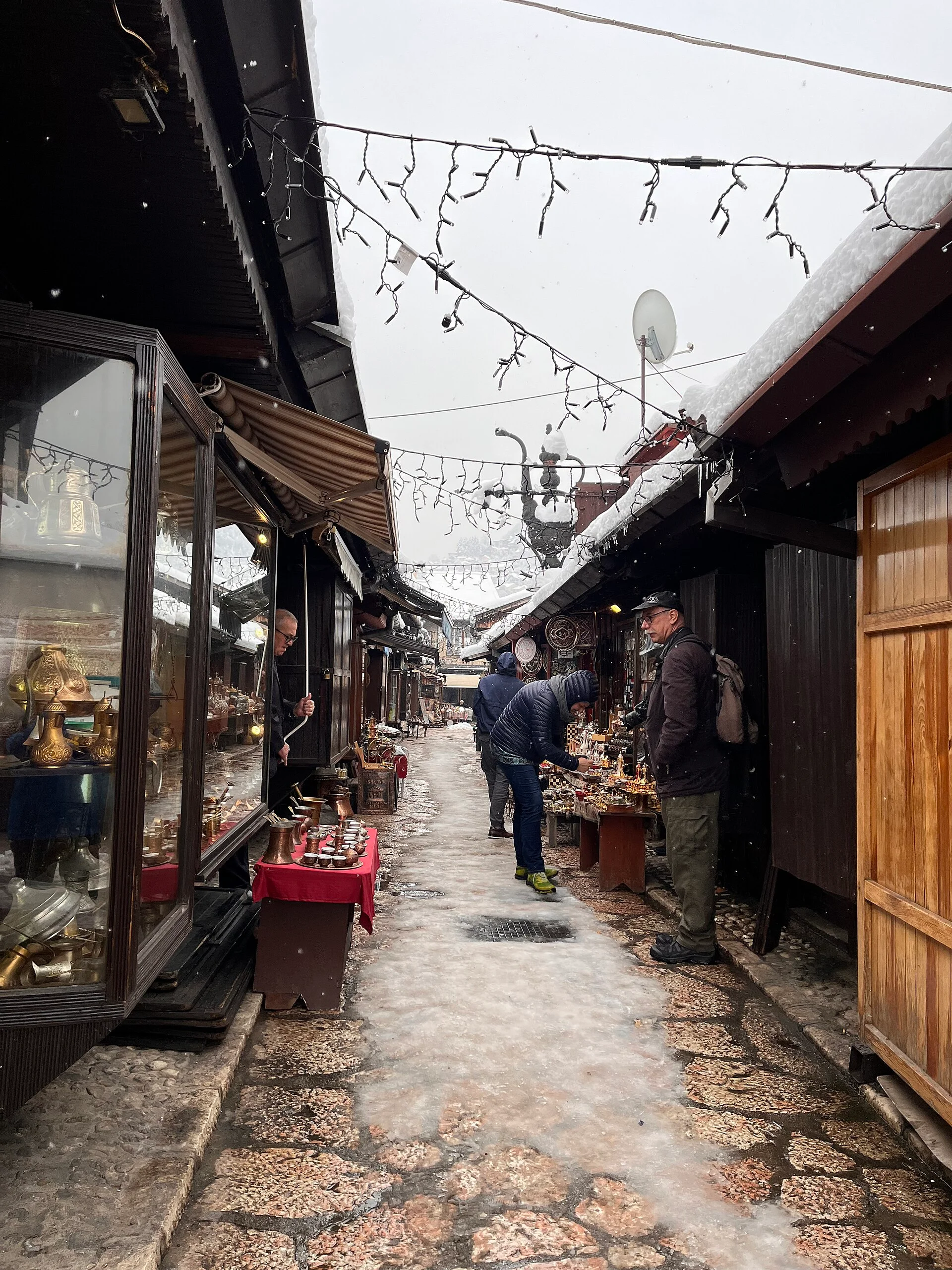
# Sarajevo, Copper in the Old Quarter
The sound arrives before the shop: metal answering a small hammer in quick, controlled strikes. Kazandžiluk, the coppersmith street within Sarajevo’s Baščaršija, carries a craft history in its name and in the objects displayed along the lane. Coffee sets, trays, bowls and decorative pieces catch the light. The useful question is not whether copper is traditional, but what was made here, by whom and for what life.
Begin with Sarajevo’s layered urban history. Ottoman-era commercial organisation, later Austro-Hungarian development, twentieth-century Yugoslavia, war and reconstruction all sit within a short walk. A craft route should not isolate the old quarter as timeless theatre. Visit a city museum or take a well-sourced walking tour before asking one street to explain everything.
Baščaršija remains commercial and social space. Shops receive goods, residents cross the lanes, worship shapes the day and visitors gather quickly around visible work. Keep the path open, ask before entering a production area and separate browsing from permission to photograph.
The sheet before the ornament
Copperwork begins with material whose thickness, hardness and preparation affect what follows. A vessel may be raised, shaped, joined, engraved, tinned or polished through different stages. Ask the maker or seller which processes were completed in the workshop and whether other specialists contributed. Collaboration is part of the account, not evidence of lesser authorship.
Hammer marks can be functional and decorative. Repetition changes the metal and builds a surface, while engraved lines may be added after the main form exists. A brief demonstration shows control but cannot represent the hours behind a large tray. Ask what was prepared in advance and how long the complete object takes.
Tools are working equipment, not props. Keep hands away from sharp edges, heat and active benches. If invited to try a strike, follow the maker’s position and eye protection guidance; do not treat the session as entertainment for a photograph. Pay for instruction when a workshop offers it formally.
Photography can expose new designs or turn a person at work into anonymous atmosphere. Ask first, keep the maker’s preferred name with the image and do not publish a private workshop address. A purchase does not include the right to reproduce an engraved pattern commercially.
Coffee sets and careful claims
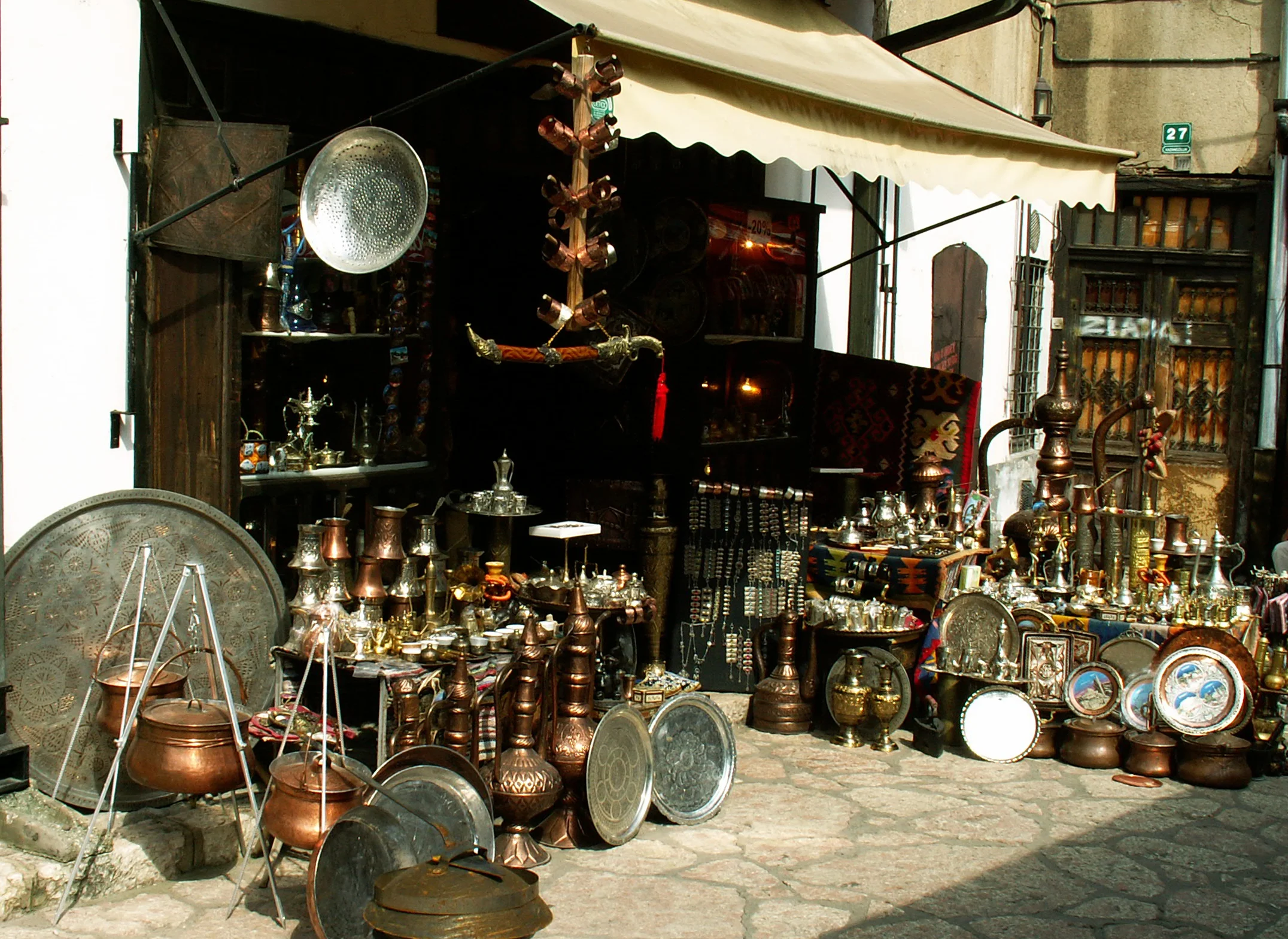
Bosnian coffee culture is often the first frame used to sell copperware. A set can be useful and beautiful, but terminology matters. Ask what each piece is called, which parts are copper, whether the interior is tinned, and how it should be used and cleaned. Decorative objects may not be suitable for food or heat.
Never use acidic food or drink in an unlined copper vessel unless the maker specifically identifies it as safe for that purpose. Ask how lining should be inspected and renewed. Dishwasher use, abrasive cleaners and prolonged moisture may damage surfaces. Written care advice is more valuable than a general promise that copper lasts forever.
Old-looking patina is not proof of age. New work can be deliberately darkened; older objects may have repairs or uncertain use histories. Buy alleged antiques only with documentation and competent advice. Contemporary signed work offers a clearer relationship to a living maker and fewer cultural-property questions.
Price reflects weight, material, shaping, decoration and finishing. Establish whether a stated price applies to the displayed piece and whether negotiation is expected. Do not compare a hand-shaped signed object with an imported pressed souvenir merely because both are copper-coloured. If the budget is small, choose a modest object with a clear maker rather than bargaining skilled labour out of a larger one.
A street that cannot be copied whole
Souvenir shops in Baščaršija combine local work, regional goods and imports. Mixed inventory is not inherently deceptive; missing labels are the problem. Ask a short sequence: Where was it made? Who made it? What material is it? Is it intended for use? Which care does it need? A specific answer is more useful than the word authentic.
The city’s difficult recent history must not be used as emotional sales decoration. War-damaged material and objects represented as shell casings or military remnants raise ethical, safety and provenance questions. Do not buy an item because trauma has been converted into novelty. Museums and documented memorial sites offer more responsible historical context.
Guides may receive commission from shops. Ask openly and judge the visit on transparency, expertise and choice. Commission does not make every recommendation false, but travellers should know whether the route and price are commercially connected.
Language supports a better transaction. Learn the maker’s preferred name and the object’s local term, but avoid performing borrowed vocabulary as proof of expertise. If translation is needed, credit the guide or shop worker who provided it. The person who makes communication possible is part of the visit.
A humane old-town day
Give Kazandžiluk one focused period rather than repeated passes with a camera. Pair it with a museum, a meal and time beside the Miljacka so the city’s scale broadens beyond the bazaar. Choose routes and institutions through current official information; opening hours and access change.
Cobblestones, slopes and thresholds can make movement demanding. Ask guides and venues about step-free approaches, seating and toilets. A ground-floor shop with time for explanation may be more rewarding than pursuing a famous workshop that cannot safely accommodate everyone.
Religious spaces keep their own rules. Dress and behave respectfully, lower voices, avoid blocking entrances and never photograph worship without explicit permission. During festivals or Friday prayer, local need comes before a visitor’s planned sequence.
Food and coffee should not be rushed between purchases. State allergies clearly and learn the pace of service rather than treating the table as another content stop. A copper vessel becomes more legible when it is understood through use, hospitality and care—not just shine.
Make space for contemporary work beyond the familiar coffee set. Makers may alter scale, surface and function or collaborate with designers while retaining deep knowledge of metal. Ask how a new piece was developed and who should be credited. Innovation does not weaken the old street; it shows that skill can answer present lives rather than survive only through repetition for visitors.
The sound stays with the name
Once a tray is wrapped, the shop becomes quiet again. Keep the maker’s name, address offered for public use, receipt and care advice together. If the lining wears or a handle loosens, repair can continue the relationship rather than ending it.
Sarajevo’s copper is most compelling when it remains part of a working city. The hammer is not an echo staged for travellers. It is a tool shaping present-day material, income and design—one measured strike at a time. Carry the maker’s name home with the object and keep it there.