
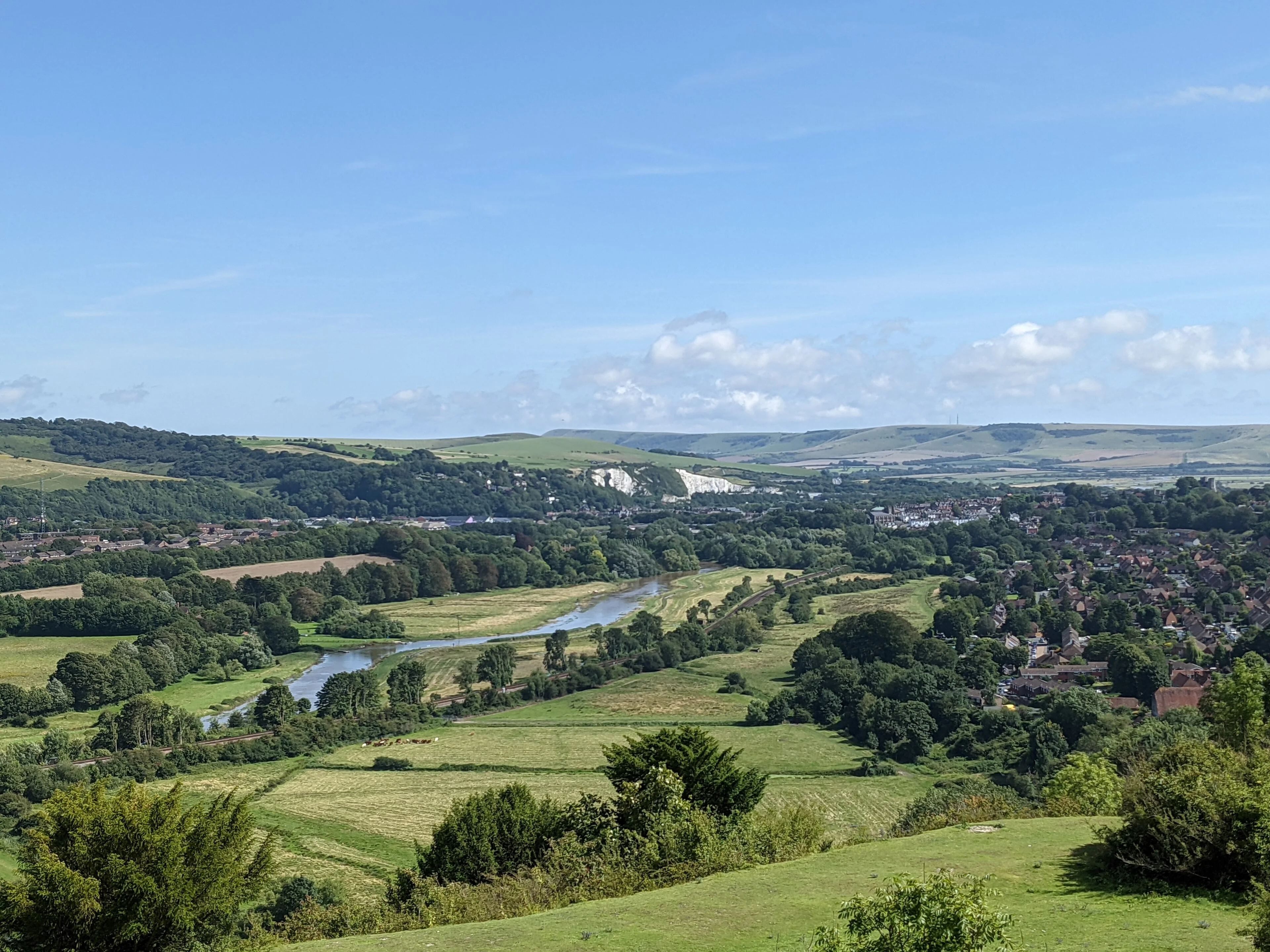
The edge of the field
The South Downs reveal autumn first at the edges. Hawthorn reddens, blackberries darken and the path begins to hold the memory of overnight rain. On the open ridge, summer can still flash through the cloud; one fold lower, a shaded lane already smells of damp leaves. The change is intimate rather than spectacular. It rewards a walker who notices the hedge as habitat, boundary and archive instead of treating it as scenery between views.
This is a protected landscape and a working one. Arable fields, grazing, villages, roads and nature reserves overlap. Public rights of way provide access across land that still has jobs to do. Follow waymarks, leave gates as found, keep dogs under close control and step aside for livestock or machinery. A photograph of a harvest field never justifies entering it. The edge is where the traveller belongs unless access is explicit.
Chalk underfoot
The chalk ridge gives the Downs their open horizons and distinctive ecology, but the walking surface changes quickly with weather. Dry chalk can be firm and bright; wet chalk and clay can be slick. Descents deserve more caution than their gentle profile suggests. Check the National Trail and park guidance, carry a map that works offline and build a route with a clear exit to a village or station.
The South Downs Way is long enough to invite completion language. Resist it. A day section can hold the essential experience without turning the landscape into a test. Choose a route around current transport, ability and daylight. Where gates, stiles or gradients create barriers, use published accessible routes and detailed local information rather than assuming “easy” means step-free.
Hedgerow etiquette
Berries tempt the hand, but foraging requires knowledge, permission and restraint. Some plants are toxic, roadside growth may be contaminated and wildlife depends on autumn food. Never uproot wild plants, take only what is legal and abundant, and leave unfamiliar species untouched. A guided walk with a qualified local naturalist is a better introduction than an app-based guess.
Hedges also hold nests, insects and movement corridors. Keep noise low and dogs close, particularly near livestock and ground-nesting habitat. Do not push through gaps that are not rights of way. The most attentive walk is one that leaves no new path. In a heavily used landscape, repeated small choices determine whether a verge remains resilient.
“The most attentive walk is one that leaves no new path.”
Rivileo Journal
Villages as part of the route
A village pub, shop or tea room can turn a linear walk into a day with human scale, but opening hours outside summer are not guaranteed. Check directly and carry enough food and water to be self-sufficient. Spend where you stop without expecting every business to provide toilets, bottle refills or shelter to non-customers. Public facilities are uneven, so plan them as carefully as the viewpoint.
Rail and bus links make lower-impact sections possible, especially around Winchester, Lewes, Brighton and Eastbourne, but rural connections can be infrequent. Design the walk backwards from the last reliable departure. A taxi fallback should be researched in advance because mobile coverage and local availability vary. The reward is a route that does not require returning to a parked car and can end naturally in another place.
A horizon earned gently
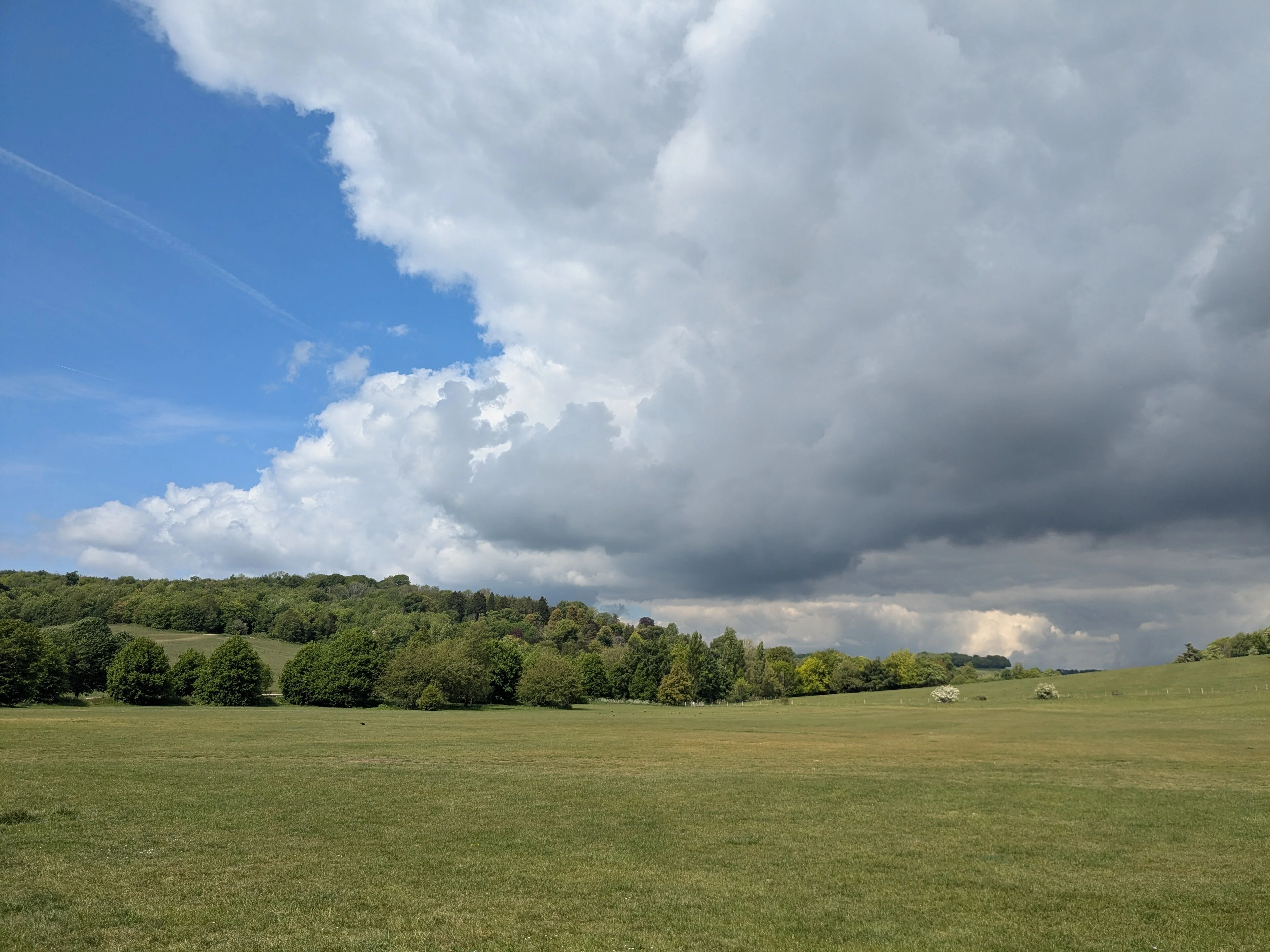
Wind is the Downs' most persuasive editor. It can make a mild forecast feel cold, turn an exposed lunch into a poor idea and carry weather across the ridge faster than expected. Pack a layer and waterproof, protect the map and know which descent shortens the day. If visibility closes, the landscape has not disappeared; it has moved the experience toward sound, texture and the next safe path marker.
At hedgerow time, the South Downs offer no single grand reveal. They accumulate: a flint wall, a field newly cut, a rook line, a view opening briefly toward the sea. Walk fewer miles and look sideways. The season is present in the margins, which is also where good countryside manners begin.
Following a living boundary
A hedgerow is not simply the edge of the view. It can be habitat, stock barrier, shelter, historic boundary and a record of management carried across generations. September brings berries, seeds and busy feeding, but foraging rights and safety are not obvious from abundance. Take nothing without permission and knowledge, leave food for wildlife and never sample a plant from a sprayed verge. The pleasure lies in learning to identify what is present, not proving the walk through a basket.
Public rights of way cross working farms, and the distinction between path and field matters. Keep dogs under close control, especially around livestock, close gates as found and follow temporary diversions where lawful notices protect operations or safety. Cattle behaviour can be unpredictable; give animals space and do not place yourself between a cow and calf. The National Trail is well established, but a downloaded map and a charged phone remain sensible. Chalk paths can be slippery long before a route feels mountainous.
Rail access makes sections of the Downs possible without a car, though Sunday engineering works and infrequent rural buses can transform the return. Build the walk from the last dependable connection backwards, not from the prettiest midpoint forwards. Pubs and village shops may close between services or on particular weekdays, so carry water and enough food. If spending locally is part of the route, check hours and arrive with time to order rather than asking a kitchen to stay open for a delayed walker.
At dusk, the landscape changes ownership. Birds and mammals become active, farm traffic may still use narrow lanes and visibility falls quickly beneath trees. Carry a light, wear something visible on road sections and finish before darkness if the route is unfamiliar. Then let the shortened day be an ending rather than a failure. A train window at sunset, muddy boots beneath the seat and one accurately named hedgerow plant can be a more complete journey than another hurried summit.
Choose the overnight stop for connection rather than status. A town with a station, an open kitchen and a path from the door can remove two car journeys and support businesses outside the most photographed villages. Ask hosts about boot storage, bus changes and managed routes; their practical knowledge is often more useful than a generic “top walk.” In return, arrive at the agreed time and remember that country hospitality still runs on finite staff and hours.
A thoughtful route
- Before leavingChoose the exit first
Confirm the final station or bus stop, then shape mileage, daylight and breaks around it.
- MorningClimb in cool air
Reach the ridge without racing and reassess wind and footing once exposed.
- MiddayPause in a village
Use a verified open business, spend locally and refill before the next quiet section.
- AfternoonRead the hedges
Notice fruit and wildlife without picking what you cannot identify or leaving the path.